


arcoris bio: biomarker detection kits to reach new markets

Interview with Matyas Vegh, chief executive of arcoris bio
Estimated reading time: 8 minutes
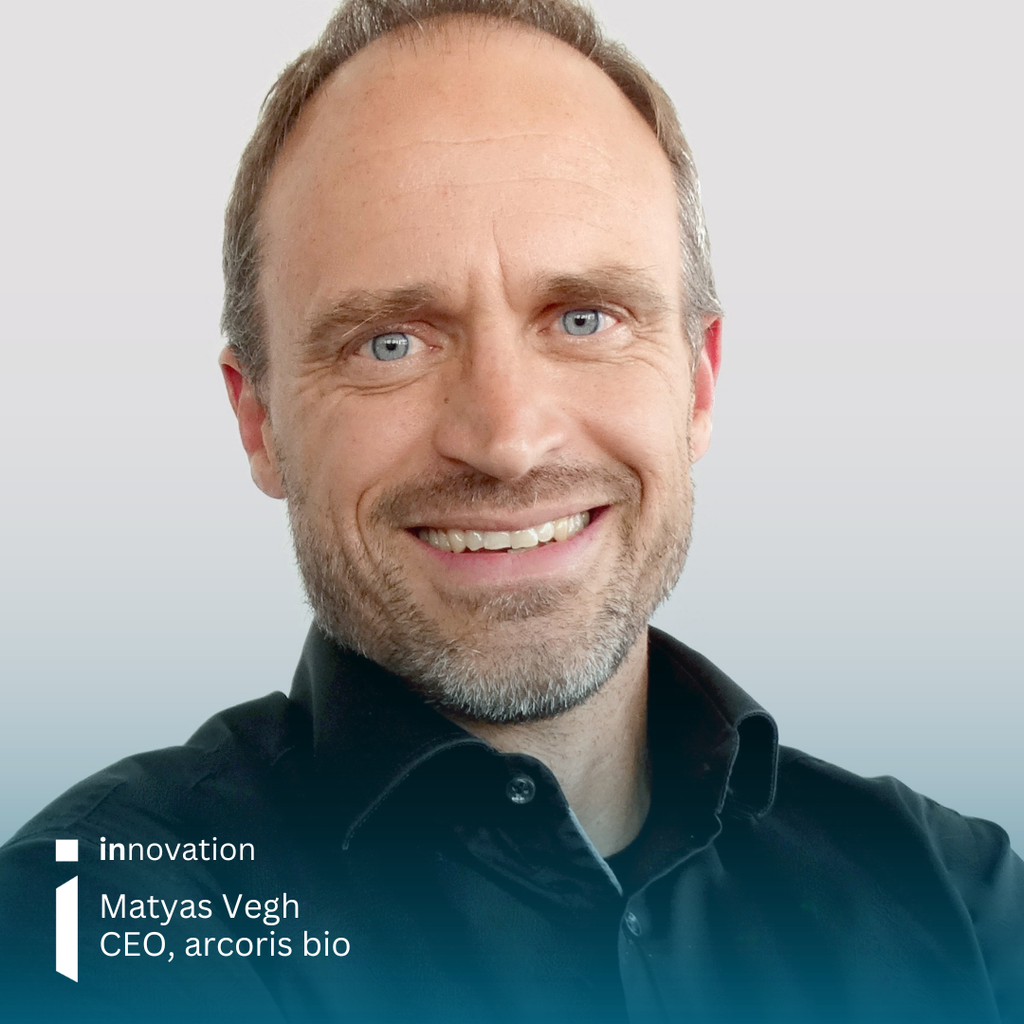

arcoris bio launched its ImmunoMUSE kits earlier this year to address challenges in tissue imaging workflows. Their chief executive, Matyas Vegh, told us about a new partnership to bring the kits to European and North American markets
Innovation by itself is not enough to bring technology and products to new markets—good relationships and strategic partnerships are needed to expand, the chief executive of arcoris bio, Matyas Vegh shares.
The life science research tools and in vitro diagnostics company is expanding the reach of its immunoMUSE biomarker detection platform, entering a distribution partnership with Europa Biosite to bring simplified tissue imaging workflows to researchers across Europe and North America.
Matyas hopes the expansion will encourage early adoption of the kits, which are based on the firm’s MUSE (multiplex universal signal enhancement) biomarker detection platform.
The kits were launched earlier this year, and Matyas says they were designed to address two challenges in tissue imaging—sensitivity and multiplexing (carrying out multiple tests at the same time).
Describing Europe as a “very special life science market”, he describes the partnership with Europa Biosite, (their group of companies and network of researchers), as an effective way for them to bring immunoMUSE to multiple European markets. Matyas says, “It is a very diverse market. You have different cultures, languages and purchasing schemes from country to country, so you also need local knowledge and relationships with researchers.”
Matyas, who trained as a molecular biologist, has spent 25 years in the industry, primarily building start-ups from scratch in the diagnostics, research tools and instruments spaces.
He joined arcoris bio four years ago, shortly after its foundation. The Switzerland-based company develops reagents—chemicals that are essential in tissue imaging.
Looking to the future
The innovative immunoMUSE kits are based on reagents, and work in combination with staining instrumentation and microscopy.
With life science tools, Matyas explains, publications are the “currency of adoption”. He explains:
“Scientists like to use a new technology if others have published about the technology. In order to find those first scientists that use or try out the technology—early adopters, you need a good relationship with these scientists.
“To find those first scientists who are early adopters of the technology, good relationships and knowing who in certain areas would be willing to try it are crucial.”
This is something that will help accelerate adoption of immunoMUSE, he hopes.
“Europa Biosite has a local presence; they know the local network of scientists, and so they could find those very early adopters. Out of this you then generate publications, and this will help you to go broader in the market and help adoption.”
Long-term, the goal is to make the new technology available to a broad community. However, Matyas has his sights set on further expansion and says, “Perhaps beyond the current immunoMUSE kit, we would have ideas to deepen and broaden our product portfolio.”
This could take the form of increasing what the company currently offers, by using the technology in detection of different types of biomarkers, for example, RNA biomarkers.
Beyond the European and US markets, arcoris bio would like to take immunoMUSE to the Asia-Pacific market (APAC).
Matyas shares: “I think for us, especially as a small company, we wanted to do this as a gradual process in order for us to learn first from the more local market in case more help or more support is needed. This is why we wanted to do a two-step process: Europe first and then going broader to the US and to Asia Pacific.”

Simplifying research workflows
With immunoMUSE kits researchers can create their own multiplex immunofluorescence panels using their preferred antibodies.
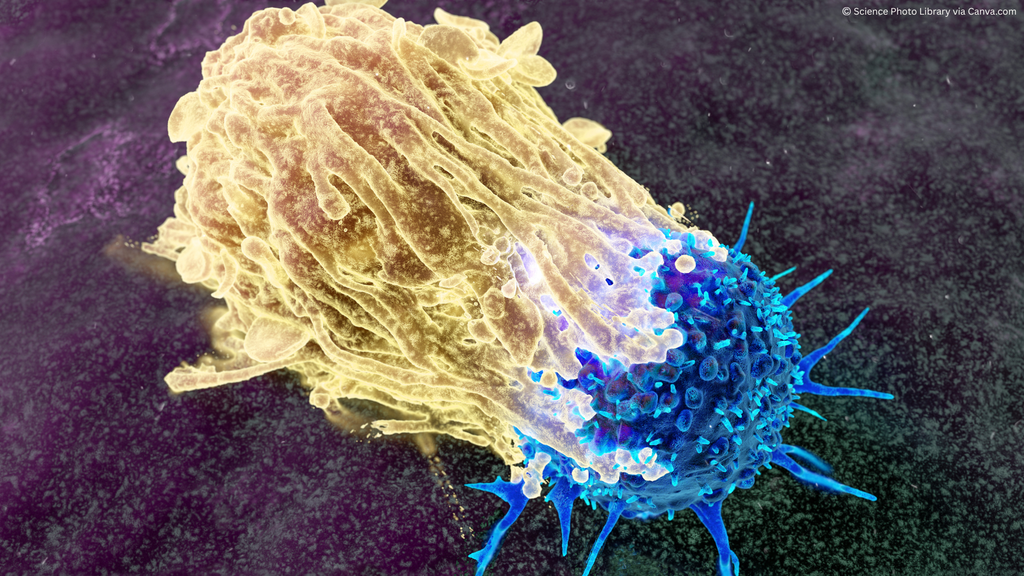
In standard tissue staining—a technique used to add colour to samples—researchers typically use a ‘probe’ to find and highlight specific biomarkers. However, these probes can be difficult to see. The MUSE technology adds a signal to the probe via a chemical reaction at the final stage. This amplifies the signal, making biomarkers more visible and easier to detect.
Matyas says it works by amplifying and improving the signal so that biomarkers that would not have been visible before with standard technologies can be detected.
He adds: “At the same time MUSE technology enables true multiplexing, so that means you can look at several biomarkers at the same time in one staining run on the same sample. By this you save sample material, but you also gain much deeper information into that one sample, and this is very important for several areas, especially in oncology, but also in neurology and other scientific fields. What is really important for us is that, even though that technology sounds a bit complex, the workflow is very easy to learn.”
In terms of the market, immunoMUSE kits have attracted increasing interest from industry partners. Matyas says they are making a “significant impact”, adding: “They come to us and want to test the technology, and this shows we are on the right track.”
So far, the feedback from customers using immunoMUSE kits has been positive.
Matyas says: “They really like the data quality and the high sensitivity of the assay. What is even more important for us is that they like the workflow. They might have expected (as it is a technology that adds more signal and has some complexity) that they would need to do a lot of troubleshooting. But in the end it always worked on the first trial.”
Broadening the scope of research
Among the areas of research arcoris bio says immunoMUSE kits are well-suited to, are oncology and immunology.
According to Matyas, MUSE is particularly useful for researchers interested not only in the biomarker, but also its location within the tissue. “This spatial information drives the use of this technology, and it is particularly important in oncology,” he explains.
He cites the example of a clinician who might want to know if a specific gene is overexpressed when analysing a tumour sample, or if there is a different population of cells adjacent to each other.
Neuroscience is another area where the technology is beneficial.
“We have many customers who use this technology in brain research because the spatial information becomes very complex and very important,” Matyas says. The brain can be a difficult sample to analyse if biomarkers are in low abundance; however, the signal amplification used in immunoMUSE kits makes them visible, he adds.
In areas such as oncology in the standard diagnosis and study of diseased tissue, there are some markers that are difficult to see and need two pathologists to look at. However, the increasing use of digital pathology in the sector is something Matyas points to, not only digitising images, but also the ability to gain more information from biomarkers by using immunofluorescent staining methods—something that also allows researchers to add more markers.
“That allows you to have more information from that same tissue section for the patient, and it will really lead to more personalised medicine and a better understanding of whether that patient could respond to a certain treatment or not.”
He points to one example: where increased sensitivity led to more oncology patients benefiting from a treatment.
“More patients that have a lower HER2 signal can be eligible because higher sensitivity assays became available, and this is an example of how higher sensitivity leads to more patients benefiting from a therapy.
“But obviously adding more information per patient sample really helps the clinicians to get a better understanding of the type of tumour the patients have.”
Enabling research
Beyond technical specifications and expansion plans, Matyas shares the most rewarding aspect of bringing the MUSE technology to market.
“I’ve been selling research products now for more than 20 years—tools, kits, instruments, services—and what is always most rewarding is when you have scientists coming back and they show you the data—and they are so proud of it.
“You have enabled that scientist to find out something, to do research and gain knowledge. This is extremely rewarding because if you have great technology, what use is it if you cannot transmit that to the market?”
The sector is constantly evolving, but the infrastructure enabling that progress remains vital; ultimately, equipment and distribution strategies are the crucial pieces of the puzzle.
Connect with Matyas
innovation spotlights the future of RARE through a technological lens. To access more innovation articles click below.