

LEO Pharma: building a rare dermatology pipeline

Interview with Lukasz Jarzyna, vice president, rare disease, LEO Pharma
Estimated reading time: 7 minutes

As LEO Pharma advances its rare disease pipeline with the acquisition of the rights for dersimelagon, its vice president of rare diseases, Lukasz Jarzyna, discusses his hopes for rare dermatology and the work the company has been doing to expand its offering in the area
As LEO Pharma grows its pipeline in the space of rare dermatology, vice president, Lukasz Jarzyna, hopes to see it emerge as a distinct therapeutic class.
Lukasz shared this vision as the firm marked a significant step forward for two rare skin diseases with the successful acquisition of worldwide rights to dersimelagon from Tanabe Pharma.
The US Food and Drug Administration (FDA) has also accepted for filing and granted Priority Review to the New Drug Application (NDA) for dersimelagon, with a Prescription Drug User Fee Act (PDUFA) date expected by the end of February 2027.
Lukasz joined LEO Pharma little over a year ago to lead the company’s rare disease efforts in the US and globally. Since then, the focus has been on building the rare disease team, expanding the product offering and strengthening the pipeline—particularly for rare skin diseases. He notes that the company has seen “extraordinary growth” in this area, both in pipeline development and in “bringing hope” to patients.
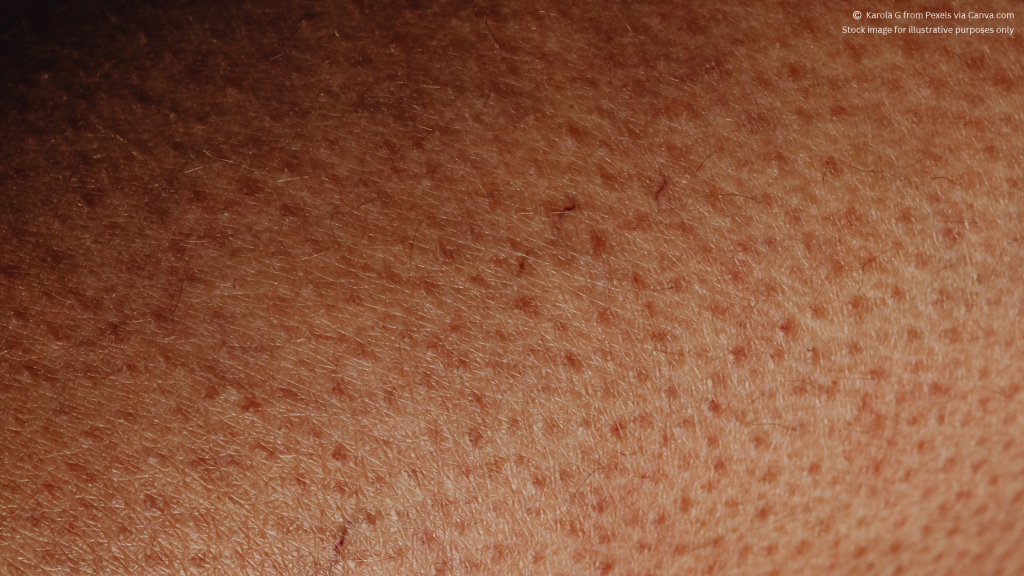
Dersimelagon has been hailed as a potential first‑in‑class oral therapy for erythropoietic protoporphyria (EPP) and X‑linked protoporphyria (XLP), two rare genetic skin diseases. EPP and XLP are severe, lifelong disorders that cause intense sunlight‑induced skin pain and significantly limit patients’ ability to spend time outdoors. “It has a huge impact on quality of life,” Lukasz explains.
Symptoms may include rashes, swelling, redness and burning sensations. In some cases, patients may also experience liver damage. “I’ve had a chance to talk to some patients over recent months,” Lukasz says, “and they all refer to this burning sensation that severely impacts their quality of life.”
What struck him most was the diagnostic journey.
“In rare diseases, we often refer to the diagnostic odyssey, where it takes on average five years to get a proper diagnosis. What shocked me is that in EPP and XLP it takes 10 to 15 years. The journey those patients and their caregivers have to endure is just incredible.”

A vision for rare dermatology
Because symptoms often appear in childhood, the condition’s extreme light‑sensitivity places a significant burden on children who want to play outside with friends, compounded as they grow up by frequent medical appointments. “The quality‑of‑life impact is not to be taken lightly,” Lukasz says. “We are talking about strong lifelong daylight avoidance. The loss of quality of life is profound and includes high rates of depression, anxiety and social isolation.”
Looking ahead, Lukasz hopes rare dermatology can follow a path similar to oncology.
“Over the past 10 to 15 years, a new class called rare oncology has emerged. My hope is that in the next five to ten years, we will talk about a new class called rare dermatology.”
LEO Pharma is expanding its teams and pipeline to support that aim, and Lukasz says: “How can we create a platform for patients, providers, regulators, insurance companies and industry to come together and find solutions for rare skin disease patients? There are over 800 such diseases, most with no approved treatment, and these patients urgently need solutions.”
Expanding pipeline and portfolio
“The pipeline has grown tremendously over the past year. The entire LEO team is working tirelessly to bring more treatments to market and expand our offering for patients with rare skin diseases,” Lukasz shares.
The results of the Phase 3 INSPIRE study into dersimelagon conducted by Tanabe Pharma showed prolongation of average daily sunlight exposure time before the onset of symptoms associated with sunlight exposure.
LEO Pharma acquired the worldwide rights to it for up to $435 million, and its acquisition strengthens the firm’s late-stage pipeline.
It follows an exciting year for the firm. Last September, LEO Pharma entered into a partnership with Boehringer Ingelheim for Spevigo for generalised pustular psoriasis (GPP). It is also being studied in another Phase 3 study for another rare skin disease—pyoderma gangrenosum (PG). Lukasz shares: “Hopefully we’ll be able to see some positive results from that study in the near future.”
Earlier this year they acquired Replay, a herpes simplex virus (HSV) gene therapy platform focused on dystrophic epidermolysis bullosa (DEB). “It’s a great platform that we acquired to potentially be able to address more diseases beyond DEB as well.”
For now, the team is busy working with Tanabe Pharma preparing for the potential launch of dersimelagon next year. Lukasz notes, “It’s not just the recognition of dersimelagon and the potential benefit it has for patients that’s special; it’s also that it got Priority Review.”
With the Priority Review status granted by the FDA, the potential approval decision is expected to coincide with Rare Disease Month.
Lukasz says: “We have six decades of experience in dermatology and have spent over a year building this platform for rare skin diseases. To potentially celebrate FDA approval alongside Rare Disease Month would be something very special.”
Around 30% of all skin diseases are classified as rare, affecting approximately seven million patients globally. This underscores the significant unmet need in rare dermatology, Lukasz notes: “If you look at the dermatology pipeline, only around 1.5% of products in development actually address rare skin diseases. The unmet need is huge and addressing it is both complex and challenging.”
Navigating development challenges
He adds: “There isn’t enough investment going into rare skin diseases, and that needs to change. LEO is at the forefront, leading this space with three dedicated products.”
Rare disease development is filled with challenges. When considering how best to address patient needs, Lukasz emphasises: “It has to start with the science.”
“We are focusing on diseases with high unmet needs, where there are currently no treatment options, and where we can make a tangible difference.”
Studying rare diseases often means encountering conditions with little prior research and no established frameworks. “There is a lot we have to construct from the ground up, engaging directly with the FDA and regulators. At the same time, we can utilise existing rare disease frameworks, leveraging our deep experience in dermatology to accelerate development and bring new hope and treatments to patients.”
As the industry seeks to redefine how rare skin diseases are understood, funded and treated, the emergence of rare dermatology as a formal therapeutic class may be the next major change in the field.
Connect with Lukasz
in the pipeline brings you the latest developments from the RARE pipeline. To access more in the pipeline articles click below.