


Huntington’s disease: an important moment for treatment development

Interview with Oscar Pérez, chief scientific officer, Ferrer
Estimated reading time: 7 minutes
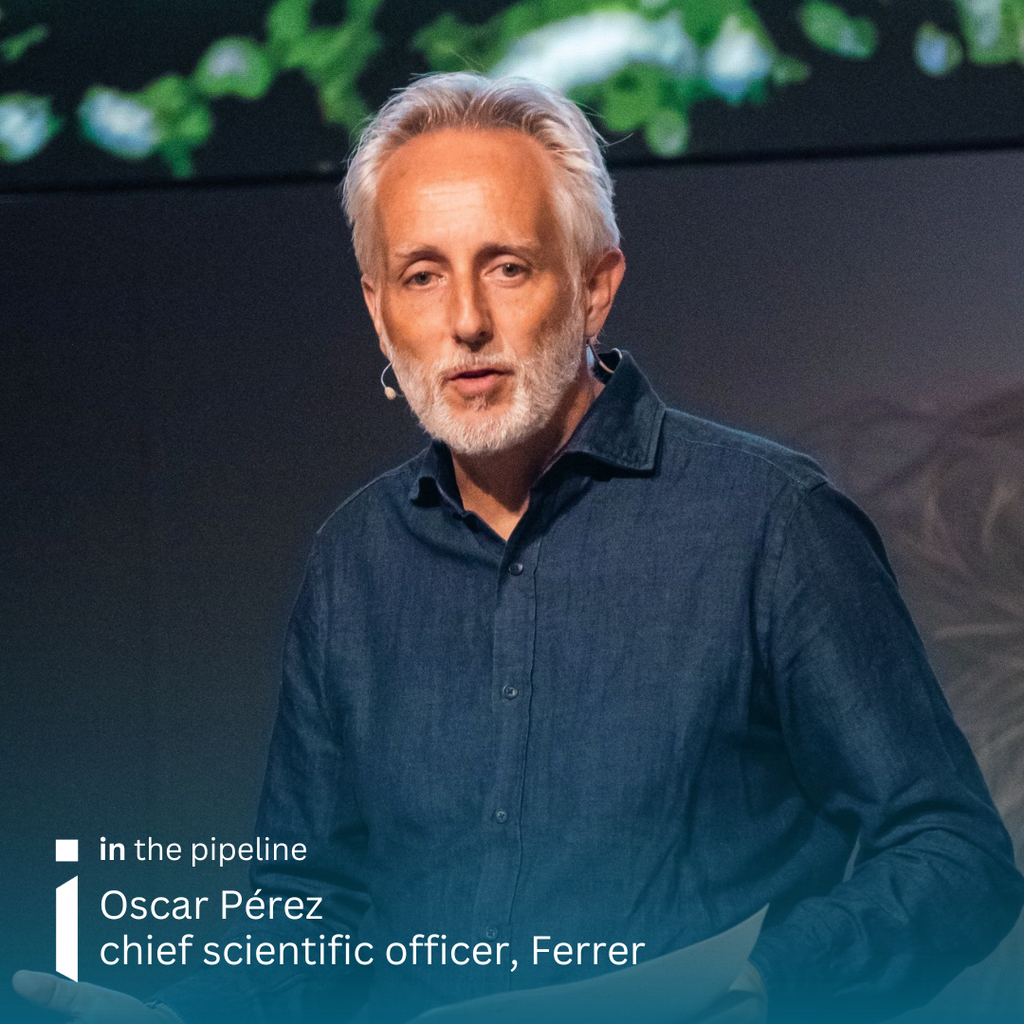

Recruitment is underway for a confirmatory trial of pridopidine. Ferrer is a co-developer of the drug, and the firm’s chief scientific officer, Oscar Pérez, spoke to RARE Revolution about hopes for the study and developments across the neurodegenerative pipeline
Treatment development in Huntington’s disease is entering a “terrific moment”, with a range of companies investigating potential new options, says Ferrer’s chief scientific officer, Oscar Pérez.
The company is marking the start of the confirmatory Phase 3 PRECISE-HD study, which it is co-developing with Prilenia Therapeutics to assess the efficacy and safety of pridopidine in Huntington’s disease.
As part of the randomised, double-blind, placebo-controlled trial, the clinical impact of pridopidine on disease progression, functional capacity, motor function, cognition, speech and quality of life will be evaluated in 400 participants.
The study will take place across up to 75 sites globally, including in the US, EU, UK and Canada. Recruitment has begun in the US and UK, with other countries expected to follow on a rolling basis.
For Ferrer, the trial represents part of a longer-term focus on rare diseases and neurological conditions.
For Oscar, successful drug development starts with understanding the needs and experiences of patients themselves and translating those insights into clinical trial design
“When it comes to designing clinical trials, the patient is at the centre of everything,” he says. “One of the guiding principles is that we have the patient at the centre, in the sense that we look for the patient’s voice, and we also encourage the patient to speak up.”
One example is the design of clinical trial protocols, “when designing a protocol, we are co-designing it with the help of the patient associations,” Oscar explains. “We then get in contact with patients and caregivers who know the nuances of the disease; what are the expectations in terms of the unmet needs that are still pending?”
He says this approach is particularly important in rare diseases, where existing treatment options may be limited and may not address the full range of needs experienced by patients.
For Huntington’s disease, Oscar believes that after many years of limited therapeutic progress, the Huntington’s research field is experiencing increasing scientific activity and investment.
“This is a terrific moment for Huntington’s because many companies, not only Ferrer, are investigating,” he says.
Oscar also points to the potential advantages of pridopidine’s oral administration, particularly when compared with treatments that require more invasive methods of delivery and also additional hospital resources.

A holistic approach to Huntington’s
Speaking about PRECISE-HD, Oscar says the primary goal is to establish whether pridopidine can slow disease progression.
Existing treatments primarily target specific symptoms, while there remains a need for therapies that can address the overall progression of Huntington’s disease.
“The approach of pridopidine to Huntington’s disease is much more holistic because if it can demonstrate efficacy, that would mean that it is slowing the progression of the disease because it impacts all relevant disease aspects; cognition, motor function and also behavioural and psychiatric dimension too,” Oscar says.
The study’s primary endpoint will be based on the composite Unified Huntington’s Disease Rating Scale (cUHDRS), which assesses multiple aspects of the disease.
The cUHDRS brings together measures across different domains of Huntington’s disease, providing a broader assessment of the impact of a treatment.
“That is a global way to understand whether the efficacy you are delivering is meaningful and appropriate,” Oscar explains.
Lessons from clinical development
The drug development process has evolved in recent years, particularly with the increasing use of technology.
Drug discovery platforms and computational models can be used to support optimisation, helping researchers identify and refine molecules based on characteristics such as pharmacokinetics (how the body reacts to a drug) and pharmacodynamics (what a drug does to the body).
This, Oscar says, can be particularly valuable in neurodegeneration.
“That optimisation nowadays can be run in two to three months instead of running long studies. At the same time, you can also try to find some biomarkers and you can rely on technology to further support target identification and candidate selection.”
Oscar believes advances in technology are key to helping shorten the time required to move from discovery towards clinical development.
“My opinion is that from preclinical to early clinical stages, we may be witnessing a huge acceleration. From the clinical stage onwards, it will take more time. Once the study is concluded, you can accelerate in terms of mining the data, relying on technology.”
Ferrer’s neurology division focuses on rare neurodegenerative conditions, drawing on specialised teams and expertise in developing and manufacturing treatments.
Huntington’s disease is one of the conditions the company is exploring within its transformative portfolio.
The company is also investigating other neurodegenerative conditions, including amyotrophic lateral sclerosis (ALS) and progressive supranuclear palsy (PSP), which is part of the atypical parkinsonism family of disorders.
In ALS, the company is conducting the PREVAiLS study of pridopidine, which is now recruiting for Phase 3. In PSP, Ferrer is carrying out a global study of egalognastat, a molecule being developed for the rare neurological disorder, which can affect movement, vision and balance.
Oscar says egalognastat is intended to slow disease progression, which can be rapid in patients with PSP.
The molecule originated with a small Swiss start-up, Asceneuron, with Ferrer now acting as its developer and holding global rights.
A readout of the PSP study data is expected next year. If the results demonstrate efficacy, Oscar says Ferrer will engage with regulators regarding a potential “accelerated pathway” to market.

Defining the right patient population
PRECISE-HD is being conducted in collaboration with Prilenia Therapeutics, which has led earlier development of pridopidine.
The study will have two consecutive stages: a 52–week placebo-controlled stage and a 104–week open-label extension stage, in which all eligible participants will receive pridopidine.
Those living with early- to mid-stage disease, including those who have experienced motor changes or an impact on independent functioning will be the focus of the study.
One of the learnings from previous research and studies is the need to define the study population precisely, something Oscar says is quite important.
“It is quite tough to make evident a signal of efficacy if you are mixing up many different populations, so the most important learning is to select what the adequate population of a study is,” he says.
In neurodegenerative diseases such as Huntington’s, progression can vary considerably between patients. Identifying patients earlier in the course of disease as well as enriching with clinical indicators of progression could reduce the variability caused by differences in the rate of disease progression, helping with the sample size, the statistical power and clinical robustness needed to determine whether a treatment is having an effect.
Delivering something meaningful
Ultimately, Oscar says the motivation behind the programme comes back to patients and their need for new treatment options.
“I love that we may deliver something meaningful because that is much needed, and we are putting all our effort and desires into it,” he says.
He also points to Ferrer’s focus on social justice: “What better social justice is there than to be focused on those underserved conditions?”
Connect with Oscar
in the pipeline brings you the latest developments from the RARE pipeline. To access more in the pipeline articles click below.