


How can biopharma better fund and prioritise their pipelines?

Interview with David Crean, chief business officer, MediciNova
Estimated reading time: 9 minutes
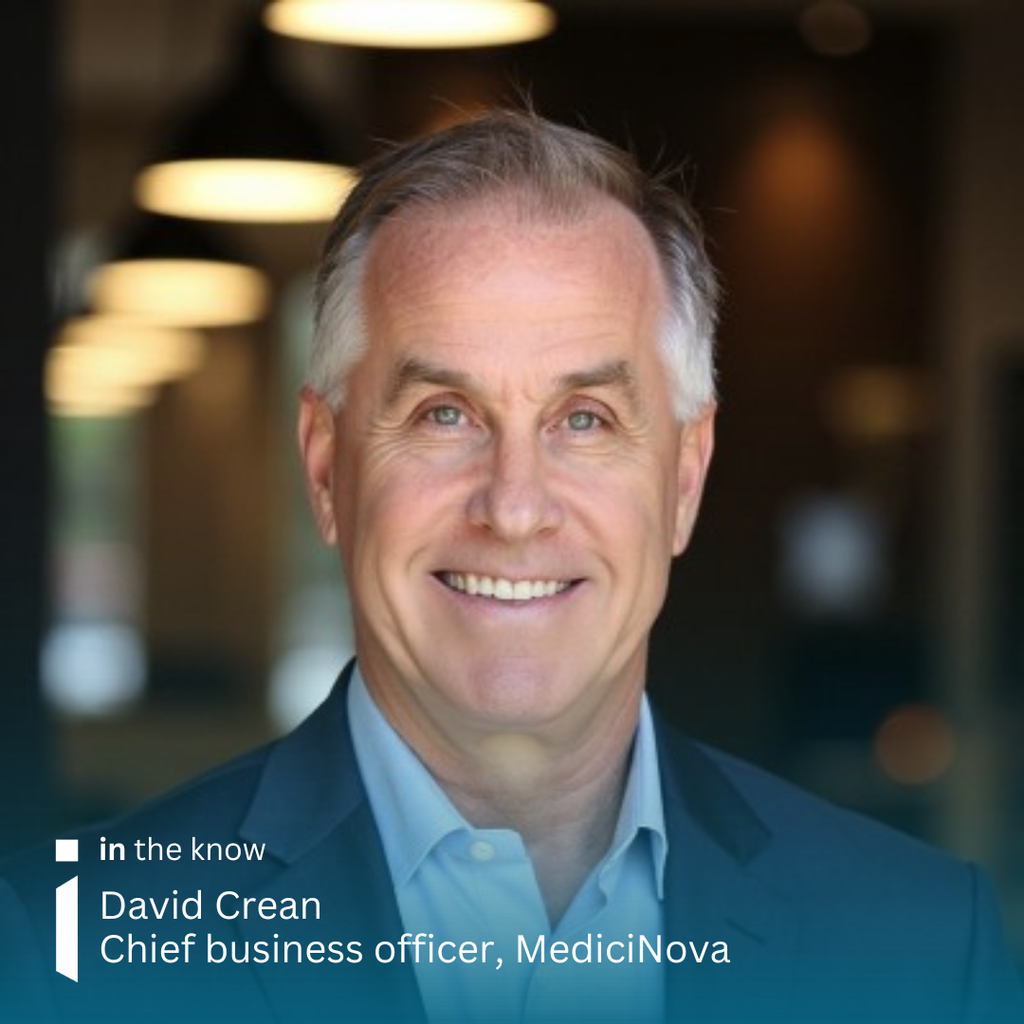

Grants and partnerships are typical ways biopharma companies typically access the capital they need. However, prioritisation and optimising portfolios are also crucial. David Crean, chief business officer of MediciNova, shares his guidance on the issue
Access to capital can be a barrier in the biopharma sector—but in the midst of a volatile market, how can firms scale and manage their pipelines?
David Crean is the chief business officer at MediciNova, a company focused on treating various neurodegenerative conditions as well as fibrotic disorders, with amyotrophic lateral sclerosis (ALS) a core area of interest.
The California-based firm also has offices in Tokyo and is publicly traded on both NASDAQ and the Tokyo Stock Exchange.
There are several pressures facing the market right now. Like many sectors, chief among them is access to capital.
As David says, “Without capital, you can’t grow a company, you can’t scale, you can’t run clinical trials. Clinical trials are very expensive, so that’s the principal issue that biotech and pharma companies are faced with.”
Regulatory uncertainty is another challenge, particularly in the United States, with recent changes within the FDA.
Adapting to funding constraints
Funding constraints have led to changes in the way clinical trials are approached.
David shares: “Those pressures have created opportunities for companies to take a look at how they’re conducting clinical trials or maybe determining which clinical trial to run.”
A large part of running a company, he explains, is being “capital efficient”—using the money you have efficiently.
“Capital efficiency just isn’t about cutting costs or cutting budgets, or reducing headcount, or perhaps delaying programmes. The objective should be: how do you run your least expensive clinical trial while maintaining regulatory rigour?
“The most informative clinical trial you’re going to run is the trial the company can execute responsibly.”
This pressure is also leading to what David describes as “forced prioritisation”, where a firm can’t run a large number of studies but has a broad portfolio of products or product candidates it wants to test.
“I think what you’re seeing in the market is prioritisation. Which clinical trial or which programme do you really need to focus on; and which one is going to drive the biggest value inflexion for the company?”
From this, the question companies might ask is: if they are going to put money into a programme, which one is going to provide the greatest value?
Companies are also looking beyond the US FDA for alternative pathways. David explains: “Whether that’s in Europe, maybe it’s going down to Australia, where you have some tax credits and running clinical trials there. The greater certainty in some of these other markets is providing a safe haven for some companies.”

Exploring non-dilutive funding pathways
Against this backdrop, companies are increasingly turning to non-dilutive funding pathways, such as government grants and collaborations with other pharma companies to navigate a tight financial landscape. These options mean they don’t give up their company equity.
Speaking of non-dilutive options, David notes: “This is an area a number of companies are looking at. Non-dilutive funding can really add and intensify the strategy in and of itself.
“I don’t think non-dilutive funding is the strategy, but it certainly should support the strategy.”
He adds: “It can extend your runway, support important research and reduce the shareholder capital—the equity required to reach evidence milestones or value inflexion milestones.
“It can also provide scientific validation and help attract investigators to what you’re doing.”
Non-dilutive funding is more limited than equity funding, while grants and cooperative arrangements have very defined scopes, reporting obligations, timelines and permitted uses.
Due to this, David says, “companies still need to have flexible capital in terms of equity for work outside of the award.”
In terms of partnerships, for example, if a company was to enter into a deal with a large pharma operation, it would provide upfront cash and further payments dependent on development and regulatory milestones. Equity, however, is generally not tied to this, David explains.
“My guidance to companies and founders, CEOs, boards of directors in this area is non-dilutive funding, and then equity financing should go together, and you should be pursuing both in parallel.”
MediciNova itself has leveraged non-dilutive grant support by way of National Institutes of Health (NIH) and National Institute of Neurological Disorders and Stroke (NINDS) funding, as well as academic research collaborations, to progress its lead neuroinflammation platform, which includes Phase 3 programmes in ALS and degenerative cervical myelopathy.
For a number of years, the company has been pursuing both equity financing and a non-dilutive funding strategy. On the non-dilutive funding side, David says they’ve done a “remarkable job” in terms of acquiring funding from government agencies.
One of the studies the firm conducted through the leadership of a large academic medical centre was supported through a grant, with the company providing a drug for that particular trial centred on ALS.
David shares: “We have a number of academic collaborations and other government agency collaborations where we’ve been able to successfully build our company, build our clinical programme around this idea of non-dilutive funding.”
Outside of this, the company uses money from equity financing—cash raised in the public markets—on the programmes it is principally focused on.
Exploring non-dilutive funding pathways
While different funding models can help companies extend their runway, having access to capital is only part of the challenge. When the market is volatile and capital might be constrained, companies also need to decide which programmes and clinical milestones are worth protecting and which activities can be deferred.
David said a process called portfolio optimisation is one option. This involves looking at the pipeline, programmes or clinical trials a firm has.
“There are a number of decision points you need to walk through in order to make the best decision possible.”
Using a “very disciplined framework”, companies are deciding where they are going to spend their money, he explains.
“You’re going to be looking at biological rationale, for example, what your pipeline is doing and the intended target you’re going after.”
Factors such as prior clinical evidence, unmet need in the indication, regulatory feasibility and the regulatory pathway, as well as challenges with clinical enrolment, are all considered.
Manufacturing, competitive differentiation, potential partnerships in the area, and the time and capital required to reach each stage also need to be looked at.
“Companies need to go through portfolio optimisation and determine where they’re going to spend their next dollar, and how is that going to ultimately drive the company forward. At the end of the day, companies need to make sure every dollar they’re putting in is going to move the company forward and make the next decision point clearer.”
Doing this, he says, allows for “de-risking along the way”, though he adds: “If you’re spending and you’re not de-risking, then I would question that. Why are you putting money into that programme at this point?”

Focusing on high-value platforms
This approach to prioritisation is particularly important as investors become more selective with how they’re investing their money, both on the public and private sides.
They want to see de-risked assets—assets that are in the clinic.
David said it’s harder for firms that are in the preclinical stage to attract capital.
“It’s becoming more difficult if you’re a seed stage or Series A company, and you’re just in the discovery stage or preclinical stage, because then you’re competing against assets which are in the clinic.”
This is where prioritisation and portfolio optimisation come in, David says.
“If you have a platform technology and multiple shots on the go, you really have to focus on just one. Try to advance one to show proof of concept and that the products coming out of that platform are actually working or have some utility.”
For companies with multiple potential programmes, demonstrating proof of concept can therefore be an important step in showing that the underlying platform has value and helping to determine where further capital should be directed.
Multiple avenues for raising capital
David also points to increased mergers and acquisitions activity and reverse mergers, where private companies become public by merging with a public company.
“Investors have been, for a number of years, been patient. They put their money into funds or into the public markets, and they’re expecting a return on their investment. For the last several years, it’s been challenging.”
The sector is now starting to see investors get a return on their money and, when they get their money back, David says they “like to recirculate and put it back into other funds.”
For companies seeking capital, this wider market environment reinforces the need to have more than one route available.
Among the guidance he would give to early-stage companies or companies seeking capital is that they should have multiple pathways for growth. This includes looking at equity markets, non-dilutive funding from various agencies, as well as pursuing partnership strategies.
He adds: “It requires you to be very flexible, yet disciplined, but also looking at multiple avenues for raising capital.”
In an uncertain and challenging market, exploring different avenues for funding and directing capital where it can have the greatest impact is crucial for growth.
Connect with David
in the know lets you stay informed with all the latest issues from the world of RARE. To access more in the know articles click below.