

Be ready: why biotechs’ organisational readiness must come before international patient engagement

Estimated reading time: 7 minutes
Biotechs are uniquely placed to build close, meaningful relationships with patient communities. Their size, focus and ways of working allow them to stay near the patients they serve. Yet not every biotech is ready to engage internationally and even with the best intentions the approach taken can fall short of what lasting partnerships require. The result is a set of predictable engagement gaps that erode trust, strain small patient organisations and weaken the evidence and access strategies companies depend on. Closing those gaps starts inside the company
Biotechs hold a distinctive advantage in patient engagement: proximity. Smaller teams, focused pipelines and flatter structures mean the distance between a patient conversation and a strategic decision is often short. Leaders can meet patient advocates directly, scientists can hear firsthand what living with a condition involves and insights can reach development and access teams without passing through multiple layers. In rare disease, where a single community may represent most of the patients a company will ever serve, that closeness is not only possible but essential.
Patient communities, in turn, hold knowledge that no dataset can fully replicate. They understand the lived experience of a condition, the real patient pathway from first symptoms through diagnosis and care, the unmet needs that matter most day to day and the trade-offs patients are willing to make when weighing treatment options.
This insight can sharpen trial design, inform the choice of endpoints and patient-reported outcomes, strengthen the evidence presented to regulators and payers and help ensure that medicines reach the people who need them.
The relationship between biotech and patient communities has evolved considerably. Patient organisations that were once consulted late, if at all, are increasingly recognised as partners across research, development and access. Many companies now involve patients from the earliest stages of a programme, and patient-experience data is becoming a more established part of regulatory and access discussions. Yet there is still work to do, particularly as companies take their programmes beyond their home market.

The playbook does not travel on its own
Many biotechs, particularly those that grew up in the US, have built strong patient engagement capabilities in their home market. Relationships with advocacy partners are established, internal processes work and teams understand local expectations.
As programmes expand into Europe, Latin America, APAC (Asia-Pacific) and beyond, companies typically carry that playbook with them. The science travels. The protocol travels. With adaptation, the regulatory pathway travels. Trust with patient communities does not travel automatically.
Engagement gaps rarely stem from poor intentions. They stem from a structural mismatch: the commitment to engage arrives before the organisation is ready to support it.
Five common engagement gaps
Across markets, the same patterns tend to appear.
- The input gap. Patient experts contribute time and lived experience to advisory boards or research but there is no defined route for that input to influence decisions, and no follow-up explaining what changed.
- The process gap. Contracting, compliance review and fair-market-value payments were designed for one market. Applied elsewhere, they create delays of weeks or months, signalling to partners that their contribution is a low priority.
- The adaptation gap. Materials are translated rather than adapted, reflecting a health system, care pathway or cultural context that does not match the country in question.
- The coordination gap. Clinical, medical, commercial and advocacy functions approach the same organisation independently, creating duplicated requests and mixed messages.
- The access gap. Companies run trials and build community relationships in countries without a clear or communicated plan for post-trial or commercial access.
Each of these is a symptom. The underlying issue is organisational readiness.
Why the stakes are higher in rare disease
Three characteristics of rare disease communities amplify the impact of these gaps.
- Limited capacity. Patient organisations are often small and run by volunteers, patients, parents or carers. When a company is unprepared, the cost is effectively transferred to the community.
- Cross-border connectivity. Rare disease advocates are closely networked internationally. Experiences with a company, positive or negative, circulate quickly beyond the market where they occurred.
- Asymmetric trust dynamics. Trust is built slowly and lost quickly. Recovering from a poor first engagement typically requires far more effort than getting it right the first time.
For these reasons, readiness is not only an operational matter. It is also an ethical one.
What readiness actually means
Organisational readiness does not mean finalising a global strategy before speaking to anyone. Patient communities should help shape that strategy. Readiness means having the internal foundations in place so that the company can honour what it asks of people.
Five questions provide a practical starting point for leadership teams.
1. Intent and sequencing: why here, and why now?
Clarity of purpose matters. Is the goal to inform development, generate patient-experience evidence, prepare for health technology assessment (HTA) and access, or build a long-term relationship? Each implies different commitments. This question also forces an explicit discussion of market sequencing. Where there is no realistic plan to bring a medicine to a country, that should be stated transparently from the outset.
2. Ecosystem understanding: who are the right partners?
Each country has its own landscape of patient organisations, national alliances, clinical networks and policy stakeholders. In Europe, for example, umbrella organisations and European Reference Networks (ERNs) play roles that may have no direct US equivalent. Engaging without a clear map risks overlooking key voices or creating unintended competition between groups.
3. Operational infrastructure: can the systems support partnership?
Compliance frameworks, contracting templates, fair-market-value approaches and transparency requirements differ by country. These processes may appear administrative internally but externally they are a direct signal of how much the company values its partners.
4. Governance: who owns the relationship?
Without clearly defined roles for leading, coordinating and sharing information, communities receive inconsistent messages. Governance should be agreed before the first external meeting, not after the first misstep.
5. Feedback and measurement: can the loop be closed?
If input is requested, there must be a mechanism for it to inform decisions, and a commitment to report back, including when input could not be acted on. Measurement should focus on influence and outcomes, not just meeting counts. Without this engagement risks becoming extraction.

Principles for building readiness
Organisations that engage well internationally tend to share four practices.
- Listen before asking. Early conversations focus on the community’s existing priorities, needs and past experiences with industry, rather than the company’s programme.
- Invest time upfront. Aligning internal teams, adapting processes and clarifying access plans can feel slow under pressure to show progress. In practice, internal shortcuts tend to resurface as external trust deficits.
- Build with country teams or local experts. Local teams or experts understand cultural and health system nuances that global functions often cannot. Co-designing the approach with them increases credibility and sustainability.
- Treat the home market as a baseline, not a template. Every community has its own history, expectations of transparency and model of partnership. Strategies should adapt accordingly.
Readiness as a strategic and ethical commitment
Readiness is sometimes perceived as a delay between a company and the communities it aims to serve. A more useful framing is that readiness is how an organisation demonstrates that it takes a community’s time, knowledge and trust seriously before asking for any of them.
For biotechs, preparing to expand beyond their home market, the question is not only “Are we ready to launch?” but also “Are we ready to be a good partner?” Addressing that question early and honestly is one of the most effective ways to ensure patient voices are not simply heard but genuinely count.
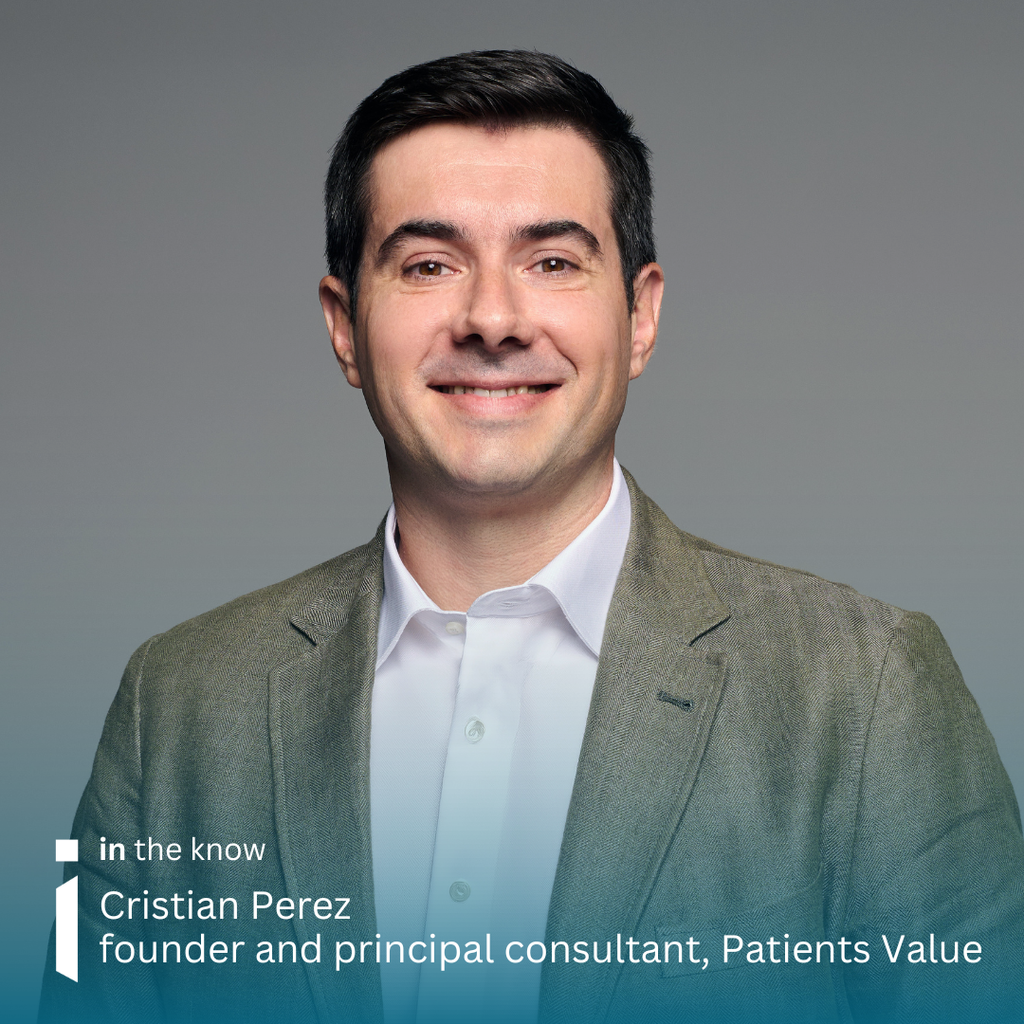
Cristian Perez is the founder and principal consultant of Patients Value, a boutique consultancy enabling US biotech companies to build meaningful, trusted partnerships with patient communities internationally.
Connect with Cristian
in the know brings you the latest conversations from the RARE think tank. To access more in the know articles click below.