
Could disease-anchored doctorates reshape rare research?
Interview with Dr Dennis Lal, of University of Texas at Arlington and Cook Children’s Medical Center
Estimated reading time: 8 minutes
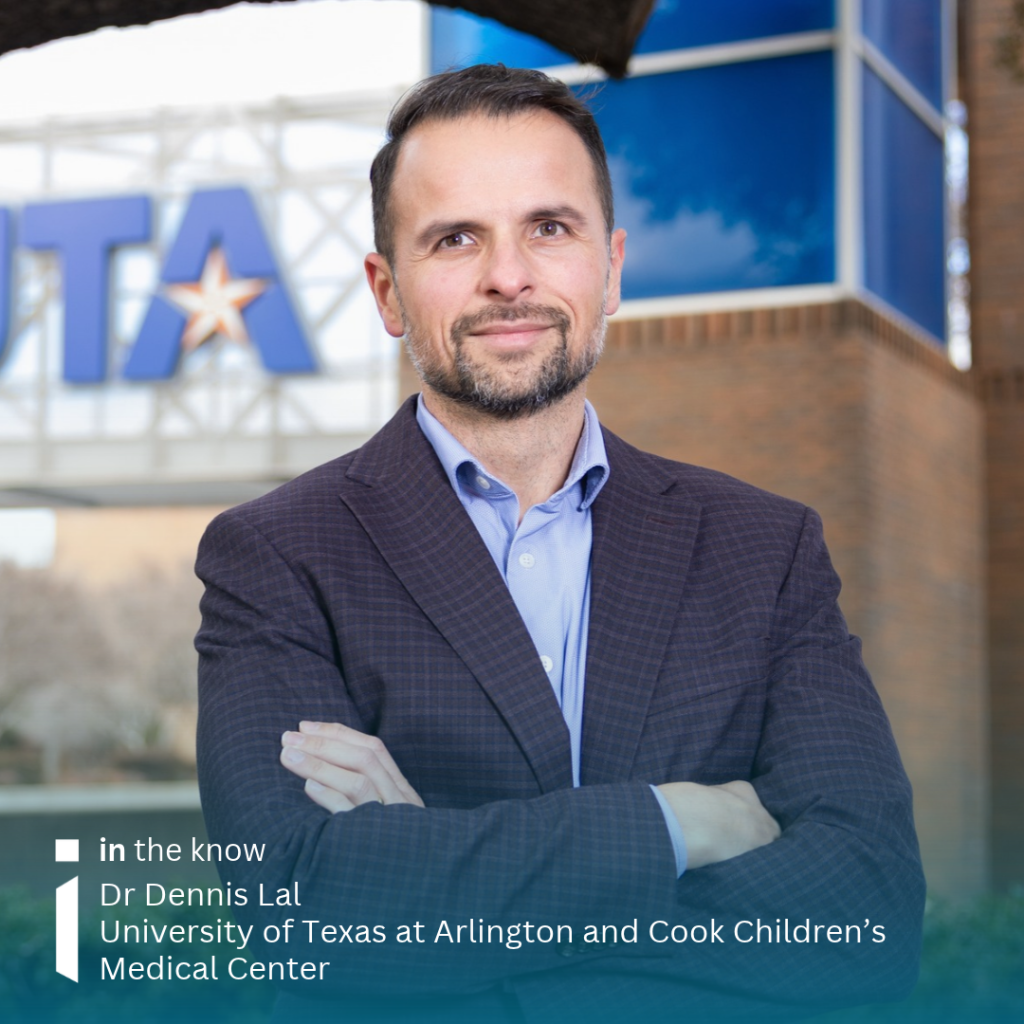
Image courtesy of Herschel Heath/ UT Arlington
Joining up the lived experience of rare disease families with research is part of a new approach at the University of Texas at Arlington (UTA), which will see it collaborating with patient organisations to train the next generation of scientists. Dr Dennis Lal, of the University of Texas at Arlington and Cook Children’s Medical Center shares how this is taking shape
A “unique” disease‑anchored doctorate will see students train to become experts in a single rare disease while working closely with families and patient organisations—reflecting a growing shift in how rare disease research is being approached.
The University of Texas at Arlington (UTA) is embracing this shift through its graduate programme in Quantitative Biology led by Dr Allan Clark, which aims to move research into real‑world contexts, anchoring each student’s training around a single disorder.
The initiative is led by Dr Dennis Lal, executive scientist of the Pediatric Precision Health Program at Cook Children’s Medical Center, Fort Worth, and executive director at UTA’s Center for Innovation in Health Informatics (CIHI). The goal is to train students in the programme not just to study rare diseases, but to become domain experts in one condition while remaining aware of broader priorities in the field, including patient needs, clinical care, diagnostics, data and therapeutic development.
Dennis began his career as a molecular geneticist and has spent 15 years researching epilepsy and neurodevelopmental disorders. He advises several neurodevelopmental disorder organisations and works closely with many patient groups, often attending their family conferences—sometimes with his own family.
“During the last 10 years, although we’re making great progress in the basic science of rare disease research, we are really lacking translation, and this really pains me,” he says. “I have trained many residents, medical students and physicians, but I see that translation is not happening much on a larger scale. At the basic science level, one of the biggest problems I observe is that it takes a long time until the scientist develops a broad disease-relevant knowledge and thinks more holistically.”
Working with patient organisations
Dennis explains that scientists will often focus on the molecular aspects, clinical devices or one field or domain. Then, when it comes to meeting at annual patient conferences, everything is centred on the disease. These contrasts meant there were challenges around communication
“In my discussions with the family organisations I work with, this problem became very clear, and one day I was thinking: why don’t we just develop a programme where we train students across all domains?”
The programme differs from traditional PhD approaches that may treat a disease as a case study. Instead, it is a disease‑anchored doctorate created in collaboration with patient organisations to connect lived experience, specialty care, research and industry.
Coursework, clinical exposure, research rotations and dissertations will all revolve around the single disease each student is studying. Training opportunities will come through patient organisations, Cook Children’s specialty clinics, research laboratories and industry partners.
At the Jane and John Justin Institute for Mind Health, led by Dr M. Scott Perry at Cook Children’s, the students will be able to perform clinical research using novel devices and biomarker research in collaboration with Dr Christos Papadelis, who shares, like Dennis dual appointments across UTA and Cook Children’s. The team has authored a range of publications on rare neurodevelopmental disorders and epilepsy, alongside conducting clinical, physiological and molecular research. This work provides students with valuable opportunities to engage in real-world patient-focused research.
Alongside biology courses, students will take classes relevant to their chosen disease, which may include data science, medical genetics and clinical aspects. They will spend time in hospital settings, meet patients, conduct research and present their findings to patient organisations.
“The unique aspect of this is that half of the programme is sponsored by a patient organisation, with the student focusing on that disease,” Dennis says. The programme will match the sponsor organisation with the right professor and student. “All three need to have a good fit,” he adds. “We are trying to embed it as we go—and have open conversations. Next year, when we have clear policies and everything mapped out, disease organisations can get to know us, and the researchers, and see if there’s alignment and opportunity to collaborate.”
Matching research with real-world needs
So far, eight patient organisations have said they want to sponsor a student. As the programme is still new, they are currently matching principal investigators with research projects and patient organisations. From there, they will identify students who could work on co-developed projects.
“The goal is really to sync the research with the lived experience of the families and the urgent needs, which may change over time,” Dennis explains.
The aim is to “develop a programme which is adapting to the needs—real-world needs of the families.”
He hopes to build a cohort of fellows who are all working on different diseases but can learn from others. “Different organisations have different solutions for similar problems. I hope that if we build the programme, it can really grow, and we can make a real big dent on rare disease as a whole, at least in the US and possibly beyond.”
The initiative builds on a previous collaboration between UTA and Cook Children’s Medical Center at the Rare Disease Family Foundations Symposium, where representatives from family foundations discussed the challenges and barriers patients face.
So far, the patient organisations they are working with are all from the personal connections Dennis has in the neurodevelopmental disorder and epilepsy space, but this could be scalable in the future to other fields.
Currently, UTA is preparing to begin the new approach, and it is the biology students who will initially have the opportunity to take part. However, the hope is to expand in the future. “Next year, we will have a specific track where you can apply for this programme—it’s a unique entry into the PhD. I talk with the patient organisations quite a bit, and I think they want their own community members to apply. It doesn’t have to only focus on existing students. I can imagine that there are many siblings and cousins, and maybe even a parent who wants to focus on working on their own disorder.”
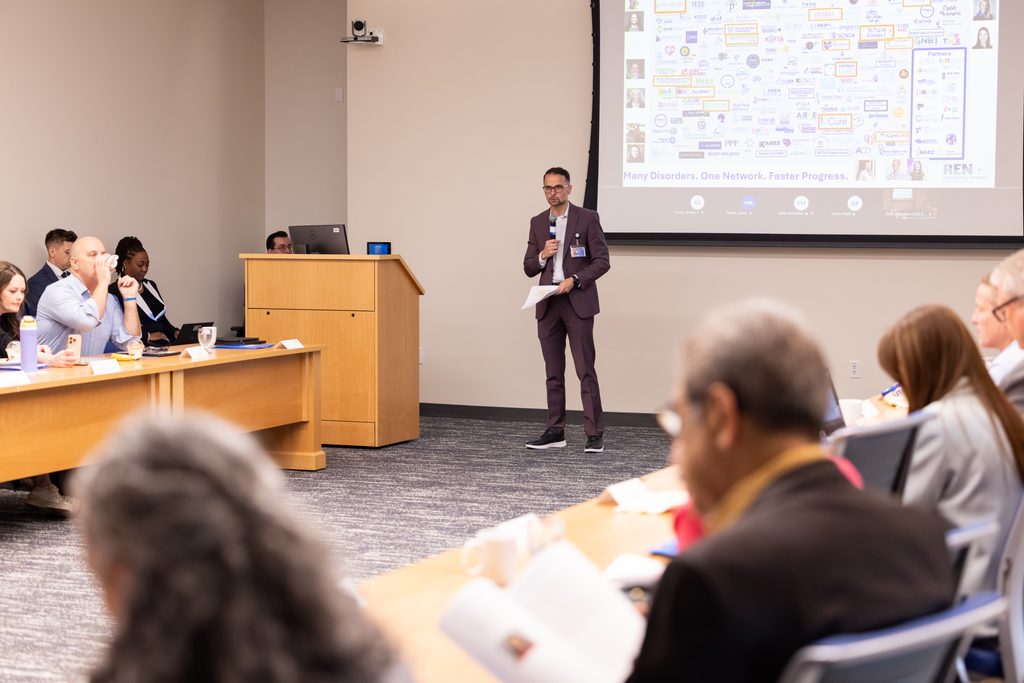
Image courtesy of Herschel Heath/ UT Arlington
A learning process
Navigating fragmentation in both data and healthcare can be a challenge for families. To help students understand this, Cook Children’s has been developing digital care pathways to guide patients with certain genetic diseases or rare conditions through the system to a specialist, avoiding challenges associated with standard referrals. “It’s an interactive programme across Cook Children’s and UTA, so the students observe this,” Dennis says.
Another aspect involves interviewing parents who have signed up for research about their lived experience, giving students direct insight into how the healthcare system treats families.
During the PhD programme, students and principal investigators will be expected to foster relationships with patient organisations through regular communication and check-ins.
“The student should go to the annual family conference and learn about all the needs of the disease, and then they can really focus their research on trying to do something good,” Dennis says.
Dennis also hopes to bring a new approach to learning for nursing, to aid development of nurses trained in genetics and rare disease so “they are confident and know how to use information from the scientific literature to inform their care”.
They have had strong support from Dr James Grover, the dean of the graduate school, the president of the university and “many other people”, Dennis says. New approaches inevitably face challenges, he acknowledges, and it will be a process of seeing what works and learning from mistakes. “At the moment, everything looks pretty promising, but we’re learning as we go.”
In the rare disease space, initiatives that place the patient experience at the core are vital, and perhaps in the not too distant future this disease‑anchored approach will become the gold standard.
Connect with Dennis
in the know brings you the latest conversations from the RARE think tank. To access more in the know articles click below.