
Curative ambitions: Chiesi Group and Arbor Biotechnologies forge a new path in genomic medicine

Interview with Giacomo Chiesi, executive vice president of Global Rare Diseases, Chiesi Group
Estimated reading time: 10 minutes
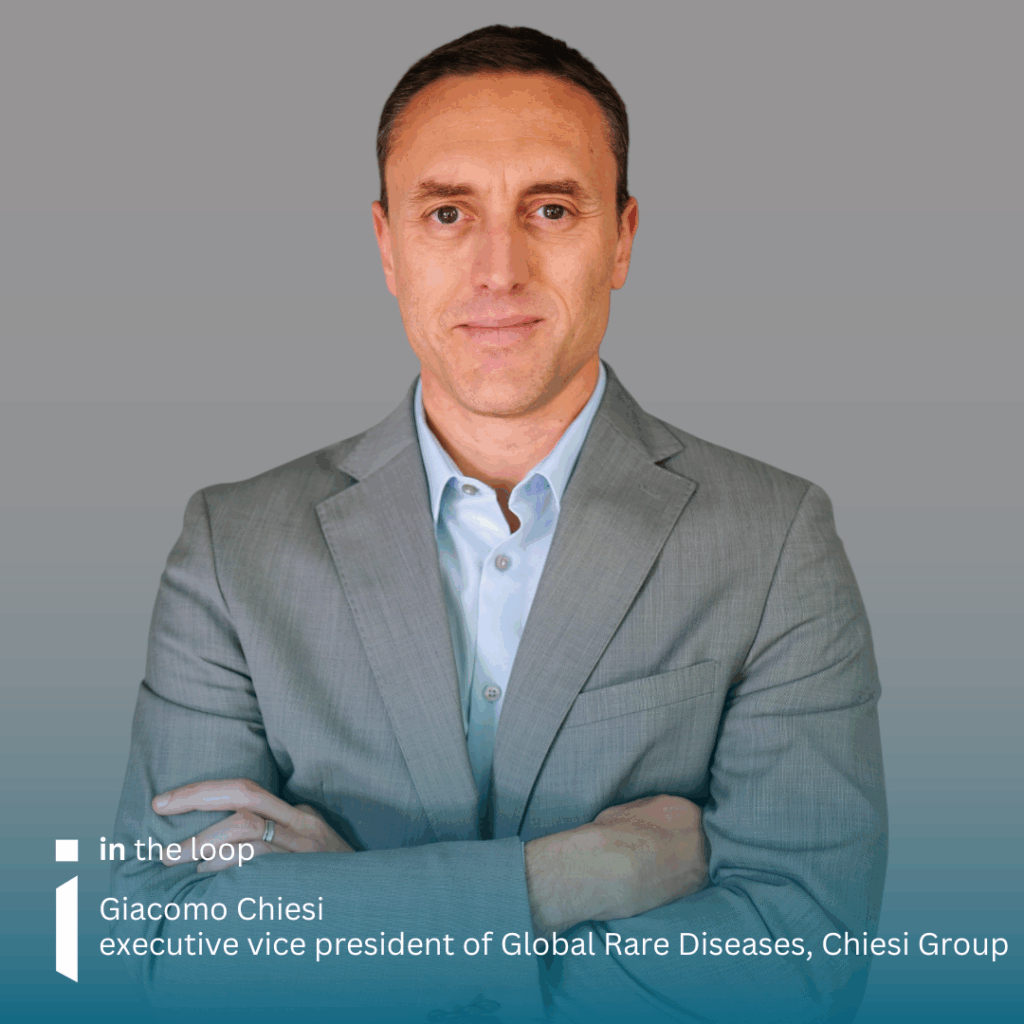
Chiesi’s landmark partnership with Arbor Biotechnologies marks a new era in rare disease therapeutics, blending generational family leadership with state-of-the-art gene-editing technology. As one of the industry’s largest investments in genomic medicine ($2.1 billion), this alliance sets a new standard for collaboration and innovation. For pharma professionals, it signals the scale of commitment, and shared responsibility, required to deliver potentially curative therapies to some of the most underserved health communities. Giacomo Chiesi, a member of the third generation of the Chiesi family, and executive vice president of their Global Rare Disease division shares the backdrop to this important strategic partnership
For nearly a century, Chiesi has stood as a family-driven enterprise in the world of healthcare and pharmaceuticals. Founded in the Provence of Parma, Northern Italy, Chiesi traces its origins back over 90 years, rooted firmly in the principles of sustainable and organic growth championed by its founding family. Now in its third generation of family leadership, Chiesi has steadfastly adhered to a philosophy of taking measured steps—”growing without overextending and always striving to make a positive impact on society”, as Giacomo Chiesi, executive vice president of Global Rare Diseases, Chiesi Group explains. “There is a way of saying things in Italian where we say, never take a step which is longer than your foot or your leg.” This has been reflected in the Chiesi way—incremental, sustainable and organic growth.
From its beginnings as a European company focused primarily on respiratory medicine, Chiesi has evolved into an international organisation, while preserving the values and close-knit approach that family businesses cultivate. This strong legacy of stewardship continues to shape Chiesi’s journey, where deep roots remain the foundation for innovation, progress and compassionate care for today and for generations to come.
Part of that journey has seen the company turn its attention to some of healthcare’s most overlooked areas—rare diseases. Driven by a desire to extend their impact beyond traditional therapeutic boundaries, the Chiesi family recognised rare diseases as both a vital social mission and a strategic opportunity. This ambitious, strategic expansion had a clear vision: to reach patients and families for whom existing therapeutic options were non-existent, and to forge a legacy of innovation in fields where unmet needs are greatest. This move not only diversified Chiesi’s portfolio but also positioned the company at the forefront of developing and commercialising life-changing therapies worldwide.
Investing heavily in research and development (R&D), Chiesi has rapidly advanced a pipeline that now includes ten approved treatments for rare conditions, touching the lives of thousands of patients across continents with over 13,000 rare disease patients treated to date. In 2025 rare disease activity represented between a quarter and a third of Chiesi’s overall revenue and annually the group invests 20-25% of its entire revenue (around 150 million euros) into research and development (including discovery, pre-clinical and clinical). Giacomo advises that in 2026 they expect 20% of that R&D investment to be for rare diseases.
Giacomo expands, “There are three main businesses that we currently want to continue to develop—respiratory, neonatal care and rare disease. Additionally, he says: “As a family business, we typically say that we don’t look at the next quarter report. We look at the next generation of people. So that’s the long-term orientation we are looking toward.” As part of this long-term commitment to rare disease, Giacomo knew that strong allies and partnerships would be key, allowing them to leverage the latest technologies in advanced therapy development.
Forging a new alliance
While the group’s existing pipeline includes a host of chronic and enzyme replacement therapies for rare diseases they recognised the need for transformative approaches. Chiesi’s strategic leap into gene-editing marks a new era in their innovation journey.
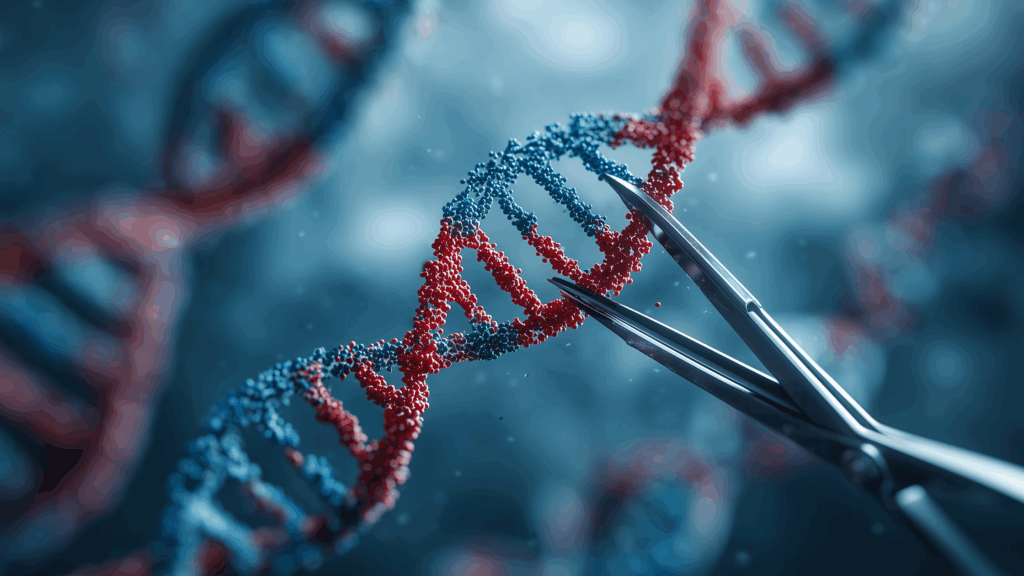
In 2023 Chiesi began actively searching for a technology partner who could support them in this mission. This search led to Arbor Biotechnologies. Arbor Biotechnologies brings several important strengths to their partnership with Chiesi: 1) a versatile, proprietary gene-editing platform capable of a wide array of genetic modifications—including editing, knockdown and insertion—which gives Chiesi the flexibility to pursue a variety of curative therapies. 2) technology that is already validated in the clinic (with ABO-101 for Primary Hyperoxaluria Type 1-PH1), and additional options for expanding into other rare diseases in the future, and 3) deep scientific expertise and a commitment to collaborative development.
Choosing the right partner was crucial as Giacomo notes, “Throughout the course of 2023 to 2025 we engaged in robust due diligence and vision alignment with Arbor”. He expands on what stood Arbor apart in a globally competitive field, which came down to patient-centred alignment and technological versatility.
“The most important thing, for us, is orientation to patients and the willingness to make decisions which ultimately benefit patients, even if sometimes they’ll come at a short-term sacrifice and cost for the company. And that’s something that we absolutely have in common and share with the Arbor team.”
Giacomo adds, “They have a very versatile platform, which allows you to essentially do almost whatever you want from a gene modification standpoint.” He also highlights Arbor’s unique collaborative culture: “The last thing and very interesting component that they bring to the table is the fact that they’re very collaborative. That level of collaboration we think is exquisitely needed for complex constructs like this, to be able to make it to the market.”
Chiesi’s strategy for deploying Arbor’s gene-editing technology begins with PH1, but their vision extends much further. The alliance grants Chiesi multiple options to use Arbor’s proprietary platform across additional rare disease indications. While some next targets remain confidential, their long-term approach is to expand into other rare liver and kidney diseases and ultimately tackle complex conditions such as neurological/lysosomal disorders—areas where crossing biological barriers like the blood-brain barrier is a major challenge. Giacomo adds, “We have multiple options to their technology, and if we trigger those options, we can use their technology in a number of new diseases.” The partnership is seen as a scalable foundation for both short- and long-term breakthroughs as clinical proof builds and technology matures.
Wider impact for the rare disease community
With their landmark alliance, Chiesi and Arbor Biotechnologies are not only advancing therapeutic innovation—they are raising new hopes and standards for the entire rare disease landscape.
Devyn Smith, PhD, CEO of Arbor Biotechnologies shares his hopes, “We’re proud to join forces with Chiesi, a company that shares a deep commitment to improving outcomes for patients with rare and life-threatening disease. Chiesi brings a strong track record in rare disease innovation, combined with our platform of advanced gene editors, we aim to deliver significant solutions that can redefine care for patients living with PH1 and other rare genetic diseases”.

For families facing ultra-rare and progressive conditions, the prospect of a one-time, potentially curative gene therapy is transformative. Giacomo underscores the company’s commitment to ensuring that the patient voice remains central: “There’s a lot of different ways that we maintain that deep commitment to the patients. The more obvious one is patient ad boards, an active listening tool for us. Patients are fundamental, and it is absolutely critical for us to continue to adjust our organisation and our values to continue to meet their needs.”
This partnership, valued at over $2.1 billion, stands as one of the largest commitments in rare disease history. For Giacomo and Chiesi, it is both a reflection of the scale required to change the rare disease treatment paradigm and a call-to-action for the industry: “We want to be around for the next 100, then the next 200 years to build something significant for patients both now and for the future.” He continues, “As a private company, we’re relatively immune to the macro cycle of funding, as well as what the central banks decide to do. We certainly hope that companies like us will continue to operate, and new companies will be formed to continue to bring new rare disease therapies to market. But from our standpoint, our commitment is steadfast.”
Acknowledging the profound questions posed by permanent genomic interventions, Giacomo explains Chiesi’s proactive, collaborative stance: “We start from the standpoint that a therapy, especially if it’s a genetic therapy, is a very personal choice and there are a number of aspects that we’re going to have to work on from an ethics standpoint and on education. The first one is working with regulatory authorities as well as frankly, governments around the world to understand what gene editing is and what it isn’t.” He adds, “As much as there’s a lot of work to be done by governments to identify the most proper regulatory framework for the adoption of artificial intelligence, there is a similar work to be done over time for the proper adoption of genetic therapies. From our standpoint as a company, we just want to make sure that we support society making those choices in parallel with the technological and therapeutic advances being made.”
For pharmaceutical industry professionals, Chiesi’s alliance with Arbor Biotechnologies offers a compelling blueprint for the future of rare disease therapeutics. It is setting a new benchmark for strategic investment, cross-sector collaboration, and patient-centred development. As the sector confronts complex scientific, ethical and commercial terrain, Chiesi’s example signals that meaningful, long-term impact demands not only capital and expertise, but also empathy, transparency, and industry-wide resolve. This partnership is both a challenge and an invitation: to join in elevating standards, championing transformative cures and ensuring the promise of genomic medicine is realised for all rare disease communities.
Giacomo also acknowledges that industry commitment alone is not enough—sustained change for rare disease progress lies not just in technological solutions and partnerships. It requires broader societal investment and philanthropic action. As he shares: “The importance of philanthropy in rare diseases cannot be overstated. Given the large number of rare diseases identified there’s vast opportunity there for philanthropy. In my opinion, there is need for an organised, larger philanthropic effort. It’s not here yet, but I think there’s a lot of undercurrents that are preparing the formation of new movements, which, in my opinion, over time (it’s not going to be immediate or overnight, but over time), will bring to the formation of something more systemic and structural in terms of worldwide philanthropic efforts in rare diseases.”
Perhaps this too could be an arena where Chiesi can forge a new path for the benefit of all.
Connect with Giacomo
in the loop lets you stay informed with all the latest issues from the world of RARE. To access more in the loop articles click below.