
How one founder is using machine learning to change the rare disease diagnostic journey
Interview with Sara Elgott, founder and CEO, OpalMedica
Estimated reading time: 9 minutes
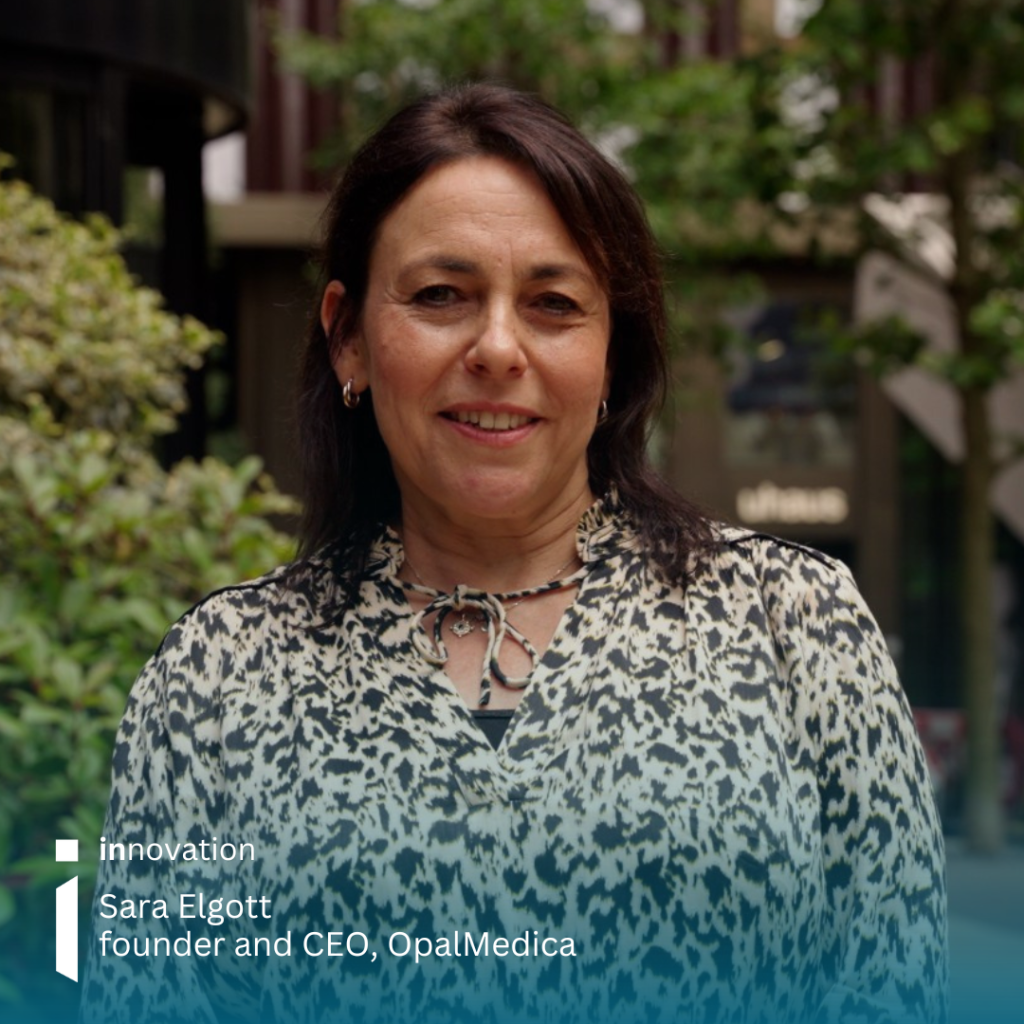
After losing her mother to a rare condition, Sara Elgott founded OpalMedica. The new platform she is developing aims to help healthcare systems recognise rare diseases earlier
A new clinical decision support platform in development by a medical technology firm could help with earlier identification of rare disease in primary care. GP Clinical Flags is being advanced by OpalMedica with the intention that it would be used as a medical device during routine GP consultations to support clinical decision making.
The firm’s founder Sara Elgott presented research and the initial findings of the GP Clinical Flags validation study at the European Conference on Rare Diseases (ECRD) 2026. The research was conducted in collaboration with Dr David McMinn, Dr Kate Scoffings, Dr Youssef Hassan and Dr Safwaan Adam. At the conference Sara presented a poster called ‘Assessing the accuracy of an automated machine learning approach for the detection of rare and underdiagnosed diseases in primary care’.
Sara’s career spans 30 years in the pharma industry, much of it in rare diseases and areas of unmet medical need. Last May she left her role as country manager for a rare disease company and set up OpalMedica, with the aim of helping healthcare systems recognise rare diseases earlier.
Sara’s area of work was around Cushing’s syndrome and adrenal cancer where diagnosis times can be lengthy, and she was inspired to start her own enterprise on both a professional and personal level. She says: “Both conditions have really long roads to diagnosis, even longer than the average five years seen in other rare diseases. Unfortunately, by the time people have been diagnosed, it is often too late for them.”
Research inspired by personal experience
The loss of her mum from Cushing’s syndrome—a hormonal disorder caused by having too much cortisol in the body over a long period of time—also plays a role in her ambition for earlier diagnosis. Her mum had been diagnosed the day before she passed away. Sara explains, “Unfortunately, many of the symptoms are really non-specific, so they are there, but there’s no real patterns that a primary care doctor would recognise.
“The disease that my mum passed away from has an incidence of around two in a million1; her doctor had never seen a case of Cushing’s syndrome, so it wasn’t surprising he didn’t spot it, by the time somebody considered it—it was too late.”
Sara and her team developed two algorithms: one for Cushing’s syndrome and one for Conn’s syndrome (primary hyperaldosteronism)—which Sara says isn’t rare but is “really under-recognised.”
High blood pressure can be a feature of both conditions. While in Cushing’s skin changes, weight gain as well as muscle and bone weakness are signs of the disease.2
A survey of people who already had a diagnosis of Cushing’s and Conn’s was carried out. In some cases, people were tested for both. The team built bespoke machine learning models to identify symptoms patients were reporting and then tested it among real patient diagnostic journeys and against GPs’ consultation notes. They tested the models in around 70 people with Cushing’s and Conn’s syndrome to assess the accuracy of the models for diagnosing these diseases, and also among 100 people who did not have these diseases, to ensure that the models did not flag people as having the diseases when they did not.
Sara says: “We did some simulations with doctors with real patient notes and what we saw was that these individual symptoms were really common, but together there was a pattern, a cluster of symptoms in patients that have already had that diagnosis.”
A platform to guide not replace
The findings demonstrated high levels of accuracy—86% symptom recognition of Cushing’s syndrome and 90% for Conn’s. Disease determination achieved rates of 89% and 100% respectively, while maintaining low false positive rates of 6% and 0%.
Sara adds that although there is some refinement to be done, the results from the work are “very promising”.
The next stage is to do a robust study using anonymised datasets in the NHS; further studies are planned with NHS partners in Greater Manchester. However, before any pilot can take place, there’s a regulatory pathway to embark upon.
While the tool is there to give doctors extra information, it’s not there to replace their clinical judgment, Sara says, “It’s there really to guide them”.
It works by analysing coded and free-text patient records during routine consultations and alerts clinicians when symptom patterns may suggest an underlying rare condition.
Elaborating on this, Sara says, “It’s been hailed as a game changer because it will work seamlessly in the background of the consultation. It goes back into the medical history. It analyses coded information and relevant free-text within the patient record in real time to identify patterns and raises the flag to say this patient needs to be investigated.”
Feedback from patient organisations, patients, GPs, specialists, industry partners, and electronic health record providers has been very positive.
One recent tester said, “Exactly what we need as GPs. We are human and think of the common things.”
While another said: “The platform helps provide useful diagnoses considerations based on the history and symptoms you’ve elicited. In the context of a busy pressured working environment, it can help you make sense of a large amount of information in a short period of time.”
Avoiding alert fatigue was part of the development process, with the tool sensitive only to flagging when someone potentially has a rare disease based on their symptoms. Sara says, “I understand from GPs, they really do appreciate that it’s not going to pop up all the time. It might be every 100 consultations, so it won’t come up very often.”
She adds: “It’s making it sensitive enough and specific enough to raise that flag. And we’re making sure the next diseases we choose to be implemented are ones where there’s currently a very long road to diagnosis.”
Plans to increase the number of models
Under the funding model for the device, it would be free to the NHS with funding coming from pharmaceutical companies as a service to medicine. Regarding data privacy Sara says the data is secure and safeguarded, and industry partners don’t see any of it. She says: “It’s extremely important that not only do we not see the data, and that the pharma companies with treatment for those diseases don’t see any data either. This is completely within the NHS system.”
Sara describes how they have their own “bespoke data processing pipeline” with expertise built in and added that they don’t use any large language models. Going forward she says development of GP Clinical Flags is continuing and soon they plan to go from the two models they currently have to eight.
“The next six models are in diseases where there’s a really long road to diagnosis, where there’s an established NHS care pathway, and where we have incredible expertise in house at OpalMedica with our chief medical scientific officer, who’s a consultant doctor at the Christie Hospital in Manchester.”
The aim is to keep expanding the number of disease detection models, and the hope is in three years they could reach 100. If the necessary validation, regulatory approval and implementation for the device is achieved then a pilot programme will take place in Greater Manchester. And Sara hopes that one day GP Clinical Flags will be in all GP surgeries but says there’s a “long way to go” before then.
Looking beyond the UK, OpalMedica would like to also take the tool to Europe and the US.

Work starts with a patient’s journey
Experience of patient journeys, as well as OpalMedica’s My Rare Journey platform, has helped inform the development of the machine learning models for the GP Clinical Flags tool.
Sara gives an example of the first survey they conducted around Cushing’s where they received 250 responses. Within those answers there were a few patients who reported symptoms that have not previously been reported in the published literature.
They went on to ask people what the first things they noticed were, and what they told their GP. Sara underlines that building a model for the disease where that previously unreported symptom was included would raise a flag, not just with that one symptom but with others too.
Sara says: “Every part of our work starts with that diagnosed patient’s journey because the learnings from that are what makes this so special and so unique. I’m really proud of My Rare Journey. We already have hundreds of stories told, and we’re building communities of people with rare diseases.”
Having insights to share back with patient groups is crucial, as it not only keeps them informed but they are also telling their story in the hope it helps progress.
“If you’ve waited seven years for your diagnosis, you want to share your story not just to give your insights, but also because there are people developing tools to help others in the future not have to wait as long as you have.”
Sara’s own experience has inspired her and drives the mission to help clinicians and patients by combining patient insight, clinical expertise and innovative technology to achieve faster diagnosis. She says: “I wish there was something like this available 28 years ago because my mum would probably still be here. I think that every day, everything I’m doing is for that reason—just to help people like my mum and families like ours that are missing an important person.”
To view the poster, ‘Assessing the accuracy of an automated machine learning approach for the detection of rare and underdiagnosed diseases in primary care’, pleaseclick here
Connect with Sara
References
[1] https://academic.oup.com/jes/article/8/Supplement_1/bvae163.1181/7813607
[2] https://www.nhs.uk/conditions/cushings-syndrome/
innovation spotlights the future of RARE through a technological lens. To access more innovation articles click below.