


MND: research discovers signs of disease up to 20 years before onset

Estimated reading time: 7 minutes
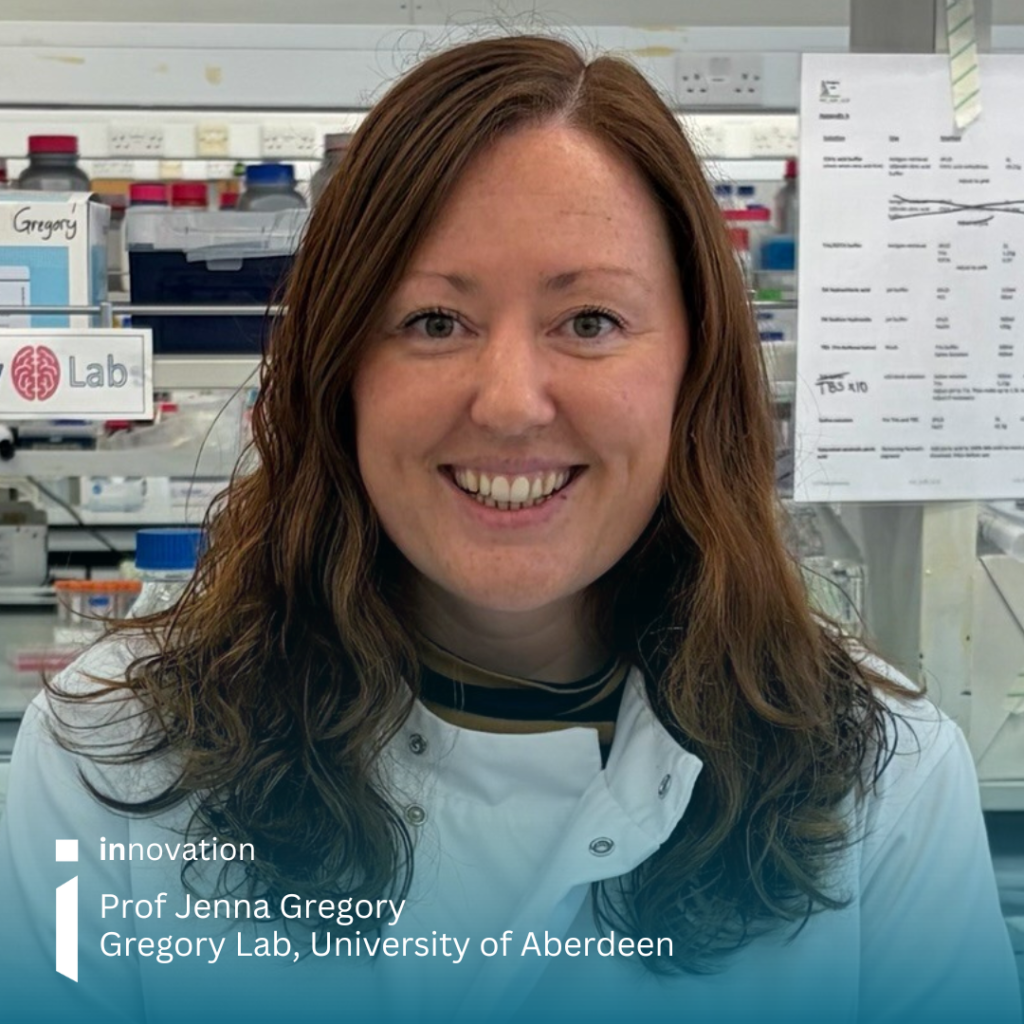
Motor neurone disease (MND) remains incurable, but one research team believes the key to tackling it may lie years before the first symptoms appear—by identifying those at risk and exploring ways to reduce it
New research from the University of Aberdeen has identified signs of Motor neurone disease (MND) in skin and gut tissue years before symptoms develop. And the team carrying out the groundbreaking research at the university’s Gregory Lab is aiming to develop a lateral flow diagnostic test to be brought to market.
The Gregory Lab is led by Professor Jenna Gregory and is based at the university’s Institute of Medical Sciences. Its team of 10 researchers investigates the biological mechanisms that drive neurodegenerative diseases, with a particular focus on MND. They aim to identify who is at risk, when intervention may be timely and how precision-prevention approaches could be used to reduce disease risk before symptoms develop.
A goal of the research is to shift the focus from treating disease after symptoms appear to identifying risk factors much earlier, when preventative strategies may be most effective.
Amyotrophic lateral sclerosis (ALS) is the most common form of MND, and around 5,000 adults in the UK are living with MND at any one time, and a person’s risk of developing it is around 1 in 300. It is more common in those over the age of 50, though adults of any background can develop MND. 1
Jenna is a professor of pathology at the university and a clinician scientist. She studied preclinical medicine at St Andrews University and went on to complete a PhD and complete her clinical training at Cambridge University. Following this she moved to the University of Edinburgh to train as a pathologist before moving to Aberdeen.
What is happening 10 years before people develop disease?
In 2006 a significant discovery was made in the MND research field when it was identified that a protein called TDP-43 becomes faulty and toxic in MND.2 It is found to be faulty in around 97% of people with MND.3
At the time, Jenna’s research was already focused on these faulty proteins. The TDP-43 discovery prompted a major shift in MND research towards developing disease models, and during her PhD at Cambridge she worked on one such model. Over the past 20 years her research has continued to be focused on MND.
Jenna shares, “My clinical training is in pathology, so I am very interested in what’s really happening in the disease process in tissue, in the brain and in other organs in the body. Historically that’s always been focused on the brain, but recently we are realising we’re not doing a great job of curing neurodegenerative diseases when we wait for people to get symptoms.”
The research focuses on pathomechanisms—the pathology of the disease and the process that leads to it. They then explore it from two angles: precision medicine, which involves thinking about how to target therapies to particular types of disease; and precision prevention, which is looking at any drivers happening in people 10 years prior that they could be targeting.
Jenna explains: “What we’re particularly focused on is what do people look like 10 or 20 years before the disease starts, so we can think about how to intervene and prevent the disease. That’s really led us to understanding that the gut and the skin can be really good sites to find signs of the disease.”
Detailing how precision medicine works Jenna described how there might be two types of patients; ones that have a very inflammatory reaction in the brain, and those that don’t. This, she said, is an example of a good target for precision medicine.
She adds, “Half the patients would maybe respond to an anti-inflammatory, but half wouldn’t. If you put everyone into one trial with that drug, you’re not going to see a difference, and perhaps that’s why we’re not doing so well with clinical trials. We can also extend that principle to precision prevention, it might be that everyone’s got a slightly different risk factor that converges on the same disease, so it could be that you have a genetic risk, in which case we might need to treat your prevention in a slightly different way than if you’ve got a gut disorder.”
Access to archived samples from across Scotland means researchers have a window into what was happening with a patient years prior. Jenna says, “If you have your appendix taken out when you’re 12, or you have your tonsils taken out when you’re 20, or if you have a gut biopsy in your 60s, we have all of that tissue, so it’s like a “research time machine” – we can then look for signs of the disease years before people went on to develop the disease.”
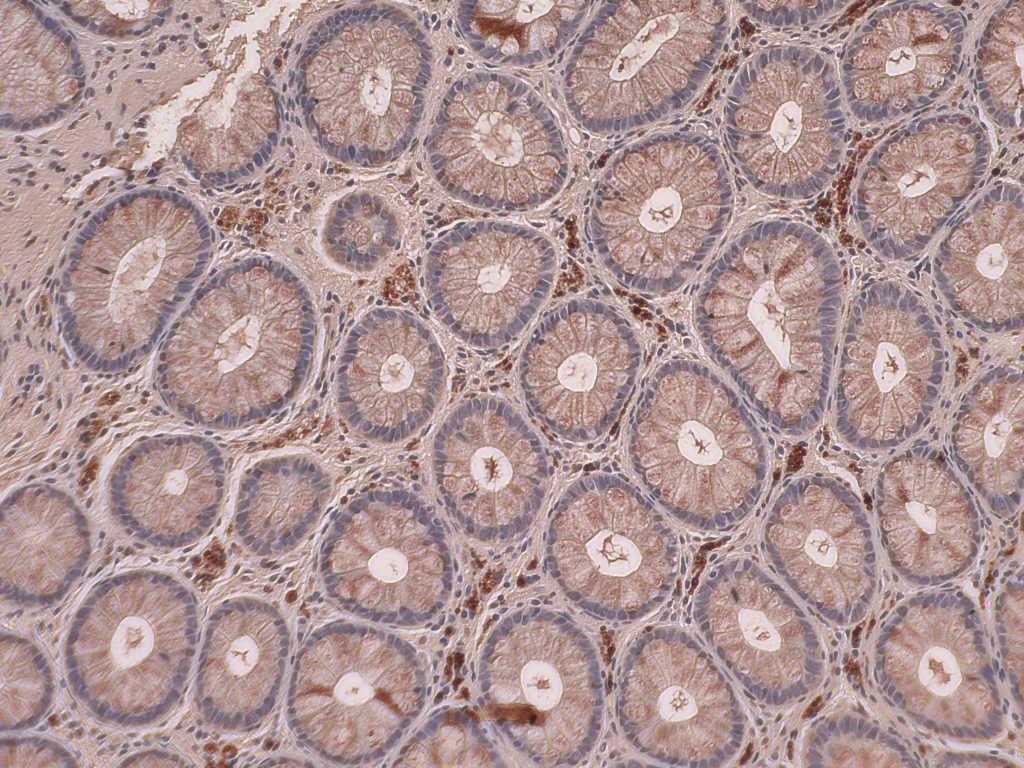
Spotting signs of MND up to 20 years before onset
The lab has received funding and grants from different charities and organisations for its work. It has various projects ongoing, and each of the research team works on slightly different angles looking at biopsies from areas such as the gut, colon, stomach and skin, in pursuit of the ultimate vision of precision medicine and precision prevention.
This helps, Jenna says, with “thinking about how different bacterial environments or different metal exposures and pollution could drive different aspects of the disease.” She adds: “Everyone’s working on a slightly different project, but all towards the same goal.”
Speaking of some of the early findings from the research, Jenna shares, “We can see signs of the disease in skin, for example, up to 20 years before symptom onset, which is really interesting for MND, because we currently don’t have a diagnostic test. The fact that you can predict that so early within the decades before symptom onset, we have potential high accuracy in predicting whether someone will get the disease or not from that test. Similarly, from the gut, seven years before symptom onset we can see signs of the disease.”
The disease is often thought to be driven by proteins that clump together in the brain, and the research has identified those protein clumps in the gut. Jenna says, “That could be driven by lots of different factors, so perhaps microbiome changes, pollution, different comorbidities or different health problems in the population.”
In terms of prevention, this focuses on finding out what it is that someone is accumulating that causing them damage for a prolonged period of time and then stopping it from happening.
And prevention strategies could take in policy and lifestyle advice as well as therapies; an example Jenna gives is, “In the gut findings, we’re seeing pollution as a driver. So, what about if it’s not even a medication? What if it’s advising people about green corridors to walk the kids to school or advising local council policy? And for example, diet, we know that a high-fibre diet can prevent some of those gut features, though not everybody can adhere to one.”
As well as continuing to push forward with their research, work around a diagnostic test is a focus for the next few years.
The team is working towards developing a lateral flow test that could provide an accurate, prevention-orientated diagnosis, particularly using blood and stool samples. Speaking about that, Jenna says: “I’m hoping we can get that to market within five years, so we can start thinking about prevention trials as we’d have an actual measure of how that changes.”

Hopes work can make real difference for patients
Speaking with and liaising with the patient community is important to help inform the research. The team takes part in outreach events such as ones organised by MND Scotland, and Jenna also does global outreach, including question and answer sessions and presentations with patient advocacy groups.
She says, “There’s a lot of really good will in our patient population—they want to be involved with research, and we have to give back as well. She adds: “Patients are the best people to tell us what should and shouldn’t be done.”
Jenna has also been appointed centre director of the Smith Centre for Neurology and Neuroscience. It was established at the university through a philanthropic donation and brings together different specialities to solve brain health problems and think about the prevention of diseases.
And she also has high hopes for the Smith Centre, where different research groups across the university are working to tackle neurological diseases.
She shares, “In five years’ time, I want Aberdeen to be on the map for prevention-generation research through the Smith Centre. I want something that can directly benefit society, particularly a lateral flow test to aid diagnosis and a clinical trial.”
To learn more, please visit: gregorylaboratory.com
Connect with Jenna
References
[1] https://www.mndassociation.org/about-mnd/mnd-explained/what-is-mnd
[2] https://pennmemorycenter.org/penn-led-discovery-tdp-43/
[3] https://www.myname5doddie.co.uk/for-researchers/research-projects/improving-mnd-gene-therapy/
innovation spotlights the future of RARE through a technological lens. To access more innovation articles click below.