
Next steps for rare diseases in England: progress of the Rare Therapies Launch Pad

Estimated reading time: 7 minutes
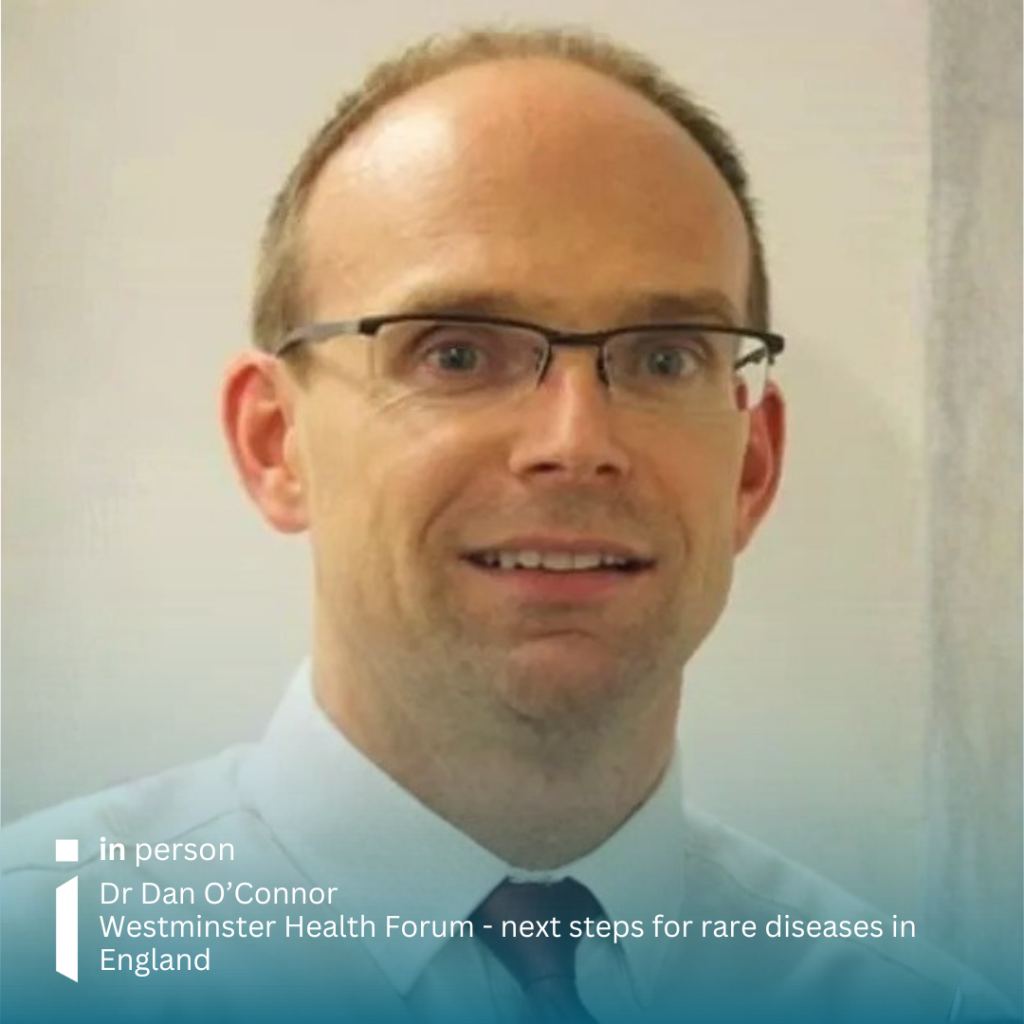
Launched in 2023, the Rare Therapies Launch Pad (RTLP) was created to help children with rare conditions access individualised therapies. Dr Dan O’Connor from the Association of the British Pharmaceutical Agency (ABPI) discussed the pilot’s progress at the Westminster Health Policy Conference
TheRare Therapies Launch Padis a pilot programme for individualised therapies in the UK and has been co-developed by a number of stakeholders. These include Genomics England, the Medicines and Healthcare Products Regulatory Agency (MHRA), Genetics England, Genetic Alliance UK, Great Ormond Street Hospital Charity, Mila’s Miracle Foundation and the Association of the British Pharmaceutical Agency (ABPI).
As part of the Westminster Health Policy Conference on next steps for rare diseases in England, the conference heard from Dr Dan O’Connor, the ABPI’s director for regulatory and early access policy.
“We started really as a coalition of the willing a couple of years ago,” he explained, “recognising that for individualised medicines, it was a particularly difficult development and access pathway. Creating the Rare Therapies Launch Pad (RTLP) has brought together experts from a number of different organisations, and Julia Vitarello, founder ofMila’s Miracle Foundationhas been instrumental in helping us get off the ground.”
Bridging the gap between science and the patient
Creating a sustainable and equitable pathway is the main aim of the RTLP pilot programme. As part of this, the team is working to understand what infrastructure is needed to be put in place to enable patients to have rapid access to cutting-edge science.
The RTLP has five working groups: patient and variant identification, regulatory aspects, reimbursement, innovation and development (a newer working group), and accredited centres. One of the main pillars they are working on is how to improve the patient journey.
“This includes finding the patient with an actionable mutation, linking that patient to potential therapeutic modality, ensuring compliance with the regulatory system and working towards reimbursement and data collection,” Dan told the conference. “This will ensure we learn from each of the patients that are treated.”
Multistakeholder engagement is crucial to this, he added, as is clarifying what everyone’s role is across the health ecosystem. The pilot is also focused on identifying gaps in policy, regulatory and reimbursement to ascertain where work is needed.
“Ultimately, what we hope is to put the UK on the map as a global leader in terms of this space, and in terms of the development and access to these individualised medicines,” he explained. “It’s increasingly recognised across the globe that this is a really important area.”
With the pilot programme, the RTLP coalition wants to achieve the creation of a new end-to-end pathway. “This would build out that infrastructure to enable us to facilitate the switch from really exciting 21st century science to treatment with iterative learning,” Dan explained. “This would help to bridge what is currently a large gap between scientific opportunities and the patient.”

Developments in the regulatory system
Dan spoke about what he deemed as “exciting” developments that are happening in the regulatory system. In drug development, there is a big shift in terms of personalised medicines. This has included moving from population-based therapeutics to stratified and even individualised treatment regimes, he told the conference.
“But, when we think about the current paradigm, many of the tools that we have really need to be repurposed or repositioned,” he explained. “Clinical trials tend to be for larger sample sizes and marketing authorisation and drug licenses rely heavily on substantive data for formal benefits or health-related quality of life issues. It’s important that we move that forward.”
Although there may be opportunities to treat in terms of compassionate use, they are important tools that do not allow sharing of data, and are not scalable or sustainable, he added. But the NHS does have other tools it could build on.
“For example, in the NHS system, we have precedence in terms of the stem cell transplantation setting where individualised risk tolerance can be taken into better consideration when we think about treatments,” he said.
More accredited centres needed
The RTLP would like to see the creation of more accredited centres or centres of excellence, where care can be informed by previous experience, as this could enable opportunities to extrapolate data, particularly across platforms and technologies. It would also allow the right guardrails and proportionate parameters for regulation, access and flexibility, he said. Part of the RTLP’s pilot programme will include testing the accredited scheme that has been collectively agreed by the health system.
“Within the pilot programme, the five working groups are the engine to develop those alongside the clinical application of individualised therapies,” he added. “The pilot structure includes inputs such as patient pathway mapping, multidisciplinary clinical delivery, data and evidence collection, iterative learning and cross stakeholder insight. Our work will also include ensuring good alignment with the regulatory pathway, including working through the reimbursement model and accredited framework, governance roles and investment readiness. This is all really in the hope that what we can do as part of a wider ecosystem is to transform early research and clinical experience into this new end-to-end pathway for individualised patients.”

Exploring economic funding models
A member of the audience asked for Dan’s views on what a sustainable model for early access schemes in a rare disease context could look like.
“One of the issues that has come up time and time again is that alignment between the regulator and the payer aspect,” Dan responded. “This is some of the work that the RTLP is currently doing in terms of assessing the different economic funding models that could be required.
Medicines that are provided at cost have previously been suggested as one type of model, and that may be sustainable for some types of development programmes, he said.
“But in the RTLP, we believe that actually there is an element of need for commercial companies to be involved in this space. There is also a need to consider what return on investment is sufficient to attract companies to provide their expertise and the scale that they can do this in terms of medicines.”
Dan was also asked for his views on the type of real-world data that could prove to be most valuable in supporting early access decisions for rare therapies.
“I think increasingly we recognise that because of the limitations in clinical trials, you’re not going to be able to get all of the evidence generation that you need from a traditional developmental approach,” he responded. “But, the tools to be able to measure real-world data are getting much better. Particularly from an RTLP perspective, we recognise that most of the data is going to have to be captured in the real-world data setting because in most cases, the clinical trials are going to be designed to be able to do that.”
He added that regulators have good experience of using real-world data, particularly from a safety perspective. Dan said there may be less experience in terms of the efficacy side of things, particularly with getting robust data, and understanding what’s important to measure from patients.
“I think there’s really strong movement in terms of creating some interesting core outcome datasets and using computer adaptive technology for measuring patient-reported outcomes,” he shared. “In my opinion, we’re on the cusp of being able to use real-world data in a much more powerful and systematic way. Going forward, this is going to be crucial for rare disease development and access programmes.”
Connect with Dan
in person keeps you up to date with RARE conference insights. To access more in person articles click below.