

Personalised treatments in sight for ADH1

Interview with Dr Michael Mannstadt, chief of the Endocrine Unit, Massachusetts General Hospital, Boston and principal investigator, CALIBRATE study
Estimated reading time: 9 minutes
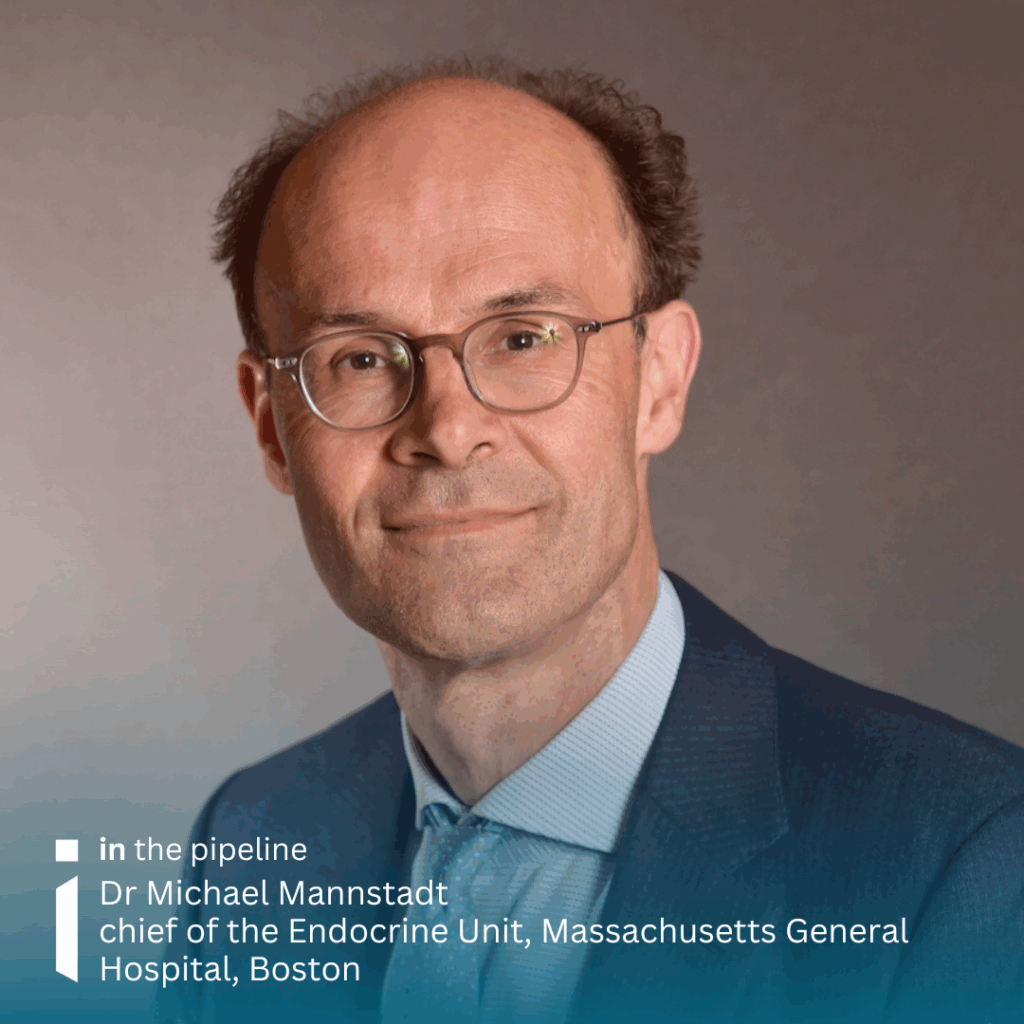
Breakthroughs in rare disease research are changing lives. Dr Michael Mannstadt, Massachusetts General Hospital, Boston, discusses ADH1—a rare genetic disorder affecting calcium regulation—and the transformative impact of the CALIBRATE clinical trial testing the oral drug encaleret. With normalisation of calcium levels and improved patient outcomes, this landmark trial offers hope not only to those with ADH1 but also to the wider rare disease community where the goal of personalised treatments is firmly in sight
Dr. Michael Mannstadt is chief of the Endocrine Unit at Massachusetts General Hospital, Boston and a leading authority in the field of endocrinology. His clinical and research work centres on bone and mineral disorders, with a particular focus on the parathyroid glands—small glands critical to regulating the body’s calcium balance.
Among these disorders, Michael has dedicated much of his attention to ADH1 (autosomal dominant hypocalcemia type 1), a rare genetic form of hypoparathyroidism. His commitment to understanding and improving the lives of patients with ADH1 has placed him at the forefront of both clinical care and research in this rare disease community.
Mechanisms of the disease: autosomal dominant hypocalcemia type 1 (ADH1)
ADH1 is a rare, inherited disorder that affects the body’s ability to regulate calcium—often resulting in a wide range of symptoms and serious health risks. As Michael explains, “ADH1 is a genetic condition, which means there might be a family history, but like many other genetic diseases, it could also be de novo, meaning the patient is the first one in the family with this disorder.” The root of ADH1 lies in pathogenic variants of a specific gene: the one encoding the calcium sensing receptor (CaSR). Michael explains, “On the surface of cells in many tissues throughout the body, there is a protein called calcium-sensing receptor, which is a G-protein coupled receptor that senses calcium levels. Its expression is highest in two organs: the parathyroids, four little glands in the neck that produce parathyroid hormone, and the kidneys.”
In healthy individuals, this receptor works like a thermostat, helping the parathyroid glands regulate the production of parathyroid hormone (PTH) which keeps blood calcium levels within a narrow range. Michael draws a comparison: “While we sit here having our interview, our calcium levels are always constant within a very narrow range. The calcium-sensing receptor works much like a home thermostat that senses the temperature and ensures a constant temperature. In patients with AHD1, the heating system itself might be totally fine and functional, yet the temperature is low because the thermostat is dysfunctional; it thinks it’s 30 degrees Celsius when it’s actually, let’s say, only15 degrees.” In ADH1, these faulty signals from the calcium-sensing receptor in the parathyroids lead to low production and secretion of parathyroid hormone (PTH). That means that “when people don’t have enough or no PTH (parathyroid hormone) they develop low calcium in the blood and several other mineral disturbances.” The net effect is persistent hypocalcemia (low blood calcium), leading directly to the disease’s sometimes severe and unpredictable symptoms.
Disease burden and symptom management
For those living with ADH1, the burden of disease can be substantial, affecting both day-to-day life and long-term health. The symptoms arise from persistently low calcium levels in the blood, and as Michael explains, “Low calcium levels can result in a range of symptoms. The most common ones are neuromuscular and neurocognitive symptoms. Patients might experience tingling, numbness, muscle cramps, tetany (muscle contractions) and laryngeal spasms that can make it difficult to breathe or speak. Some also experience seizures.” Notably, he adds, “It’s not rare that people with ADH1 come to medical attention because of seizures,” underscoring that symptoms can sometimes be dramatic and life-threatening.
Yet, the disease’s impact is not uniform. “As in many other diseases,” Michael observes, “there are patients who don’t seem to have symptoms, although, when you actually ask more detailed questions, they often describe symptoms of hypocalcemia without realising they are related.” This variability can make ADH1 difficult to diagnose and may leave some patients unaware of the seriousness of their condition until complications arise.
A significant and often challenging consequence of ADH1 is its impact on renal health. As Michael explains, “Another very important issue that is happening in patients with ADH1 is that the urinary calcium is high.” This chronic overflow of calcium into the urine, which itself is asymptomatic, can result in the formation of kidney stones and nephrocalcinosis—calcification within the kidneys leading to chronic kidney disease. Michael adds, “These complications are quite frequent in this disease—much more common than in other forms of hypoparathyroidism.” The risk of kidney damage not only heightens the disease burden but also complicates treatment as attempts to raise blood calcium levels can inadvertently worsen renal problems.
Historically, effective treatment options have been sorely lacking. Calcium and active vitamin D tablets have been used for some, but as Michael explains, this is not without risk. “In theory, you can raise calcium levels by giving calcium tablets or a specific form of vitamin D, active vitamin D, which is a prescription drug, but while this approach might increase the calcium in the blood, it will also increase the urinary calcium, potentially leading to unfavourable outcomes for kidney health.” Michael adds that, “even attempts to manage the disorder with medications such as diuretics or PTH injections have fallen short. In reality, nothing really works to restore normal physiology.”
This long-standing lack of effective therapies has meant that many ADH1 patients experience a heavy symptom burden and their care had to be focused on managing symptoms rather than correcting the underlying problem.

CALIBRATE: a phase 3 study for ADH1
One of the most significant recent advances in the treatment of ADH1 has come from the CALIBRATE clinical trial study by BridgeBio Pharma which investigated the small molecule, oral drug encaleret. Michael, who serves as a principal investigator in the study, describes encaleret as “a negative allosteric modulator—NAM—to the calcium sensing receptor.” He explains, “What it does is it binds to the calcium sensing receptor and makes it less active. Therefore, this approach directly targets the underlying molecular defect, quite unlike our current treatments with calcium, calcitriol, all other supplements—you actually target the faulty molecule itself correcting the defect—essentially restoring it to normal function.”
Encouragingly, encaleret has produced transformative results for trial participants. “With just a tablet twice a day, you can correct everything that’s wrong. It stimulates the production of PTH from the patients’ parathyroid glands, which in turn allows the kidneys to reclaim calcium from the urine. You normalise blood calcium, and, importantly, urinary calcium, which has never been seen before,” Michael notes. The pivotal trial met its primary endpoint, achieving normalisation of serum and urinary calcium in 76% of patients treated with encaleret, compared to only 4% of those on standard care.
For patients, the impact has been nothing short of life changing. Michael recalls, “I had a patient who in the past needed high doses of calcium and calcitriol just to bring her calcium out of the danger zone. In the trial, she needed just the lowest amount of encaleret possible, one tiny tablet a day which was able to normalise everything. And she could do things in her life that she was not able to do before. She could do sports she hadn’t done in years. It was very rewarding to see.”
As both a clinician and a researcher, Michael describes the success of the trial as “just amazing,” adding, “That’s ultimately why we do research and clinical trials, in the hope of this kind of success”.
Looking to the future, the CALIBRATE study is being extended with a long-term, open label extension: “97% of patients are now in the long-term extension which is planned for a 48-months follow up.” With the positive results of this phase 3 trial, there is hope that encaleret will soon be available as a commercial therapy, offering new optimism for those living with ADH1.
A potential new era for the ADH1 community and beyond
Looking ahead, the remarkable results of the CALIBRATE study mark not only a turning point for ADH1 patients but signal hope for the broader rare disease community. Michael highlights the far-reaching impact of such trials: “Ten years ago or even five years ago, we would have never thought that this is possible. Now there’s real hope that, thanks to research and advances in science, we can develop treatments that are truly personalised.” He points to the specific opportunity in targeted therapies, observing, “This is particularly true for the G-protein coupled receptors, where oral medications are a possibility—they could, for example, replace peptides targeting GPCRs in the future.”
With several clinical trials underway for hypoparathyroidism and long-term extension studies ongoing, Michael sees a new era for patients with rare diseases. “For the rare disease community, there is an interest, both from academic researchers to identify new pathways and treatment options, and also increasingly from industry to pursue development of drugs for rare diseases.” He also stresses the critical role of patient groups as catalysts for awareness and progress: “What really helps is when patients come together as a community to advocate for themselves because that empowers them and drives advances in medical research and treatment.”
Yet, he is keenly aware that medical innovation must be matched by efforts to identify those in need: “Genetic testing is nowadays very easy to do. I’m a big fan of genetic testing, and I believe it should be offered to all patients with hypoparathyroidism, whose aetiology is unknown.”
Michael’s call to action is clear—embrace the power of new diagnostics and therapies, support advocacy and work together to ensure that the breakthroughs witnessed in ADH1 herald a brighter future for all rare disease patients.
Connect with Michael


Visit:mannstadt.mgh.harvard.edu
To connect with the BridgeBio team to learn more about the CALIBRATE study results, contact Bubba Murarka, executive vice president, corporate development, via email:contact@bridgebio.com
in the pipeline brings you the latest developments from the RARE pipeline. To access more in the pipeline articles click below.