
Rethinking cell therapy: CERo Therapeutics brings a new mechanism to AML

Interview with Brandon Cieniewicz, Director, CERo Therapeutics
Estimated reading time: 8 minutes
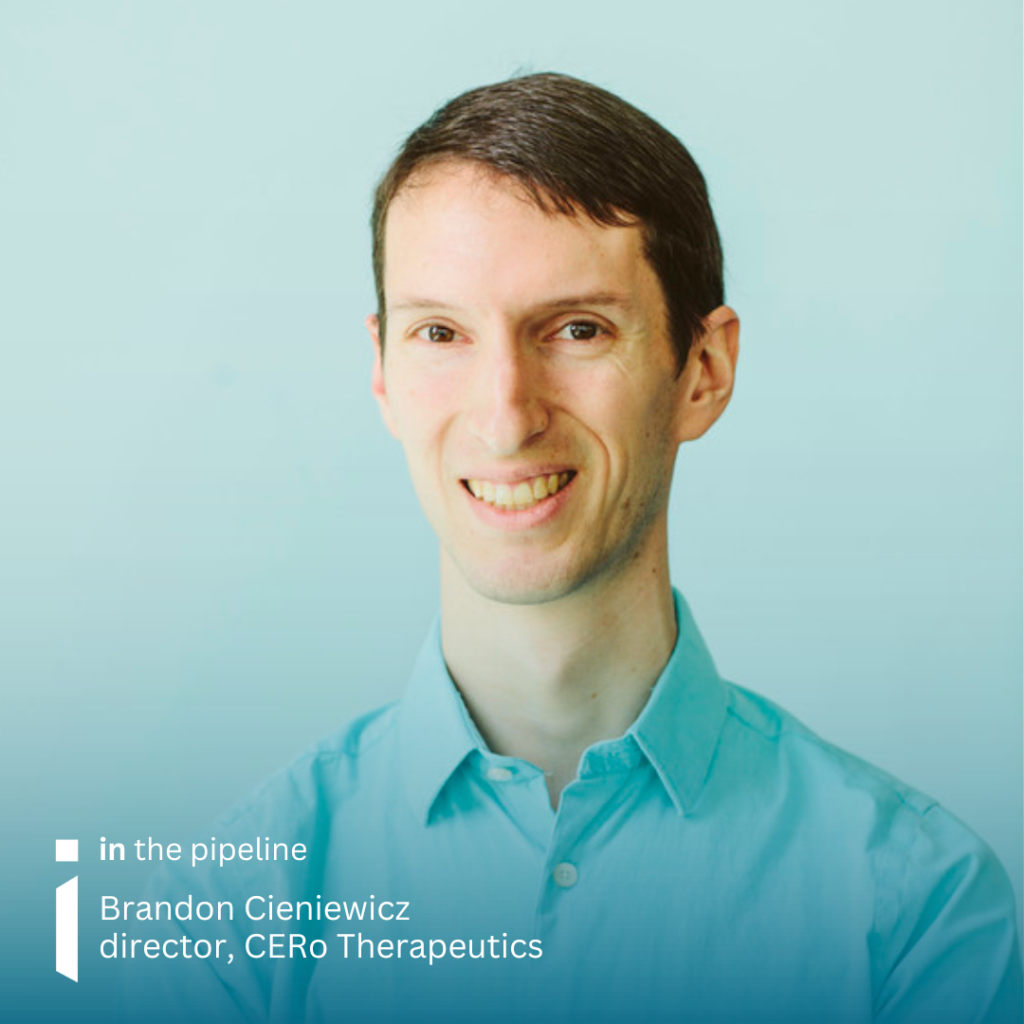
CAR-T cell therapy has changed the outlook for patients with B-cell cancers, but acute myeloid leukaemia (AML) has largely resisted these advances. Brandon Cieniewicz, director at CERo Therapeutics, has spent six years helping to develop a T cell that works differently: one that targets a molecule that healthy cells keep hidden, and that can both kill tumour cells and present their antigens to the wider immune system. With early clinical data now emerging from CERo’s CertainT-1 trial, he discusses the science behind this approach and what it could mean for patients who have otherwise run out of options
Brandon Cieniewicz knows acute myeloid leukaemia (AML) from both sides of the bench. During his postdoc at Stanford Medicine, he studied how T-regulatory cells interact with the disease, working closely with paediatric cases where treatment options were few and outcomes often suboptimal. That experience shaped a conviction that stayed with him: AML needed something new. When he joined CERo Therapeutics in 2020, the company’s central idea was still forming. Six years on, he has helped bring it from concept to clinic and now leads research and development.
“Getting back to this disease with high unmet need and being able to come up with something new and bring it through clinical trial, has been very rewarding,” he reflects.
That “something new” starts with a question that challenges convention in the engineered T-cell field: rather than directing T cells against a protein on the cancer surface, could they be equipped with a receptor borrowed from innate immune cells, one that recognises a different class of molecule altogether?
Why AML resists cell therapy
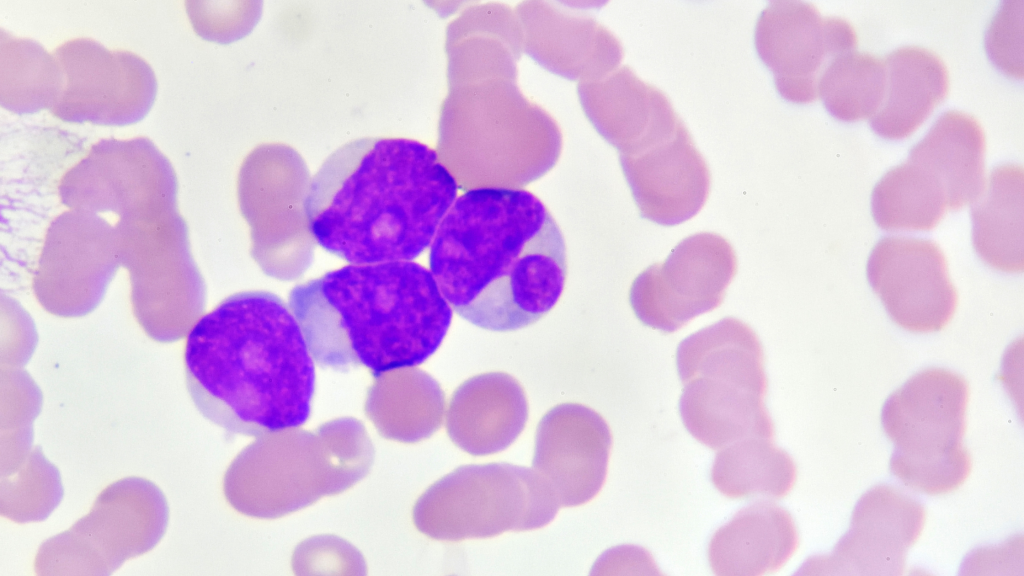
The success of CAR-T therapy in B-cell cancers has not extended to AML, and the reason lies in the biology of the disease itself. AML arises in the bone marrow, and its malignant cells closely resemble the healthy haematopoietic stem cells from which all blood cells develop. Many of the protein targets on AML blasts are also present on these stem cells. “It’s very difficult to kill the AML without also recognising the healthy cell targets,” Brandon explains. As a result, CAR-T therapies directed at AML risk destroying the very bone marrow that patients need to recover.
Some groups have tried to address this with Boolean-logic CAR-T designs, which require the T cell to detect two or three surface molecules simultaneously before it activates. These approaches are conceptually elegant but add layers of complexity. CERo chose to sidestep the problem altogether by going after a different kind of target.
A target that healthy cells conceal
CERo’s answer is the CER-T (Chimeric Engulfment Receptor T cell) platform, a class of engineered T cells that combine innate immune functions with adaptive T-cell killing. The company’s lead product, CER-1236, replaces the single-chain variable fragment (scFv) used in conventional CAR-T constructs with the TIM-4 receptor as its extracellular binding domain. TIM-4 recognises phosphatidylserine, the TIM-4-Ligand, a phospholipid that normally sits on the inner face of the cell membrane. In healthy cells, it stays hidden. It is only exposed on the outer surface when a cell is stressed, dying or malignant. This biological distinction gives CER-1236 a degree of selectivity that protein-antigen-directed therapies have struggled to match.
In preclinical screening of 29 newly diagnosed AML patient samples, CERo detected elevated TIM-4 ligand expression on approximately 60% of tumours. This expression spanned the common mutational subtypes of AML, including FLT3- and IDH2-driven disease, indicating that the target is not restricted to a single molecular subgroup. Recent independent work from MD Anderson Cancer Center, identifying overexpression of phosphatidylserine synthase across a range of cancers, has further supported these observations1(FIG 6.).
There is another advantage. Because phosphatidylserine is a structural component of every cell membrane, cancer cells cannot delete it through genetic mutation. “They can perhaps modulate it and keep it on the inside more, but there are always ways to get it back out, because it can never have a genetic mutation that prevents its exposure,” Brandon notes. This contrasts with CD19-directed CAR-T therapy, where antigen-loss relapses remain a well-documented limitation.
Killing and presenting: a dual mechanism
CER-1236 is designed to do more than kill tumour cells. Its intracellular architecture combines CD3 and CD28 signalling domains, which drive cytotoxic activation, with a TLR2 signalling domain that enhances the phagocytic function of TIM-4. This means the engineered T cell can engulf fragments of the target cell and cross-present tumour neoantigens to the rest of the immune system, effectively acting as an antigen-presenting cell (APC).
The rationale draws on research2 showing that T cells capable of engulfing antigen can present it via both HLA class I and II molecules. In a tumour microenvironment where professional APCs are often compromised, this secondary route of immune activation could help sustain a broader anti-tumour response and reduce the risk of relapse driven by tumour heterogeneity.
Early clinical signals
CERo opened its Phase 1 CertainT-1 trial in 2025 and treated the first patient in May of that year. Four patients have now been dosed across two dose-escalation cohorts, with a fifth and sixth in preparation.
Two findings stand out from the translational data so far. First, T-cell expansion has been robust: infused cells increased 20- to 60-fold and remained elevated beyond the initial expansion phase. Second, none of the four patients has developed cytokine release syndrome (CRS). In conventional CAR-T therapy, CRS is a frequent and sometimes life-threatening complication driven by excessive cytokine production, often requiring intervention with tocilizumab. Its absence across all four patients is, as Brandon puts it, “really unique”.
One patient, treated at the lowest dose level, showed a particularly striking response. This individual had been dependent on both platelet and red-cell transfusions since late 2024 and had not responded to four previous lines of therapy. After receiving CER-1236, their bone marrow recovered sufficiently to achieve over 60 days of platelet transfusion independence. “The clinician was telling us that the guy was biking to the clinic to get his checkups, which is not something you’re supposed to be doing if you are severely platelet deficient,” Brandon recalls. Although AML blasts were not fully cleared, healthy stem cells reasserted themselves and began producing functional blood cells. The team describes this as bone marrow remodelling, something that had not occurred during any of the patient’s prior treatments.
Beyond AML
The favourable safety profile has opened a door that has historically been closed in cell therapy. The CertainT-1 trial has been amended to include patients with myelodysplastic syndromes (MDS) and myelofibrosis, both chronic bone marrow disorders where patients may live for years with manageable disease but lack a curative option outside of bone-marrow transplantation. Until now, the toxicity associated with CAR-T therapy has made it difficult to justify in these settings.
“If we can give them a T cell that’s potentially curative without the side effects that CAR-Ts have seen, then perhaps that opens up what we could treat with T cells,” Brandon suggests.
CERo’s longer-term ambitions extend further. Phosphatidylserine exposure has been observed across a range of solid tumours, including lung and ovarian cancers, and a solid-tumour trial is open, though not yet enrolling. The company also sees potential in combining CER-1236 with small-molecule inhibitors that drive phosphatidylserine to the cell surface, an approach that goes back to the company’s founding hypothesis.
For rare cancers, the logic is particularly compelling. Because TIM-4 ligand expression is not lineage-dependent, CER-1236 could be directed at malignancies too uncommon to justify developing a dedicated CAR-T product from scratch. “We have the drug and safety profile already. We just have to determine if that cancer has the TIM-4 ligand in a simple preclinical data set, and that would be sufficient to warrant a clinical trial,” Brandon explains. The investment made for larger indications, in other words, could be leveraged to reach patients with diseases that might otherwise be overlooked.

Looking ahead
CERo is open to partnerships as it advances through dose escalation, with support from contract research organisations that manage the clinical infrastructure. As the dose increases, the team hopes to see deeper and more sustained responses. Brandon sees the broader field of engineered T-cell therapy at a turning point. “Engineered T cells are still alive outside of B-cell malignancies. We haven’t solved it yet, but there are a lot of good ideas out there, and we just have to keep pushing them forward.”
To learn more about CERo Therapeutics, please visit:cero.bio
Connect with Brandon
References
[1] https://www.science.org/doi/10.1126/sciadv.adx8134?url_ver=Z39.88-2003&rfr_id=ori:rid:crossref.org&rfr_dat=cr_pub%20%200pubmed
[2] https://pubmed.ncbi.nlm.nih.gov/2841610/
in the pipeline brings you the latest developments from the RARE pipeline. To access more in the pipeline articles click below.