

Silent absence of research in treatment journeys

Estimated reading time: 7 minutes
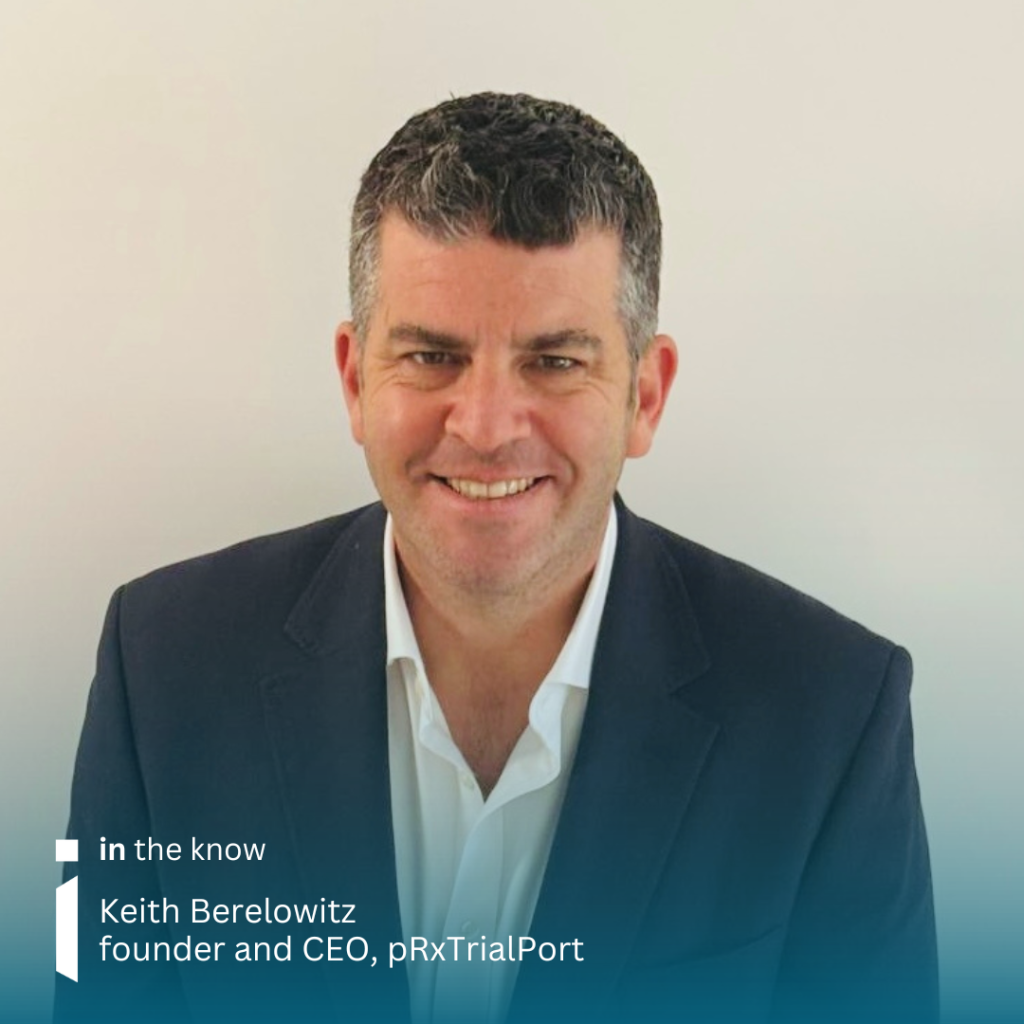

With decades of experience in the clinical research sector, Keith Berelowitz, founder and CEO of pRxTrialPort, highlights a growing need for research to be better integrated into the patient journey early on, and with improved clarity and openness. He believes the pathway to addressing gaps in clinical trial research lies in supporting patients in understanding research protocols and expectations, whilst ensuring the right flow of information reaches clinicians, so that clinical trials can be presented as a meaningful option in a patient’s story rather than as an afterthought
Treatment journeys unfold through appointments, leaflets and decisions made under pressure. For many patients, research is not presented as a meaningful part of the pathway early on. By the time clinical trial participation is discussed, it can feel sudden, rushed or positioned as a last resort rather than one option among several. This quiet absence of context is rarely intentional, but its impact can be significant.
Gaps in information are common and usually unintentional. Clinicians are time limited, research teams are focused on clinical delivery, and when trials are presented, patients are not always supported to understand the wider context, including why a trial is being offered and what participation will demand in real life. Questions about emotional impact, daily routines and long-term implications can be left hanging and that gap leaves uncertainty even in highly motivated patients.
Clinical trial research gaps are often discussed in terms of data and representation. Less attention is given to gaps in lived understanding. Patients are told what a trial aims to measure and what procedures are involved, but not always the practical reality, such as screening failure likelihood, the emotional weight of uncertainty or what support exists if participation becomes overwhelming. These details shape trust.
In rare disease, this invisibility of research can cut even deeper. Families and individuals often become the research navigators by necessity, tracking registries, foundations and sponsor announcements while clinical teams manage broad caseloads and changing guidance. This is not a criticism of clinicians. It is a signal that the system does not reliably join the dots and it leaves too much of the discovery burden on the people already carrying the most.

What patients are rarely told when enrolling
Enrolling in a clinical trial involves more than meeting eligibility criteria. Patients are rarely told that feeling unsure after signing consent is common and that understanding keeps evolving. New questions appear weeks later and anxiety grows if patients feel they should have asked earlier.
Another area often underexplained is the emotional rhythm of a trial. There may be intense monitoring followed by long waits, uncertainty and fear that symptoms mean failure. In rare disease especially, families already live in uncertainty and research can amplify it.
Trial participation also collides with personal life. Travel, time off work, caregiving, school schedules and costs are not side issues. They determine whether participation is possible.
When timelines are built on unrealistic assumptions about travel, time, cost and comprehension, the pressure does not vanish, it just gets redistributed. Sites and coordinators carry it, monitors carry it and above all, families carry it.
If we are to talk to people about clinical trials we need to be clear
Across health systems globally, there is growing recognition that informed participation goes beyond information disclosure. It includes comprehension, readiness and practical feasibility, and it requires communication that fits real lives, not ideal assumptions.
This lack of clarity does not reflect a lack of care. Clinical teams work within tight timeframes and rare disease pathways are complex, with fewer specialists and less consolidated knowledge. Families often fill the gaps themselves, sometimes knowing more about active research than the clinicians they rely on.
Improving participation therefore involves listening as much as explaining. When patients feel safe asking basic questions, they are more likely to engage thoughtfully and less likely to withdraw later because the reality arrived late.
How technology can support a fuller picture to close clinical trial research gaps
Closing clinical trial research gaps is not only about enrolling more people. It is about seeing the people we currently miss, including those who are never offered research as a real option, those who quietly step away and those whose experience is never captured because it does not fit neatly into a clinic visit.
Visibility is not a communications problem. It is a design problem. If people have to stumble into research, or decode it at speed, participation will skew towards the confident, the connected and the nearby.
Technology can reduce these gaps when it translates complexity into something people can use, and when it supports shared data foundations, consistent terminology and patient reported inputs that reflect daily life. Used well, AI can turn scattered information into structured insight without making the process cold or opaque.
The point is not to automate the human side out of research. It is to make the human side possible at scale, with clearer explanations, better staging of information and fewer preventable surprises.
What this changes for study design and delivery
• If participation requires repeated long travel, that is a feasibility risk, and it will show up later as screen failure, dropout and protocol deviation.
• If screen failures are treated as an administrative outcome rather than a learning signal, the same friction repeats study after study.
• If awareness depends on patients stumbling across a buried link, visibility is being left to chance.
• If understanding requires high health literacy or fast English, the study is quietly selecting for the privileged.
• If sites absorb the pressure of aggressive timelines and complex procedures, quality becomes the silent trade off.
• If patient questions, declines and dropouts are captured and fed back into design, clarity improves and burden reduces.
For rare disease programmes, joining up the dots is often less about creating more materials and more about making information flow to the right people at the right time. Sponsors can support clinical teams by giving sites a simple, usable version of the trial story that clinicians can hold in their head, not just a protocol they can file. They can invest in consistent, plain language summaries that mirror how families search and speak, and in lightweight ways for sites to surface barriers early, including travel feasibility, screening burden and caregiver constraints. When that feedback is treated as evidence, not noise, the trial becomes easier to offer, easier to explain and easier to deliver without quality being the price of speed.

Building trust through empathy and openness
Addressing the silent absence of research requires empathy and openness and a willingness to say what is known, what is uncertain and what support exists.
For biopharma teams, the opportunity is to help clinical teams keep trials top of mind rather than an afterthought. That can look like clearer site facing trial narratives, practical participation pathway maps and feedback loops that return patient and site friction to protocol teams early before amendments and rescue plans become inevitable.
The future of patient focused research lies in recognising what has gone unsaid and gently bringing it into view. Reducing invisibility is not only a patient problem, but also a workflow problem. Patient engagement and clinical teams can make research easier for clinicians to carry forward by simplifying what is shared, making it visible at the point of care and creating a clear handoff that does not require clinicians to memorise trial details or hunt for links. In rare disease especially, families often arrive already informed. Our job is to join the dots, so that clinicians can meet that reality with confidence and trials become something discussed early, not discovered late.
Connect with Keith
in the know brings you the latest conversations from the RARE think tank. To access more in the know articles click below.