
Singing for your dinner

Estimated reading time: 1 minute
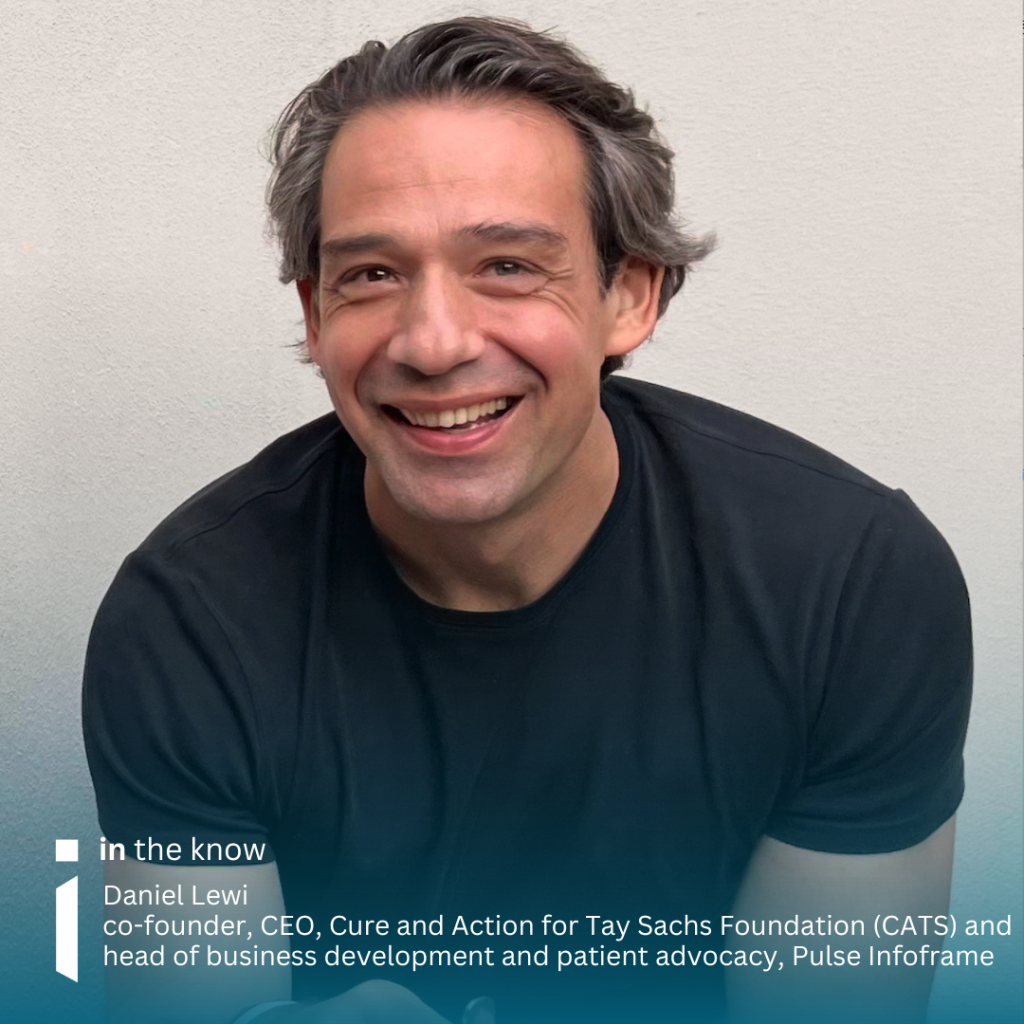
Daniel Lewi is the founder and CEO of the rare disease charity, Cure and Action for Tay Sachs Foundation (CATS), which he co-founded with his wife Patrícia Durão. With lived experience as a bereaved parent, Daniel works closely with patients, caregivers, researchers and industry to ensure lived experience meaningfully informs research, development and access. He is a passionate advocate for the need for more ethical, respectful engagement with families who share their stories
What is something I’ve always thought about is how often people with lived experience in rare disease are asked to give more than is understood, or acknowledged by the those inviting them in.
Across pharma and biotech, it has become common practice to invite patients or caregivers into the organisation to speak about life with a rare disease. These sessions, often called “lunch and learns”, are positioned as opportunities to humanise science, to remind teams why their work matters and to connect research and development with real lives.
To be honest, when done well, these sessions can be incredibly powerful. They can change perspectives, shape thinking and genuinely motivate teams. People listen. People care. For a moment, it feels like a shared purpose. But too often, that sense of commitment is sadly temporary.
A company may genuinely believe it is invested in a disease area and its community. Then funding priorities change. A pipeline decision is made. A programme is paused or stopped.
And almost overnight, the relationship disappears. Emails stop. Engagement stops. The community is no longer relevant. From a corporate perspective, this is framed as strategy. From a human perspective, it feels like abandonment.
The greatest challenge is the emotional imbalance built into these interactions.
When a patient, caregiver or bereaved parent is invited to speak, they are not presenting slides or abstract data. They are sharing their life. Their child. Their loss. They are opening wounds that never fully heal, often in front of a room of strangers, because they believe it might help save someone else.
For bereaved parents in particular, this is not a “talk”. It is an act of emotional exposure. We are speaking about someone we love deeply—someone we could not save. All while continuing to fight so that other children might have a different outcome. That takes an enormous toll.
The pain point is not that companies change direction. That is part of business. The pain point is how those changes are handled, and how little consideration is given to the emotional labour that was asked of the community in the first place.
Too often, there is no follow-up. No acknowledgement of the shift. No recognition that a relationship existed beyond convenience.
The message received, intended or not, is that the story was useful only while it aligned with the pipeline.
This creates a sense of transactional engagement: patients and carers are valuable while they serve a purpose, and invisible when they no longer do.
For charities, this is incredibly difficult to manage. We are asked to facilitate these connections, to encourage families to share, to trust that engagement is meaningful.
When it ends abruptly, we are left supporting people through the emotional aftermath, while having no control over the decisions that caused it.
Room for improvement (considerable improvement)
There is an opportunity here for industry to mature in how it engages with lived experience.
There is a growing recognition that patient voice matters, not just in communications, but in trial design, endpoint selection and evidence generation. That is positive.
But with that recognition must come responsibility.
Companies have the opportunity to move from episodic engagement to values-based engagement. That means being honest about uncertainty. Being clear that programmes may change. And committing to respectful closure when they do.
There is also an opportunity to acknowledge emotional labour explicitly. Preparing teams before these sessions, supporting speakers properly and following up afterwards should be standard practice, not optional extras.
For charities and advocacy groups, the opportunity is to help set boundaries and expectations. To ensure that lived experience is not treated as a consumable resource, but as a partnership rooted in mutual respect.
Done well, these engagements can still be powerful, motivating, and deeply human, without leaving harm in their wake.
I would embed ethical standards for lived-experience engagement across pharma and biotech. If a company invites someone to share their story, there should be a clear framework that includes preparation, informed consent about potential programme changes and a commitment to close the loop if priorities shift. Silence should never be the default.
I would also normalise acknowledging emotional impact. A simple, honest conversation “this is changing, and we want to thank you and recognise what you gave” goes a long way. It does not change the decision, but it changes how it lands.
Most importantly, I would end the idea that sharing grief is understood simply because it is listened to. Listening is the start, not the finish.
The most valuable spaces are those where uncomfortable truths can be shared, where companies are willing to hear not just inspiring stories, but the impact of how decisions are communicated and relationships are ended. Progress in rare disease does not come from good intentions alone. It comes from empathy that extends beyond the moment it is convenient.
To learn more about the work of the CATS Foundation please visit:https://cats-foundation.org
Connect with Daniel
in the know brings you the latest conversations from the RARE think tank. To access more in the know articles click below.