


The Act for Ultra-Rare Coalition – growing momentum for an overlooked population

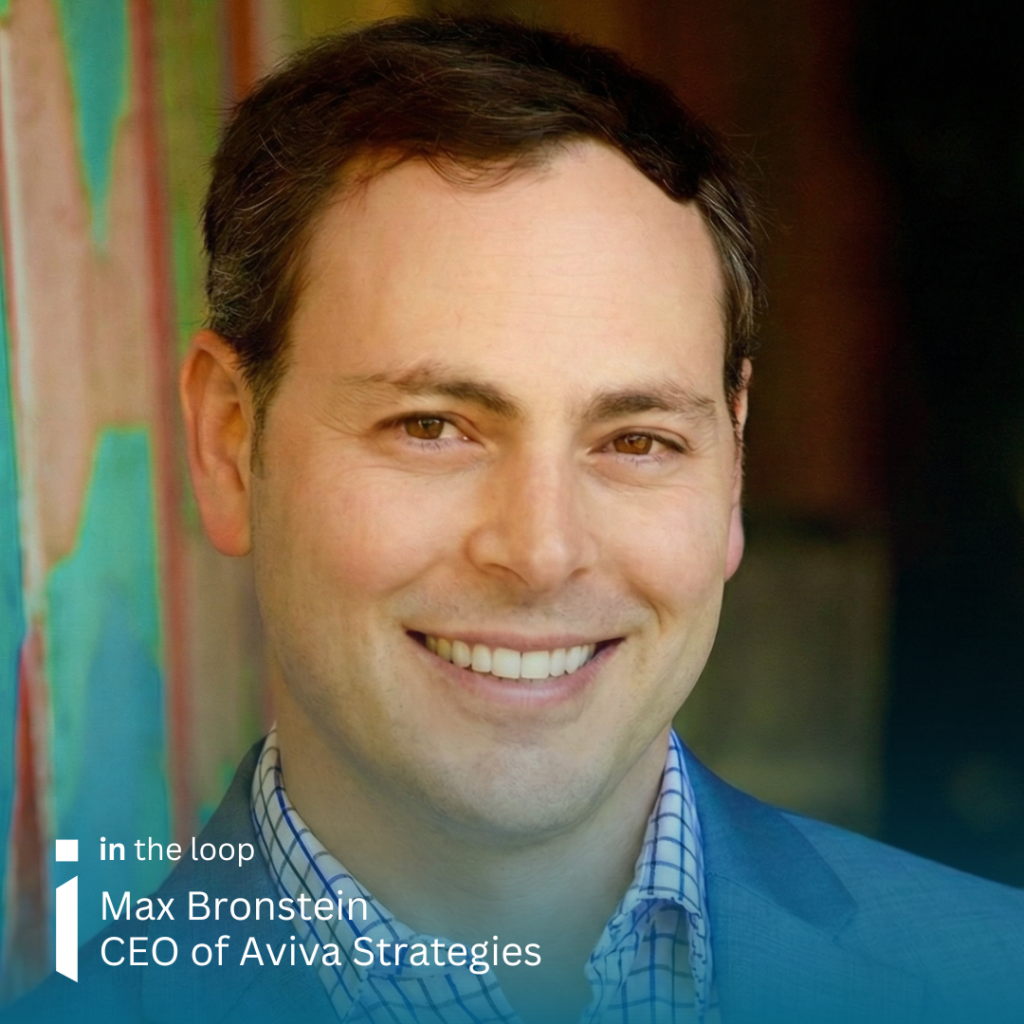
Interview with Max Bronstein, founder and CEO, Aviva Strategies
Estimated reading time: 9 minutes
The Act for Ultra-Rare Coalition is seeking to rewrite the rules for an underserved population, starting with a formal definition of ‘ultra-rare’. With many parents taking up the baton of drug development themselves, Max Bronstein, CEO of Aviva Strategies, explains how clear definitions, targeted incentives and regulatory reform could finally shift the balance
Max Bronstein is a health policy and advocacy leader with 20 years of experience spanning non-profit, industry and government. He was formerly chief policy officer at the EveryLife Foundation for Rare Diseases, where he helped advance major federal initiatives such as the 21st Century Cures Act and newborn screening reforms across the US. He led health policy and corporate affairs at Audentes, and later joined the Biden administration at the White House leading health innovation. Today, Max is the founder and CEO of Aviva Strategies, a health advocacy firm supporting clients on government affairs, regulatory engagement and coalition building.
The Act for Ultra-Rare Coalition
The Act for Ultra-Rare Coalition, run by Aviva Strategies, is dedicated to advancing legislative and regulatory solutions for people living with ultra-rare diseases. The coalition emerged from long-standing frustration from many in the ultra-rare space about the lack of industry activity and investment.
“There were people like me, from industry, and from the patient side who have spent many years working on ultra-rare, but candidly have been very frustrated with the state of play,” Max explains.
The scarcity of investment in ultra-rare can place a burden on parents, with some, with the means and capabilities, taking on the role of drug developers. “They are basically doing all of the functions of a biotechnology company, racing against the clock in a very literal way, trying to develop a drug before it’s too late for their child. That is a really tall order, and from where the coalition sits, it should not be like that.” Max sees this as an ethical failure given the US’s wealth, resources and technical capabilities.
On the industry side, three founding partners form the coalition: Ultragenyx Pharmaceutical Inc., Chiesi Global Rare Diseases and Mighty Therapeutics. Patient organisations are closely involved, many of whom have completed Ultragenyx’s annual “boot camp” which teaches advocates about drug development. “Many patient advocates have been involved in advising us on the challenges they experience as parents who’ve gone down the road of trying to create a medicine for their child. What they see as the top barriers, biggest challenges and what they think would be helpful in the space get to a world where we see a lot more investment in ultra-rare.”

Defining ultra-rare
Defining ultra-rare is the coalition’s crucial first step, as for Max, it underpins everything that follows: policy, incentives and industry engagement. Seeing similarities in the challenges faced by the rare community over four decades ago, Max is mirroring a previous playbook.
As he explains: “When we look back to 1983 when the Orphan Drug Act was passed into law, the state of play in the rare disease world was such that we didn’t even have a definition of rare or orphan. There was enormous, overwhelming unmet medical need and when the advocacy community got together and decided to effect change, what were the first things they did? They laid out a definition for rare, and they created a variety of regulatory and economic incentives to try to catalyse industry activity in this space. When the Orphan Drug Act was passed, which was widely seen to be an incredibly successful policy intervention, it created an industry where there was none previously.” In short, without a definition, ultra-rare remains invisible; with one, it becomes actionable.
“Taking the pulse” on ultra-rare
The coalition sent an RFI (request for information) across the ultra-rare community—to patient groups, trade organisations and companies—to “take the pulse” on whether stakeholders see ultra-rare as a distinct problem, whether a formal definition would be helpful and what that definition and related incentives might look like.
Max notes that not everyone views the situation as a problem, despite high-profile stories of parents shouldering drug development alone, which is why the RFI focuses on both framing the issue and testing support for potential solutions. The coalition is using this input to explore options such as numerical versus more flexible qualitative definitions, and to map the “universe of public policy interventions” before narrowing to the highest-impact proposals for patients.
Addressing the barriers to progress
Max notes that obstacles to scientific advancement are slowly decreasing.
“Nowadays, when we look at ultra-rare monogenic diseases, the barriers are much lower because there are new platforms such as gene editing and repurposing, so there’s lots of promising methodologies out there.”
However, translating science into clinical testing still demands huge time and capital.
Regulatory obstacles have historically included high rates of complete response letters (CRLs) in ultra-rare, which halt ongoing drug development programmes. As Max explains, the reasons are variable but some of the unique challenges are around the use of control groups in progressive, often fatal ultra-rare conditions. “How can you expect that group to be amenable to doing a control when a patient is not getting access to an investigational therapy that could be helpful? There are ongoing debates around how to replace the very traditional approaches to randomised trials.”
CMC (chemistry, manufacturing and controls) requirements that demand product volumes mismatched to ultra-small patient populations can also impede progress—producing a certain amount of product to pass CMC testing, that may only treat a handful of patients a year if approved.
Structural and economic barriers mean many companies won’t invest in ultra-rare programmes. Max describes how many parents’ plan A, of garnering interest from a biotech, often fails and as a result families are pushed to a “do it yourself” model of drug development. A few high-profile successes, Max notes, “are the exception and not the rule”. For most, the reality remains bleak, with many families still told to “take your child home and love them”.
In February 2026, the FDA published guidance on a new plausible mechanism framework for the development and approval of individualised therapies for genetic conditions.1 Max says the guidance includes ideas for alternatives to randomised controlled trials (RCTs) and his hopes are that the framework will help bridge the gap between high level agency agenda and what is actually happening on the ground.
Global leadership and harmonisation
Max would like to ensure the US remains a global leader and competitive hub for drug development and points to existing FDA efforts, such as the Commissioner’s National Priority Voucher (CNPV) pilot programme as examples of policies aimed at re-anchoring and onshoring innovation. He says the coalition is open to similar approaches in ultra-rare.
However, he notes that the realities of ultra-rare—the nature of the low prevalence—means that trials ideally should be global to recruit enough patients and truly maximise benefit. “I think it’s important that whatever our coalition proposes has a global component to it so that it creates a paradigm that’s not just workable in the US, but in other countries as well.” In this way, he says the US can act as a bellwether in terms of public policy structure, such as with the Orphan Drug Act. To make this work in practice, he sees regulatory harmonisation as critical, so that what the FDA advises on trial design is closely aligned with Europe and the UK, enabling truly global trials rather than fragmented, country-specific protocols.

Targeted incentives to unlock ultra-rare
The coalition is still in its exploration phase and has not settled on a single incentive package to advocate for, but is currently assessing what would be most impactful, as well as politically feasible. Max points to tools that have worked historically—such as exclusivity extensions and tax credits—noting that the Orphan Drug Act’s 50% clinical trial tax credit, which was cut in half during the first Trump administration, should, in his view, be restored and potentially adapted for ultra-rare.
A key theme is providing support earlier in the pipeline: “One of the complaints that we heard from patients and families who are working on early-stage products, is around pre-clinical costs, such as expensive animal trials.” The coalition has been conducting early research on the idea of tradable, refundable tax credits that could be used or sold even by pre revenue entities, effectively transferring value from large, profitable companies to ultra-rare developers. He contrasts this with mechanisms like priority review vouchers (PRV), which only deliver value after approval—often a decade away and unreachable for many parent-led efforts.
“Even having a definition of ultra-rare itself is an incentive to some degree, because it creates clarity, and is a signal mechanism to industry that regulatory authorities and payers are paying attention and there’s potential for more public policy in this space.”
Seizing the moment
In the near-term, the coalition is focused on analysing responses to the RFI and plans to convene a webinar later this year to share findings and gather further community feedback. Parallel to this, the group will be in “coalition-building mode”, bringing more patient organisations and drug developers with ultra-rare experience to the table.
While Max recognises the scale of the task at hand, he is confident in the timing and lofty goals of the coalition.
“We are tackling a tough problem, we’re not naive about that, but when we looked at the space, we didn’t see anyone else tackling this problem head on. We’re aware of the scope and the barriers to change, but we believe the timing is right.
“Change is already happening, and if we didn’t come up with a proposal that would take advantage of the momentum we’re seeing in ultra-rare, we would miss our window of opportunity to create policy change for a better future. It’s going to take a lot of hard work, it’s going to take a big coalition and it’s going to take a real grassroots effort to get us there, but that’s what we’re starting to build right now.
“I’ve had the privilege of working with a lot of families in this space over the years, so anytime I’m feeling temporarily defeated I talk to them and it reminds me why this work is so important.”
Connect with Max
References
[1] https://www.sciencedirect.com/science/article/pii/S0002929726001485
in the loop lets you stay informed with all the latest issues from the world of RARE. To access more in the loop articles click below.