The weight they carry: patient organisations and the real cost of newborn screening advocacy

Estimated reading time: 9 minutes
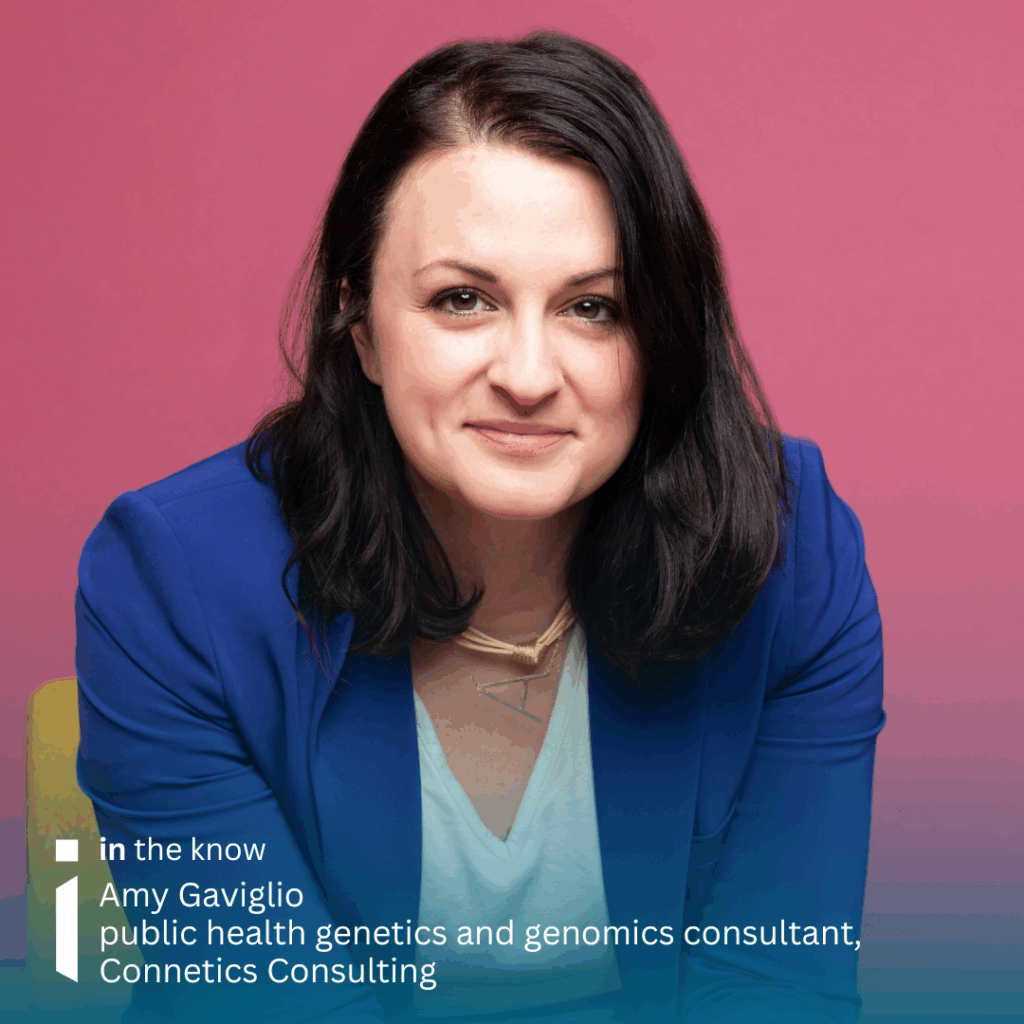
Written by Amy Gaviglio, Connetics Consulting, with insights from Natasha Bonhomme, Expecting Health
What industry partners need to understand about the families and groups carrying our screening systems forward, and the question we should all be willing to ask
There is a particular kind of exhaustion that sets in after a patient organisation has spent five years, ten years, often longer, advocating for a single disease to be added to newborn screening (NBS). It is not the satisfied tiredness of a job done. It is the exhaustion of an ultra-marathon while grieving a lost child or caring for a sick one, all while raising money, learning the language of policy committees, evidence reviews, cost-effectiveness modelling and public health frameworks that were never designed to be navigated by families.
And then, sometimes, the answer is no. Or not yet. Or come back with more evidence.
These moments in NBS have been shaped, sustained and, in some cases, salvaged by patient organisations. We need to talk honestly about what that has meant, what it has cost and whether it is the right, equitable or sustainable way to build a public health programme that touches every family within a country or jurisdiction.
What patient organisations bring to the table
Anyone who has sat in a newborn screening advisory meeting knows that patient advocacy groups (PAGs) are often the driving reason a disease is on the agenda at all.
PAGs bring things the rest of the ecosystem genuinely struggles to produce. They hold the lived experience of families navigating a delayed or missed diagnosis, or of trying a novel therapy, and they hold it across decades, longer than many clinicians will work in a single institution and longer than most policy staff will hold a portfolio. They carry institutional memory in a system that otherwise resets with regular periodicity.
This goes beyond storytelling. They do real evidence work. Many of the natural history datasets, patient registries, quality-of-life instruments and family-reported outcome measures that NBS evidence reviews rely on are initiated, funded or sustained by PAGs, often before any commercial therapeutic interest exists. They convene clinicians who would otherwise never sit at the same table. They translate between researchers, regulators, payers and families, often acting as the only stakeholder in the room with no institutional conflict of interest beyond wanting children to be diagnosed in time.
And, crucially, PAGs are trusted. When a family is told their newborn has screened positive for a rare disease they have never heard of, the first place many of them turn to is a patient organisation. That trust is earned over years of being present when no one else was.

The burden no one accounts for
Here is what is less visible.
The work PAGs are doing in NBS advocacy is, in many cases, work that should belong to an interconnected public health system.
It is being done instead by small foundations, sometimes with one or two paid staff, sometimes entirely by volunteers, very often led by parents whose own children have been or are affected and whose lives have reoriented toward meeting the needs of their own children, future affected children, as well as those of a disjointed system.
Consider what working towards adding a single disease to a national screening programme actually requires. It requires understanding the specific evidence framework of that country’s screening committee, which differs meaningfully between the UK NSC, the US RUSP process, and equivalent bodies in Europe and elsewhere. It requires commissioning or contributing to systematic reviews, clinical trials, health economic modelling and pilot data. It requires coordinating clinical experts across multiple centres and, in most cases, jurisdictions. It requires navigating public health laboratory feasibility questions, treatment access pathways and ethical review. It requires sustained engagement with regulators, sometimes across multiple consultations and rejections. And it requires doing all of this while also running a support helpline, a family conference, a research grants programme and a fundraising operation to support this and other initiatives.
The financial drain is real. The emotional drain is harder to quantify but very likely, more significant. Parents who become advocates do not get to step away from the disease at the end of the working day. They live with it. They are often advocating for changes that will not arrive in time for their own child. The cumulative and circular weight of that—the hope, the rejection, the hope again, the rejection again—is something the system rarely acknowledges, let alone resources.
There is also a quieter cost: the professionalisation of advocacy without the infrastructure to support it. PAGs are increasingly expected to operate at the standard of policy think-tanks, with regulatory affairs leads, scientific advisory boards and communications strategies. Many do this brilliantly. But they do it on charitable income, with the constant background tension of whether they should be spending their limited resources on evidence generation or on supporting families currently in crisis. And there is a particular sting in what happens when they do this successfully. The moment a PAG becomes polished enough to be effective; fluent in evidence frameworks, comfortable in committee rooms, capable of holding its own against statutory bodies, it is liable to be met with a new line of questioning. Are they still authentic? Are they still really parents, still really patient advocates, or have they become something else? Is their motivation truly the children, or has it been shaped by the industry partners who help fund them? It is a no-win position.
PAGs are told their lived experience is invaluable but their evidence is anecdotal; then, when they build the capability to produce rigorous evidence, they are told they have drifted too far from the families they represent to be fully trusted. The very competence the system demands of them now becomes grounds for doubting them.
The disappointment most people never see
When industry partners interact with PAGs, they often see them at their most polished—at conferences, in steering committees, presenting at advisory boards. What is harder to see is what happens when an advocacy effort that has consumed years of a small organisation’s life ends in a deferral, a rejection or a decision to pilot rather than implement.
These outcomes are not rare. They are arguably the average experience for NBS advocacy in many systems. The rejection letter, the recommendation against, the request for more evidence that the organisation does not have the resources to generate. The disease stays off the panel. Babies continue to be diagnosed late, or not at all, until irreversible harm has occurred. And the PAG, already exhausted and having to answer for these setbacks, has to decide whether to begin again.
This is not an argument about rigorous evidence standards, which exist for very good and very needed reasons. It is an observation that the cost of meeting those standards is being borne very unevenly, and largely, by the people with the fewest resources to bear it.

The question we should be willing to ask
Which brings us to the harder question, and the one this piece is really about: should patient organisations have to play all of these roles in the first place?
There is the comfortable answer, which is that PAGs are uniquely valuable, that their voices must be heard and that we should support them better. All of this is true. But it sidesteps the deeper issue.
A NBS programme is part of the greater public health infrastructure. Decisions about which diseases to screen for affect every baby born in a country or jurisdiction. The evidence base, the implementation pathway, the equity considerations are all public responsibilities. The practical reality is that a disease only gets serious consideration if it has a sufficiently well-resourced patient organisation behind it. We have built a system in which screening expansion is sometimes shaped less by clinical need or population benefit than by the advocacy capacity and resources of affected families.
That is an equity problem. Diseases with well-trained advocates and well-connected boards move forward. Diseases that affect smaller, more marginalised, or less organised or resourced populations do not. The babies do not differ in how much they would benefit from early diagnosis, but the advocacy ecosystem does.
It is also a sustainability problem. The current model assumes an effectively infinite supply of unpaid or underpaid labour from people who are simultaneously navigating serious illness in their own families. That assumption is not holding, and in some areas it is visibly fraying.
What this means for industry partners
For industry, the honest reflection is this. PAGs are not a stakeholder to be engaged at the late stages of a launch plan. They are, in many cases, the reason a disease is screenable, identifiable and treatable in the first place. Without their decades of upstream work, much of what makes a therapy commercially viable in the rare disease space simply would not exist.
That recognition should change how partnerships are structured. It argues for unrestricted, multi-year support rather than transactional project funding. It argues for paying PAGs properly for the work they do: including the convening, the evidence generation and the policy engagement and advocacy that benefit the entire ecosystem. It argues for industry partners to strategically partner with advocacy and policy experts who can train and support PAGs, rather than allowing PAGs to carry that weight alone. And it argues for honest conversations about what is reasonable to ask of small, family-led organisations in a regulatory environment that demands ever more sophistication.
It also argues for something more difficult, which is supporting the structural conversation. If we are to subscribe to the genuine belief that early diagnosis through NBS is the foundation of equitable access to rare disease therapies, then advocating for properly resourced, publicly funded NBS infrastructures—one that does not depend so fundamentally on the energy of grieving families to function—is a must.
The patient organisations carrying NBS advocacy forward are doing extraordinary and complex work. But maybe they should not have to be the ones to do it.
Connect with Amy
in the know brings you the latest conversations from the RARE think tank. To access more in the know articles click below.