

Understanding open label extensions in clinical trials—purpose, design and benefit

Interview with Dr Amélie Lothe, medical community head for rare epilepsies, UCB
Estimated reading time: 8 minutes
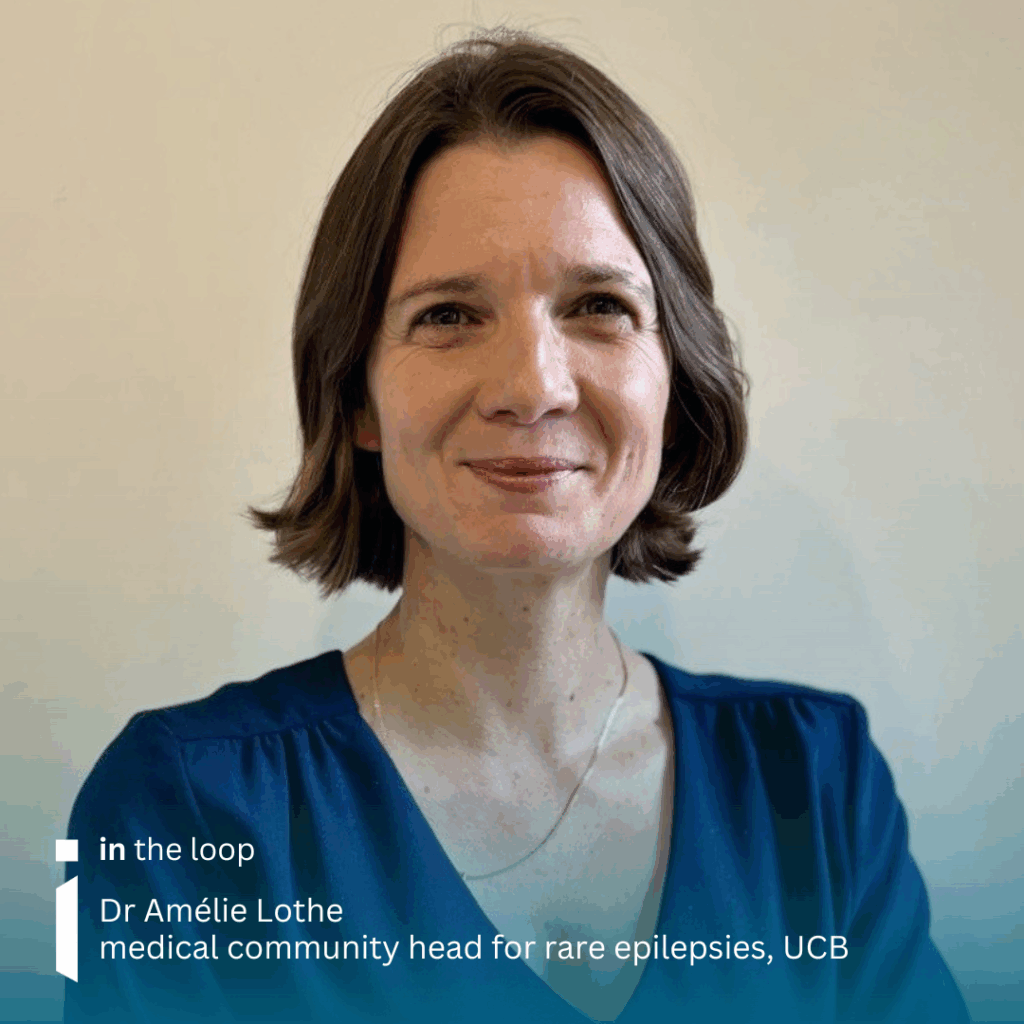

Open label extension studies (OLEs) are a critical component of the clinical research landscape, particularly for chronic and rare conditions. In a recent interview with Dr Amélie Lothe, global medical community head – rare epilepsies at UCB, we delved into the rationale, design, ethical considerations and impact of OLEs in the context of developmental and epileptic encephalopathies
Purpose, design and recruitment
An open label extension (OLE) is a follow-on study that allows participants from prior randomised controlled trials (RCTs) to continue receiving, or gain access to, the investigational drug, with both participants and investigators aware of the treatment allocation. Dr. Amélie Lothe, UCB, explains: “The main difference from the randomised control trial studies is that on an OLE, investigator, the patient and the caregiver are aware they are receiving the active drug and not a possible placebo.”
OLEs are designed to gather long-term data on elements that are difficult to capture in the short timeframes of traditional RCTs. Amélie expands, “Open label extension studies can be used as a follow-on study of randomised control trial. And why are we doing that? We use these OLEs in order to get more insight on the long-term safety, tolerability of the drug, but also the durability of the effect of the drug”.
Recruitment into OLEs generally targets patients who have completed previous trials which allows for maintained continuity and expansion of the dataset for longer range assessment.
Benefits of OLEs to industry sponsors
Open Label Extension (OLE) studies provide substantial advantages to industry sponsors striving to bring new therapies to market, particularly in complex or chronic conditions like developmental and epileptic encephalopathies (DEEs), an area where Amélie specialises. According to Amélie, “With an OLE study you better characterise your long-term benefit-risk profile. Which means, very importantly, you understand the durability of effect and your safety over the long-term. This is important because in certain chronic diseases we know that some drugs that are on the market already have what we call a ‘honeymoon effect’, meaning that you have a reduction of efficacy after a couple of months of treatment.” OLEs allow sponsors to gather data over a protracted period of time, beyond that ‘honeymoon’ period.
Having this extended dataset is vital not only for regulatory submissions, but also for informing clinicians and families about what to expect from ongoing treatment and for supporting the long-term commercial positioning of a therapy. While OLEs involve additional investment, their ability to generate robust long-term data and support regulatory approval often delivers significant value that outweighs the costs for industry sponsors.
Additionally, OLEs reflect a sponsor’s ethical commitment by offering ongoing access to investigational medicines, minimising prolonged placebo exposure—an especially critical concern in severe or life-threatening rare diseases. This not only benefits patients but also enhances the sponsor’s reputation and can facilitate positive relationships with both regulators and patient communities.

Ethics, patient considerations and trial design: minimising bias and blinding
Ethical considerations like limiting prolonged placebo use, especially in progressive diseases, are front of mind in drug development, as Amélie is keen to emphasise: “It’s very important for us to provide a more ethical clinical trial; in severe, life-threatening rare diseases is it ethical to keep the patient on placebo for an extended period of time? In short—No”
But this is not without unique challenges. The open nature of OLEs means both researchers and participants know they are receiving the active treatment, which can introduce biases. To address this, sponsors must design these studies carefully to minimise risk of bias and maximise benefit.
Amélie explains, “Importantly, participants in OLEs are those previously involved in blinded trials; therefore, when an OLEs begin, they know with certainty that they are receiving the active drug and not the placebo.” For this reason, data in OLEs are typically collected alongside measures to monitor and account for possible bias.
Amélie also discussed how the unique needs of populations involved need to be considered through the lens of ethics and patient consideration. “In patient populations, for example, DEEs, a majority of them will have severe intellectual disability. Therefore, the caregiver has a really key role in the assessment of the outcome, typically acting as decision maker on behalf of the patient.”
Amélie adds context with regard the importance of family and participant autonomy: “We need to make participants aware of their rights should they decide to leave the study. It’s very important to communicate this effectively to families.” This is particularly important in OLEs. Where the timeframe is longer, speed of drug development might mean that the participant may become eligible for other sponsor trials during that time. “Typically, patients cannot participate in more than one clinical trial at the same time if they are already receiving an investigational drug. However, as a patient or caregiver, it is always their decision to stay in a study, and they can choose to leave at any time—especially if they feel another trial might be better for their child. Keeping families informed on the options open to them is a key part of effective trial management,” Amélie adds.

Regulatory agencies and OLE data
OLE data are increasingly valued by regulatory agencies, especially in rare and chronic diseases where long-term safety and efficacy are crucial for approval: “It’s very complicated right now for regulatory to give an approval to a drug where you have less than six months or one year of follow-up data. From a safety perspective you need at least a sufficient exposure to a drug in order to understand the safety, tolerability profile.”
Long-term OLE data can help strengthen approval packages, particularly as agencies look to new models like natural history studies and basket trials. Amélie comments on the future benefits:
“Open label extension studies can offer strong support for regulators to approve a treatment for rare diseases. If you know how a disease or symptoms will progress without treatment, you could provide a robust characterisation of benefit and risk of a proposed treatment in the context of an open label study.”
By providing essential long-term safety and efficacy data, OLEs can streamline regulatory review and help accelerate the approval and market entry of new therapies, particularly in areas of high unmet need. This is an important success measure in progressive diseases such as DEEs and many other rare diseases.
Patient benefits—rare epilepsies and DEEs
OLEs provide important benefits for patients, particularly in rare diseases and DEEs where options may be limited. Participation allows continued access to potentially beneficial therapies and the best available medical monitoring: “From a caregiver and patient perspective, OLEs are important for them because it opens up access to care and access to the investigational drug, where typically they don’t have a lot of options. Often when families enter a clinical trial, they have no options left.”
The design of OLEs should include holistic outcomes, not only monitoring seizure frequency or primary symptoms but also quality of life—both for patients and caregivers: “We involve the caregiver in our studies by asking, for example, what is the global functioning of the patient? What is the impact on their quality of life, not only the quality of life of the patient, but also the quality of life of the caregiver, of the families? What is the level of anxiety of this caregiver?”
OLEs designed via cocreation with community help both industry and families better understand how a drug performs over the long haul—something that short-term studies cannot provide. They are a cornerstone in the development of treatments for chronic conditions like DEEs. They are crucial for long-term safety and efficacy data, offer ethical and practical benefits to patients, caregivers and sponsors, and serve an increasingly important role in regulatory approval processes.
As Amelie poignantly puts it: “Outside of tolerance and safety, for me it is really important that we can truly see how a drug will impact daily life. This type of long-term study is helping us to understand that in a more meaningful way.”
About Amélie Lothe
Amélie Lothe is the global medical community head for rare epilepsies at UCB, specialising in medical affairs for developmental and epileptic encephalopathies.
Connect with Amélie
in the loop lets you stay informed with all the latest issues from the world of RARE. To access more in the loop articles click below.