

What I wish doctors knew about living with a rare condition…

Estimated reading time: 7 minutes
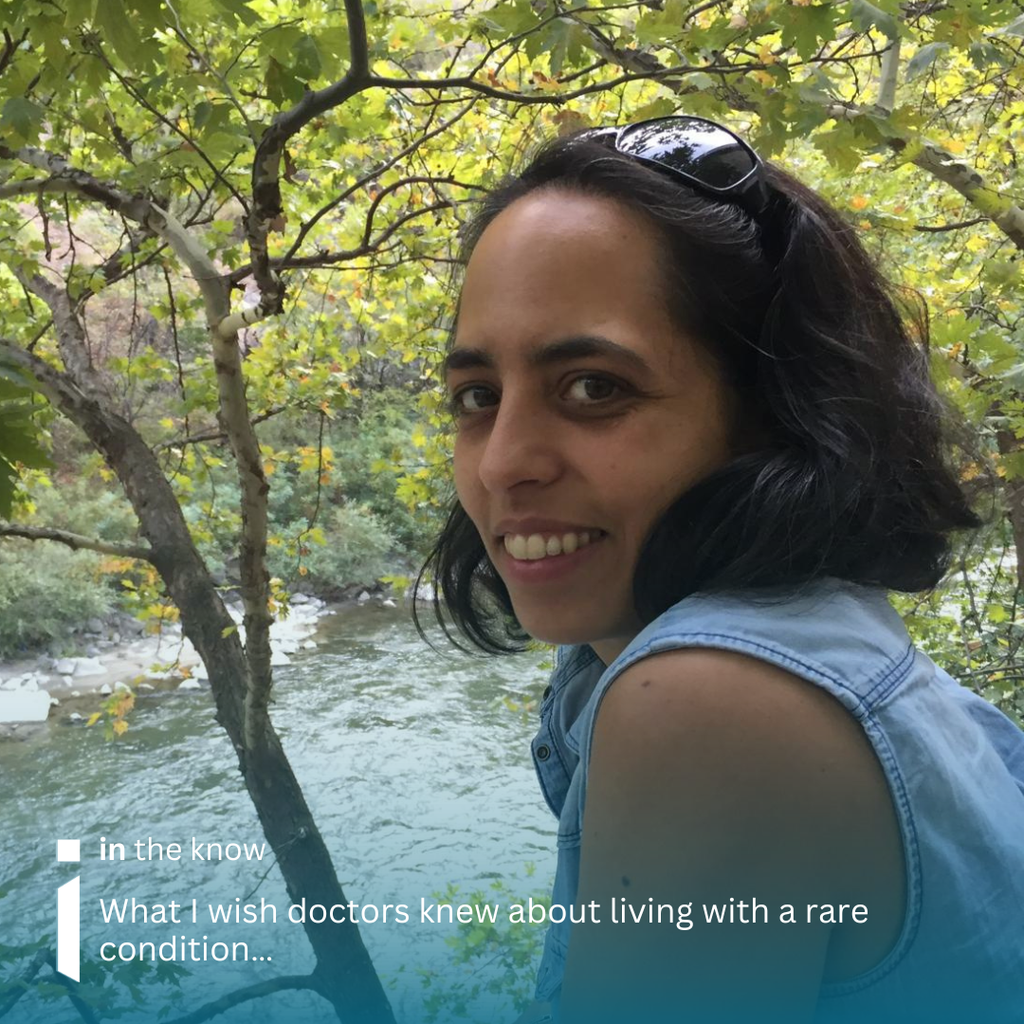
Living with a rare condition often means facing delayed diagnoses, dismissive care and compounding health risks. Nikoleta shares her story of navigating uterus didelphys, highlighting why empathetic, personalised healthcare is crucial for rare disease patients
“I felt that there was a lack of genuine interest in me as a person, as a patient.”
Nikoleta has a rare condition called uterus didelphys, known to cause painful periods and complications with fertility and childbirth. Like many people affected by rare conditions, Nikoleta’s journey to a diagnosis was long and complicated, made harder by the fact that doctors initially dismissed her symptoms.
Across the globe,over 300 million peopleare estimated to be affected by a rare condition at some point in their lifetime. A not insignificant number. However, despite this, those living with rare conditions continue to come up against the same barriers. Not being listened to, lack of professional awareness and unanswered questions are all recurring challenges faced by those in the rare community—with experiences like Nikoleta’s being all too common.
Rare conditions, common experiences
In June of 2025, the charity Unique published theirUnique Experiences Reportexploring the ways that rare chromosome and gene disorders impact people’s lives. Results came in from around the world, with the most commonly cited challenges including lack of support and uncertainty about the condition.
63% of survey respondents felt that they/their healthcare professionals did not have a good understanding of their rare disorder, making it difficult for them to be effective advocates. Additionally, many also felt that it was a “battle” to get their concerns taken seriously by healthcare professionals, and parents to children with rare conditions report being pinned as “overanxious parents.”
One respondent shared how: “People expected me to be relieved that the diagnosis has given me the answers to my child’s struggles, but I felt frustrated that this could have been diagnosed years ago. But I hadn’t been listened to, and professionals kept disregarding my worries.”
Impersonal care
When I spoke with Nikoleta, her journey with uterus didelphys seemed to mirror lots of the experiences mentioned in the report.
When asked about her condition, Nikoleta explained that she first noticed symptoms at age 16 when she experienced a prolonged period, prompting her father to take her to a doctor. Nikoleta recalls:
“I remember the doctor saying, ‘Your uterus has quite a funny shape, a heart shape, but apart from that there’s nothing.’ They didn’t give me a proper scan because I wasn’t pregnant or planning to be pregnant at just 16. They thought the prolonged period was nothing serious.”
Nikoleta said that the doctor left her feeling assured that it was nothing serious. This was only reinforced when she became pregnant six years later, and none of the doctors shared concern.
“The biggest disappointment was the doctor I saw early in my pregnancy. I felt that there was a lack of genuine interest in me as a person, as a patient.”
Nikoleta described how she felt she had been stereotyped as a “healthy young woman,” with nothing about her that should “require extra care.” All of which led to her condition being completely overlooked and going unaddressed.

A chance diagnosis
Despite going unnoticed by her doctors Nikoleta would later find out that she had a condition called uterus didelphys1. The condition causes women to have two small uteruses instead of one larger one, often leading to painful cramps, excessive bleeding during periods and susceptibility to miscarriages and childbirth complications.
Nikoleta explained how her diagnosis happened almost completely by chance, when her routine nine-month appointment fell on a weekend, meaning she was seen by a junior doctor instead of her usual gynaecologist.
“When [the junior doctor] did the examination, I could see on his face that he was puzzled, because he looked back at my records to see if anything was there, and there wasn’t. He had noticed something that my other doctor hadn’t.”
It was then that Nikoleta was told she had uterus didelphys, two uteruses instead of one. The doctor explained that the true extent of her condition could not be known until after the baby was born but that the passage for the baby was only half the size it usually would be. Nikoleta would need a caesarean section (C-section) as soon as possible to ensure the safe delivery for her and the baby.
Nikoleta says, “I was puzzled, and then I was afraid. If it hadn’t been for that [junior] doctor that day, I probably would have tried for a [vaginal] birth. It would have been extra stress, pain and more dangerous for me. I was very lucky. I don’t know what would have happened.”
Thankfully, Nikoleta’s C-section surgery was successful, and both she and the baby emerged from the delivery healthy. However, Nikoleta still faced many unanswered questions about her condition, and even after the diagnosis, very little information was ever given to her regarding any risks of future pregnancies.
“They could have referred me to a specialist but at the time I was healthy and I had a baby to look after, so I didn’t really think about it.”
Nikoleta went on to have two other successful pregnancies. However, when Nikoleta became pregnant for the fourth time several years later, the stakes were higher.
Doctors shared their concerns with Nikoleta, telling her, “There was a risk my uterus would burst and I would die—and so might the baby. No one had told me this was a risk during any of my other pregnancies.”
What do I wish my doctor knew?
The lack of close attention paid to Nikoleta during her pregnancies and what she perceived as general disinterest in her condition—even after a diagnosis—led to her being exposed to significantly greater risk during her pregnancies and childbirth than was necessary. Without adequate attention to maternal care tailored to her personal situation and diagnosis, she was unable to make informed decisions around family planning and her own personal health—with the risks largely going unknown to her.
It can be easy to listen to Nikoleta, or the countless others in rare disease who have similar experiences to share and feel like the improvements or systemic changes required to move the needle are out of our control. However, there are things we can do on an individual level as professionals in the space that can make a big difference.
And it all starts with listening. Listening to patients and treating their observations seriously is vital, withstudies showing that empathyfrom physicians lowers patient anxiety, distress and delivers significantly better clinical outcomes. Furthermore, having a healthcare professional who is willing to learn about a rare condition has apositive impacton a patient’s experience. The same is also true for having a healthcare professional who advocates for patients in the early days of their journeys, which helps them to access appropriate tests and ongoing care.
Though stories like Nikoleta’s shine a light on the importance of listening to patients, they shouldn’t have to happen. When asked what she felt was important for doctors to know as they interact with patients living with rare conditions, Nikoleta is clear:
“It’s very important the way doctors communicate with the person. It makes a whole big difference. Giving that feeling to the patient that they’re unique, and important, and that at that moment, ‘I’m seeing you, I have all my focus on you’.”
A simple ask that is echoed by all living with rare disease. To be seen, heard and understood. Because only then can individuals feel safe, cared for and make the most informed decisions possible around their own personal healthcare—and in Nikoleta’s case, the health of her unborn children.
Connect with Florence
References
[1] https://my.clevelandclinic.org/health/diseases/23301-uterus-didelphys
in the know brings you the latest conversations from the RARE think tank. To access more in the know articles click below.