
Putting you in the heart of the rare community – Wolfram Syndrome UK

Estimated reading time: 6 minutes
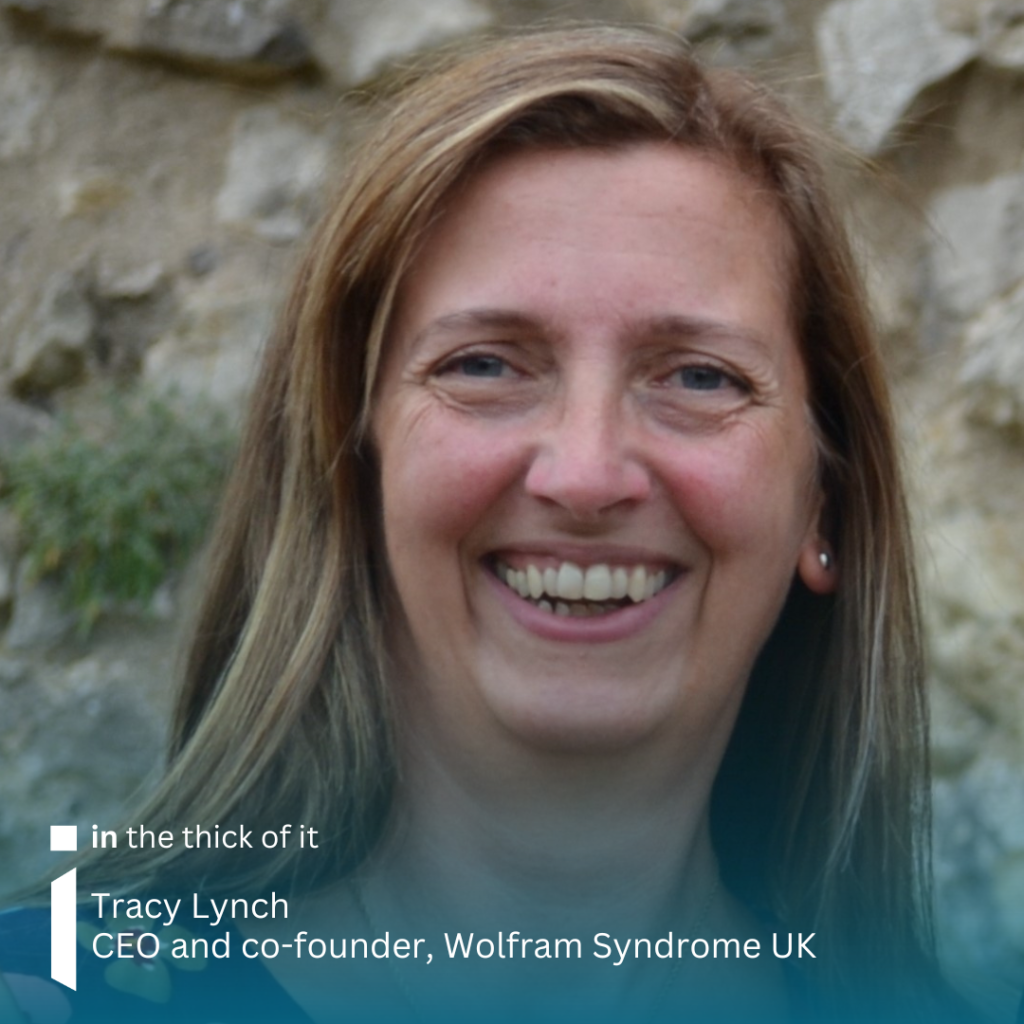
Patient advocacy groups deliver their top three unmet needs and main asks of industry to best serve their rare community. This week’s insights come from Tracy Lynch, CEO and co-founder, and co-authored by Dr Gina Isherwood PhD, contracts manager, Wolfram Syndrome UK
Wolfram Syndrome UK is the only dedicated charity and website in the United Kingdom supporting those affected by this ultra-rare condition. Established in 2010, it was founded to address the lack of clear, accessible information and meaningful support available to families, as awareness among medical professionals was, and often still is, limited. Working closely with specialist clinics in Birmingham, the charity connects patients, families, clinicians and researchers, and hosts an annual conference to share knowledge and progress.
Our mission is to improve the lives of everyone affected by Wolfram Syndrome through compassionate, patient-centred support, increased awareness and the promotion of research. We strive to ensure access to expert care, encourage early diagnosis and foster a strong, supportive community. Through collaboration and advocacy, we aim to advance understanding of this complex condition and bring hope for better treatments and improved quality of life for all affected
Wolfram syndrome, also known as DIDMOAD, is a rare inherited condition characterised by diabetes mellitus, diabetes insipidus, optic atrophy and deafness. Diabetes mellitus leads to high blood sugar and lifelong insulin treatment, while diabetes insipidus causes excessive thirst and dilute urine due to lack of vasopressin.
Progressive optic atrophy results in worsening vision, often leading to blindness, and hearing loss typically develops in adolescence. Some individuals also experience urinary, renal and neurological problems, including balance difficulties and depression. The condition varies in severity, but many complications emerge over time, requiring monitoring. Life expectancy may be reduced in severe cases.
What are your top three unmet needs or main asks of industry to best serve your rare ecosystem?

There is a lack of investment and focus from pharmaceutical companies in research to identify potential therapeutic candidates for clinical trials in Wolfram Syndrome (WS) and how these clinical trials can best be designed for the small patient population with reduced costs. By looking for synergies and common pathways in neurodegenerative rare, and more common conditions, pharmaceutical companies can increase the size of the target patient population and thereby the commercial opportunity. While adaptive clinical trial design approaches would reduce the number of patients required to demonstrate efficacy and enable multiple candidates to be evaluated in a single trial.
Pharmaceutical companies would be able to become part of a very active and collaborative global WS research community that has developed a wealth of data that could help to inform and shape their research activities. In addition, the global WS patient registry and centres of excellence that deliver multidisciplinary WS clinics could help to identify suitable patients and act as expert study sites for any future clinical trials on this ultra-rare condition.

There is a lack of understanding of the challenges of living with a rare condition, a lack of awareness among healthcare professionals about rare diseases, such as Wolfram Syndrome, and therefore the length of time it can take to secure a diagnosis. While it is impossible for any healthcare professional to have knowledge of 7000+ rare diseases, if a patient presents with multiple conditions that are not seemingly linked, by considering that these symptoms might be the result of a single cause—a rare condition—can at least help to speed up diagnosis.
Sadly, many of those affected by a rare/ultra rare condition can wait up to three years before receiving a confirmed diagnosis and may often receive limited/no information about the condition, leaving the patient to try to find the information themselves. If the diagnosing clinician can give the patient the details of a patient organisation, if there is one, and some limited information, it gives the individual, or family, hope and the knowledge that there is someone to talk to who will understand.
Once an individual has the diagnosis, they face a lifetime of needing to explain their condition to virtually everyone they meet, including most, if not all, healthcare professionals. The person affected and their families typically need to manage multiple, seemingly unrelated symptoms that progress over time, causing distress, anxiety and social isolation. By developing a deeper understanding of a rare condition, such as WS, and the challenges it causes, pharmaceutical companies would help these communities to feel that their struggles are not unrecognised and that perhaps their future could be brighter than they might imagine.

One area where pharmaceutical companies could help the WS community, and potentially the communities of other rare conditions, is to make research and its challenges easier for non-experts to understand. For many families, focusing on research and the clinical trials that they might be able to participate in, helps to provide a beacon of hope in their often dark and uncertain world.
Their challenge is that the research information they can access is typically not presented for a non-specialist audience and uses complex terms and language that is not easy to comprehend. In addition, the broad objectives and therefore the progress of the research can be hard for families, as non-experts, to determine. For the WS community, one example is that research or clinical trials focused on eyes very often do not make it sufficiently clear that these activities may not help all hereditary eye conditions.
Pharmaceutical companies could help rare disease communities by providing clear information, without specialist language, on different aspects of research such as the steps involved in identifying and developing new therapeutic targets, the potential challenges the researchers may face, the rationale for including specific inclusion criteria in clinical trials, and importantly, for families with the condition, the broad reasons why progress in research can take such a long time.
They could also highlight to these communities how they could help their research efforts, by, for example, joining a condition specific patient registry, if there is one, or attending a specialist clinic, if available. In addition, through liaising with patient groups, they could gain an understanding of the issues that are most important for those affected by the condition and their families to ensure that they form a central part of their future research plan.
Connect with Tracy
in the thick of it puts you in the heart of the RARE communities you serve. To connect with more RARE communities click below.