
Next steps for rare diseases in England: advancing research, innovation, trials and genomics

Estimated reading time: 9 minutes

Experts at Westminster Health Forum policy conference about rare diseases debated barriers to treatment and how drug development could be transformed as well as improvements needed to the system
As part of the Westminster Health Forum Policy Conference on next steps for rare diseases in England, a panel session discussed the barriers to progress and where change is still needed.
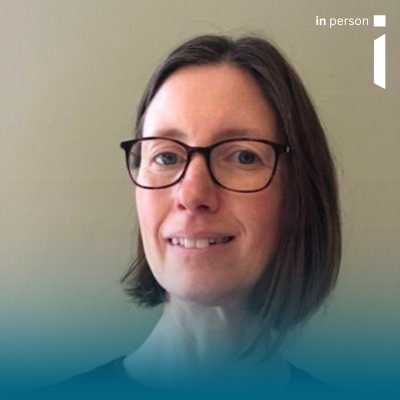
The conference first heard from Moin Saleem, a professor of paediatric renal medicine and director of Bristol Renal at University of Bristol. He has worked in the field of kidney disease for more than 25 years and has a background in cell biology and translational research. In the last seven years, he told the conference he has ventured into drug development including developing a kidney gene therapy.
“We have developed the first gene therapy platform that is suitable for rare and ultra rare kidney diseases,” he explained. However, he said that his unique experience is with science that is ready to cure patients, but the commercial environment “isn’t fit for purpose” for taking into clinics for most of the conditions classed as ultra-rare.
Drug development barriers
He began by discussing one of the main barriers to rare disease drug development currently.
“I think the drug development ecosystem remains trapped mainly by cost,” he told the conference, “including the need to substantiate every step of each individual therapy in that development pathway. The likely reality is that hundreds of rare diseases will need hundreds of individual treatments each costing in the current schema millions per patient, and that is not a sustainable model.”
He described his experiences of pitching his gene therapy to several companies and venture capitalists that invest in the rare space. “They all require a return and it means their commercial calculations are almost universally unfavourable.”
One solution he proposed was creating a new operational network that would circumvent the requirement for industry to fund ultra-rare disease therapies. This would create an alternative to the current marketing authorisation as the end point of drug development, he explained. “I think that ultra-rare indications could thrive within an investigator-led drug development pathway, with appropriate support put in place for each of the steps needed. This would consolidate real cost efficiencies and would require a systemised drug development pathway.”

Additional conditions needed to transform clinical trials
The MHRA’s transformation of regulatory pathways for rare disease will introduce flexibility, but this also requires other conditions to be in place, he said. For example, relevant manufacturing model modules that are cost effective and deliver the right manufacturing quality for large animal and toxicology studies.
“At the clinical trial authorisation phase, the requirements needed are a lighter touch,” Moin explained. “So, for example, you could reach across data from toxicology studies from similar products and natural history data could be used for controls. This could really move the needle, I think, as once you do your Phase 1 and Phase 2 trials for safety and dose escalation, then all subsequent patients could enter what I’ve called a perpetual, pivotal trial.”
This would allow all patients with that condition to be treated with the same treatment, he added. “It would effectively also give you the sustainability and a pathway to obtain clinical approval of a new product to get real access for all patients who need it.”
Moin provided more detail on his perpetual, pivotal trial suggestion and how it would work. The MHRA would have a role in monitoring the trial data in order to refine, if needed, and continue trial enrolment. The drug price would ideally remain at the cost that the specialised centre is running it at to enable NICE to grant approval for an investigational product. Following this, NHS specialist commissioning would then be in a position to grant the treatment for all patients participating in the pivotal trial.
“That’s the vision and it would mean for each individual condition, all patients with the relevant disease indication are treated,” he said. “This could potentially be rolled out for not just one or two but for multiple rare disease indications. It would hopefully be much quicker than it would be through a commercial pathway, and it could be led at scale.”
Tackling treatment inequity
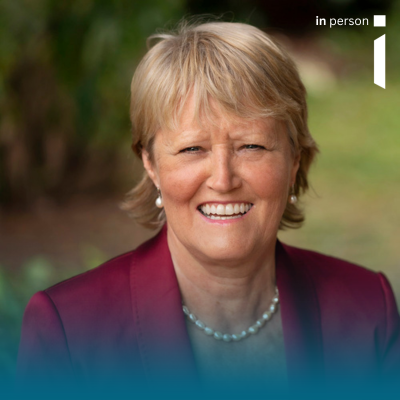
Next, the conference heard from Samantha Barber, chief executive of the charity, Gene People. She discussed the inequity that the Batten disease and CLN2 community are currently facing due to a controversial decision to withdraw treatment access for newly diagnosed children.
“Batten disease is a form of childhood dementia and it is a complex, devastating condition,” she told the conference. “There is no cure and the children sadly die.”
A treatment was developed and the primary study for the clinical trial was conducted from September 2013 to December 2014. The extension study began in February 2015 and lasted until December 2020, and involved five UK patients.
“Current estimates are that there are up to 50 children with CLN2 in the UK, but it was fewer at the time of the trial, so the proportion of children on the trial from the UK was really quite significant,” she explained.
The managed access agreement following an initial NICE process started in November 2019. At the end of the programme, there were 32 children receiving the treatment across five centres in England.
“But then tragically, a decision was made earlier this year to stop access to children newly diagnosed with CLN2 Batten disease,” she added. “This means there are some children who are receiving this treatment and some who are not. It has also been removed from the Generation Study list1 as there is no longer a treatment available. This is a failure of the system,” she said.
The loss of this rare disease being included within the newborn screening study is also difficult to take, she added, because it is difficult to ascertain true prevalence as misdiagnosis is unknown for this condition.
“The decision completely ignores the inequity this creates within a small patient population,” she said.
Greater precision and flexibility needed
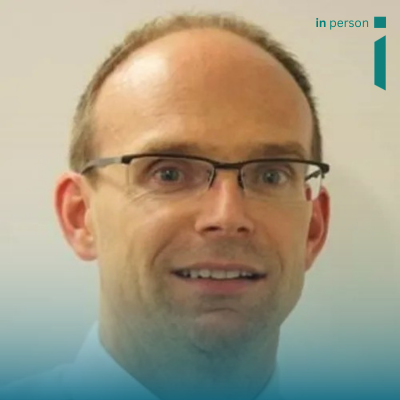
The final speaker for the panel session was Matt Bolz-Johnson, public affairs and patient advocacy lead at Chiesi UK. He left the NHS more than a decade ago as NHS England was being formed and has worked in the rare disease space in Europe. He has recently returned to the UK to find it once again at a point of change. His session identified where improvements could be made.
“We need to have greater precision around data and real-world evidence,” he told the conference. “Real-world data is generated in routine care, whereas real-world evidence analyses data to answer a specific question. One is messy and the other is generally clean and tidy because of the regulatory environment. If we start to blur the boundaries between these concepts, we start to undervalue one of the most important assets in rare diseases: routine, longitudinal data.”
When it comes to trial design, proportionate trial design is sometimes ethically necessary, but adaptive trial designs can help when traditional models struggle.
“In rare diseases, where natural history is well understood and outcomes are severe, insisting on a placebo-controlled trial can be difficult to justify,” he explained. “But, many single arm trial approaches are not seen as being as good in terms of the evidence, compared to those blind trials. Controls help us understand what happens without interventions, but when the trajectory is already clear, we need to ask what additional insights a control arm is truly providing.”
He gave an example where we readily accept that there has not been a randomised placebo control trial for parachutes, as natural history is already known. This logic is also relevant to rare diseases where the outcome is predictable, he argued.
Equity in trials is often constrained by systems, but not intent, he continued. Trial designers often operate within a regulatory reimbursement framework where a clean and tidy dataset is prioritised. However, rare disease data is messy. He warned that if the NHS does not adopt a different approach to rare diseases, it could unintentionally exclude those with greatest unmet needs.
“If we want fairer participation roll out in clinical trials, we need to align on what good enough evidence looks like,” he added.

Avoiding early market withdrawals
There also needs to be greater openness about funding gaps and partnerships should not be penalised, he said. Patient-led evidence is essential but it is rarely funded by health systems or by traditional research mechanisms.
“Working at European level for the past decade, there has been very clear proposals of rare disease funds that are put in place to support the real-world evidence infrastructure needed when something is approved early,” Matt told the conference. “This enabled us to collect real-world data. But still, we do not have that funding in place. Industry may be willing to support data collection, but we shouldn’t automatically treat that evidence as being less credible because it’s industry funded.”
For rare diseases, the cost and time required to meet regulatory and reimbursement requirements can outweigh the ability to sustain innovation, which can hinder research and development (R&D), he added. “As we’ve seen with a lot of gene and cell therapies, this can lead to early market withdrawals. This isn’t just a commercial issue, it is a system design problem.”
He also drew on his experiences of working in highly specialised national commissioning in Europe, adding that his team had a high cost drugs budget. This helped them to take a different approach when needed around how high cost drugs were assessed and implemented in highly specialised services.
“I’ve never really been convinced about how that approach with high cost drugs sits within NICE,” he said. “NICE see things in terms of quality standards and these fall short of the mark when it looks at evaluating evidence for ultra-rare conditions particularly. Maybe it’s an opportunity now to rethink where high cost drugs are assessed and perhaps we could move back to what worked before with national commissioning,” he suggested.
“If we want to advance rare disease research, innovation, trials and genomics, we need a framework that is designed for uncertainty,” he added. “A framework that is built for rare diseases, not adapted from common ones.“
Connect with Moin
Connect with Samantha
Connect with Matt
References
[1] https://www.generationstudy.co.uk/
in person keeps you up to date with RARE conference insights. To access more in person articles click below.