


Putting you in the heart of the rare community – Alpha-1 Europe Alliance

Estimated reading time: 6 minutes
Patient advocacy groups deliver their top three unmet needs and main asks of industry to best serve their rare community. This week’s insights come from Fernanda Aspilche Ferro, president, Alpha-1 Europe Alliance
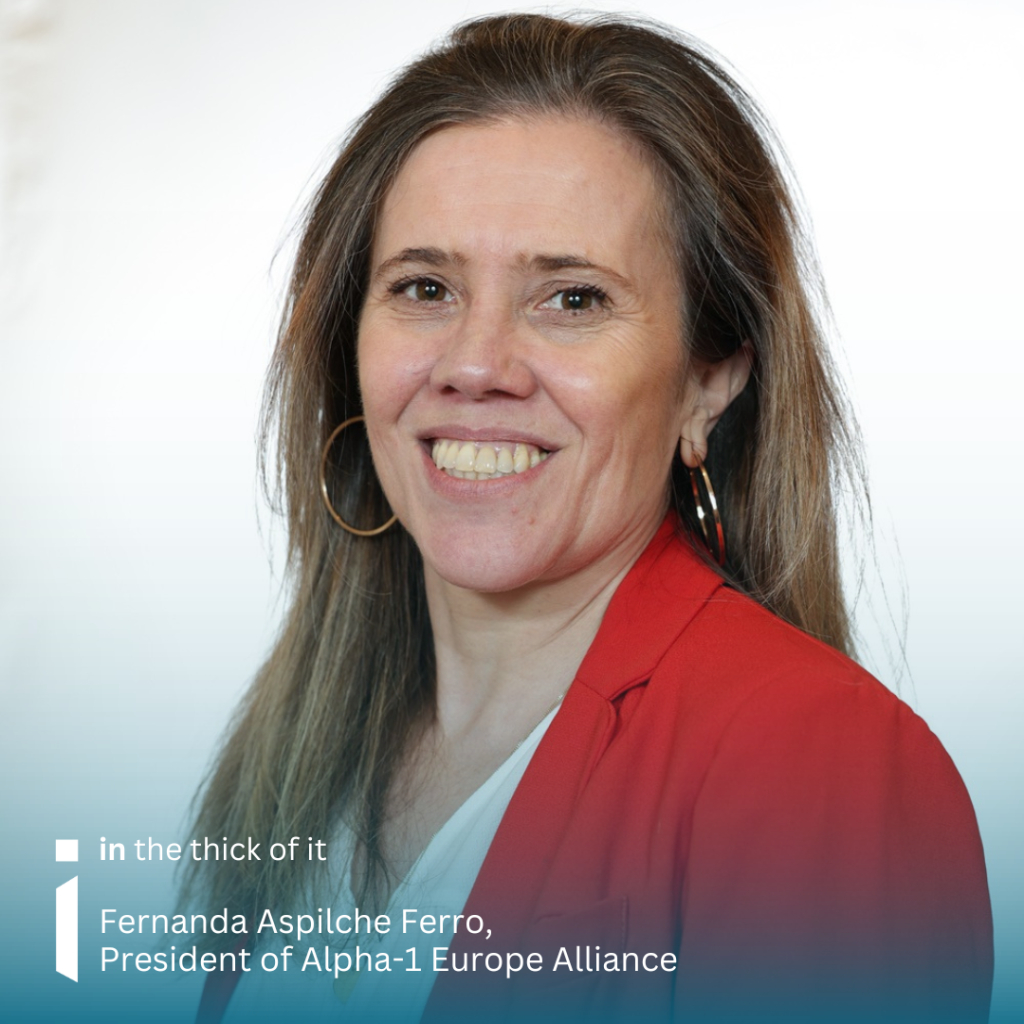
The Alpha-1 Europe Alliance (A1EA) is a nonprofit organisation representing national patient groups in 14 European countries. Established in Belgium in 2023, our mission is to drive systemic change across Europe for people affected by Alpha-1 antitrypsin deficiency (AATD). We envision a Europe where everyone living with Alpha-1 has access to accurate diagnosis, personalised care, innovative therapies – and ultimately, a cure. We work to unite patient voices, foster cross-sector collaboration and influence European health and research policy with one clear goal: equity in access to care and treatment.
Alpha-1 Antitrypsin Deficiency (AATD), also known as Alpha-1, is a genetic condition that can affect the lungs, liver, and, less commonly, the skin. It is caused by reduced levels or abnormal forms of alpha-1 antitrypsin (AAT), a protein mainly produced in the liver. AAT plays a key protective role in the lungs, helping to prevent tissue damage caused by inflammation, infections and inhaled irritants.
In AATD, abnormal AAT may accumulate in the liver instead of being properly released into the bloodstream. This can lead to liver disease, while the reduced availability of AAT in the blood leaves the lungs more vulnerable to damage. In some cases, AATD can also cause a skin condition called panniculitis.
Diagnosis is usually made through blood tests measuring AAT levels, followed by phenotyping or genetic testing to identify the specific AAT variant.
What are your top three unmet needs or main asks of industry to best serve your rare ecosystem?
Awareness of Alpha-1 Antitrypsin Deficiency (AATD) remains critically low, resulting in significant underdiagnosis and missed opportunities for early intervention. Many people live for years with respiratory, hepatic or dermatological symptoms before receiving a correct genetic diagnosis, while awareness of available therapies also remains limited among both patients and healthcare professionals.
AATD is a rare genetic condition with multisystem impact, recognised under ORPHAcode 60 and classified in ICD-10 (E88.01). However, due to its heterogeneous presentation and overlap with common conditions such as COPD, adult-onset asthma, bronchiectasis, liver disease, panniculitis and vasculitis, it is frequently overlooked in clinical practice. We call for a coordinated European strategy to strengthen awareness, promote earlier diagnosis and improve implementation of existing clinical guidelines. This should include systematic testing within relevant clinical pathways, particularly for patients with COPD, adult-onset asthma, unexplained liver disease, specific skin manifestations and those with a family history of AATD.
Greater collaboration between policymakers, healthcare professionals, industry, researchers and patient organisations is essential to improve education, expand diagnostic capacity and integrate AATD more effectively into respiratory, hepatic, dermatological and rare disease frameworks. Improving awareness and early diagnosis is critical to enabling timely intervention, reducing irreversible organ damage, increasing access to appropriate care and treatment, and ultimately improving quality of life for people living with AATD across Europe.

Despite progress in medical science and cross-border collaboration, access to care and treatment for people living with AATD remains highly unequal across Europe. Many patients continue to experience delayed diagnosis, fragmented care pathways and significant disparities in access to therapies depending on their country of residence. As part of the implementation of the Roadmap to 2030, the A1EA has established a dedicated advocacy workstream to advance its priorities through evidence-based policy engagement and stakeholder collaboration. This work is structured around the Call to Action and translated into a focused Action Plan for 2026.
A central priority is ensuring equitable access to treatment and therapies. Today, only a limited number of European countries fully reimburse augmentation therapy, leaving many patients without access to standards of care. To address this inequity, we call for the development of dedicated funding mechanisms for AATD, including national or regional reimbursement frameworks, accelerated and simplified access pathways, early access programmes and innovative reimbursement models. Ensuring timely and equitable access to treatment is not only a matter of clinical need but also of health equity across Europe. Strengthening access pathways will be essential to improving outcomes and reducing the long-term burden of disease for patients and healthcare systems alike.

We urge the EU to strengthen and sustain long-term funding for Alpha-1 Antitrypsin Deficiency (AATD) research through key programmes such as Horizon Europe, including ERDERA, and the EU4Health programme. Continued investment is essential to advance understanding of the disease, accelerate innovation and support the search for effective treatments and, ultimately, a cure.
We also call for reinforced collaboration between leading European research and clinical networks, the Alpha-1 patient community and the European Alpha-1 Research Collaboration (EARCO). Strengthening these partnerships will enhance knowledge-sharing, support the centralisation of critical clinical data, and improve patient referral pathways across Europe.
Equally important is the meaningful involvement of patients in all stages of decision-making. Patient communities bring essential lived experience that should directly inform health policy, research priorities and clinical development. We therefore call on European and national authorities to systematically include AATD patients and organisations in therapy evaluations, including processes at the European Medicines Agency (EMA) and national health technology assessment (HTA) bodies. In addition, the full socioeconomic impact of AATD on patients, caregivers and wider society must be consistently considered in all value assessments and funding decisions. Embedding the patient perspective across research, policy and health systems will ensure more relevant, equitable and effective outcomes for the AATD community in Europe.
Connect with Fernanda
in the thick of it puts you in the heart of the RARE communities you serve. To connect with more RARE communities click below.