Screened is not saved: building access into the promise of newborn screening

Estimated reading time: 11 minutes
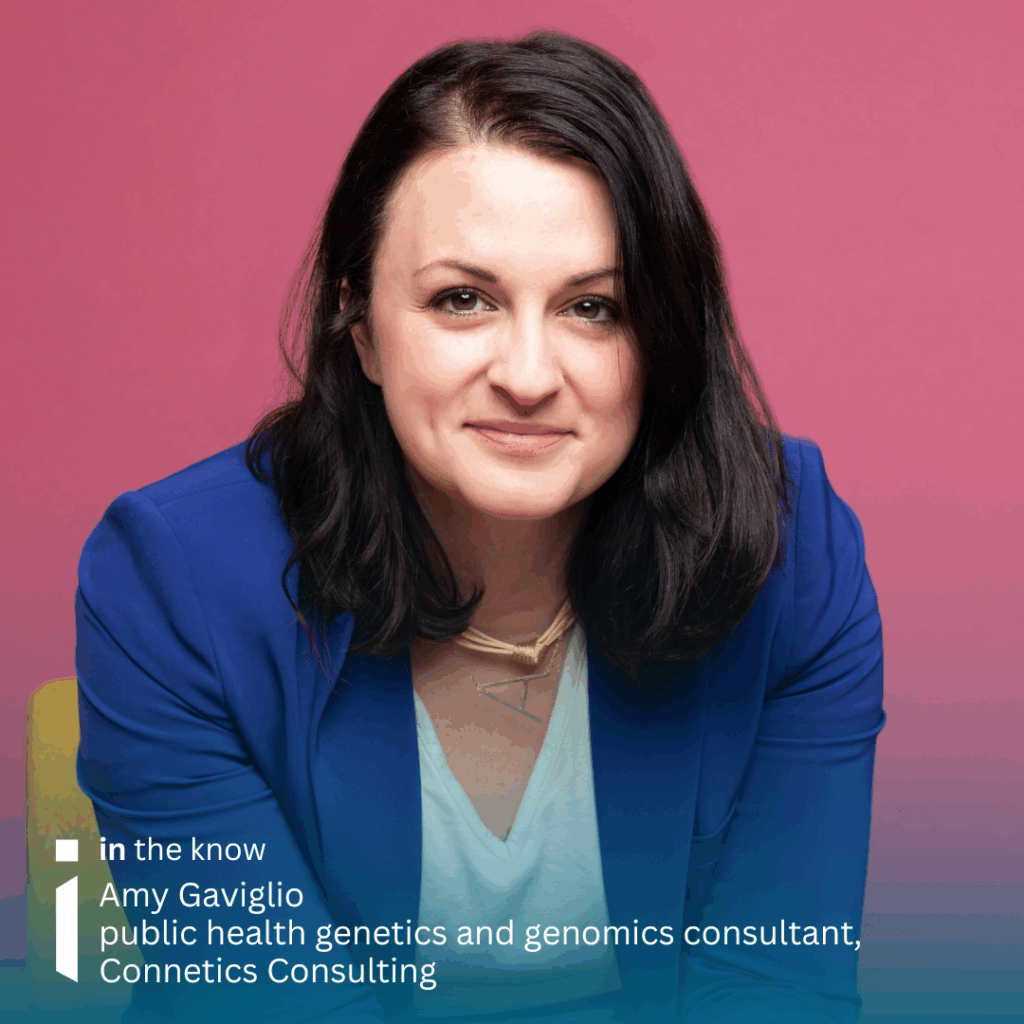

Written by Amy Gaviglio, Connetics Consulting, with insights from Dr Aaron Goldenberg
Newborn screening saves lives, but mandates are incomplete if they don’t ensure equitable access to essential treatments and care
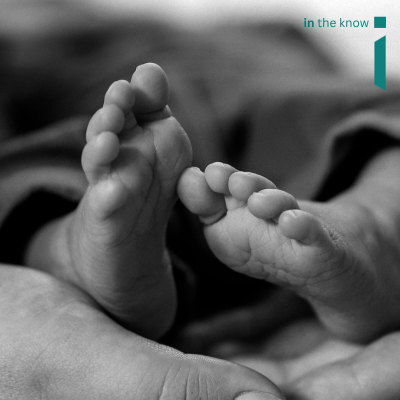
There is a moment, a few days after a baby is born, when a family who believed everything was fine receives a phone call. Their newborn has screened positive for a rare disease they have likely never heard of. In the version of events we all hope for, that call is the beginning of a coordinated journey: confirmatory testing, an appropriate specialist, a therapy started early enough to drastically improve health outcomes. In another version, the same call begins a different kind of ordeal: one measured in the distance to the nearest treatment centre, in prior authorisation letters, in the slow realisation that the therapy that made it appropriate to screen for the disease in the first place is not, for them, actually within reach.
Same screen. Same result. Two very different outcomes. And the difference between them frequently has nothing to do with the baby, the screening assay or the therapy itself.
The principles that still govern newborn screening suggested that this should not happen. When Wilson and Jungner set out their criteria more than half a century ago, they treated screening and treatment as a single obligation rather than two.1 There should be an accepted treatment. Facilities for diagnosis and treatment should be available. There should be an agreed policy on whom to treat.
Screening was never meant to be an act of detection that stands on its own. It was meant to be the first step in a sequence that ends in care. But the principles don’t clearly delineate availability and acceptability from accessibility.
Where the mandate ends
Newborn screening (NBS) is one of the very few things in medicine we compel. We justify that unusual authority on serious ethical ground: the harm of a missed diagnosis outweighs a parent’s right to consent, and the jurisdiction has a legitimate interest in the welfare of the child. This is the logic of legal doctrines like parens patriae, which exist as justifications for a public health mandate, permitting the state to take a narrow set of decisions out of parents’ hands. Universality inherently follows from this mandate: because screening is compelled, it is able to reach nearly every newborn.
But let’s look closely at what that logic actually covers. It makes the screen mandatory. It says nothing about the therapy. The public health obligation to families is strongest at the time of the heel stick and it quietly dissolves at the door of the clinic. We compel the beginning of the process and then leave the rest of it—the confirmatory testing, the specialist visit, the therapy, the insurance appeals—to families and clinicians, inside health systems that were never built to truly deliver equity. A mandate that ends at detection is a fundamentally different kind of promise: one that does not guarantee benefit, only information. And for a family with a positive result and no realistic path to diagnosis or therapy, information is not always the powerful tool we want it to be.
This is not a new problem
None of this tension arrived with gene therapy. Families of children with inborn errors of metabolism have spent decades fighting simply to have life-saving medical foods and formulas covered by insurance, an inequity that has quietly affected patients and families for a generation. And where formal systems fail, informal ones inevitably take their place. Medical crowdfunding has become an ordinary route to orphan therapies. And while a successful campaign shows what generosity can do, it also lays bare everything troubling about relying on it: the questions of justice, of power, of privacy, of who happens to have a moving story and a large enough network. Crowdfunding is what access looks like when we have decided, by default, not to build it.
What has changed is the scale of what now waits on the other side of a positive screen. The diseases we are adding are increasingly treated with more complex gene and cell therapies with high upfront costs, delivered at a small number of specialised centres, and are most effective when administered inside a narrow window of time.
Compounding this is the recent FDA pathway for individualised therapies designed for a single patient. This is an extraordinary scientific step, but one that also multiplies the access questions rather than answers them. For decades, the availability of an effective treatment worked as one of the primary threshold questions for adding a new condition to NBS panels, and it worked because the answer could very well be no. Individualised therapies fundamentally change the equation of that threshold. What we now have to assess is not only whether a broad treatment is currently available, but whether one might be able to be engineered ad hoc for new diseases, inside the window that makes finding affected infants meaningful.

The question beyond the evidence review
This is the uncomfortable thing the current therapy landscape asks us to face. Recent additions to NBS panels represent diseases whose treatments fall squarely within the expensive, centre-based, time-sensitive paradigm. Today, a disease earns its place on a panel largely on the strength of being treatable. But if access to treatment is limited by geography, by insurance status, by whether a family can take weeks to months away from work and other children to travel to one of a handful of qualified centres, then the word treatable may have incredibly variable meaning for different families. The evidence review asks whether an effective treatment exists. It rarely asks whether available treatments will reach each child who screens positive.
That forces the treatability question to be held in two hands at once. On the one side, it may be inappropriate to let the difficulty of guaranteeing equitable access become a reason not to screen, because without screening no child reaches the therapeutic window and the inequity becomes total. On the other, if screening is the sole path to a therapy that works, then finding a baby and failing to deliver that therapy is a loss we have chosen in advance. Neither hand can be set down. What that means is that accessibility cannot keep being treated as a downstream implementation detail, handled condition by condition after the decision to screen has already been made. It has to be taken up as a whole, and at a level above individual screening decisions: who can reach a treating centre, who can afford to stay there, who is covered, who is reimbursed, who is referred across state and national lines and what happens to the children for whom none of that is arranged.
We have not had that conversation, and two assumptions have made it easy not to. The first is that inequity is inevitable, because health systems are inequitable and screening cannot be expected to repair what it did not create. The second is that new therapies will reach everyone eventually, if we are only patient enough. Neither is a fact.
Availability, accessibility, equity
Part of what keeps those assumptions alive is that we use a single word, access, to carry three quite different meanings. Remember: Wilson and Jungner principles say that an effective treatment has to be available. Availability just means the therapy exists. Accessibility means this particular family can actually get to it. Equity means that getting to it does not depend on race, disability, income or geography. A therapy can be entirely available and almost completely inaccessible, and when accessibility follows the usual social fault lines, what we have is availability without accessibility.
The encouraging news is that this gap is closable, and we have early proof that it can be. But the case for closing it does not rest only on what has worked. It rests on what a mandate is. When a jurisdiction compels the screen, it does something to families that they did not choose: it goes looking, on their behalf and without their asking, and it hands them an answer. That act is defensible only if the system stands behind what it finds. To mandate detection is therefore to take on the obligation to work toward access.
Three obligations towards access follow. Continuity of care: no family should be left holding a diagnosis and nothing else. Accountability: the mandate moves responsibility onto the system, not onto the family it was exercised upon. Equitable navigation: the labour of understanding a result, finding a specialist and securing a therapy cannot fall most heavily on the families with the least time and energy to spare. None of these are discharged by the screen itself. A mandate without the support to make it real is, in the end, a mandate without meaning.
Which raises another question: whose obligation is it exactly? If the duty to screen belongs to the public health system, does the duty to build a path to treatment belong there too? Public health programmes have fair grounds to say no. Their statutory authority, their funding and their expertise typically are only built for identification and short-term follow-up; asking a NBS programme to also underwrite therapy access is asking it to do something it was never designed or resourced to do. But the obligation cannot simply be handed to the healthcare system either, because the healthcare system did not make the promise. It did not compel the test, and, thus, did not necessarily undertake what the test sets in motion.
The most honest answer is probably that the obligation is collective, shared across public health, clinical care, payers, treatment centres, professional societies, advocacy organisations and the companies whose therapies made the condition screenable in the first place.
But collective is a word that can hide as easily as it can clarify. An obligation everyone holds is an obligation no one is accountable for, unless we are willing to say specifically who does what, and by when. In other words, it is easy to say we are all part of the solution without actually defining the roles and responsibilities within that solution.

What this means for industry
For industry, this is all incredibly relevant. A therapy is the reason a disease can clear the treatable bar. Inclusion on the Recommended Uniform Screening Panel (RUSP) or jurisdictional screening panels is not something that simply happens to a company; it is an asset companies actively pursue, because it de-risks a pipeline, forecasts a treatment population and signals durability to investors. It is not logical to seek the benefit of the mandate and decline responsibility for the promise the mandate makes.
So, what would it look like to take the obligation seriously? It would mean helping to build access infrastructure, treatment-centre networks, cross-jurisdictional coverage agreements, travel and housing support, from the beginning rather than after the first family is stranded and building it through the kind of durable, multi-stakeholder alliances that can hold it steady over time, rather than through a single company’s programme.
Much of this work is pre-competitive: a shared referral network, or a common approach to cross-state Medicaid coverage, benefits every therapy that follows, which is exactly the sort of infrastructure a coalition can build and no single sponsor should own. It means bringing honest access modelling to the nomination itself: if you are supporting a disease’s addition, arrive with a realistic map of where the therapy will and will not reach, and a commitment to closing those gaps rather than a hope that someone else will. It would mean designing patient assistance and payment models for uninsured and publicly insured families, so that crowdfunding is never the safety net of record. And it would mean measuring success by the things that actually reflect the promise—reach, follow-up completion, time to treatment across geographies and payers—not only by speed and uptake of screening
The promise we are actually making
The heel stick is where the promise is made. It should not be where the promise ends. When we tell a family we have found something, we are making a commitment, whether we intend to or not, and we owe them more than the name of what their child has.
We built these programmes so that no baby would be missed. The harder and still unfinished work is making sure that no baby is found and then left behind.
Connect with Amy
References
[1] https://iris.who.int/server/api/core/bitstreams/762f0d2f-4225-46df-b060-c39b37b9d76d/content
in the know brings you the latest conversations from the RARE think tank. To access more in the know articles click below.