

Bridging innovation and access: How medical affairs shapes the future of rare disease therapies

Written by Amanda Henkel, practice area lead, rare disease, Inizio
Estimated reading time: 9 minutes
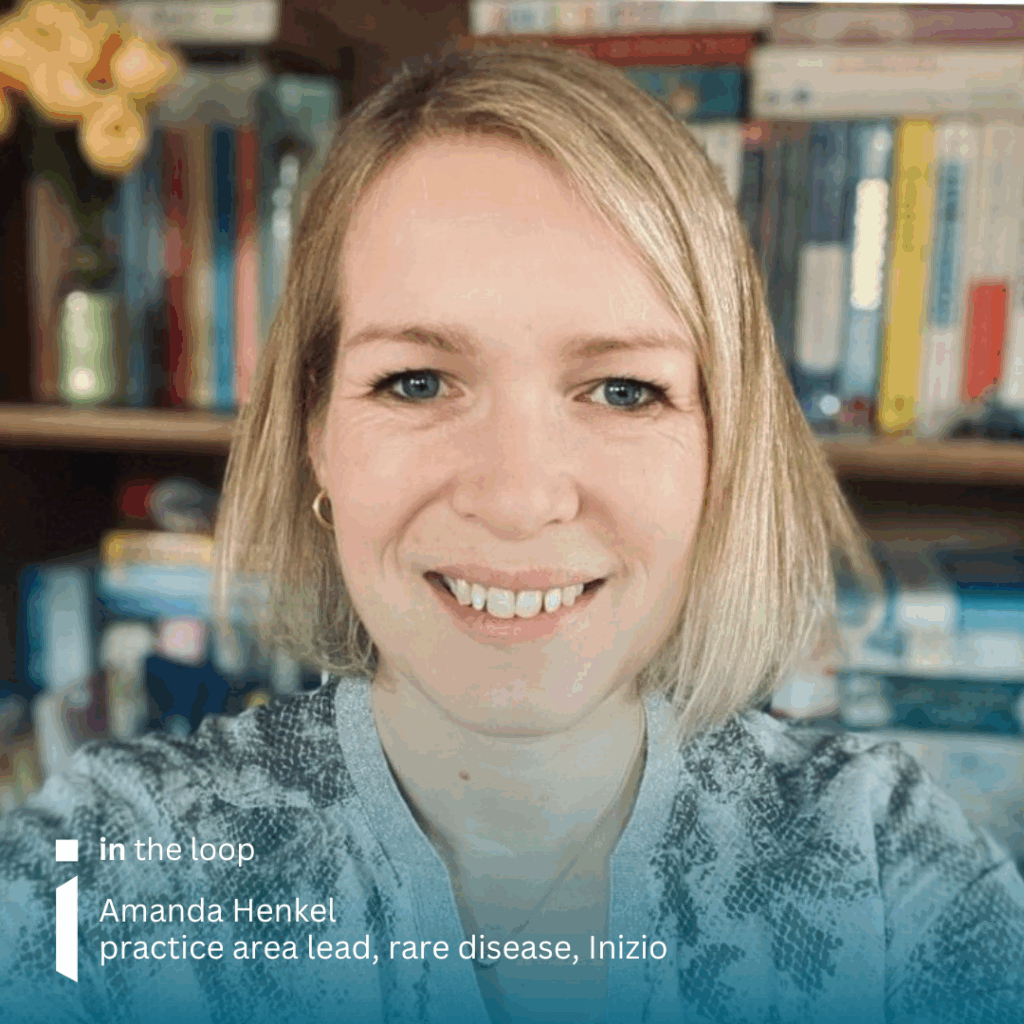

Amanda Henkel, practice area lead, rare disease at, Inizio outlines how medical affairs can help bridge the gap between scientific innovation and equitable patient access
Rare diseases may affect small populations individually, but collectively they impact more than 300 million people worldwide1. Advances in genomics and molecular biology have enabled innovative modalities, including cell and gene therapies (CGTs), that are redefining what is clinically achievable. However, as innovation accelerates, the path from discovery to real-world adoption has grown more complex. Small, heterogeneous patient populations and evolving evidence expectations continue to challenge successful development and access.
Within this environment, medical affairs plays an increasingly critical role. Positioned at the interface of science, clinical practice and health-system decision-making, the function helps ensure that promising therapies are appropriately evaluated and effectively integrated into care.
But how do Medical Affairs can help bridge the gap between scientific innovation and equitable patient access?
The evolving landscape of rare disease research
The U.S. Orphan Drug Act of 1983, together with subsequent international policies, marked a pivotal shift in rare disease drug development by providing the incentives needed to move rare diseases from a philanthropic niche to a viable area of sustained therapeutic innovation2. In the decades since, these policies have contributed to hundreds of orphan drug approvals3, demonstrating how focused legislative action can drive tangible scientific and commercial progress.
Genomic sequencing now enables precise identification of causative mutations, supporting more targeted interventions. Technologies such as CGTs, antisense oligonucleotides and RNA interference are redefining what constitutes a “treatable” condition. Diseases once considered untreatable, such as certain forms of inherited blindness or spinal muscular atrophy, now have approved therapies that address their underlying genetic drivers4, 5.
Digital and social connectivity has also reshaped the rare disease ecosystem. Patient-advocacy organisations, often founded by affected families, have become influential partners in research and policy, accelerating recruitment and expanding funding pathways, while online communities provide valuable insights into disease burden and unmet needs.
However, progress has also raised expectations. As precision science advances, stakeholders must navigate high development costs and the need for robust real-world evidence. Regulatory approval increasingly marks a transition rather than an endpoint, with sustainable success depending on continued evidence generation and effective collaboration across the full product lifecycle.
Emerging approaches in the treatment of rare diseases
Rapid scientific progress is reshaping how new therapies are discovered and developed. A field once dominated by repurposed treatments and incremental advances is now defined by modalities capable of addressing genetic defects at their source.
Cell and gene therapies (CGTs)
CGTs remain the most visible breakthroughs, offering the potential for long-term or even curative benefit. By delivering functional genes or engineered cells, these therapies can restore or replace defective biological pathways. Approved treatments for conditions such as Leber congenital amaurosis and spinal muscular atrophy demonstrate the potential for meaningful disease modification. Ongoing innovation in vector design, manufacturing and delivery is expanding applicability to a broader range of genetic disorders.
Nucleic acid–based therapeutics
Technologies such as antisense oligonucleotides and small interfering RNAs, enable precise targeting of messenger RNA, offering a flexible platform for modulating protein expression. They are particularly promising in neurological and metabolic diseases where small molecules often fall short. Advances in chemical modification and targeted delivery are improving durability, specificity and scalability, critical factors for translating early-phase promise into long-term therapeutic options.
Enzyme replacement and substrate-reduction therapies
Established modalities such as enzyme replacement therapy and substrate-reduction therapy continue to play a central role, especially in lysosomal storage disorders. While not curative, these treatments have evolved with improved formulations, dosing regimens and adjunctive approaches that enhance efficacy and patient experience. Their refinement underscores the value of a multimodal therapeutic landscape that incorporates both established and emerging technologies.

Digital health and data innovation
Digital tools are now integral to development. AI-enabled diagnostics, wearable sensors and remote monitoring technologies support earlier patient identification and more sensitive measurement of disease progression, enabling richer and more continuous data generation in small populations.
Collectively, these advances position rare disease research as a proving ground for precision medicine—where biological insight, therapeutic modality and data innovation converge. The challenge ahead lies not in scientific possibility, but in ensuring that these breakthroughs translate into timely, equitable access
Navigating commercialisation in rare diseases
Every step from diagnosis to reimbursement presents challenges that can delay or prevent access to therapy. For many conditions, diagnostic journeys still span years, with time to diagnosis ranging from months to over 20 years6. Low disease awareness, overlapping symptoms and limited availability of specialized testing all contribute to delayed or missed diagnoses. Even when therapies exist, eligible patients may be widely dispersed across geographies and healthcare systems, complicating trial recruitment, early access and post-marketing evidence generation.
Traditional clinical trial designs may be difficult to execute in small and heterogenous populations, limiting the ability to generate statistically robust data. This uncertainty can affect regulatory decision-making and create barriers during payer review, where expectations for long-term evidence continue to rise.
Commercialisation introduces further complexity. High development and manufacturing costs (particularly for advanced modalities such as CGTs), combined with small target populations, inevitably drive pricing scrutiny. Payers increasingly seek assurance of durable benefit before committing to reimbursement, yet long-term follow-up data are rarely available at launch. As a result, market access often depends on innovative evidence strategies, including natural history studies, disease registries, post-approval commitments and outcomes-based agreements tied to real-world performance.
At the same time, patient expectations are shifting. Advocacy organisations and online communities now influence research agendas, accelerate trial enrolment, inform policy and help define value. Their involvement brings opportunities for partnership but also requires clear and credible communication.
Bridging scientific progress and real-world access requires alignment across researchers, clinicians, regulators, payers and patient communities, supported by robust evidence and transparent communication. This is where Medical Affairs is uniquely positioned to lead.
The expanding influence of medical affairs in rare diseases
In the rare disease ecosystem, where evidence gaps are wide, populations are small, medical affairs plays a critical role in translating scientific discovery into accessible treatment. Positioned between research, clinical practice and health system decision-making, the function connects the insights and relationships needed for new therapies to achieve their full potential.
1. Clinical development support
Medical affairs helps shape more informed and feasible clinical trial strategies. Early engagement with key opinion leaders, investigators and clinical networks ensures that endpoints reflect real-world disease impact and that study populations capture patient diversity. This input strengthens protocol design, optimises site selection and enhances recruitment.
2. Education and stakeholder alignment
Medical affairs fosters understanding and alignment across the healthcare system. Many clinicians may go their entire careers without encountering a rare disease, making targeted scientific exchange essential. Medical Affairs teams interpret complex clinical data, contextualise emerging evidence and support healthcare professionals in disease recognition and management. They also facilitate dialogue across academia, industry and regulators to ensure shared understanding of therapeutic value.
3. Evidence generation beyond trials
Long-term real-world evidence is essential for sustained access. Medical affairs often leads initiatives such as patient registries, observational studies, natural history research and patient-reported outcome development. These activities strengthen the evidence base, inform clinical practice and refine therapeutic positioning.
4. Collaboration with patient and payer communities
Close collaboration with patient-advocacy groups helps identify unmet needs and ensure educational materials and evidence plans are patient-centred. Increasingly, medical affairs also supports innovative reimbursement models (such as outcomes-based agreements), which depend on reliable data collection and ongoing scientific dialogue with payers.
Ultimately, medical affairs ensures rare disease innovation is both scientifically rigorous and practically achievable. By integrating clinical insight, evidence generation and stakeholder engagement, the function strengthens the bridge between laboratory breakthroughs and patient access.

Bridging innovation and access
As scientific discovery expands what is possible in rare disease treatment, success increasingly depends on how effectively those advances are translated into equitable, real-world access. This complexity demands sustained collaboration among researchers, clinicians, regulators, payers and patient communities, supported by shared data and clear communication.
Medical affairs sits at the centre of this collaboration. By combining scientific expertise with evidence generation, education and cross-stakeholder engagement, the function provides the continuity needed across the product lifecycle. It ensures that innovation is clinically relevant, that emerging data are accurately interpreted and that healthcare systems are prepared to adopt new therapies responsibly and effectively.
As breakthrough science rapidly redefines what can be treated, medical affairs helps ensure that progress translates into tangible impact for patients, bridging the gap between discovery and delivery..
Connect with Amanda
References
[1] Rare diseases: a global health priority for equity and inclusion. (2025). In Seventy-eighth World Health Assembly, Seventy-eighth World Health Assembly. https://apps.who.int/gb/ebwha/pdf_files/WHA78/A78_R11-en.pdf
[2] Hannah-Alise Rogers and Hassan Z Sheikh. (2024). The Orphan Drug Act: Legal overview and policy considerations. In CRS Reports. https://www.congress.gov/crs-product/IF12605
[3] https://rarediseases.org/wp-content/uploads/2023/11/NORD-ODA-Explainer.pdf
[4] Deng, C. et al. (2022). Real-world outcomes of voretigene neparvovec treatment in pediatric patients with RPE65-associated Leber congenital amaurosis. Graefe S Archive for Clinical and Experimental Ophthalmology, 260(5), 1543–1550. https://doi.org/10.1007/s00417-021-05508-2 https://pmc.ncbi.nlm.nih.gov/articles/PMC9010358/
[5] Blair, H. A. (2022). Onasemnogene abeparvovec: A Review in Spinal Muscular Atrophy. CNS Drugs, 36(9), 995–1005. https://doi.org/10.1007/s40263-022-00941-1 https://pubmed.ncbi.nlm.nih.gov/35960489/
[6] Phillips, C. et al. (2024). Time to diagnosis for a rare disease: managing medical uncertainty. A qualitative study. Orphanet Journal of Rare Diseases, 19(1), 297. https://doi.org/10.1186/s13023-024-03319-2 https://pmc.ncbi.nlm.nih.gov/articles/PMC11323401/
in the loop lets you stay informed with all the latest issues from the world of RARE. To access more in the loop articles click below.