
Daniela Rogoff, chief medical officer, skeletal dysplasia – BridgeBio Pharma

Estimated reading time: 6 minutes
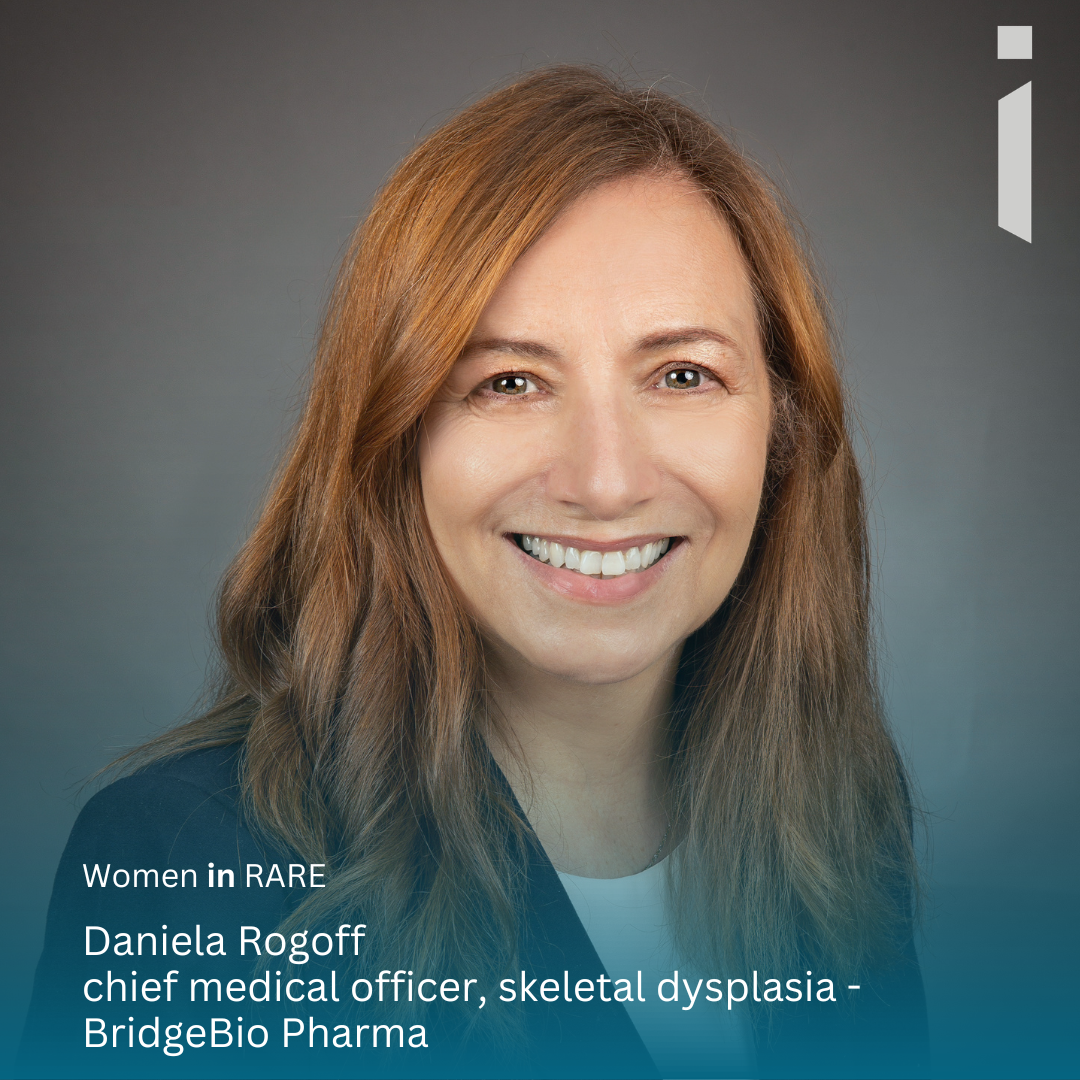

“What keeps me re-committing, day after day, is knowing that behind everything we do there is a person waiting or hoping for a new treatment.”
I am a paediatric endocrinologist originally from Argentina, where I completed my medical school, residency, fellowship and my PhD. I always wanted to understand how the body works to better understand what happens when it doesn’t, and that curiosity pulled me toward research.
I came to the US to do research at the NIH and continued in academia at UT Southwestern Medical Center in Dallas. After five years in research, I moved to the pharmaceutical industry, where I held several roles in medical affairs before joining clinical development. I have spent the last 13 years in clinical development, working in different fields, and for the past seven years I have been part of QED/BridgeBio, working in the development of infigratinib in skeletal dysplasia, where I’ve had the incredible opportunity to watch the programme in achondroplasia go from phase 2 to regulatory filings, and hopefully soon to the children who can benefit from it.
What motivated you into your chosen career path?
I enjoyed research in academia, but I was missing something that translated more directly into helping people. So, I moved to industry, starting in medical affairs, and when the chance came to move into clinical development, I found my passion. It brought together everything I love: medicine and science, the challenge of strategic thinking and the hope of making a meaningful difference in someone’s life. I was lucky to have mentors who believed in me and pushed me to continue learning and to think critically.
What keeps me re-committing, day after day, is knowing that behind everything we do there is a person waiting or hoping for a new treatment. That creates a sense of urgency, responsibility, and an obligation to never forget what matters the most, that is the people we are hoping to serve.
What do you see as some of the opportunities as a woman in your field?
I think that, as women, we have a real opportunity to change what leadership looks like in this field. There are more of us in the room than there were when I started, and every one of us makes it easier for the next person to picture herself there.
In rare disease especially, the way many women tend to lead—listening, building consensus, paying attention to the person and not only to the data—is exactly what the work needs.
Developing a medicine for rare conditions means that you work together with a community, advocacy groups and clinicians who know each person by name. That kind of empathy is not a soft skill, it shapes how you design a trial, which outcomes you choose to measure, how you work when you know that every minute counts.
We also have the opportunity to mentor. I was lucky as I had wonderful mentors and teachers which made a tremendous difference in my career. Now I try to do the same.
And there is the opportunity to bring your whole self to the work—to be a physician, a scientist, a mother, someone with strengths and areas for growth, and a different way of looking at a problem—and to treat all of that as an asset rather than as something to manage.
What are some of the barriers to success as a woman in your field?
It is still a field largely dominated by men and you have to learn to make yourself heard and to trust yourself.
You spend energy calculating how hard to push, whether a question will be read as a valid one or as a gap in your knowledge, and that is energy that is not going into the work itself.
Progress also tends to be slower. Women are more often advanced on demonstrated performance and men on perceived potential, which means women spend longer proving what they have already shown they can do.
Then there is life and work balance, which is the challenge I hear and experience the most. Drug development is long, unpredictable and demanding, and many women make quiet trade-offs that never appear on a CV. It is very easy to get pulled into work and lose perspective, and that is something I have to be deliberate about.
None of this is unsurmountable, and I have watched all of it shift over the course of my career. But these barriers are still real and naming them matters as they lead to change that will help the women coming up behind us.
What is one piece of advice you would give your 10-year-old self?
Follow your dreams and trust yourself. Don’t accept that something has to be done a certain way just because it has always been done that way. Don’t get discouraged when things don’t work out and take the opportunities when they come.
Someone once told me that the hard part is getting in the door—after that, it is up to you to show what you can do.
Can you tell us about your current work priorities and focus or a particular project you are working on?
My focus is the clinical development of infigratinib for children living with skeletal dysplasia. I have been with QED/BridgeBio since 2019, and during this time the programme in achondroplasia has gone from the first child dosed in a clinical study to regulatory filings. Few people get to see a programme go the whole way, and doing it alongside a team that shares your same passion and values is an even greater privilege.
Day to day, my priorities are the ones that come with a programme at this stage: the rigor of the late-phase data, the regulatory interactions, the long-term follow-up that tells us how children do over years rather than months, and the questions about which other conditions this science might be able to reach.
The last stretch of a programme demands as much care as the first. The priority underneath all of it is staying close to the community. Early on, we spent a lot of time listening to families and to clinicians about what actually matters in daily life. Those conversations changed how we think about what success looks like, not just a number on a growth chart, but function, independence, the everyday things a child can do more easily. That is the standard I want us to hold to.
The other thing I care about is the team. Rare disease development is long, and it asks a lot of people. Keeping a team engaged, inspired, excited, focused on the science, and deeply connected to the reason we are doing this is, I think, as much a part of my job as any document or protocol I write.
Connect with Daniela
Women in RARE is a celebration of women working in the RARE space in science, research, industry and advocacy. To access more Women in RARE articles click below.