

Dr Martina Rodie, Consultant Neonatologist NHS Greater Glasgow & Clyde and chair of Scottish Government Rare Disease Implementation Board

Estimated reading time: 3 minutes
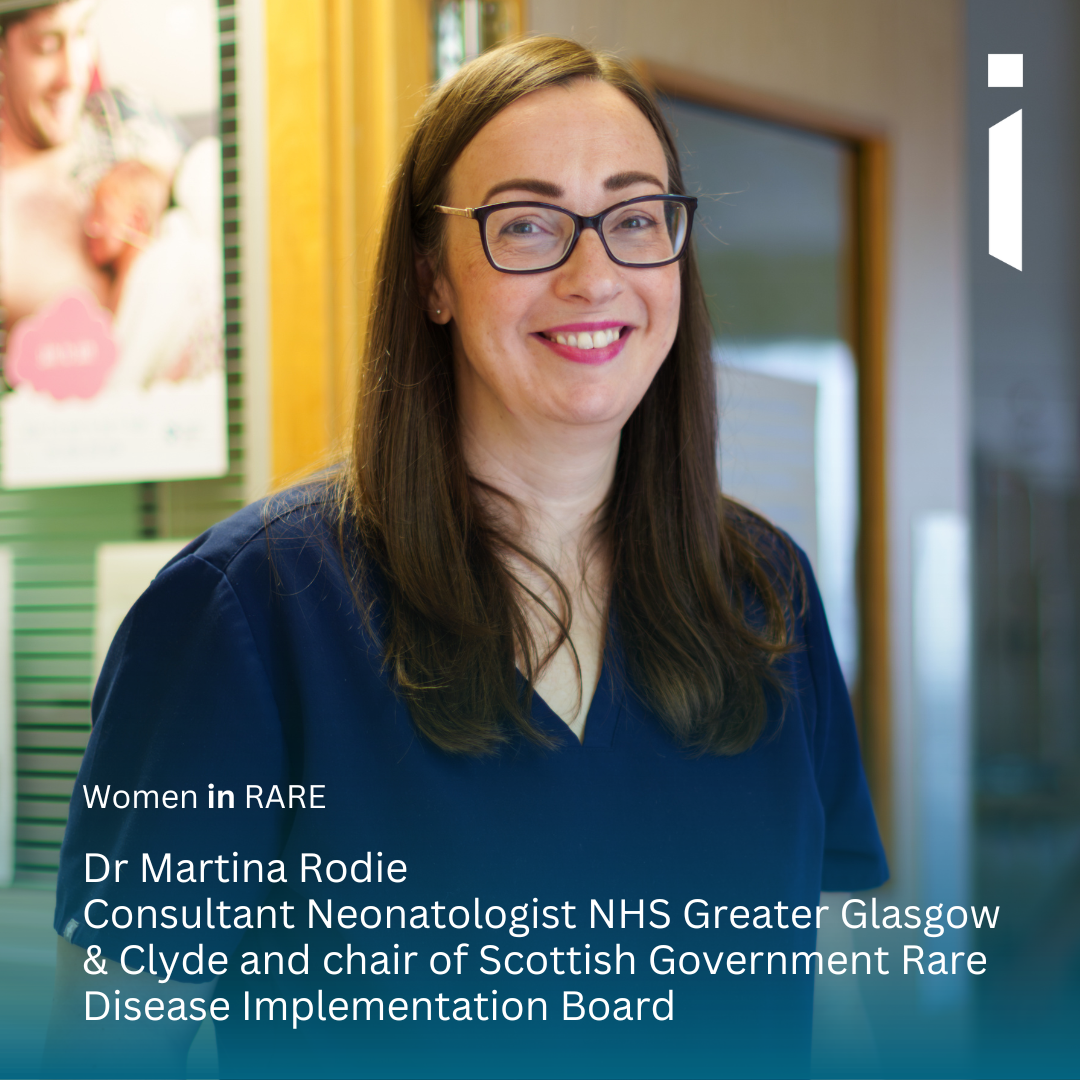
“I am working closely with the Scottish Government and other colleagues to ensure that patients affected by rare conditions are not forgotten or overlooked and that all future frameworks include them.”
I have been a neonatal consultant for nearly 10 years and I love my job. I work in Scotland’s largest neonatal unit and it is a real privilege to care for some of Scotland’s sickest babies—many of whom are affected by a rare condition. I was the clinical lead of The Office for Rare Conditions Glasgow for many years and enjoyed working with inspirational families and professionals from the rare community. As chair of the Rare Disease Implementation Board (RDIB) in Scotland I aim to improve the lives of those affected by rare conditions by guiding policy development.
What motivated you into your chosen career path?
I have always loved working with children and their families and I’m particularly interested in complex, rare and unusual conditions. My PhD studies involved rare conditions and I really enjoy continually hearing of and learning about new conditions.
What do you see as some of the opportunities as a woman in your field?
There are great opportunities for woman in the field of medicine and in the field of rare conditions. Neonatology and paediatrics in general tend to have more women than men. They are family friendly specialties and many of my female colleagues work less than full time and juggle other commitments. Opportunities include developing a special interest in rare disease, coordinating multidisciplinary care, genomics, research, national and international leadership, education, digital innovation and most importantly patient and family partnerships.
What are some of the barriers to success as a woman in your field?
Often women like myself have other caring commitments whether that is for children or elderly family members and it can be difficult to successfully juggle. Balancing a clinical and an academic career is also difficult and at times clinical commitments must take priority.
Career breaks and caring responsibilities can make it harder to build a traditional academic portfolio.
Studies have shown that women may receive less research funding on average and are less likely to be senior authors on high impact publications.
What is one piece of advice you would give your 10-year-old self?
Pay attention to how people make you feel—those who deserve a place in your life leave you feeling safe, valued and able to be yourself.
Can you tell us about your current work priorities and focus or a particular project you are working on?
The UK Rare Disease Framework is due to come to an end in January 2027 for all four nations in the UK. There has been some great work done during the framework but there remains a huge amount of work still to be done.
The NHS is facing a difficult period marked by rising demand, limited resources, long waiting lists, overcrowded hospitals and growing pressure on staff.
I am working closely with the Scottish Government and other colleagues to ensure that patients affected by rare conditions are not forgotten or overlooked and that all future frameworks include them. Care coordination is very close to my heart and I would like to develop the role of national care coordinators for those in Scotland affected by a rare condition.
Connect with Martina
Women in RARE is a celebration of women working in the RARE space in science, research, industry and advocacy. To access more Women in RARE articles click below.