
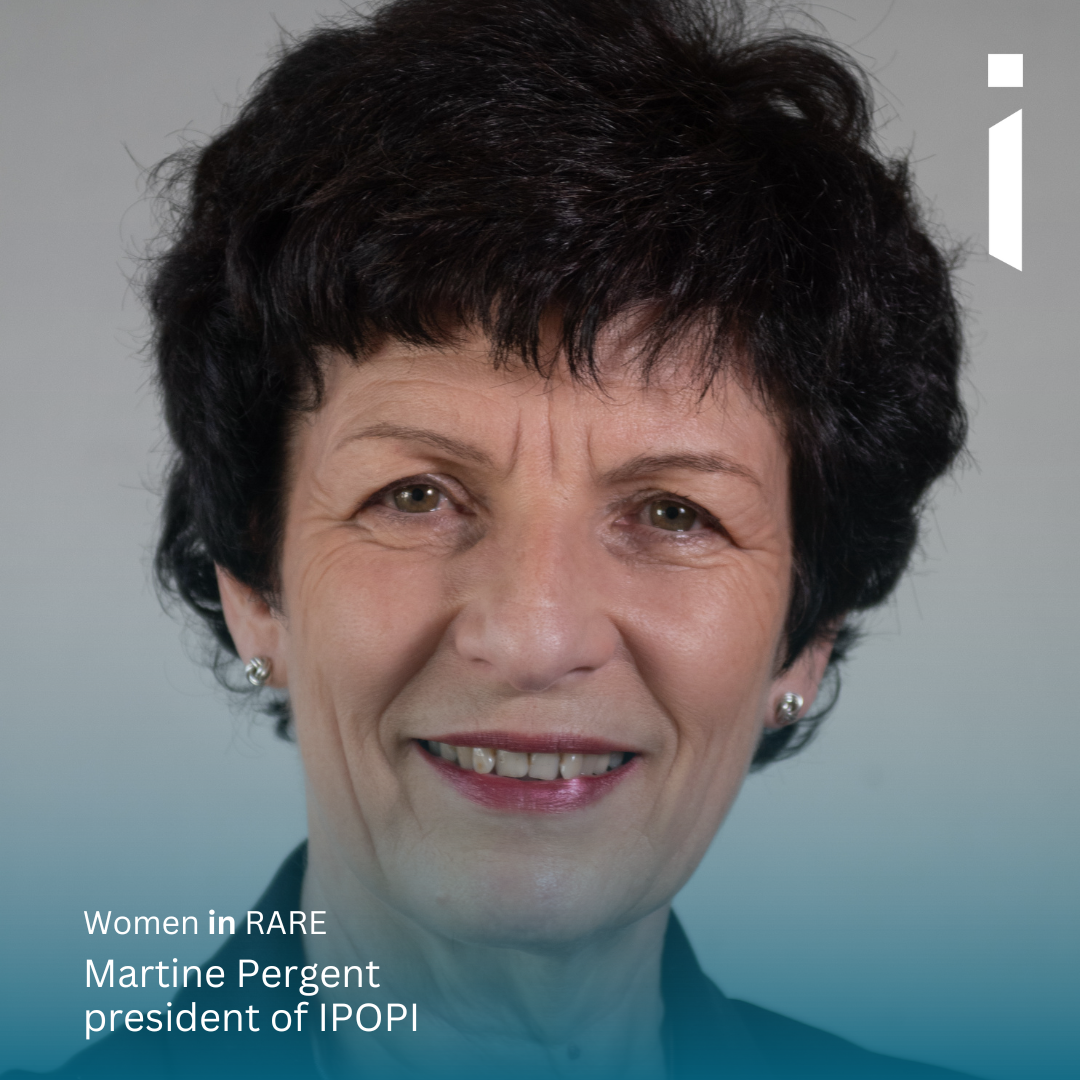
Martine Pergent of IPOPI

Estimated reading time: 7 minutes

“My drive comes from seeing how existing solutions, when deployed strategically, can transform lives and ensuring no patient is left behind, no matter where they live.”
My career journey is rooted in a personal experience, supporting friends whose newborn faced a life-threatening primary immunodeficiency (PID) and a challenging transplant. What started as family support became a formal activity when Professor Alain Fischer, the treating doctor at Necker Hospital, Paris, encouraged Francis Rembert, the father of the child, to found a patient organisation in France. Francis, recognising the need for strategic communication to raise awareness and educate, wanted me, as a communication and change management expert, to join this initiative. In 1998 we established the French patient organisation,IRIS.My dedication and expertise led to my nomination and election to IPOPI in Versailles in 2004, and later, election as IPOPI president in 2018 and 2022. And today, I am still there, volunteering with passion to amplify patient voices, advance education and lead collaborative change.
What motivated you into your chosen career path?
This field found me as much as I found it! My motivation grew from real-life encounters, opportunities and a growing sense of purpose. Especially when I met families confronting rare, undiagnosed PIDs. Those moments revealed how isolated and uncertain life can be for rare disease patients. Helping co-found a national organisation, I saw first-hand how much strategic communication, reliable information and practical support are needed. What started as a response to an immediate need became a deeper commitment. I realised that while scientific advancements in PIDs exist, from newborn screening to gene therapies, many patients worldwide still face delays in diagnosis or cannot access the existing treatments. This disparity motivated me to work at the intersection of patient advocacy, policy and global health equity.
Also, many other challenges have occurred from the need for more plasma globally or the continuum that is slowly appearing between conditions like PIDs, auto-immunity, inflammation, allergies and even cancer… Today, my drive comes from seeing how existing solutions, when deployed strategically, can transform lives and ensuring no patient is left behind, no matter where they live.

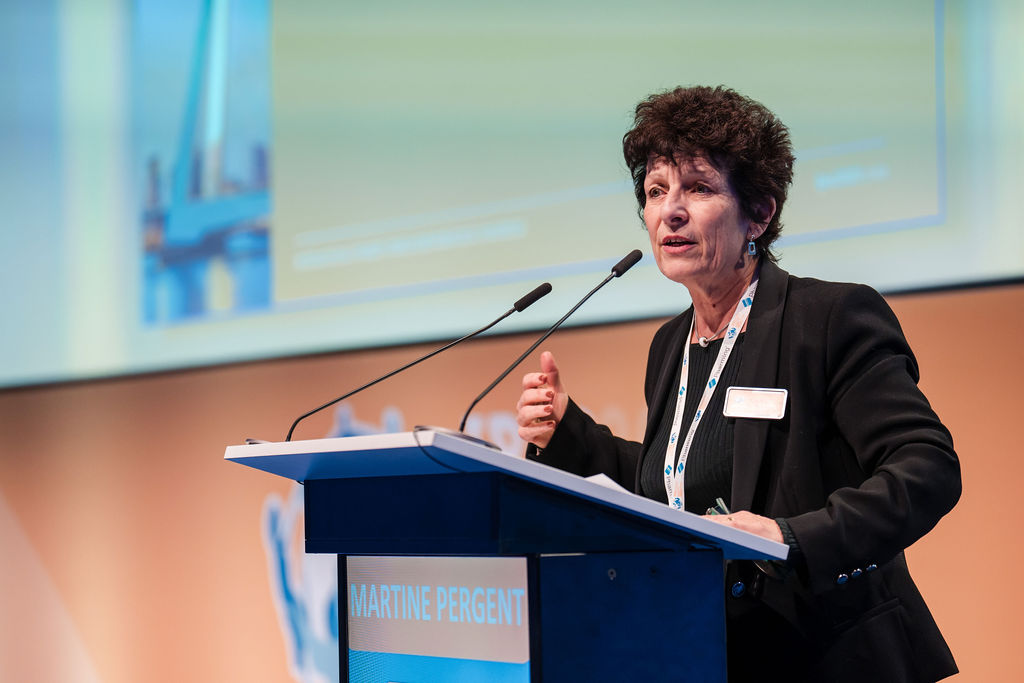


Martine advocating for global action, equity and patient-driven solutions for the PID community
What do you see as some of the opportunities as a woman in your field?
Rare disease advocacy, especially PIDs, is rich in female leadership. I love that women are everywhere in this space: as scientists and clinicians, but also as advocates, organisers and change-makers. Many patient groups were started by mothers who wanted to turn their private battles into public action.
Cooperation is our lifeblood. Women excel at building bridges, connecting patients with researchers, linking global NGOs with local groups and bringing policymakers into the mix. IPOPI’s own research grant is named after Jose Drabwell, in honour of our past president, her pragmatic and inclusive style.
Diversity and practical solutions matter here. Women in our community are hard workers, often volunteering ones, they run programmes that educate in low-resource settings, lead international workshops and champion patient-reported outcomes in research and disease management. It’s wonderful to watch new ideas sprout, from creating and celebrating PID breakthroughs in all continents. Real-world impact and empathy go hand in hand!
The rare disease community values diversity of gender, background and expertise.
What are some of the barriers to success as a woman in your field?
Despite the many dynamic women in PID advocacy, some hurdles remain. In multi-stakeholder meetings, my experience is that a woman’s proposal might be politely acknowledged, only to get revisited for action when voiced by a man. Courtesy doesn’t always mean equality, so persistence is key to ensuring ideas get implemented.
High-level decision-making still isn’t as diverse as we’d like. While women lead many local groups, global bodies and industry sometimes overlook women, making access strategies less sensitive to patients’ real needs.
There’s also the “double shift”, even triple sometimes: many women balance professional activities with personal caregiving (for children, parents or loved ones) and patient organisation commitment. I’ve faced tough choices: Should I skip an international conference to care more for my family and friends, or stretch myself even thinner? These efforts are invisible to outsiders, but they’re real. Of course, I also acknowledge that men increasingly share the same struggles, although this varies greatly from person to person and depending on the cultural context.
But I’m optimistic, our field is built on mutual support, mentorship and creative teamwork. If we keep listening, sharing and lifting each other, I truly believe we’ll keep breaking down these “walls”.
What is one piece of advice you would give your 10-year-old self?
Stay curious and passionate about medical science, especially immunology: it’s a complex field full of promises and the key to making a real difference in people’s lives. Embrace that curiosity early, as it will lead to a fulfilling journey of discovery and impact.
Can you tell us about your current work priorities and focus or a particular project you are working on?
As IPOPI president, my core priority is to ensure every person with a primary immunodeficiency, wherever they live, accesses timely diagnosis and treatment. Here’s how we’re working toward that reality:
• Strengthening national patient organisations
Patient organisations are vital change-makers. While we’re proud to support 78 NMOs worldwide, some regions (Africa, Middle East, Central Asia, parts of Latin America) still lack PID organisations, leaving patients vulnerable to delayed diagnosis and isolation.
• Expanding newborn screening
Early SCID (severe combined immunodeficiency) screening saves lives, but remains out of reach in most countries. IPOPI co-founded Screen4Rare with experts from ISNS (the International Society for Neonatal Screening) and clinicians from ESID (the European Society for Immunodeficiencies), and created International Neonatal Screening Day to champion newborn screening for treatable diseases and celebrate successes.
• Ensuring access to treatments
Barriers like insurance gaps, logistics and policy obstacles block access even where treatment is available. We advocate for inclusion of PID treatments in health systems to guarantee patient access.
• Driving data for advocacy
With the PID Life Index, we collect and share national data on care standards giving advocates concrete tools to press for better policies.
• Bridging science, education and advocacy
We help research translate into real-world impact by:
• Collaborating with all the stakeholders to address the challenges patients face
• Hosting our biennial IPIC (International Primary Immunodeficiency Congress)
• Promoting data collection as well as sustainable PID patient registries for epidemiology, research and policy
Our vision: a world where a PID diagnosis brings immediate care. We focus on local and global action, equity and patient-driven solutions to make this vision a reality.
Connect with Martine
Women in RARE is a celebration of women working in the RARE space in science, research, industry and advocacy. To access more Women in RARE articles click below.