
My daughter is going blind. We are building a new model for rare disease gene therapy

Written by Silvia Cerolini, founder and CEO, Eyes on the Future
Estimated reading time: 6 minutes
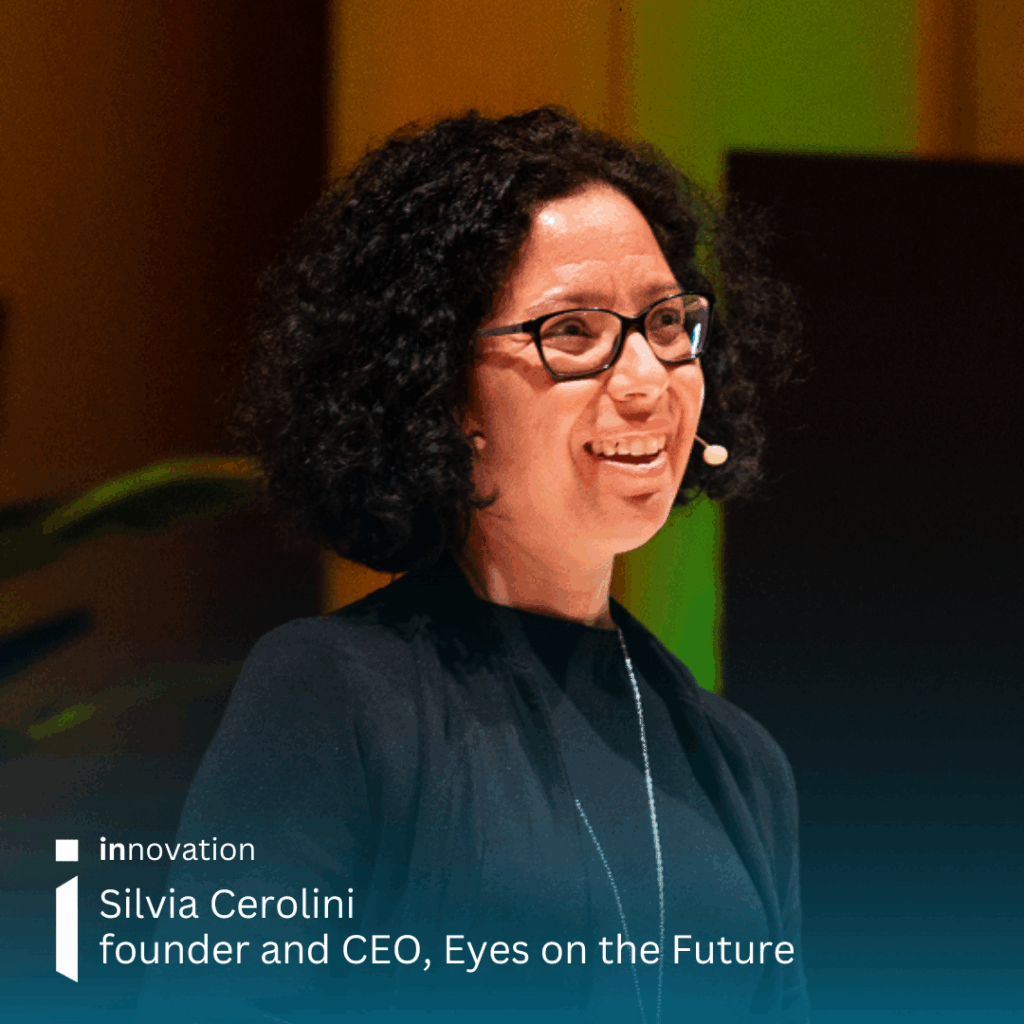
Silvia Cerolini works at the intersection of innovation, patient advocacy and life sciences. She is the founder and CEO of Eyes on the Future, a UK-based nonprofit accelerating research and therapy development for inherited retinal dystrophies causing progressive vision loss in children, and coordinates the Global RDH12 Alliance. She is the mother of a child affected by RDH12-associated retinal disease
I am writing this on an eleven-hour flight to San Francisco, on my way to the JPM Healthcare Conference, where I will be talking with partners about a new model to bring therapies to patients with rare diseases.
A few years ago, this would have sounded surreal. When my daughter Vicky was diagnosed with RDH12-associated inherited retinal dystrophy, my focus was not on financing, development strategy or regulatory pathways. It was on understanding how fast my child would lose her sight.
Vicky is now twelve years old. She is going blind.
RDH12 is a rare genetic retinal disease that causes progressive vision loss in children. Most patients begin losing sight early in life, often progressing to severe impairment or blindness by their teens or twenties. There is no approved treatment. For families like ours, time is not theoretical. Every month matters.
From the beginning, it became clear that the barrier was not science.
Gene therapy offers real hope for inherited retinal diseases. A gene therapy for another form of Leber congenital amaurosis has already been approved. For RDH12, the biology is well understood, and the scientific rationale is strong. And yet, for years, progress stalled, with therapies effectively sitting in freezers rather than moving toward patients.
The reason was not scientific. It was economic.
The traditional drug development model is not built for small populations. It struggles when patient numbers are low, timelines are long and returns are uncertain. As a result, many promising programmes never reach the clinic, even when the science is ready.
RDH12 was repeatedly judged as offering insufficient commercial upside. Interest from companies would emerge, then fade, as portfolios shifted and priorities changed. For families, this created a painful rollercoaster that lasted for years.
As families and patient organisations we did everything that is usually expected, and more.
We raised millions of dollars. We funded research at leading academic centres. We brought together families from over twenty countries worldwide. We supported natural history studies and helped generate the data needed to de-risk development. We convened scientists and clinicians and worked to remove barriers wherever we could.
And still, no trial.
That was the moment when we stopped asking how to fit into the existing system and started asking how to change the system.
Through Eyes on the Future and the Global RDH12 Alliance, we decided to step up. To go beyond advocacy and fundraising and take on the role of developer, while also helping to build a development model better suited to rare and ultra-rare conditions.
The starting premise is simple. Science is moving faster than business models. To unlock therapies for small patient populations, we need development approaches that are more efficient, more collaborative and more innovative.
Last summer marked a major breakthrough. We entered into a strategic partnership with a US-based biotech company, Opus Genetics to accelerate development of the gene therapy for RDH12.
This collaboration is structured around shared risk and shared accountability. As patient organisations, we have committed funding to the programme through milestone-based financing. But this is not simply funding. We are directly involved in governance and in shaping development priorities.
When patients co-develop, several advantages emerge. Development becomes more focused. Trial designs improve. Efficiency increases because attention is placed on what truly matters. Most importantly, urgency is built into the system.
We are doing this not only for Vicky, for our children and for our community. We are building a new, patient-led, collaborative model to bring life-changing therapies to patients faster and at lower cost.
The model rests on a few core pillars.
The first is diversified financing. Philanthropic capital is combined with industry investment to reduce reliance on traditional venture thresholds that often exclude ultra-rare diseases.
The second is efficiency across development. Rare disease programmes cannot afford unnecessary complexity. Non-clinical, manufacturing and clinical plans are designed around what is essential to reach patients, avoiding legacy approaches that add cost without meaningful value.
The third is innovation across the entire development chain. For RDH12, for example, we are exploring new approaches to endpoints and trial design, including AI-driven methods, real-world data and technology-enabled functional measures that better capture meaningful change in small patient populations. These approaches have the potential to reduce patient numbers and shorten timelines.
The fourth is a patient-led and collaborative approach. Patients, scientists, clinicians, industry and regulators engage earlier and more transparently. Regulatory strategies and development plans are shaped together.
What we are building can support rare disease development more broadly. Many ultra-rare conditions face the same challenge: strong science, clear unmet need and no viable path through traditional models.
Beyond rare diseases, this has wider implications. As medicine moves toward more personalised and targeted therapies, patient populations will become smaller, not larger. The challenges faced in rare disease today are the challenges the wider industry will face tomorrow.
If we can make development work for RDH12, we can make it work for many future personalised therapies.
For families like mine, this is not an abstract experiment. Every delay has a cost. Vision lost is vision that will never return. That urgency is what drives us to build models that move faster and work better.
But this model cannot succeed in isolation.
Industry has a critical role to play by recognising the value of therapies for small populations, not only today but as a foundation for the future of medicine. Regulators must continue to innovate, ensuring development pathways can be lean, efficient and fast while remaining rigorous. Ecosystem partners, including CROs (contract research organisations) and academic centres, must adapt to support fit-for-purpose, efficient development models. And policymakers must provide incentives that address the structural disadvantages faced by rare disease programmes.
Our goal is to take RDH12 into the clinic as soon as possible. And while we do that, we want to ensure that no promising therapy is left sitting in a freezer simply because the system is not designed to move it forward.
When science is ready, the system must be ready too.

Professionally, Silvia is also Head of Transformation at Sanofi UK and Ireland. The views expressed herein are her own.
To learn more about Eyes on the Future, please visit:http://www.eyesonthefuture.org.uk/
Connect with Silvia
innovation spotlights the future of RARE through a technological lens. To access more innovation articles click below.