
Patient centricity is the mission. Patient inclusion is the operating model

Written by Tarek Ebrahim, MD, senior rare disease medical affairs leader, founder of NovaHeal
Estimated reading time: 8 minutes
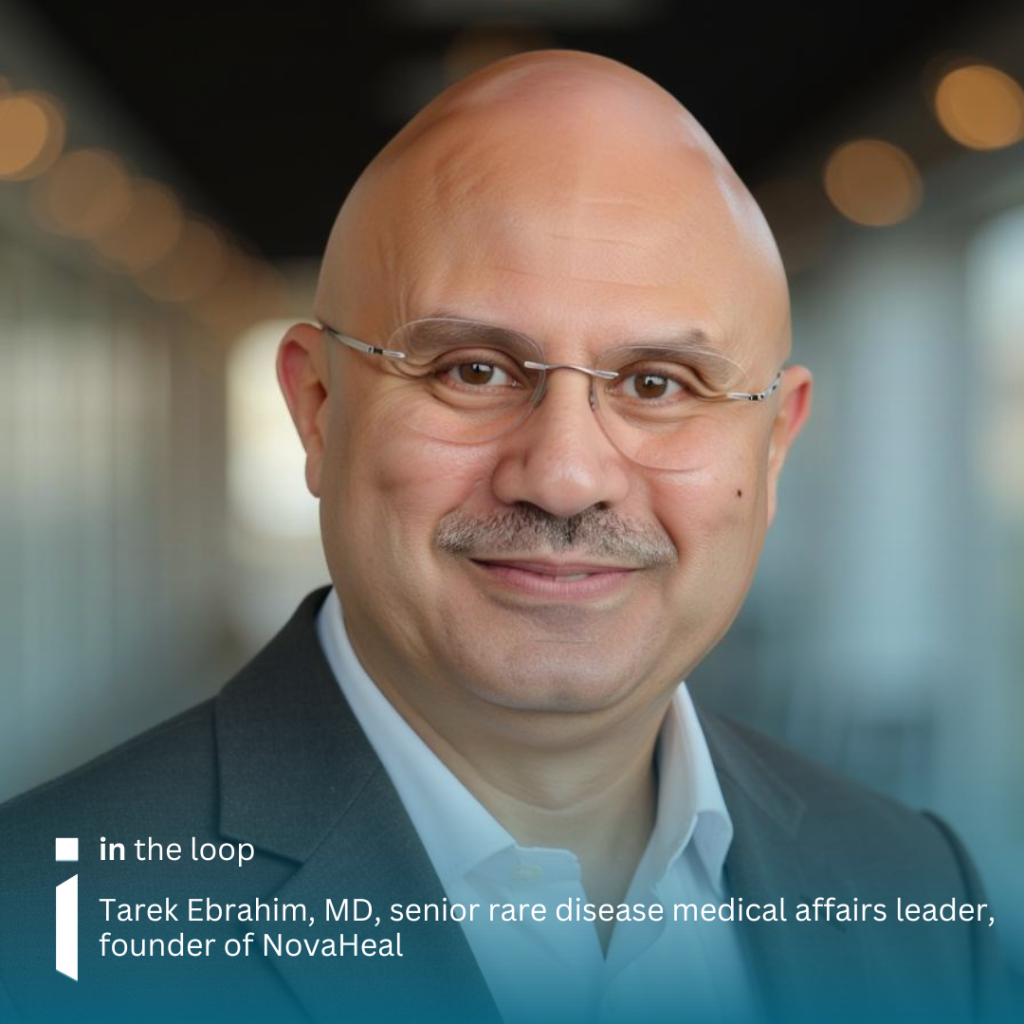
Dr Tarek Ebrahim is a physician and global biotechnology executive with more than two decades of leadership experience in medical affairs and commercialisation strategy for rare diseases. He presents why leadership in rare disease is defined not by how close we are to individuals living with the disease, but by how deeply patients shape the decisions that affect their care
I still remember a conversation early in my rare disease career with an individual living with a rare disease and a patient advocate. We were discussing what we believed was a strong patient-centric culture. She listened carefully and then said something I have never forgotten: “This all sounds very patient-focused. But people living with rare diseases do not want to be just in the centre. We want to be included.” It was not criticism. It was clarity.
That distinction may sound subtle, but in a rare disease, it changes everything.
That moment reshaped how I think about leadership in rare diseases for over two decades. Over time, I heard the same message repeatedly from people living with rare diseases and from their patient organisations: do not just build around us; build with us.
That is why I always thought about it as: patient centricity expresses intent – the mission. Patient inclusion determines whether that intent meaningfully changes decisions – the operating model.
Centricity signals intention. Inclusion changes decisions.
When “patient-centric” is not enough
Most biotechnology and pharmaceutical organisations today describe themselves as patient-centric. In principle, that means putting patients first and improving outcomes through engagement. But in practice, engagement often remains limited to listening sessions, feedback requests or isolated consultations that rarely meaningfully influence strategy.
That approach is no longer enough.
In rare diseases in particular, patients and caregivers do not want to be passive contributors to decisions made elsewhere. They want their lived experience to inform the choices that shape development, access, communication and care.
A patient-centric organisation asks, “How do we serve patients better?” A patient-inclusive organisation asks, “How do patients help shape what we do before key decisions are made?”

Why rare disease requires inclusion
Rare disease changes the equation. We rarely have perfect datasets, large populations or fully mapped disease journeys. Clinical understanding is still evolving, diagnostic delays are common, and the burden of disease often extends beyond what standard metrics capture.
In many rare diseases, patients and caregivers understand aspects of disease burden long before the medical system fully characterises them. It is a critical source of evidence. When patients and their caregivers are included early, several things improve:
- Clinical endpoints become more meaningful
- Trial protocols become more feasible
- Communication becomes more relevant
- Evidence becomes more useful for payers and providers
- Development teams ask better, more focused questions
Inclusion does more than improve empathy. It improves strategy. It helps organisations make better decisions sooner, with less risk of misalignment later.
What real inclusion looks like
The difference between average and leading biotechnology or pharma organisations is not whether they care about patients. They all do, that is why they are here. The difference is whether patient input is embedded in decision-making.
Inclusion is not occasional. It is built into the system.
Experience with Gaucher disease and other lysosomal storage disorders has clearly shown this. Patient registries were not just repositories of data. Over time, they became dynamic systems shaped by ongoing contributions from physicians and patients. Those insights informed treatment guidelines, supported label evolution and helped define standards of care. This was one of many aspects extended beyond registries into broader patient support ecosystems, including case management and patient education liaison teams designed to capture insights to better support long-term care. Over time, similar patient-centered support models expanded into other ultra-rare conditions, including paroxysmal nocturnal hemoglobinuria (PNH) and atypical hemolytic uremic syndrome (aHUS). These types of programmes evolved into more inclusive ones, such as the STAR (Solutions To Accelerate Results for patients) programme, a patient-centric framework that incorporates insights from patients and caregivers to co-create solutions and address critical needs.
In ultra-rare conditions such as WHIM syndrome, where prevalence is roughly one in a million, the need for inclusion becomes even more obvious. When patient voices were brought into pivotal trial design early on, they helped shape more innovative thinking about outcomes. One result was the inclusion of an innovative infection score as a secondary endpoint, reflecting the real-world burden patients described and ultimately contributing to the regulatory narrative supporting approval.
In a large pharma, advancing a ‘pipeline in a molecule’ strategy into rare autoantibody and alloantibody diseases was not only a scientific and business opportunity, but it also required a different model of listening. Listen more to the patient and try different inclusion channels, within approved regulatory guidelines, to understand how rare autoantibody and alloantibody diseases differ from more common ones. For example, Patient Engagement Research Councils (PERCs) helped embed patient insight directly into clinical development and product strategy discussions while improving enterprise-wide alignment around patient priorities.
In rare diseases, development does not start with the molecule. It starts with understanding the patient journey. That is the difference inclusion makes: it changes choices, not just language. Inclusion becomes real when it changes both decisions and results.

Where patient impact is really created
We often speak about patient impact as if it begins when treatment reaches the patient. In reality, patient impact is created much earlier.
- a protocol design choice becomes patient burden
- an endpoint choice becomes perceived value
- an evidence plan becomes access or denial
- an education gap becomes years of delayed diagnosis
These are internal decisions, but they determine external outcomes. Too often, organisations underestimate how profound operational decisions shape the daily experience of patients and caregivers. The most effective rare disease organisations understand this link. They design with the end in mind and allow patient insight to shape that design upstream, before assumptions harden into strategy.
The leadership trade-offs
Making patient inclusion real sounds intuitive in principle. In practice, it requires leaders to make difficult organisational choices.
- Speed vs insight – Inclusion takes time upfront but prevents costly redesign later
- Control vs partnership – Decisions may be influenced by people outside the company
- Compliance vs meaningful engagement – Complexity is not a valid reason to avoid engagement
- Global consistency vs local reality – Rare disease communities differ by geography, health system and access landscape.
These are not just operational questions. They are leadership choices.
Making inclusion operational
Patient inclusion does not scale through good intentions alone. It requires structure, accountability and repeatable processes. Organisations that do this well typically:
- Establish formal patient advisory and governance structures
- Involve patients early in protocol and endpoint discussions
- Integrate patient perspective into evidence generation and real-world data plans
- Create cross-functional accountability
- Measure whether patient input changed a decision, not just whether engagement occurred
The organisations that do this best create environments where patient insight is expected to challenge assumptions rather than simply validate them.
A simple test for leaders
There is a simple question I often ask: “Which decisions would have been different if patients had not been involved?” If the answer is “none,” then patient inclusion is not yet operating at the level it should. That question forces organisations to distinguish between participation and influence.
Closing thought
In rare diseases, the mission is clear: help people living with the diseases to live longer and better lives. Patient centricity expresses that mission. Patient inclusion makes it real.
The organisations that will have the greatest impact on rare diseases are not those that, in theory, place patients at the centre. They are the ones willing to let patients influence what they build, how they measure success and how they lead.
Leadership in rare disease is not defined by how often organisations say patients matter. It is defined by how deeply patients are embedded in the decisions that shape research, access, care and outcomes.
Connect with Tarek
References
Yeoman G, Furlong P, Seres M, Binder H, Chung H, Garzya V, Jones RRM. Defining patient centricity with patients for patients and caregivers: a collaborative endeavour. BMJ Innovations. 2017;3(2):76-83. doi:10.1136/bmjinnov-2016-000157
Søndergaard H. Patient Involvement in the Design of an Innovative Clinical Study to Capture Symptoms Important to Patients with Chronic Kidney Disease. Patient Preference and Adherence. 2024;18:1427-1435. doi:10.2147/PPA.S452804
Sharma R, Ahmed S, Campagnari J, Huff W, Lloyd L. Embedding Patient-Centricity by Collaborating with Patients to Transform the Rare Disease Ecosystem. Pharmaceutical Medicine. 2023;37(4):265-273. doi:10.1007/s40290-023-00474-y
Klein B, Levitan B, Getz K, et al. Measuring and Demonstrating the Value of Patient Engagement Across the Medicines Lifecycle. The Patient – Patient-Centered Outcomes Research. 2025;18:1-14. doi:10.1007/s40271-024
About Tarek Ebrahim, MD:
Dr Tarek Ebrahim is a physician and global biotechnology executive with more than two decades of leadership experience in medical affairs and commercialisation strategy for rare diseases. He built and led global medical affairs organisations at Johnson & Johnson Innovative Medicine and X4 Pharmaceuticals, advancing evidence generation, breakthrough designations, patient identification, publications and advocacy initiatives.
During leadership roles at Alexion and Genzyme/Sanofi, he helped shape commercialisation strategies that expanded patient access and transformed care for rare diseases globally. As Founder of NovaHeal LLC, he continues to integrate science, strategy and patient advocacy to advance innovation in rare diseases.
in the loop lets you stay informed with all the latest issues from the world of RARE. To access more in the loop articles click below.