
Patricia Weltin of Beyond the Diagnosis

Estimated reading time: 5 minutes
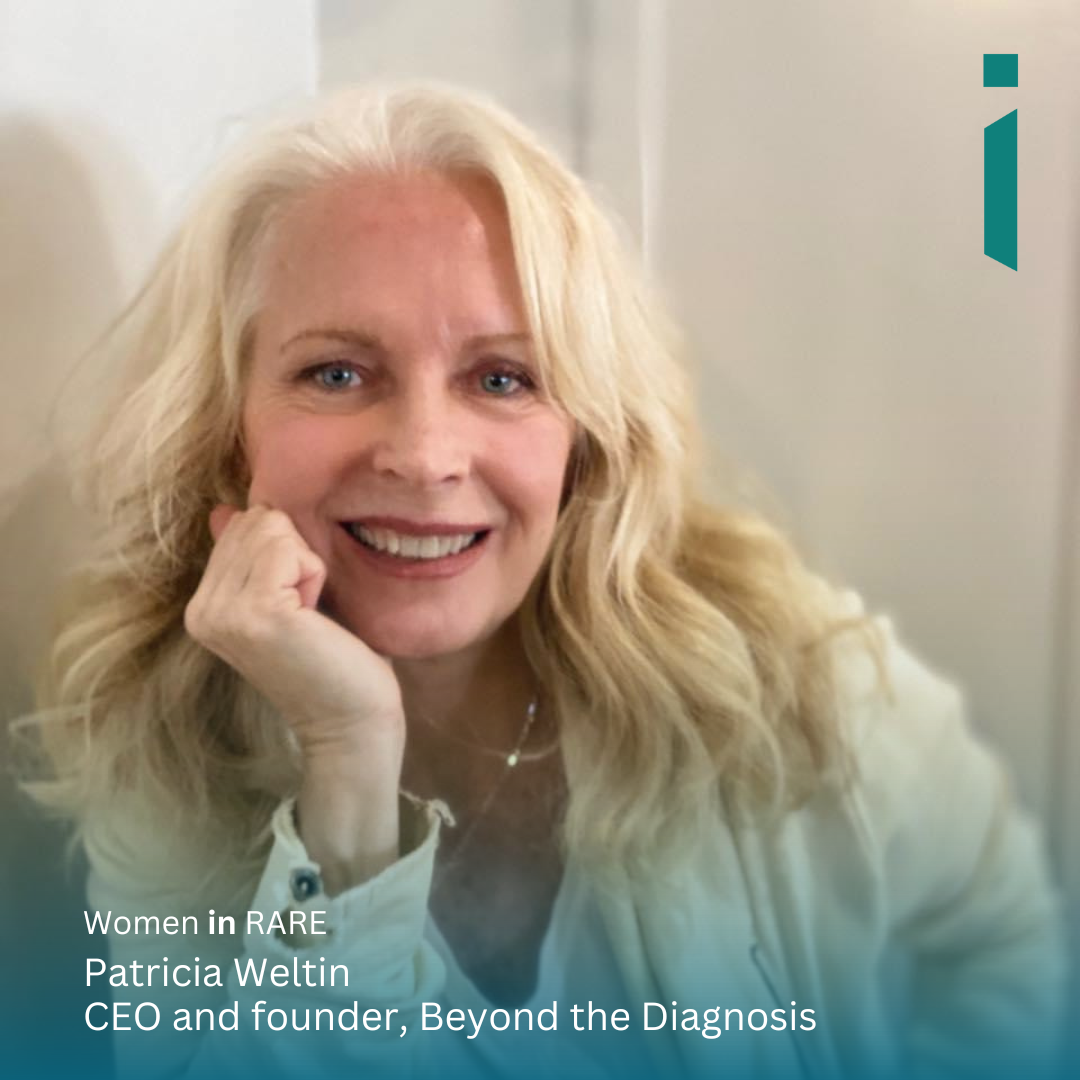
“I was already advocating for all individuals living with rare diseases and it became clear that the benefits of collaboration are profound for the entire rare disease community, including my children.”
I began my work in rare disease advocacy in 2011 to bring a non-disease specific Rare Disease Day event to Rhode Island. That effort led to national policy work, including contributing to the EXPERRT Act with Senator Whitehouse. Through this experience, I realised there were no non-disease specific patient organisations working by state, which I felt was imperative to rare disease advocacy. To address this gap, we expanded from the Rhode Island Rare Disease Foundation to create Rare Disease United, where we developed the first state-focused rare disease legislation — a model Rare Disease Advisory Council bill — and filed it in multiple states to begin building the advocacy network that was missing.
At the same time, we launched the Beyond the Diagnosis art exhibit. What began as a small initiative became an internationally recognised programme, featured on CBS Sunday Morning, that uses art to expand awareness and highlight the lives of children with rare diseases. Today, our efforts focus on expanding this impactful exhibit.
What motivated you into your chosen career path?
Like many women in the rare disease space, advocacy was personal. Both my daughters have a rarely diagnosed disease called Ehlers-Danlos syndrome. In 2011, when I first began my advocacy journey, one of my daughters was misdiagnosed with Hypermelanosis of Ito and one was seemingly asymptomatic. Eventually, as is common in hypermobile Ehlers-Danlos syndrome (hEDS), severe symptoms didn’t develop until their late teens. I was already advocating for all individuals living with rare diseases, and it became clear that the benefits of collaboration are profound for the entire rare disease community, including my children. I began researching hEDS and have made significant discoveries about hEDS and consider my work in hEDS as part of my advocacy work.
What do you see as some of the opportunities as a woman in your field?
As a mother and friend to many mothers in this space, I see the groundbreaking work being done by rare moms, including important contributions to science.
Because I work on so many rare diseases, I started making connections among these diseases, especially the link to tethered cord syndrome (TCS). In 2023, I was published as a co 1st author in an article in the American Journal of Medical Genetics for my, and another mother’s, discovery of TCS as a comorbidity of KBG syndrome.
What are some of the barriers to success as a woman in your field?
I’ve long felt, that as a woman and an advocate mom working in rare, expectations that my work need not be compensated, happen all too often. There came a point where I just stopped accepting offers to speak or share my expertise unless I was compensated fairly.
What is one piece of advice you would give your 10-year-old self?
I would tell myself that there is nothing I can’t do. I would tell myself that it’s okay to have doubts, but giving up is not an option. We can’t control those who act in bad faith, but we can always control our response.
Can you tell us about your current work priorities and focus or a particular project you are working on?
Our latest initiative, Beyond the Lesson, is one we are truly excited to share. Building on the mission and impact of our acclaimed Beyond the Diagnosis art exhibit, this new programme brings the power of art, empathy and science directly into classrooms and school communities. Beyond the Lesson creates meaningful opportunities for students to learn about inclusion, compassion and the lived experiences of children with rare and chronic conditions.
At the heart of the programme are the portraits—beautiful, museum-quality reproductions of children living with life-altering conditions. Each portrait is paired with a story that highlights the child’s personality, interests and individuality, helping students see beyond a diagnosis and connect with the whole person. This simple yet powerful approach encourages young people to embrace differences and recognise the humanity we all share.
Rather than offering a one-size-fits-all curriculum, Beyond the Lesson is designed to be flexible and collaborative. We work directly with schools, teachers and administrators to tailor the experience to their needs. Whether the portraits are displayed in hallways, classrooms, libraries or at school-wide events, each school can shape discussions and activities in ways that resonate with their students and community. Our team provides support, guidance and resources to help educators create meaningful conversations around empathy, diversity, science and social connection.
The programme is also accessible: with lightweight, traveling reproductions, schools can host their own mini-exhibit at no cost. Local sponsors and community partners help bring the portraits to schools across the country, ensuring equitable access for students regardless of resources or geography.
We believe Beyond the Lesson has the power to inspire the next generation of compassionate thinkers, scientists, caregivers and leaders. This initiative reflects our deepest hope: that by opening hearts and minds, we can create school communities where every child is seen, understood and celebrated.
Connect with Patricia
Women in RARE is a celebration of women working in the RARE space in science, research, industry and advocacy. To access more Women in RARE articles click below.