

Putting you in the heart of the rare community – Timothy Syndrome Alliance (TSA)

Estimated reading time: 6 minutes
Patient advocacy groups deliver their top three unmet needs and main asks of industry to best serve their rare community. This week’s insights come from Sophie Muir, chair of trustees, Timothy Syndrome Alliance (TSA)
Timothy Syndrome Alliance (TSA) is a patient-led, globally connected organisation dedicated to accelerating meaningful therapeutic development for Timothy Syndrome and related CACNA1C-Related Disorders (CRD)1. Our mission is to move beyond awareness and advocacy and to function as a credible, development-enabling partner for industry, academia and regulators, advancing translational research, clinical development and trial readiness.
Timothy Syndrome and CRD are ultra-rare, life-altering and life-shortening conditions with currently no disease-modifying treatments and a historically fragmented evidence base. TSA exists to close that gap. We focus on transforming lived experience, clinical insight and emerging biological understanding into structured data assets that can support translational research and clinical development. By investing in patient registries, biobank infrastructure and biomarker strategies aligned with regulatory expectations, TSA aims to reduce development risk and shorten timelines for partners committed to addressing this profound unmet need.
Timothy Syndrome and associated CRDs are severe, multisystem genetic disorders caused by pathogenic variants in the CACNA1C gene, which encodes the Cav1.2 L-type calcium channel found in almost every human cell. These conditions typically present in early childhood and are characterised by prolonged cardiac repolarisation (QT interval) leading to life-threatening arrhythmias, along with neurodevelopmental impairment.
Mortality remains high despite intensive symptomatic management, including anti-arrhythmic therapy and implantable cardiac devices. Fewer than a few hundred patients are believed to be affected worldwide, although common variation in CACNA1C has been linked to many common neuropsychiatric conditions. Phenotypic variability in CRDs contributes to delayed diagnosis and inconsistent care. There are currently no approved therapies that address the underlying disease mechanism.
What are your top three unmet needs or main asks of industry to best serve your rare ecosystem?
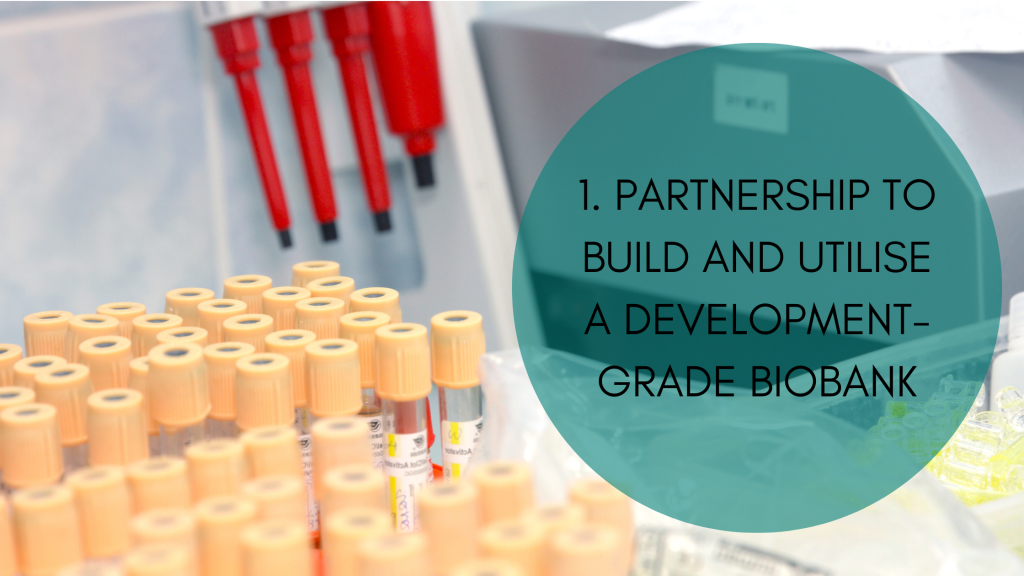
Partner with us to build and utilise a development-grade biobank. The most immediate and impactful opportunity for industry collaboration lies in the development of a disease-specific biobank that is explicitly designed to support therapeutic development. In ultra-rare diseases like CRDs, the scarcity of well-annotated biospecimens is often the single greatest barrier to translational progress. TSA is actively addressing this by establishing a biobank that links biospecimens to genetically confirmed diagnoses, longitudinal clinical data and patient-reported outcomes under robust ethical and governance frameworks.
What we ask of industry is not passive sponsorship, but active scientific partnership. Industry expertise in sample strategy, assay selection and translational relevance is critical to ensuring that collected materials are fit for purpose. By aligning biobank design with specific therapeutic hypotheses—whether small molecules, biologics or genetic approaches—we can ensure that samples directly inform target engagement, pharmacodynamic effects and early efficacy signals.
This collaboration benefits both sides. For industry, it de-risks early development by providing access to high-quality, contextualised biological material that would otherwise take years to assemble. For patients, it ensures that every sample collected has a clear line of sight to therapeutic impact. A development-grade biobank is not a static asset; it is a living infrastructure that evolves alongside a partner’s pipeline. TSA is ready to co-build that infrastructure with committed partners.
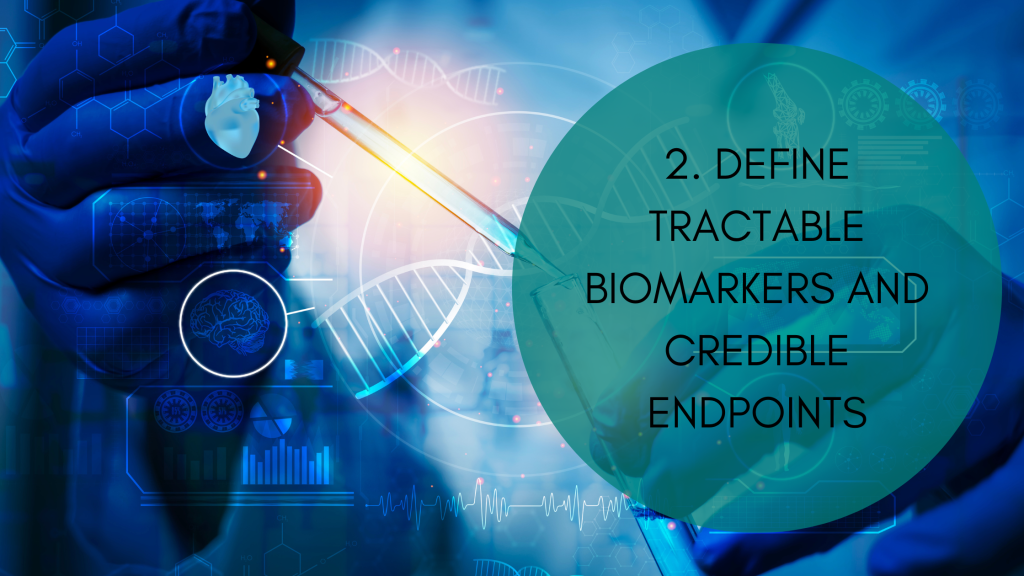
Work with us to define tractable biomarkers and credible endpoints. Our second ask is collaboration on biomarker discovery and validation as a foundation for credible clinical trial endpoints. In Timothy Syndrome, traditional large-scale outcome trials are neither feasible nor ethical. Progress depends on identifying biomarkers that are mechanistically linked to disease biology, sensitive to therapeutic intervention and acceptable to regulators as surrogate or intermediate endpoints.
TSA is investing heavily in this space by integrating electrophysiological data, molecular signals and functional outcomes into a coherent biomarker strategy. However, biomarker development cannot occur in isolation from therapeutic intent. Industry input is essential to prioritise which signals matter, how they should be measured and how they can be linked to meaningful clinical outcomes such as reduced arrhythmic risk or stabilisation of disease progression. We are asking industry partners to engage early and scientifically. This includes collaborating on natural-history analyses, supporting longitudinal data collection and co-developing endpoint rationales that can withstand regulatory scrutiny.
Regulators increasingly recognise flexibility in ultra-rare and paediatric diseases, but only when supported by robust, disease-specific evidence. By working together to establish a defensible biomarker-to-endpoint bridge, we can move faster, with greater confidence and with fewer failed studies. This is not only a scientific necessity; it is a moral one for families waiting for progress.

Engage with us as a long-term strategic partner, not a one-off stakeholder. Our final ask is cultural as much as operational: we ask industry to view patient organisations not as peripheral stakeholders, but as long-term strategic partners in development. TSA is intentionally evolving beyond the traditional advocacy model into a research-enabling organisation capable of contributing meaningfully to development strategy, feasibility assessment and post-approval evidence generation. This requires partnership models that go beyond single studies. Master collaboration agreements, joint steering committees and even risk-sharing frameworks allow patient insight and industry capability to remain aligned across development stages.
TSA brings more than access to patients; we bring continuity, trust and an integrated understanding of the disease ecosystem that cannot be replicated by contract research alone. For industry, this approach reduces friction, improves recruitment and retention and strengthens the credibility of value narratives with regulators and payers. For patients, it ensures that development programmes remain focused on outcomes that truly matter to those living with the condition. Timothy Syndrome and associated CRDs are ultra-rare, but the lessons they offer are not. By building genuine, development-grade partnerships, we can create a model for how patient organisations and industry work together to deliver therapies where they are needed most.
Connect with Sophie
References
[1] ‘Timothy Syndrome and CACNA1C-Related Disorders: First International Language and Management Guidelines Consensus Statement’. Currently for consideration at EJHG; https://www.researchsquare.com/article/rs-8058536/v1
in the thick of it puts you in the heart of the RARE communities you serve. To connect with more RARE communities click below.