
Thinking deeply when thinking is hardest: the psychology of joining a clinical trial

Estimated reading time: 8 minutes
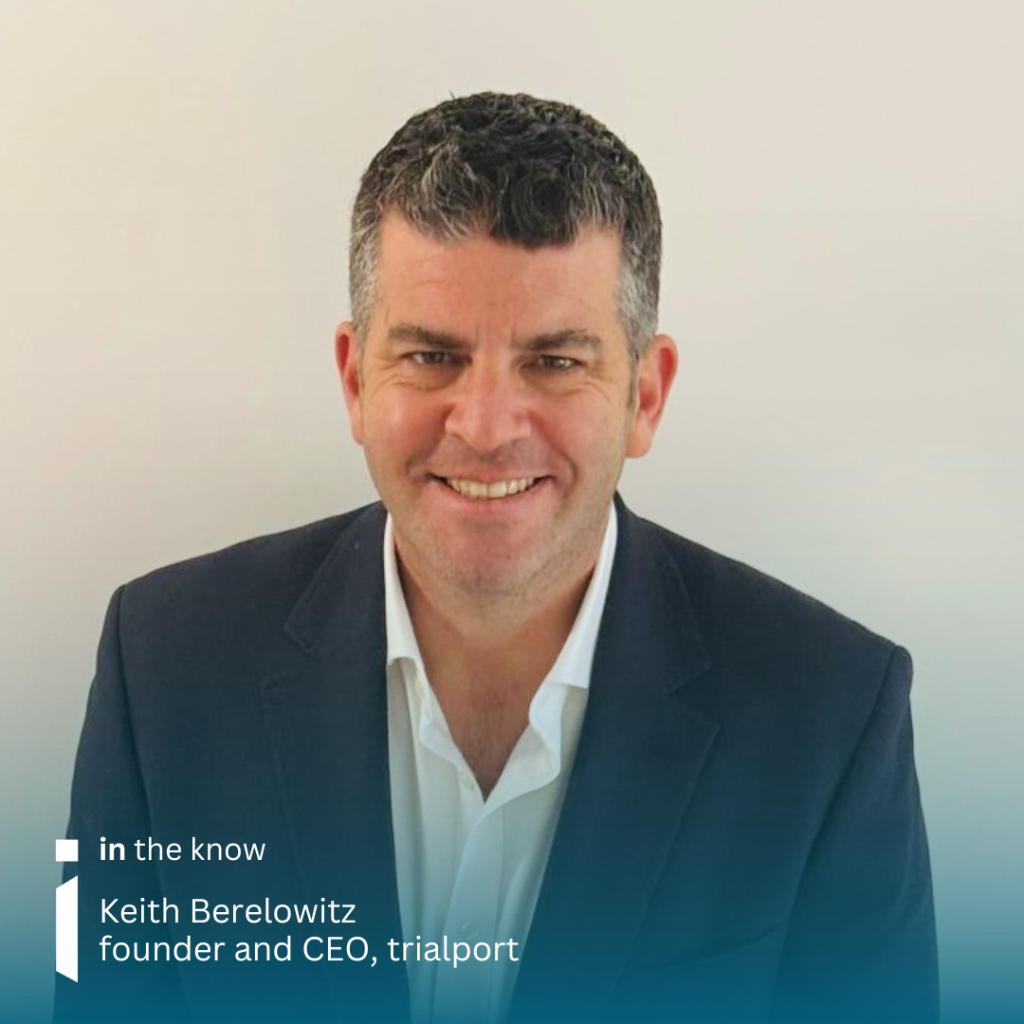

With decades of experience in the clinical research sector, Keith Berelowitz, founder and CEO of trialport, delves into the psychology of taking part in a clinical trial, highlighting the value of fully comprehending how humans process information to truly support people taking that first step into clinical research
Reducing cognitive burden, increasing cognitive routine and the practical work of helping people decide
When we ask someone to consider a clinical trial, we are asking them to do something extraordinary. We are asking them to make one of the most consequential decisions of their life at the moment when their capacity to make such a decision is at its lowest. They are unwell, anxious or absorbing a diagnosis they did not expect. They are reading words they have never heard before. They are weighing possibilities they cannot see. We then hand them a consent document that reads like a legal contract translated through pharmacology and assume the decision will follow.
It will not……
The conventional model of trial participation treats the decision as a rational information problem. Provide the protocol summary, the visit schedule, the side effect list, the consent form and the person will read, weigh and choose. Decades of behavioral evidence tell us this is not how decisions are made, and certainly not how they are made under stress.
People are not asking, “Have I been given enough information?” They are asking quieter, harder questions. Do I understand this? Can I trust this? Can I manage this in real life? Will I feel respected if I say no? Is this a decision I am making, or one being managed around me? These questions sit at the centre of whether information becomes psychologically usable. Without that, awareness never becomes activation.
The cognitive economics of a serious decision
Cognitive load theory, developed by John Sweller, draws a useful line through this problem1. Working memory is finite. There is the intrinsic load that comes with the topic itself, which is unavoidable for a serious clinical decision. There is the extraneous load that comes from how information is presented, which is largely avoidable. There is also the germane load, the productive cognitive work of integrating new information into something the person can act on.
Most consent processes mishandle extraneous load. They front-load every risk, every procedure, every contingency. They use clinical phrasing where plain phrasing would do. They present everything at once when layered information would serve better. The result is predictable. Working memory saturates. The person has spent their cognitive budget decoding terminology, with nothing left for the decision the document is meant to support.
This is the part of the experience that feels, to the person sitting in the chair, like trying to assemble furniture during a house fire. The instructions may be technically complete. The capacity to use them is gone.

Cognitive routine as a design choice
The opposite of cognitive overload is not simplification. It is routine. A practical example helps. An experienced driver can hold a serious conversation while navigating heavy traffic because driving has become automated. Cognition is freed for the conversation. A new driver in the same traffic cannot hold the conversation at all, because every input is being processed deliberately.
Trial participation is closer to the new driver. Almost nothing about the experience is routine. The vocabulary is unfamiliar. The setting is unfamiliar. The decisions are unfamiliar. The consequences are personal and irreversible.
The design opportunity, then, is to convert as much of the experience as possible into cognitive routine. Not to remove the decision, but to remove everything around the decision that does not need to be reconsidered each time. Layered information that introduces concepts in the order the brain expects them. Plain language that does not require a glossary. Visit information presented as a calendar a person can already read, not a protocol table they cannot. Practical demands explained in the language of daily life: hours away from home, distance to drive, days away from work, support a partner will or will not need to provide.
Each element that becomes routine is one less item in working memory. What is preserved is scarce and valuable: the capacity to think deeply at the moment when thinking deeply is hardest.
This is the heart of the issue.
We are not trying to make the decision easy. The decision is not easy. We are trying to make the surrounding noise quiet enough that a person can hear themselves think.
Three psychological conditions for action
Self-determination theory, the work of Edward Deci and Richard Ryan, identifies three psychological conditions under which people move from passive consideration to genuine action: autonomy, competence and relatedness2.
Autonomy is the felt sense that the decision is mine. It is not the absence of guidance. It is the presence of a real choice that the person owns. In trials, autonomy is undermined every time someone feels processed rather than supported or pushed toward an outcome that has been chosen for them.
Competence is the felt sense that I understand enough to make a real choice. This is where cognitive load and decision quality meet. Competence is not about IQ or education. It is about whether the experience has been designed so that an ordinary, intelligent adult can build an accurate picture of what is being asked and what it would mean for them.
Relatedness is the felt sense that I am being treated like a person, not a record. It is the difference between care and processing. It is the human signal underneath the words. A clinic that returns a phone call within the day, a coordinator who remembers a name, a follow-up that asks how the person is, not just whether they are still eligible. These small signals carry disproportionate weight when the rest of the experience feels institutional.
When all three conditions are present, intention forms. When any one of them is missing, even an interested person quietly steps back.
Trust as a cognitive shortcut
Trust is often discussed as a value, but it functions as a cognitive tool. When information is too complex to verify in the moment, people rely on the trustworthiness of the source as a proxy. Trust reduces uncertainty. Reduced uncertainty reduces cognitive load. Reduced cognitive load makes deeper thinking possible.
Useful trust models, including the work of Mayer, Davis and Schoorman3, point to three observable signals: ability, integrity and benevolence. In clinical trial communication, these translate into something simple. Is the experience transparent, so that nothing important feels hidden? Is it consistent, so that what is said matches what happens? Is it human, so that the person feels seen rather than processed?
Trust cannot be claimed. It is read off the experience. Saying that a study is focused on the patient does not produce trust. Behaving in a way that earns it does. People notice the gap between the language and the lived experience faster than we tend to credit.

What this means for trial design
The implication is direct. If we want better participation, we have to design for the reality of how decisions form, not the fiction of perfectly rational information processing.
That means reducing extraneous cognitive load. It means converting the unfamiliar into the routine wherever we can. It means protecting the autonomy of the person, even when we believe enrolment would be a good outcome. It means building competence through layered, plain language and a real-world framing of burden, time and logistics. It means demonstrating relatedness through the texture of every interaction. It means earning trust through transparency, consistency and humanity.
None of this is soft. It is the operational difference between a trial that informs people and a trial that helps them reach intention. Awareness is not activation. Eligibility is not readiness. Information is not understanding. Understanding is what makes choice possible.
If we want people to think deeply at the moment when thinking deeply is hardest, we have to do the harder work of removing what does not need to be there and presenting what does in a way the human mind can hold.
Understanding comes first. Decisions follow.
Connect with Keith
References
[1] https://edtechbooks.org/encyclopedia/cognitive_load_theory
[2] https://www.sciencedirect.com/topics/social-sciences/self-determination-theory
[3] https://www.researchgate.net/publication/312070306_Organizational_trust_Mayer_Davis_and_Schoorman_model_a_review
in the know brings you the latest conversations from the RARE think tank. To access more in the know articles click below.