The invisible struggle: charting the complex reality of CIDP
SPONSORED CONTENT
Chronic inflammatory demyelinating polyneuropathy (CIDP) is a rare, fluctuating autoimmune condition that attacks the peripheral nerves, causing progressive muscle weakness, sensory loss and an often ‘invisible’ struggle. While clinical metrics track measurable symptoms like muscle strength, the real measure of life with CIDP lies in the daily unpredictability and emotional toll of a condition that few can understand. Global patient leaders
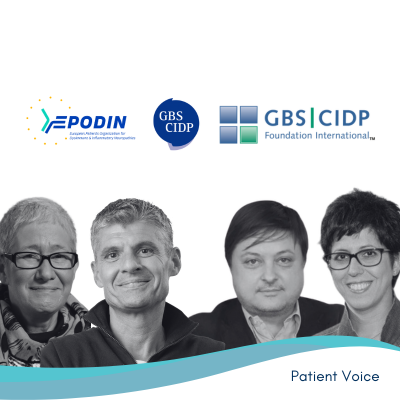
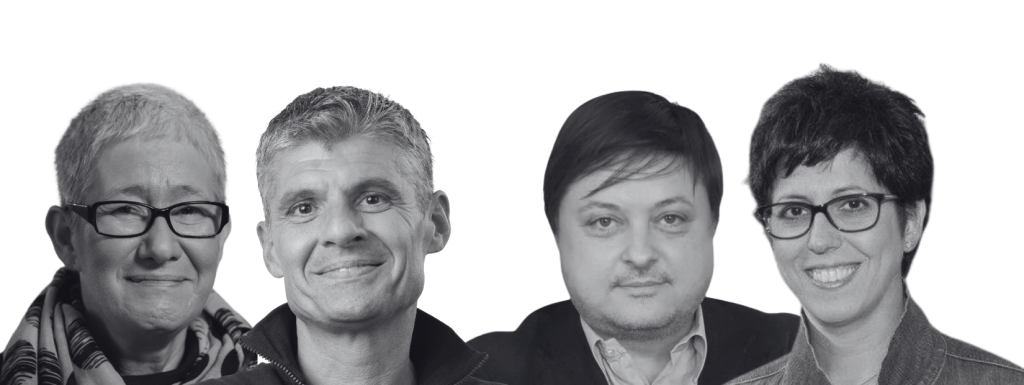
Gabi Faust, Jean-Philippe Plançon, Marian Ciopec and Nancy Di Salvo, chart a course through the diagnostic odyssey and beyond
Written by Nicola Miller, RARE Revolution
Community insights from
Gabi Faust, chair, GBS CIDP Self-Help Organisation
Jean-Philippe Plançon, president, EPODIN
(European Patients Organization for Dysimmune and Inflammatory Neuropathies)
Marian Ciopec, executive manager, EPODIN
Nancy Di Salvo, international affairs director, GBS-CIDP Foundation International
For those living with chronic inflammatory demyelinating polyneuropathy (CIDP), life is a constant series of peaks and valleys. This fluctuation demands a continuous re-evaluation of; personal limits and expectations, the dependency it enforces and the lack of awareness encountered.
The acute nature of onset often manifests as sudden, whole-body paralysis. Nancy Di Salvo recalls her initial experience at age 20:
“One morning I woke up and I could barely walk, by the time I was admitted to the hospital I was completely paralysed”.
Such sudden onset created an immediate fear, which was reignited during a subsequent relapse. Nancy remembers “not sleeping—afraid to wake up and be paralysed again”. She describes how today, recurring symptoms trigger immense fear and anxiety—a form of post-traumatic stress disorder (PTSD), where the mind instantly thinks, “Okay, what’s happening? Am I getting sick again?”.
The diagnostic odyssey: when time is tissue
In progressive neurological diseases like CIDP, the adage “time is tissue” reminds us of the urgency to prevent permanent nerve damage. This makes a timely diagnosis key in short- and long-term prognosis. Yet, for far too many, the journey to a definitive diagnosis is anything but straightforward, often protracted and marred by roadblocks.
Nancy’s own experience exemplifies this, having first been diagnosed with Guillain-Barré Syndrome (GBS), only to face a diagnosis of CIDP 16 years later. Her path was one of dismissal, forcing her to consult “at least four doctors” who casually attributed her progressive weakness to “simple aging or lingering residuals of GBS”. This remains a pervasive issue, often trapping patients in a multi-year cycle of misdiagnosis. Marian Ciopec recounts, similarly, having consulted “36 to 37 neurologists” before receiving a confirmed CIDP diagnosis.
The barriers preventing timely diagnosis are deeply entrenched. Gabi Faust highlights the insidious issue of gender bias, where women’s symptoms are routinely dismissed. A sentiment echoed by Nancy. They speak of doctors suggesting female patients “go home, drink tea and rest,” attributing genuine neurological symptoms to “psychological distress or the stresses of child-rearing”.
Lack of expertise to recognise neurological symptoms as indicative of CIDP, leads to widespread delay. The most crucial tool, an electromyography (EMG), which would immediately “reveal the nerve demyelination” and permit, prompt, function-saving intervention, is often delayed due to lack of expertise.
For those who do receive a timely diagnosis and effective treatment, CIDP is largely managed, limited to breakthrough relapses. For those who benefit from neither, it can be a lifetime marked by progressive function loss and acute and life-threatening episodes.
The invisible burden: a weight beyond the obvious
For many, CIDP is largely an invisible condition. The severity of the lived experience is entirely disproportionate to the external appearance of the patient, a disconnect that creates misunderstanding. The burden encompasses a host of “hidden” symptoms that remain poorly understood by the public and, sometimes, even by clinical teams.
Perhaps the most common invisible symptom is chronic fatigue. Nancy describes it as “a deep-seated exhaustion that can mean waking up in the morning and not having the strength to get out of bed”. This all-consuming fatigue is compounded by neuropathic pain, which, as Marian adds, is distinct from other pain. He speaks of learning to live with “pain to the extreme, and intense suffering”, a struggle that often goes unseen.
The unpredictability, fear of the future, worries about oneself and loved ones, and concerns during medication shortages, coupled with the persistent threat of relapse, place a heavy emotional toll. The use of immunosuppressant treatment approaches, for some, also means that risk of infection potentially triggering a relapse remains front of mind in some cases—adding a further layer of uncertainty.
Despite this acknowledged psychological weight, emotional support is repeatedly identified by all as the “missing piece” in holistic care. Gabi emphasises that seeking mental support must not be viewed as a personal failure; it is simply “belonging to the condition”, which she shares also has high incidences of depression associated with the disease. Highlighting a need for integrated psychological services.
The peripheral nerve involvement also brings another unique challenge. Unable to feel limb extremities can make awareness of body position (proprioception) hard. “This constant need to be mentally engaged and aware of movement creates a further mental load. As Nancy shares, “At times I can’t walk and talk at the same time because I have to concentrate on my steps” to avoid falling. This increases fatigue in a significant way.
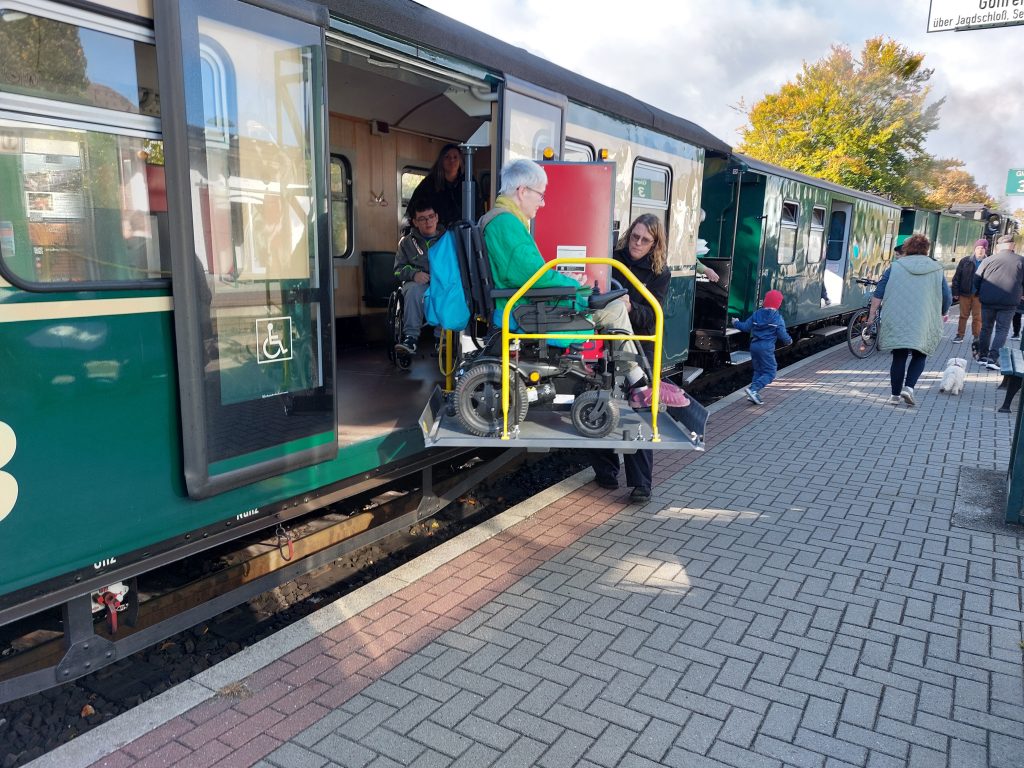
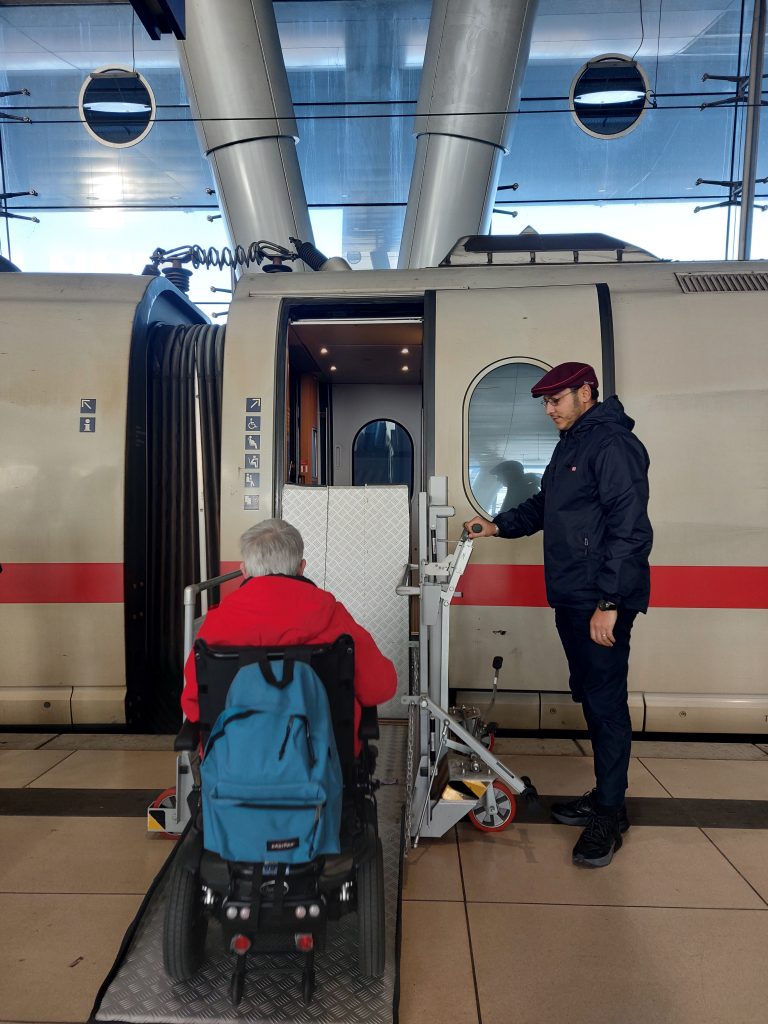
Using aids such as ankle-foot orthoses (AFOs) to support foot dropping, can—at odds with their intended purpose—negatively impact balance. Learning to use walking aids like sticks, walkers and wheelchairs, which all present increased challenges for someone who lacks body position awareness and gross motor functions, requires great care and concentration.
Jean‑Philippe is keen to add that “the C in CIDP stand for chronic”. Adding that it requires “deep personal work and acceptance” of the constant symptom fluctuations and the psychological toll of a “chronic”, lifelong condition that outsiders rarely see. They instead see what “appears to be just a normal guy in his late fifties”.
The unpredictable spectrum of mobility
For the CIDP patient, mobility exists on a dynamic spectrum, not linear progression. This unpredictability undermines a patient’s most basic ability to plan their daily life, their career, or even time with family.
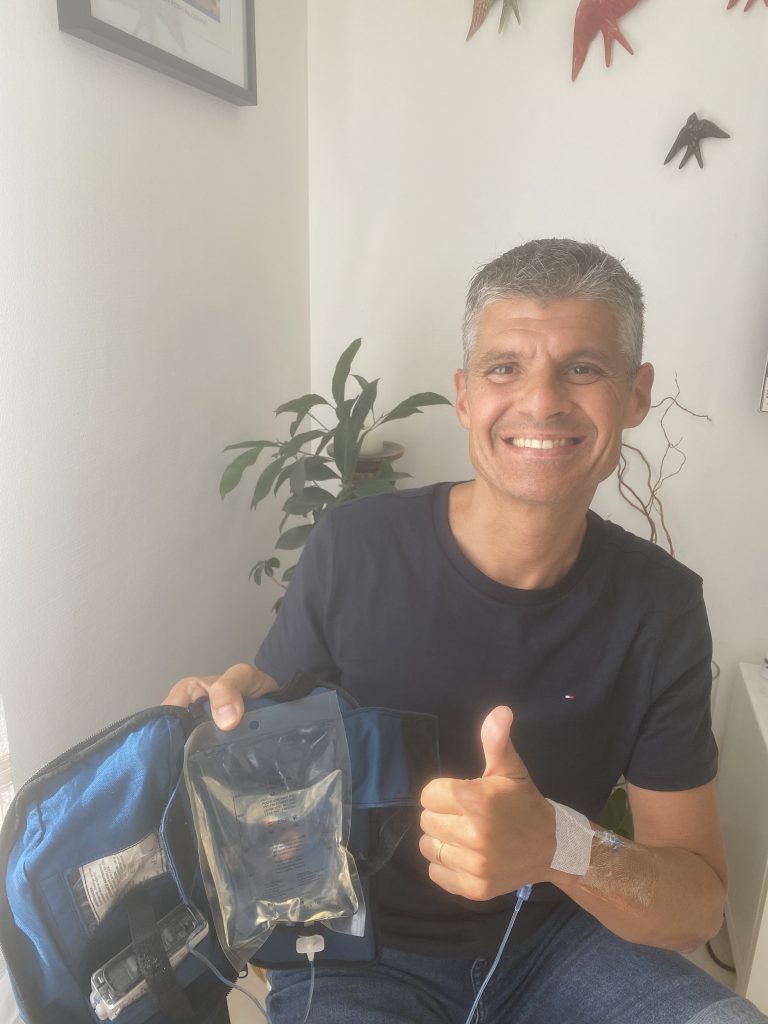
Marian, who lives in Romania, where access to treatment is ad hoc, elaborates, explaining that “without a reliable treatment schedule, planning becomes virtually impossible; I might rely only on a walking stick one day, then require a wheelchair the next”. Even in territories where treatment regimens are reliable, the schedule of intravenous or subcutaneous treatment means that all daily life must be carefully curated around this treatment anchor. Not only in terms of treatment administration but also the fluctuation in health. A trend which, as Jean-Philippe explains, typically shows stablisation in the immediate aftermath of treatment followed by a “tailing-off of mobility and function as the next treatment cycle approaches”.
The need for individuals to constantly recalibrate their life around their dynamic health needs can be exhausting both physically and mentally.
This fluctuation doesn’t just pose difficulties in life-planning, but it can be highly challenging for the individuals in their personal relationships and to the caregiver dynamic. Marian is clear that CIDP affects the whole family, not just the person diagnosed. As he puts it, “you need to basically have married a saint—it is a huge pressure on your partner, on your caregiver,” especially as his abilities fluctuate and his wife must constantly adjust how much physical and practical support she provides.
Jean‑Philippe agrees that CIDP has also inevitably reshaped life for his wife, who he reminds us “didn’t marry a patient” but a healthy young man. He is conscious to be “as burden‑less as possible,” balancing his wife’s own professional skills as a nurse with her role as his partner by not relying on her for every infusion or aspect of his care.
The autonomy equation: reclaiming self-sufficiency
A CIDP diagnosis is a direct challenge to independence, and as individuals work toward recovery, they are forced to redefine the meaning of self-sufficiency. They must transition from “passive recipients” of critical care to active, informed participants in their future treatment plans. The shift brings a new appreciation for even the smallest gains. Nancy recalls the moment she regained movement in her thumb after paralysis as an “immense joy that made me realise I could get better”.
However, the internal struggle for self-acceptance is complex. Marian, who was a physically strong man before his diagnosis, wrestled profoundly with the “guilt” of becoming dependent on his wife for support. He further shared the uncomfortable feeling of being an “imposter,” capable of standing and walking (with a stick) to speak as an advocate “on behalf of others who were less mobile or in extreme pain”. This fuels his advocacy work, proving to himself that his brain was “still working” and that he could “bring something useful” to the community.
Jean-Philippe also explains how CIDP gradually became woven into family life. His daughter has only ever known him with the condition and has often helped with small yet essential tasks, such as buttoning a shirt or assisting with the management of his IV infusions. “It was also a conscious family choice to navigate the disease this way together, integrating it naturally into everyday life”.
Patients gain autonomy by becoming experts in their own condition; however, what happens when this is not possible? An area of great concern for all was in those acute/relapse moments where they may not be physically able to advocate for their own needs. A fear compounded by the lack of emergency staff familiar with the relapsing and recovery nature of CIDP. Nancy strongly advocates for the creation of tools to empower patients to have a voice in emergencies when their voice might otherwise go unheard.
Holistic care: supporting the person, not just the pathology
There is a consensus among advocates that effective CIDP management requires a holistic treatment that should look beyond the therapeutics. Physical therapy and rehabilitation are viewed as a non-negotiable supplementary therapy, critical for body recovery and minimising lost function. Nancy recalls having to “rehabilitate’, adding “I had to relearn how to walk after paralysis”. A rehabilitation that took over six years before she would return to work and a sense of “normal life”.
Jean-Phillipe refers to physical rehabilitation and ongoing exercise as “absolutely key”. While high-impact activities like hiking or riding a standard bike may be impossible, finding adapted ways to move is a crucial component of preserving quality of life and autonomy. For Nancy, swimming offers a powerful sense of “freedom” because the body is lighter in the water. For others, assistive aids, such as an adapted tricycle provide a vital return to beloved pastimes.
Yet, access to physical therapy support remains inconsistent. Marian, for instance, has only limited access to free physiotherapy per year. In other regions, this is lacking altogether. This lack of systemic support often forces the onus of recovery onto the patient, requiring a dedicated, proactive approach to at-home self-exercising. However, there lacks adequate guidance and education on the benefits of remaining active in the context of mobility and long-term outcomes to support this. Gabi’s organisation is actively trying to bridge this deficit by developing instructional exercise videos for their patient community.
These complex care needs inherently demand a holistic multidisciplinary team approach that spans rehabilitation, respiratory function, neuropathic pain and emotional health. The disheartening reality, as Gabi notes, is that the patient is currently forced to be the “manager of this coordination”—a gap that needs closing.
Hope and the horizon
While Marian acknowledges there is much work to be done, he affirms that there is a “glimmer of hope” emerging across Europe. He deliberately chooses this wording to be sensitive to patients who were diagnosed very late (after significant damage incurred), noting that many in his community are yet to see a “bright sky above them”. However, he notes the intensification of work over the last couple of years brings a sense of “optimism”.
This progress, though imperfect, shows forward motion. To see that patients diagnosed early with prompt access to treatment can potentially “go into remission and have a very normal life” is a concept that would have been “completely impossible” decades ago. “This is progress. But this progress is not felt by all—there is still more to do.”
Within the European patient organisation (EPODIN), there are several calls to action focused on driving innovation, increasing plasma donation and strengthening European self-sufficiency in plasma-derived therapies. And Nancy closes with a powerful reminder of the responsibility we all share, stressing that in the here and now, CIDP life-sustaining treatments rely on the generosity of others: “We need people to understand that donating plasma is donating life”. So perhaps, while the CIDP community wait to see what the future holds in terms of innovation, we in society can play a small part and take up Nancy’s call to action.
To learn more about plasma and plasma donation please visit: https://www.blood.co.uk/plasma/why-we-need-plasma-donors and https://www.epodin.org/plasma-donation/
To learn more about GBS and CIDP please visit
https://www.neuropathies-peripheriques.org
Articles are for information only and do not form the basis of medical advice. Individuals should always seek the guidance of their medical team before making changes to their treatment.
This article was sponsored by argenx.
argenx have had no editorial control over the copy, and all opinions are those of the contributor.
RARE Revolution Publishing® retains all copyright.