“Living well”: life with Sjögren’s disease
SPONSORED CONTENT

When Ana Vieira started experiencing unexplained symptoms as a teenager, she had nothing but an ever-growing sense that something was wrong. It would take two decades before she received a diagnosis of Sjögren’s disease, and another decade before she accessed specialist care that truly recognised the complexity of her condition. Today, Ana is a leading patient advocate, co‑founder and vice president of Sjögren Europe, and an experienced patient research partner at European level
Written by Nicola Miller, RARE Revolution
Interview with Ana Vieira, co-founder and vice president, Sjögren Europe
Ana Vieira is 50 years old, and Sjögren’s disease has been shaping her life since early adolescence—long before she knew the condition by name.
After 20 years of being largely dismissed by the healthcare system, in 2007, Ana received a confirmed diagnosis leading her in search of information. She quickly discovered how little was available. That would soon change—largely because of Ana herself.
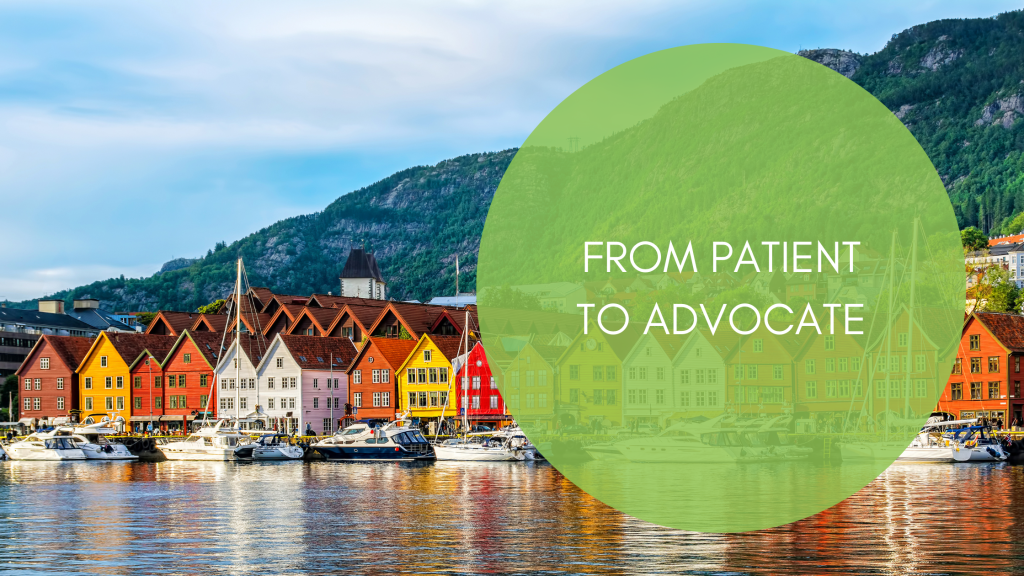
In 2015, Ana self‑funded a trip to her first international Sjögren’s symposium in Bergen, Norway.
“When you hear there’s no cure or even a treatment, you don’t just want to stay on the couch watching life go on.”
There, Ana met patient representatives from around the world and seeing their commitment ignited something in her: “I understood how powerful a patient advocate can be. That was the spark in me. I wanted to be like them.”
Since then, Ana has trained as a EULAR patient research partner, attended the EURORDIS winter school on scientific innovation and translational research, joined the European Reference Network ReCONNET for rare connective tissue diseases, and served on the EULAR Research Committee, the EULAR Clinical Research Sub-Committee, and FOREUM (the Foundation for Research in Rheumatology). She is also involved in the FACILITATE project, working to return clinical trial data to participants, facilitating its use in healthcare decision making and future research, so that valuable information does not remain “kept in silos”.
Today she devotes herself full‑time—but voluntarily—to patient advocacy, including co‑designing trials and reviewing protocols and patient‑facing materials through her work with Sjögren Europe.
Advocacy has profoundly reshaped Ana’s relationship with her condition. “It showed me a different side of the disease—the positive side. I’ve had the chance to meet very inspiring people throughout this patient journey.” Rather than anchoring her identity in loss, she has learned to look forward:
“Some people suffer from a grief that they miss the person they used to be before the disease. But I try always to look forward at the future, not the past.”
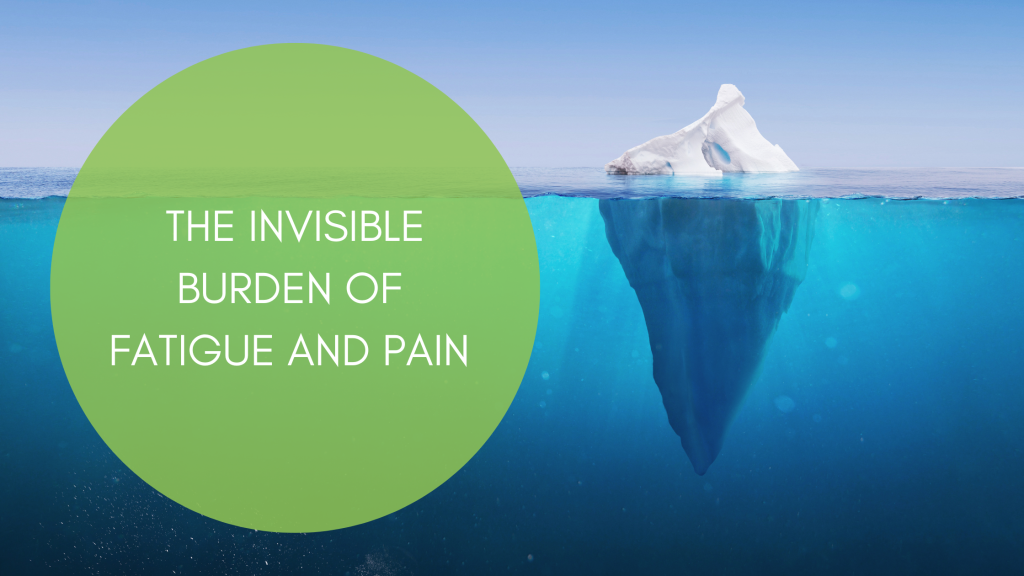
Public and even professional understanding of Sjögren’s often focuses on “dry eyes and dry mouth”. Ana is clear that this barely scratches the surface. “There’s a hidden burden of this disease. You don’t always see external signs of the disease and this invisibility brings a huge mental, emotional and even physical burden.”
When someone appears outwardly well yet reports a “myriad of unspecific symptoms”, disbelief is common: “Society, family, co‑workers, even health professionals who don’t know the disease, immediately think you’re lazy or that you have some anxiety or depression issues.”
Fatigue, in particular, can be devastating and profoundly misunderstood:
“Sometimes you’re so fatigued, you can’t find the strength to eat—chew or swallow. You literally can’t eat until your strength returns. It’s incredibly debilitating. There’s physical, mental and emotional fatigue. Sometimes you have the strength to be physically very active, but your mind is frozen or vice versa.”
Under‑treated pain also weaves through Ana’s daily life, compounding fatigue, disrupting sleep and limiting her ability to work or socialise. Self‑management strategies to decode the body’s signs and respond through rest and self-care are vital in maintaining a quality of life.

In contrast some symptoms of Sjögren’s disease are highly visible—especially dental complications and oral dryness—and these can dramatically reshape social and professional life.
“Eating at a restaurant is difficult. When you’re talking or even smiling, you can have the food stuck in your teeth due to dryness. We keep our hands or napkin in front of our mouth, or we keep drinking water—trying to hide this. Some people actually avoid going out socially, feeling shame and humiliation.”
Even with meticulous oral care, tooth decay and tooth loss are common: “There are patients who lose their teeth, so they stay isolated at home.” Self-image is shattered. Yet for many, the cost of restorative dental work is prohibitive, and national health systems do not always provide support.
“Speech is also affected. You have very little saliva, making it difficult to talk for long periods. It all sticks—your tongue, your lips, your gums. Those who have professions like teachers, who need to talk all the time, often forgo their careers.”
Bell’s palsy can also create a visual difference that impacts speech, drinking and eating, and can further isolate individuals from seeking out social interactions. All this serves to shrink the world of individuals, creating profound isolation.

Ana’s experience highlights systemic failures that many face, even after they receive a diagnosis.
“In my case, it was not a patient failing to self‑advocate; it was a system failing to listen.”
The rheumatologist who first diagnosed Ana failed to recognise the systemic nature of Sjögren’s: “He took it as a burdensome dryness disease. Every appointment, he sent me home with artificial tears and painkillers. That was it.”
Only after attending international conferences did Ana realise she was not receiving appropriate follow‑up: “It took me 10 years to understand that. Finally referred to a Sjögren’s specialist in 2017, she learned of irreversible damage, which, could have been avoided with adequate and timely diagnosis and care.”
By this time, she was already living with additional gastrointestinal and neurological symptoms. She explains, “If I’d had access to treatment immediately on diagnosis, I’m pretty sure I wouldn’t have the symptoms I’m dealing with today. With proper treatment, we might have been able to slow them down or stop them completely.”
This knowledge carries a heavy emotional toll:
“You not only have to fight to be listened to and believed, but you must live with the consequences and knowledge that it could have been different. This is what drives me in patient advocacy. I just want to avoid this happening to others. If I can change the life of one patient, it’s a win.”
Sjögren’s syndrome: at a glance
Sjögren’s is a systemic autoimmune disease that primarily attacks moisture-producing glands but can impact the entire body.
Core “sicca” (dryness) symptoms
▪️eyes: persistent “gritty,” burning, or sandy sensation.
▪️mouth: severe dryness; difficulty speaking or swallowing dry foods.
▪️other areas: can affect the skin, nose, throat, and vagina.
Systemic manifestations
▪️profound fatigue: debilitating, “flu-like” exhaustion.
▪️pain: chronic joint pain (arthralgia), swelling, and muscle stiffness.
▪️brain fog: memory lapses and concentration difficulties.
▪️neuropathy: numbness or tingling in hands and feet.
▪️organs: Potential inflammation of the lungs, kidneys, or liver.
Facts and risks
▪️demographics: 90% of patients are women, typically diagnosed between ages 40 and 601.
▪️the “invisible” struggle: symptoms are often internal, leading to long diagnostic delays and lack of social recognition.
▪️major risk: patients carry a 5–10% lifetime risk of developing non-Hodgkin lymphoma, requiring lifelong medical monitoring2.

Sjögren’s can quietly erode a person’s ability to work and remain financially secure as Ana explains.
“With brain fog, you cannot concentrate or focus. It’s difficult to start things; it’s difficult to end things. You lose your line of thought. It’s difficult to express yourself, to find the right words. You get too slow; your performance and productivity sink.”
Over time, this can become incompatible with the demands of employment: “Whatever your profession, you may realise you’re no longer fit for the position. That’s what happened to me. I ended up losing my job because I was not the person they had hired some years before.”
In many European countries, Ana explains, disability recognition for Sjögren’s is still extremely limited—despite the disease’s clear debilitating nature—meaning that a financial safety net in the absence of gainful employment is lacking. The impact can be devastating to the long-term financial security of the family unit.

Ana was late to access mental health support. “Only in 2023 did I get referred to psychological support, and since then, I’ve been enjoying life much more. I just regret I didn’t reach out to them a decade earlier.” This support has helped Ana manage not only the current symptoms but the emotional toll of years of gaslighting, uncertainty and loss.
Sjögren’s also reshapes family dynamics in complex ways. For Ana, both her parents—now in their late seventies—and her sons have acted as informal caregivers: “They (my parents) wake up every day with the focus of trying to make my life easier, and this is an emotional burden for me, because I should be caring for them.”
Her children also grew up with responsibilities many would not expect of youngsters:
“They were very young when I had flares—they supported me with dressing, taking off my clothes, helping me showering. Sometimes they had to cook their own meals. This shouldn’t happen. The roles were reversed. I feel that my disease is somehow kidnapping part of their lives—they are not totally free to live their lives—they are always worried.”
Relationships can fracture under this strain. Ana describes how her marriage ended when she chose to join a phase 2 clinical trial in 2020: “My husband never understood the disease because he couldn’t see the external signs. When I decided to participate in the trial, he just thought it was a waste of time and was me letting the family down—’obsessed with my disease’. But I just want to get better.” Ana seized the opportunity. Her marriage ended.
Now with a partner who understands and supports her, she recognised the difference: “He wasn’t the right husband. The right person is there for you no matter what. And I have that now.”

One of the most under‑discussed but deeply impactful areas is sexual health as Ana shares. “Sexual health is still a taboo, yet it’s tremendously affected. Doctors don’t approach the topic as they should—they don’t feel comfortable or they don’t know how to advise.”
Ana argues that sexual health should be part of routine care—just as referrals are made to ophthalmologists for dry eyes, referrals should be made to gynaecologists or sexual health specialists. Without this, people are left to navigate pain, dryness and nerve involvement alone:
“You end up in sexless relationships, all because you don’t know how to solve the issues. Some of them are easy to solve, but nobody talks about it. Sex is an integral part of our lives that contributes to our quality of life and to a positive perception of ourselves. It should not be ignored.”
Ana is clear that sexual health is a core dimension of Sjögren’s care that represents a significant under-met need and needs greater visibility within the healthcare sphere.

Despite the many challenges, Ana describes herself as “living well” with Sjögren’s.
“When I can go out with friends, it’s a good day. If at the end of the day all is done as planned—I’m really proud of myself.”
This means taking life day-by-day, pacing herself and celebrating seemingly small victories—like managing a solo three‑hour round trip to her specialist—as a powerful marker of independence and control. “If I can go to the hospital alone and drive myself, that’s a win. A perfect day.”
Ana also believes in self‑compassion, where she judges success against what was realistically possible that day, not against her pre‑illness life or the routines of others. Going out with friends—on days when her energy allows—is one of Ana’s clearest markers of “living well,” offering connection, joy and a vital sense of normality amid the constraints of Sjögren’s.

Looking to the future Ana is clear on her priorities.
“A solution for fatigue is number one. We know too little about Sjögren’s and fatigue. Unlocking the solution to the debilitating impact of fatigue would be everything.”
Ana also stresses the urgent need for robust European‑wide data on Sjögren’s—covering prevalence, access to diagnosis and care, and the real‑world burden of the disease:
“We don’t yet have a picture of this disease in Europe. We need to understand how the disease is diagnosed, how it is followed up in different countries, and where the biggest pitfalls are. Without this, we cannot plan the future. This is an ambitious undertaking and will need multi-stakeholder collaboration across borders.”
Sjögren’s disease is a lifelong, systemic condition that quietly reshapes health, identity, work, relationships and finances. It deserves greater recognition, research and truly holistic care so that families like Ana’s can be supported to “live well” at every stage.
Articles are for information only and do not form the basis of medical advice. Individuals should always seek the guidance of their medical team before making changes to their treatment.
This article was sponsored by argenx. [ALL – MED – LO – 0094]
argenx have had no editorial control over the copy, and all opinions are those of the contributor.
RARE Revolution Publishing® retains all copyright.
References
[1] Mavragani, C. P., & Moutsopoulos, H. M. (2014). Sjögren syndrome. Canadian Medical Association Journal, 186(15), E579–E586. https://doi.org/10.1503/cmaj.122037 Cited by: 267
[2] Shahane, A., & Patel, R. (2014). The epidemiology of Sjögren’s syndrome. Clinical Epidemiology, 247. https://doi.org/10.2147/clep.s47399 Cited by: 669