Slowing the progression of juvenile-onset ALS
Content sponsored by Oxford-Harrington Rare Disease Centre
In some cases, the diseases being studied by the Oxford-Harrington Rare Disease Centre are so rare that they have yet to be identified and named. Although they may be nameless, they are never faceless: behind each disease or cluster of symptoms is a patient and their family hoping for a treatment or, better yet, a cure
A rare disease and a difficult life
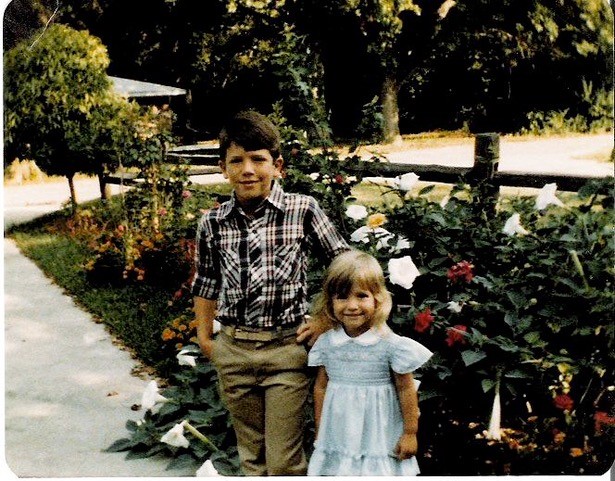
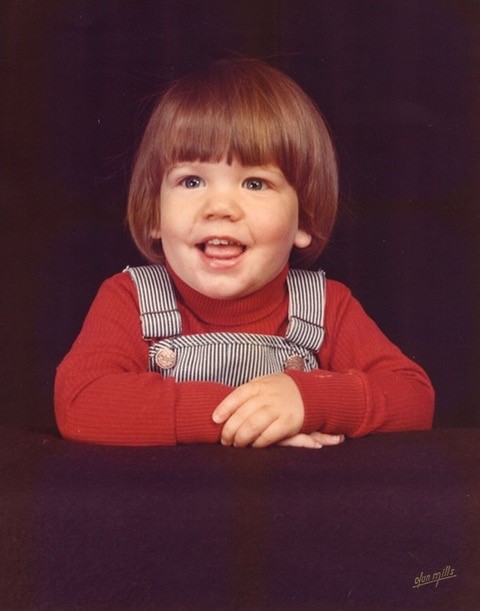
Bonnie Mattingly Woolston knows all too well what it’s like to live with a rare disease. Like her father, grandfather and generations of Mattingly ancestors, Bonnie had suffered throughout her life from an unidentified progressive motor neuronopathy.
An early memory of Bonnie’s came when she was six years old. Standing on the front porch of their home and watching her father struggle to walk across the lawn without falling, Bonnie asked her mother: “Mama, how did Daddy hurt his legs?” The reply: “Hush, honey. Daddy doesn’t like to talk about it.”
As Bonnie relates: “So I hushed. I stayed hushed a few months later when our gym teacher had us run races on the playground and I was always last. I stayed hushed in high school when I sought out the least travelled staircase to reach my second-storey classes because I held up the hordes of students using the main stairs. The same was true at my college dorm, where four floors separated my bedroom from the dining room. And, in my first apartments after college, which were invariably two or three storeys above ground. I hated stairs.”
A ‘veil of shame’
When Bonnie was pregnant with her first child, she made the nerve-wracking decision to no longer stay hushed.
“I had grown up with a veil of shame hanging over my head”, she says. “I believed there was something so wrong with me that I couldn’t talk about it with anyone else. More than anything, I did not want my children to grow up with the same feelings of shame and aloneness, living secretly with the knowledge that there was something wrong with them.”
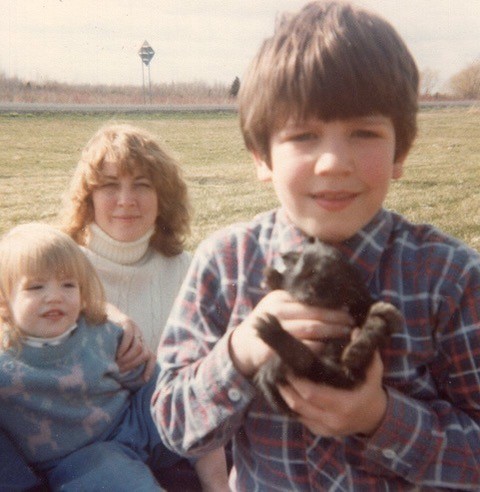
Bonnie visited with specialists in paediatrics and neurology—including her father’s neurologist at the National Institutes of Health—in an attempt to discover more about the affliction that had targeted her family for generations. She learned that only a very small number of neurologists had ever seen a patient with her family’s specific symptoms, which included limb weakness, severe muscle wasting and sensory dysfunction.
Identifying the ‘Mattingly affliction’: ALS4
In 1997 two members of the Mattingly family passed away, having arranged in advance to donate their bodies to neurology at Johns Hopkins for research into the “Mattingly affliction.” The autopsy findings revealed the previously unnamed affliction was, in fact, a type of amyotrophic lateral sclerosis (ALS). It was named ALS4 because it was the fourth variation of inherited ALS to be identified.
Today more than 40 types of familial, inherited forms of ALS have been identified. ALS4 is a rare, juvenile-onset form characterised by dominant inheritance and slowly progressive motor neuronopathy. Although ALS4 patients live a normal lifespan, they suffer considerable disability.
A disease-modifying therapy for motor neurone disease

There is no treatment for ALS4, but Albert La Spada, MD, PhD, distinguished professor, and Jack W. Peltason endowed chair, pathology and laboratory medicine and neurology, and director of the UCI Center for Neurotherapeutics at the University of California, Irvine, is working to change that.
Dr La Spada, a 2025 Oxford-Harrington Rare Disease Scholar, and his team established a research programme focused on understanding the mechanistic basis of ALS4. With critical funding and drug development support from the Oxford-Harrington Rare Disease Centre, they are developing a disease-modifying allele-selective therapy that could dramatically slow the progression of disabling motor neurone disease. This therapy has the potential to modify disease progression for the estimated 200 people in the US, UK and Canada likely to benefit from it.
Dr La Spada added that patients might even have the potential to recover function. “We’re working to translate RNA-based research into improved patient outcomes”, he says.
Advancing rare disease medicines
The Oxford-Harrington Rare Disease Centre, a partnership between the University of Oxford and Harrington Discovery Institute at University Hospitals in Cleveland, Ohio, aims to advance 40 rare disease drugs into clinical trials by 2034. Today, the partnership has more than 50 drugs in development—reflecting the urgency of unmet need and the strength of its model.
Central to this effort is the Oxford-Harrington Rare Disease Scholar Award programme. Each year, 10 academic investigators from the US, UK and Canada are selected to receive funding and translational support on projects ranging from neurodevelopmental, neuromuscular and metabolic disorders to rare cancers. Scholars also receive in-depth guidance on drug and business development, with the goal of accelerating projects towards clinical trials and de-risking them for further development and investment.
For many families, the hardest part of a rare disease diagnosis is the absence of a clear treatment path while promising academic discoveries often stall before becoming therapies because of a lack of commercial incentives. The Oxford-Harrington Rare Disease Centre bridges that gap.
Understanding the developing science
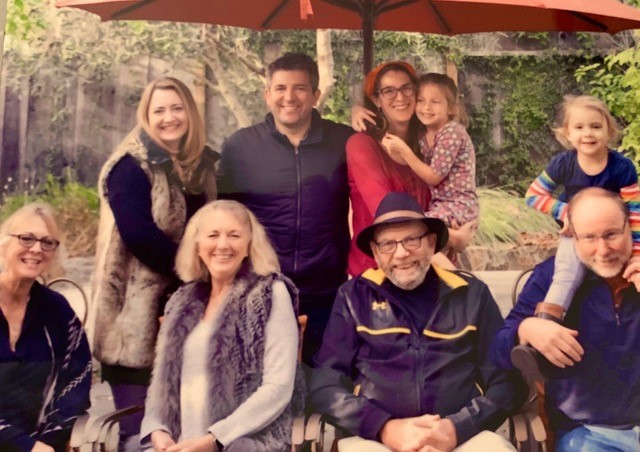
Bonnie said Dr La Spada’s efforts and kindness over the years have been appreciated by her, the Mattingly family and the ALS4 community.
“Dr La Spada was generous in sharing his thinking of the moment, he explained the developing science, and he gave me the ‘big pictures’ of what to expect next”, she says. “When I had questions, he answered. He walked me through the lengthy, confusing, concerning process. I will be forever indebted to him for keeping me in the loop.”
Dr La Spada’s research has benefitted immensely from the guidance received from his Oxford-Harrington advisers and interactions with other awardees, which resulted in several meaningful collaborations that continue today.
“I expect that the opportunity to interact with leading researchers from around the world will facilitate our research efforts, and certainly the funding support will be critical during these challenging fiscal times”, he says.
A grateful patient
Meanwhile, Bonnie, the face behind the now-identified ALS4, praised Dr La Spada’s approach and determination.
“Dr La Spada is a curious, creative, caring and committed human being”, she says. “In the 25-plus years he has spent peeling layer after layer off the ALS4 onion, he has been willing to follow the clues, change directions when indicated, put his confidence in the proof and not hang too tightly to current theory—his or anyone else’s.”
“When I dare to dream that our tiny little corner of ALS could help lead to a treatment, or perhaps even a cure, I am humbled by the opportunity to participate in this important research.”
https://www.oxfordharrington.org/