ITP: clinical trial literacy is vital to help patients make the right decisions
Content sponsored by argenx
With several clinical trials for immune thrombocytopenia (ITP) treatment currently taking place, demystifying this research process is essential for patients to take an active, informed role in their care. Patient advocates from the ITP community spoke to us about building literacy around the research and understanding how participation can help all
Written by Karen Roberts, RARE Revolution
Community insights from:
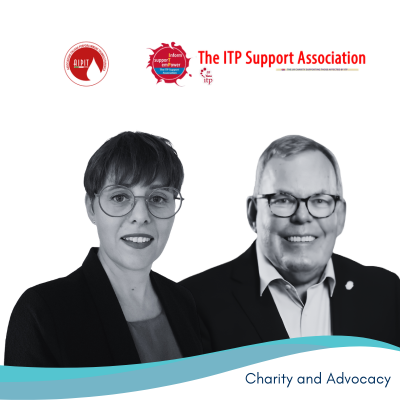
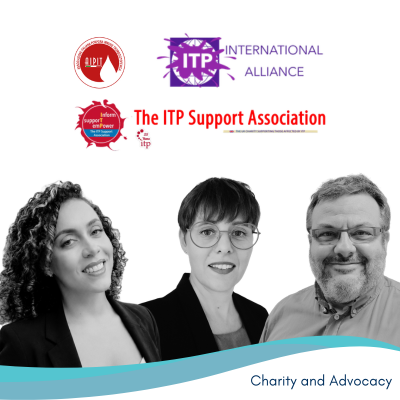
Barbara Lovrencic, president, AIPIT (Associazione Italiana Porpora Immune Trombocitopenica)
Ella-Sophia Ellis, co-founder, ITP Support Association, young adult subgroup
Serge Laborde, president, O’Cyto association

Clinical trials can be life-changing for those with long-term and chronic conditions such as immune thrombocytopenia (ITP). Understanding the research terminology, where to find the information and thinking about how the trial would affect their lives can be a barrier for patients.
Clinical trial literacy is crucial in making informed decisions about your health and potential participation, particularly when there might be multiple trials underway.
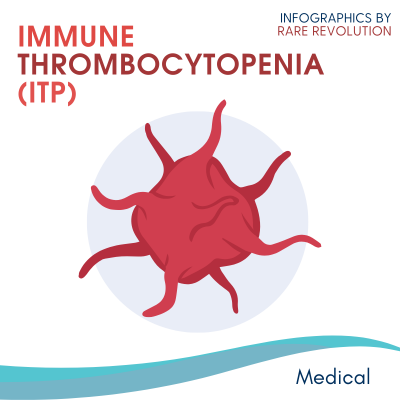
This is the case for ITP, a rare autoimmune disorder where the immune system attacks and destroys blood platelets. It causes bruising, petechiae (pinpoint spots caused by bleeding into the skin), nosebleeds and a risk of severe bleeding. There are two types of ITP, primary, where no underlying cause or trigger is identified and secondary, where the trigger is a further underlying condition or infection. At any one time, there are 9.5 cases of ITP per 100,000 people.1 In the UK, ITP affects 6 per 100,000 adults.2 With several clinical trials underway for ITP in the UK and globally, we spoke to patient advocates about: why researching the different types of trials matters, trial participation and some of the misconceptions around them.
Misconceptions of clinical trials
Barbara Lovrencic is the president of AIPIT (Associazione Italiana Porpora Immune Trombocitopenica), Italy’s dedicated patient organisation for immune thrombocytopenia. Barbara, who herself has ITP, is also the vice-chair of the International ITP Alliance. She works alongside haematologists, researchers and families to advocate for a more holistic approach to treatment, improve care and offer support.
For many people living with ITP, the phrase “clinical trial” can evoke fear or a feeling of being a test subject rather than a pioneer. Barbara described some of the misconceptions patients hold about trial participation.
“The ideas around clinical trials changed deeply after the COVID-19 pandemic. Before the pandemic, misinformation around the science related to new drug development was more limited. Actually, it was something that a lot of people never even thought about.
“What the majority of people, even patient advocates, if not trained, don’t know is how complex and how heavily regulated the entire process of new drug development truly is. Clinical trials are just a part of the process that takes 10 plus years to complete.
“What comes to patients as an experimental drug is not something someone just made in the lab and wants to test. Nowadays, new technologies are opening new opportunities in treatment development that will reshape it radically.”
Ella-Sophia Ellis was also diagnosed with ITP and co-founded the ITP Support Association subgroup—Young Adults Group—for those aged 18-30. She says, “I think it’s important that all patients are more aware and there’s more transparency about the studies out there. These studies and research activities only push forward the patient’s cause and push us closer towards a cure for the illness one day.
“I think there is scepticism around getting involved with the unknown, and we can all relate to that.”
Deciding whether to take part in a clinical trial can be a way to be active in your own care. And the impact of participation also has wider implications—results and learnings from these studies serve to help other patients, both now and in the future. These benefits are highlighted by Serge Laborde, president of the O’Cyto Association. Founded 13 years ago, it has 400 members in France and most French-speaking countries. Its members include children and adults with cytopenia disorders such as ITP, anaemia, neutropenia and Evans syndrome. The association supports those affected by the conditions, as well as supporting research and raising public awareness.
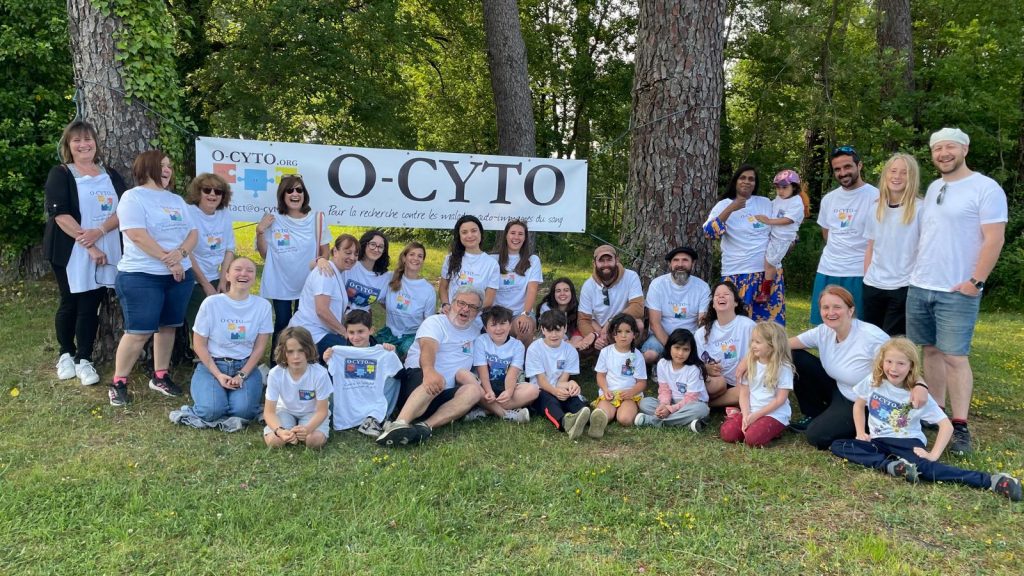
Serge shares: “Participating in a trial can also be presented as: a way to access close monitoring; an active role in one’s care pathway; a contribution to progress for future patients. The prospect of a patient helping others by participating in therapeutic advances is well understood. However, the word ‘pioneer’ only works if the patient feels respected and free to choose.”
Building clinical literacy
Often the individual taking part in a study invests a great deal of their time and their participation is a crucial part of the research—a part of the story that’s not always recognised.
Speaking of how to improve communication about why research is a gateway to hope and is necessary for progress. Barbara says, “It depends on the clinical trial study design but usually participation in the clinical trial requires effort from the patient. Sometimes taking part in the clinical trial means having to use all your days off [work or education] for study visits instead of having a proper holiday.”
“Reviving the concept of empathy and doing something for the greater good should be promoted at the general level, not just for clinical trials.”
“People often don’t associate the clinical trial with the drug someone is currently taking. Making people aware of that and telling the story of people who participated in clinical trials that led to the approval of drugs we currently use really highlights the importance of participation in clinical trials.”
Building clinical trial literacy requires moving beyond dense medical jargon. Doing this means educating the community on how treatments are designed and developed so they feel able to ask their healthcare providers the right questions and to pursue participation where appropriate, as Barbara explains.
“Education of people involved in patient organisations and joint projects on clinical trial literacy is crucial. Only educated patient organisations can educate the patient community. Empowering patients to feel they have the right to ask is also important. Fostering the culture of dialogue between HCPs and patients is the first step.”
Serge underlines measures such as involving patient associations to provide a more neutral perspective, as well as peer support and the ability to give explanations tailored to the lived experience of patients. He adds: “In rare or little-known diseases like ITP, this community dimension is often crucial.”
He also advocates for the need to simplify the language used.
“Terms like randomisation, treatment arm or phase II are often intimidating. Translating medical jargon into everyday language greatly improves understanding and therefore patient engagement.”
What happens if a trial fails?
Trials are an important part of drug development and progress, and each stakeholder has a role to play in ensuring their design, creation and implementation are suitable to optimise chances of a favourable outcome.
Barbara explains,
“It is not possible to develop a new treatment without a clinical trial, but the clinical trial and the drug need to be tailored to the patient’s needs. There is no sense in developing a drug that solves a nonexistent problem or a clinical trial that is not feasible for the patients. Early involvement of the patient community and other stakeholders in drug development should be the gold standard.”
Not every trial will be successful, but even participation in a failed trial helps future progress. Barbara explains, “The entire process of drug development collects information on the human body, disease and their interaction. Knowing which path is not the right one is valuable information. On one side, it tells us where not to go, and on the other, it makes it mandatory to search for different solutions.” Communication of this, and bringing the community along on that journey, makes the difference between trust and future participation and a legacy of mistrust.
Ultimately, trials are about more than just the treatment offered and the participants— every individual and family who takes part walks that path not only to help themselves but to help others too. And this is only possible when consent is informed through sound education and literacy of the subject.
References
[1] https://my-itp.com/what-itp
[2] kch.nhs.uk/wp-content/uploads/2023/01/pl-1091.1-immune-thrombocytopenia-itp.pdf
To learn more please visit:
AIPIT: www.aipit.com
ITP Support Association: www.itpsupport.org.uk
O’Cyto: https://o-cyto.org/en/
Articles are for information only and do not form the basis of medical advice. Individuals should always seek the guidance of their medical team before making changes to their treatment.
This article was sponsored by argenx.
argenx has collaborated in the development of content themes. They have had no editorial control over the content copy, and all opinions are those of the contributor.
RARE Revolution Publishing® retains all copyright.