Global EB Taskforce at Hever Castle: shaping the future of DEBRA’s research strategy
The Taskforce brought together different sectors of the epidermolysis bullosa (EB) community. The aim was to identify actions needed to improve treatments, care and quality of life for those living with the condition
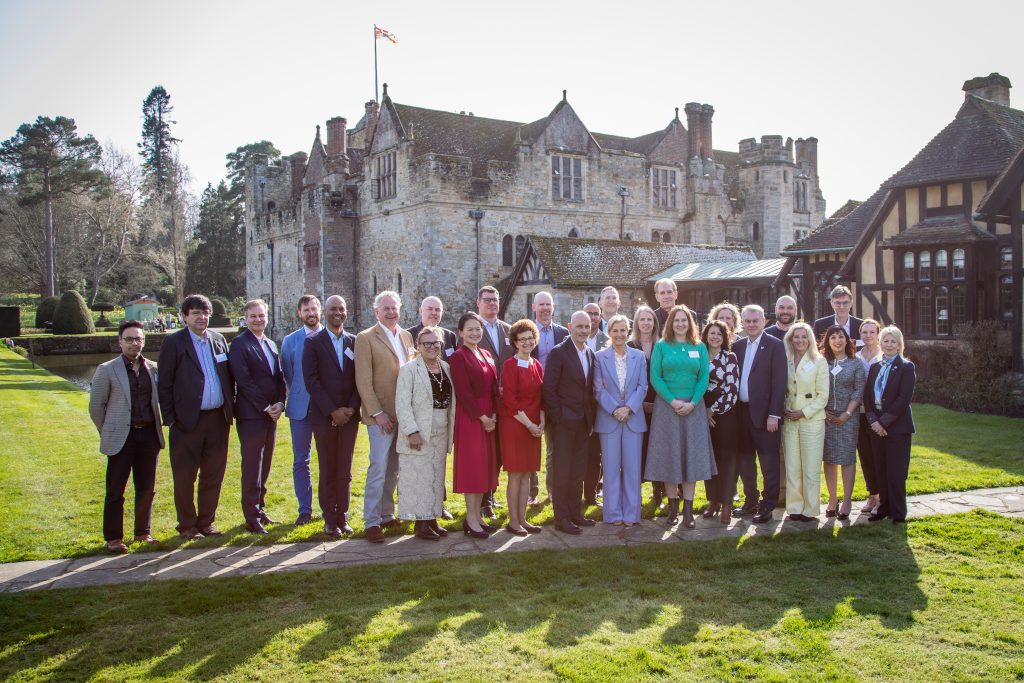
In March 2026 DEBRA UK—the national charity supporting people living with epidermolysis bullosa (EB), funding research and providing care, information and advocacy for the EB community—convened and chaired the inaugural Global EB Taskforce at Hever Castle in Kent. The landmark gathering was designed to accelerate progress for everyone affected by EB.
The meeting brought together 27 global leaders from research, clinical care, industry, regulatory science and the patient community. Their shared purpose was ambitious but practical: to move the global EB community from shared aspiration to coordinated action, and to define the priorities, partnerships and measures needed to deliver better treatments, stronger standards of care and improved quality of life for everyone affected by EB.
The outcomes report that followed the Taskforce sets out a clear 10–year roadmap for EB research and care. It is already helping to shape the next phase of DEBRA’s research strategy, sharpening the charity’s focus on patient-led priorities, translational science and the urgent need for treatments that can change lives.
Why the Global EB Taskforce matters
EB is a group of rare, incredibly painful genetic skin conditions that cause the skin to blister and tear at the slightest touch. It is sometimes described as “butterfly skin” because the skin can be as fragile as a butterfly’s wing. For many people living with EB, the daily reality can include relentless pain, open wounds, itching, infections, reduced mobility, and a profound impact on quality of life.
For decades, care has often focused on managing symptoms and preventing complications. That remains vital. But the Taskforce made clear that the global ambition must go further: towards disease-modifying therapies that can reduce the underlying burden of EB and, ultimately, towards cures.
The Taskforce therefore marks an important shift in emphasis. It calls for progress to be judged not only by scientific milestones, but by outcomes that matter most to people affected by all forms of EB: reduced pain and itch, improved physical function, enhanced quality of life and durable disease control.
A roadmap for the next decade
Ella-Sophia Ellis was also diagnosed with ITP and co-founded the ITP Support Association subgroup—Young Adults Group—for thFollowing the Taskforce an outcomes report has been published which provides a practical framework for the decade ahead. Its central message is that no single organisation, discipline or country can deliver the scale of progress needed alone. Breakthroughs will depend on stronger international collaboration, better data, shared priorities and closer alignment between researchers, clinicians, industry partners, regulators, policymakers, funders and patient advocates.
Key priorities include harmonised international registries, responsible data sharing, coordinated research programmes and clearer measures of success. Together, these foundations can help accelerate the development of new and repurposed therapies, reduce duplication, strengthen evidence and make it easier to compare outcomes across studies and healthcare systems.
The report also reinforces the importance of equitable access. Scientific progress only matters if it reaches the people who need it. That means thinking from the outset about how future treatments can be developed, approved, funded and delivered in ways that benefit people living with every type of EB, wherever they are.
Lessons for other rare conditions
The learnings from the report extend beyond EB. Many rare condition communities face similar challenges: small and dispersed patient populations, limited clinical expertise, fragmented data, slow research pathways and uncertainty about how to turn scientific promise into approved and accessible treatments.
By showing how a rare disease community can bring patients, clinicians, scientists, industry, regulators and funders together around shared priorities, the Global EB Taskforce offers a model that could help other rare conditions accelerate progress. Its emphasis on patient-led outcomes, international collaboration, better registries, responsible data sharing and early thinking about access provides a practical template for building research strategies that are more coordinated, more inclusive and more likely to deliver meaningful change.
How the Taskforce is influencing DEBRA’s research strategy
DEBRA UK is one of the world’s leading funders of EB research, investing an average of £500,000 every year since they were established in 1978. That long-term commitment has helped transform global understanding of EB and laid the foundations for the treatments and cures the EB community urgently needs.
DEBRA’s research strategy is already focused on impact: shaped by the priorities of people living with EB and powered by evidence from DEBRA’s trilogy of patient insight studies1. Together, these studies provide a vital understanding of the lived experience of EB—what matters most to patients and families, where the greatest unmet needs remain and which outcomes would make the biggest difference day-to-day. The Global EB Taskforce strengthens that patient-led approach by providing a wider international framework for action and a clearer sense of where DEBRA can have the greatest influence.
First, it reinforces the need to back world-class translational research with the greatest potential to change lives. This means supporting science that can move from laboratory discovery towards real-world clinical benefit, including new therapies, repurposed medicines and approaches that address the symptoms and complications people with EB identify as most urgent.
Second, it sharpens DEBRA’s focus on patient-centred outcomes. The Taskforce is clear that success must be measured by improvements people can feel in their daily lives: less pain, less itch, better mobility, improved wound healing, greater independence and better quality of life. These outcomes will continue to guide how DEBRA prioritises, funds and evaluates research.
Third, the Taskforce highlights the value of collaboration at every stage of the research pathway. For DEBRA, this means continuing to convene the right people, encourage shared learning, support better data infrastructure and work with partners across academia, healthcare, industry and the wider EB community to accelerate progress.
Finally, it gives DEBRA a stronger platform to advocate for urgency, accountability and access. The roadmap is not simply a scientific document; it is a mandate for action. It challenges the global EB community to work faster, align behind common goals and ensure that innovation leads to meaningful benefit for people living with EB.
Turning momentum into action
The Global EB Taskforce at Hever Castle was an important moment for the international EB community. But its true value lies in what happens next.
For DEBRA the next iteration of its research strategy will be shaped by two powerful sources of evidence: the lived-experience insight captured through its trilogy of patient studies, and the global scientific and clinical consensus developed through the Taskforce. Together, they will help ensure DEBRA’s future research priorities are both deeply patient-led and internationally aligned—focused on the research most likely to deliver practical benefits, while keeping the voices and needs of people with EB at the heart of every decision.
The ambition is bold and uncompromising: to accelerate treatments that reduce the daily impact of every form of EB, and to drive the cures that will end it.
By bringing together global expertise, patient insight and a shared commitment to action, the Taskforce has helped define a clearer path forward. Now, the challenge is to turn that momentum into measurable progress—so that effective treatments, and ultimately cures, move closer for everyone affected by EB.
The Global EB Taskforce outcomes report can be viewed on the DEBRA website.2
References
[1] https://www.debra.org.uk/eb-research/our-insight-studies/
[2] https://www.debra.org.uk/eb-research/our-research-strategy/#book2_