Being seen: why authentic representation matters in rare disease care
Content developed and funded by Chiesi UK
Beyond the power of written communication, Dr Kamran Iqbal, Chiesi UK’s head of medical affairs and patient advocacy for global rare diseases, argues that the visibility of visual imagery is also a fundamental aspect of patient-centred care and health equity. In this Q&A, we explore the origins of the True Faces of Rare, a Chiesi UK initiative, and track its evolution from pledges to tangible action, and discuss the collective effort required to reshape visual representation across healthcare and policy
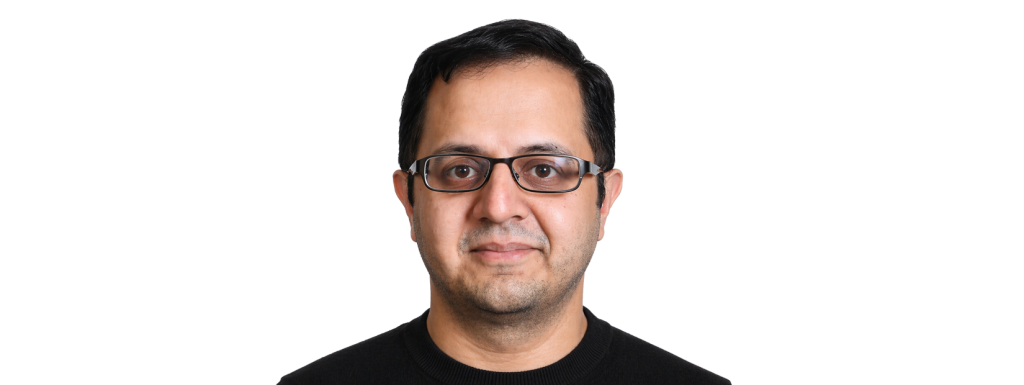
Interview with Dr Kamran Iqbal, head of medical affairs and patient advocacy for global rare diseases, Chiesi UK
Dr Kamran Iqbal, head of medical affairs and patient advocacy for global rare diseases at Chiesi UK, brings a unique and powerful perspective to the rare disease community. As both a physician and a person living with the rare eye disorder, retinitis pigmentosa, Kamran bridges the gap between clinical practice and the lived patient experience. These experiences have increasingly shaped Kamran’s interest in authentic representation and its role in patient-centred care. Today, he advocates for greater consideration of how people living with rare diseases are represented across healthcare communications.
We recently interviewed Kamran to learn more about what motivates him and how he is putting his energy behind the True Faces of Rare initiative, something which he hopes others will also get behind.
Kamran, you live with retinitis pigmentosa and have built a career as a physician. How have your personal health experiences shaped who you are, both as a person and as a healthcare professional?
“Living with retinitis pigmentosa (RP) has fundamentally changed how I see the world, both literally and figuratively.
Losing my sight gradually has not been one defining moment; it has been a succession of small, often invisible losses. I could still see clearly in front of me, yet the night sky slowly became emptier as the faint stars disappeared from view. Darkness became something to fear and, as my peripheral vision narrowed, unfamiliar places brought a growing sense of anxiety. Although my central vision remains, I must continually look for obstacles and think carefully about how I will navigate safely. Over time, I have realised that sight loss shapes far more than what I can see—it influences where I go, when I travel and how confidently I move through the world.
What makes RP particularly challenging is that it is largely invisible. Because I do not look different, most people assume that I can see normally. They do not see the constant calculations, the heightened awareness or the effort required to do things that many people take for granted. At times, that invisibility can feel incredibly isolating.
Yet, as my own field of vision has narrowed over the years, my appreciation of what it means to truly see people has grown.
Representation isn’t simply about appearing in a photograph; it’s about feeling recognised, understood and valued.
When healthcare reflects people’s real experiences, it creates understanding, builds trust and ultimately leads to more compassionate, person-centred care.”
As someone who experiences healthcare from dual perspectives, both as a recipient of specialist care and a clinician, what have you learnt about how people living with rare conditions are perceived, recognised and represented in healthcare and society?
“I’ve spent more than two decades working in healthcare, first as an NHS physician and now in medical affairs and patient advocacy within rare diseases. Throughout my career I’ve believed in evidence-based medicine, clinical excellence and improving patient outcomes.
Living with a rare disease has added another dimension to that understanding. It has reminded me that healthcare is experienced through relationships, conversations and trust, not just clinical evidence.
Patients remember how they are treated, whether they feel listened to and whether their experiences are genuinely understood.
Having both perspectives has reinforced my belief that patient-centred care extends beyond diagnosis and treatment. It also includes how we educate, communicate and represent people.
If our communications don’t reflect patients’ realities, we risk creating barriers before a consultation has even begun.”
Living with RP, means navigating a condition that is not always immediately visible to others. How has that experience shaped your understanding of what it means to feel seen, understood and recognised?
“Living with an invisible condition means you often find yourself explaining what others can’t see. There have been many occasions where I’ve hesitated to ask for assistance because I worried people might question whether I really needed it. Even now, I sometimes find myself wondering whether people think I’m exaggerating because my disability isn’t immediately obvious.
Over time, I’ve realised that feeling seen has very little to do with being visible. It’s about being believed, understood and accepted without constantly having to explain yourself. That experience has shaped how I think about representation.
When people living with rare diseases are portrayed authentically, they’re not just being included in communications—they’re being recognised as individuals with real lives, ambitions, challenges and identities that extend far beyond their diagnosis.
That recognition can be incredibly powerful.”
Kamran, when did you first become personally and professionally aware of the disconnect between how people living with rare diseases are often portrayed and the reality of their lived experiences?
“The original seed actually came from a member of my team, who highlighted concerns about the way people living with rare diseases were being represented in healthcare communications. It was an important observation, and together we agreed it was something worth exploring properly rather than relying on assumptions or anecdotal feedback.
We decided to commission patient-led research with the UK based charity, Metabolic Support, to better understand whether this reflected a broader issue across the rare disease community.
80% of respondents rated the importance of seeing people affected by the condition in disorder-specific materials between 8 and 10 out of 10. Their comments also highlighted the importance of authenticity, connection and seeing experiences they could relate to.
They confirmed that authentic representation mattered to patients and influenced how understood, respected and included they felt.
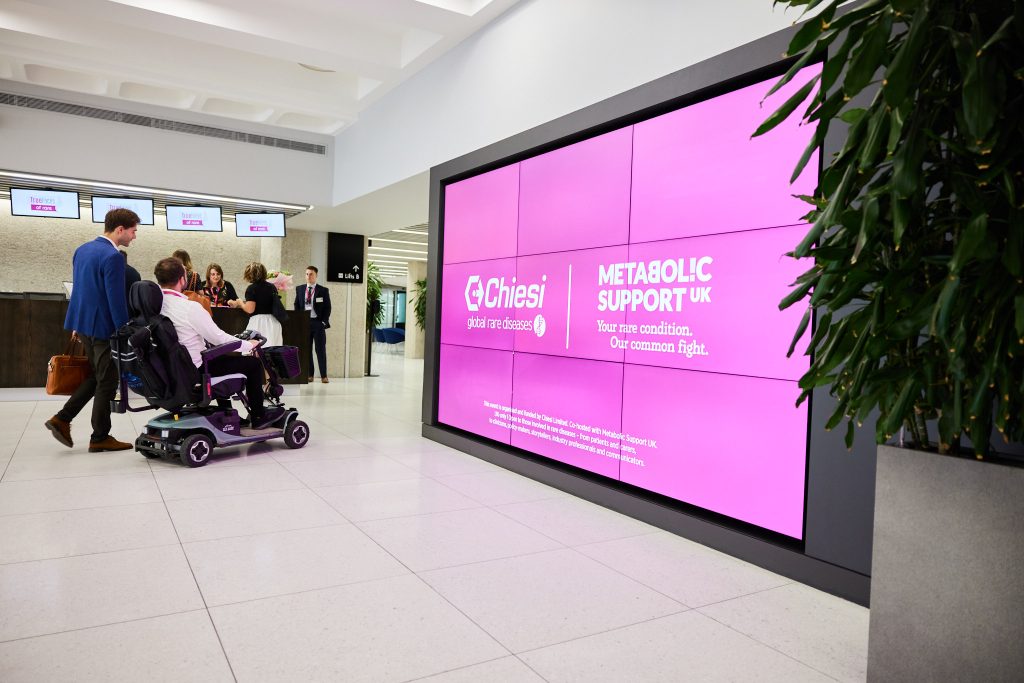
Once we had that evidence, we felt we had a responsibility to share it. That led to the publication of our findings, the creation of the True Faces of Rare initiative and the Westminster launch, where patients, charities, healthcare professionals, policymakers and industry came together to begin an important conversation about how we move from recognising the issue to creating meaningful change.”
For readers who may not be familiar with the True Faces of Rare initiative, can you share more about its mission and the driving force behind it?
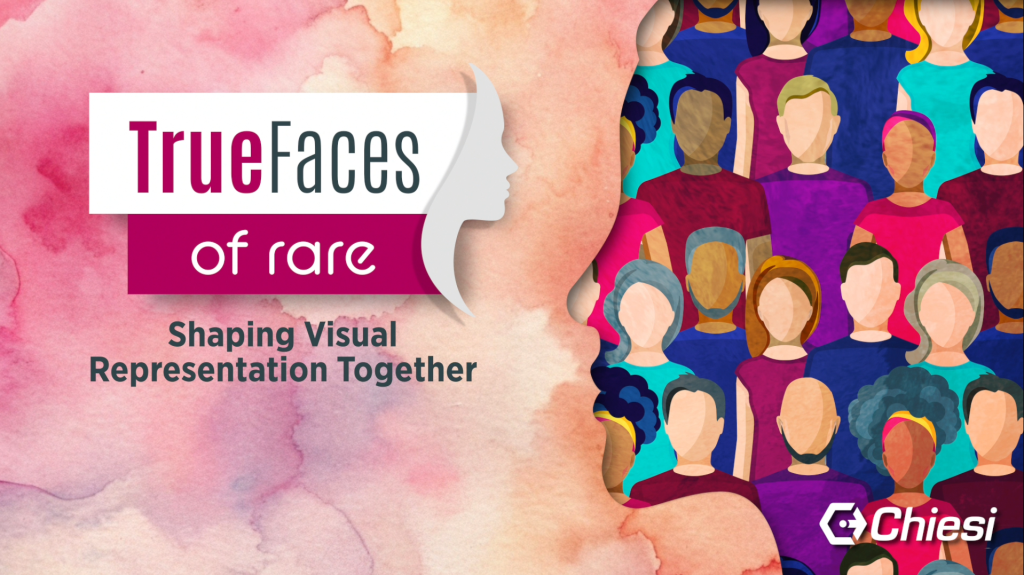
“True Faces of Rare is a collaborative initiative that aims to improve how people living with rare diseases are represented across healthcare communications.
It was inspired by a simple but important question: if patient-centred care is a fundamental principle of healthcare, shouldn’t the way we represent patients also be centred on their lived experiences?
Through research involving people living with rare diseases and carers, we explored their preferences for authentic imagery in rare disease materials and the reasons underpinning those preferences. The findings highlighted a clear desire for more authentic representation and provided an evidence base for bringing organisations together around a shared ambition.
Importantly, True Faces of Rare isn’t about criticising previous approaches. It’s about encouraging collaboration and helping all of us improve how we represent people living with rare conditions.”
Kamran, can you expand on why you believe authentic representation is a patient-centred care issue rather than simply a communications issue?
“Healthcare communication shapes understanding long before someone walks into a clinic.
The information people read, the educational resources healthcare professionals use and the images that accompany them all influence perceptions of disease, expectations of care and, ultimately, relationships between patients and healthcare professionals.
If those representations are inaccurate or overly generic, they can unintentionally reinforce misconceptions or leave patients feeling invisible.
Patient-centred care is about respecting people’s experiences, values and perspectives. Authentic representation supports that by helping patients feel recognised while also improving understanding among healthcare professionals, policymakers and the wider public.
For me, this isn’t simply about better communications. It’s about creating a healthcare system where patients feel genuinely seen, understood and respected.”
Through your work with patients and the wider rare disease community, what have you heard about the impact that authentic representation, or the lack of it, can have on people’s experiences and sense of belonging?
“The message has been remarkably consistent. People want to be recognised as individuals, not stereotypes.
We have heard from people living with rare diseases that they do not always see themselves reflected in healthcare materials.
We’ve also heard from healthcare professionals who recognise that more thoughtful representation can support conversations with patients and help people feel acknowledged.
Perhaps the most encouraging feedback has been the willingness across the rare disease community to work together. This has never been about assigning blame or criticising past practice. It’s about recognising that we all have an opportunity, and a responsibility, to do better.”
Kamran, as you look back on the year since the Westminster launch, what progress has most encouraged you, and how has the conversation around authentic representation evolved?
“The Westminster launch was an important milestone because it brought together patients, charities, healthcare professionals, regulators, policymakers and industry around a shared conversation.
What has encouraged me most is how quickly that conversation has evolved. We’ve moved beyond asking whether authentic representation matters to discussing how organisations can put it into practice.
We’ve seen increasing engagement across sectors, with organisations reviewing their own materials, involving people with lived experience earlier in content development and beginning to consider authentic representation as part of good healthcare practice rather than simply good communications. More than 50 organisations have now made that commitment formally, which is a scale of commitment I don’t think any of us expected a year ago.
For me, that’s been the biggest success. The conversation has shifted from awareness to action.”
While progress has clearly been made, from your perspective Kamran, what more needs to happen to make authentic representation an expected standard across healthcare, policy and communications?
“The next step is to make authentic representation part of everyday practice rather than an occasional initiative.
That means continuing to build the evidence base, involving people with lived experience throughout content development and creating practical guidance that organisations can apply consistently.
However, this shouldn’t become another compliance exercise or checklist. It’s about culture as much as process. Before producing any healthcare communication, we should simply ask ourselves one question: Does this genuinely reflect the lived experience of the people we’re trying to represent?
If that becomes routine, authentic representation will naturally become the expected standard rather than the exception.”
Ahead of this year’s True Faces of Rare: From Pledges to Progress event, what do you hope attendees and readers will take away from the conversation, and what action would you encourage them to take?
“This year’s event is all about action. Last year, we asked organisations to recognise the importance of authentic representation. This year, we’re focusing on how we translate that commitment into meaningful action.
Being virtual this year means it’s genuinely open to anyone who wants to be part of the conversation, wherever they’re based in the UK and Ireland, which feels important for an initiative that’s fundamentally about inclusion. On 17 September, we’ll hear from a diverse range of voices including an MP and CEO, patients and family members who will share their personal experiences and perspectives firsthand. We’ll also hear perspectives from policymakers, regulators, patient organisations and healthcare leaders as we explore what more is needed to move beyond voluntary commitments and embed authentic representation as a recognised and expected standard across policy, healthcare communications and wider health systems.
I hope attendees leave with practical ideas they can implement within their own organisations, whether that’s reviewing existing materials, involving people with lived experience earlier in content development or simply asking different questions about the images and stories they choose to use.
My message is that everyone has a role to play. Whether you’re a patient, healthcare professional, charity, policymaker, researcher or someone working within the life sciences industry, the choices we make influence how rare diseases are understood.
If there’s one thing I’d encourage readers to do, it’s to turn support into action. Join us at True Faces of Rare: From Pledges to Progress, listen to the experiences being shared and consider what practical change you can make within your own organisation or community.
And importantly, if you or your organisation shares our ambition for people living with rare diseases to be represented authentically, make the True Faces of Rare pledge. It’s a simple commitment, but every pledge helps build momentum towards making authentic representation an expected part of healthcare communications.
Meaningful change doesn’t happen because of one event or one organisation. It happens when people across the rare disease community collectively decide that doing better is both possible and necessary.”
To learn more and register for the forthcoming event hosted externally, please visit:
True Faces of Rare: From Pledges to Progress
You can get behind the True Faces of Rare initiative and pledge your support here:
Make the True Faces of Rare pledge
This article was developed and funded by Chiesi UK.
RARE Revolution Publishing® retains all copyright.
UK-RD-2600102 | August 2026