Beyond medical fit: redefining patient readiness in clinical trials
Content sponsored by trialport
Clinical trials can offer a lifeline for rare disease patients, but the journey often demands more than just medical eligibility. trialport’s readifit™ tool looks to address this by empowering individuals to look beyond ‘medical fit’, evaluating their personal readiness and support networks to ensure they can stay the course, reducing dropouts through truly informed choices
Written by Emma Bishop
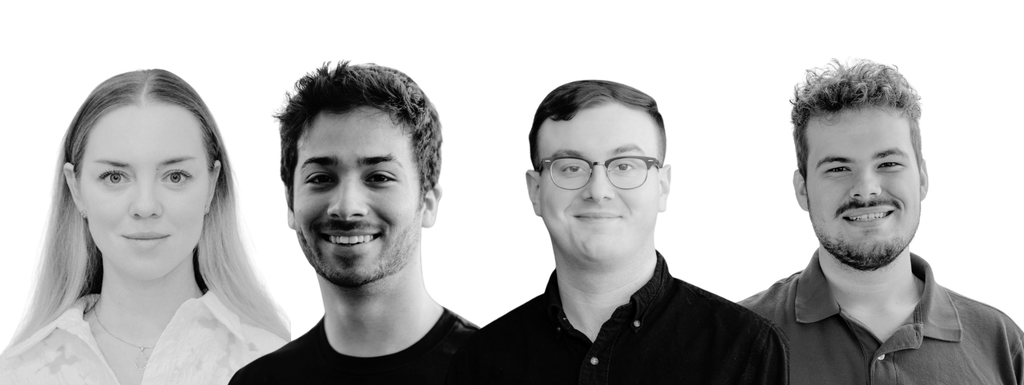
Interview with Dr Angelika Grechnaya, Ethan Graff-Radford, Lathe Ward and Charles Myrick, trialport
With just 5% of rare diseases having an approved medicinal product1 a clinical trial can offer hope where there is none. However, there can be an assumption that this offer of hope means people will willingly take part and are able to do so. The impact of a clinical trial can bring unforeseen burdens and understanding these before consent is given is key.
Dr Angelika Grechnaya is a counselling psychologist and has worked with trialport for the past eight months. She explains that medical fit is only the first gate to understanding whether someone is ready for a trial. The second stage is looking at whether someone can sustain participation. The decision goes from “Can I start?” to “Can I stay?” As Angelika explains, “To stay in a clinical trial is not one decision. You need to say multiple yeses. ‘Do I have enough time, enough money, enough support, is the trial aligned with what feels right for me, am I ok if the outcome is not what I expect?’”
There are multiple factors that contribute to dropout rates:
Practical and logistic demands – someone may have conflicts with work, childcare or caring for parents. They may have to travel long distances to trial sites which can result in financial burden.
Emotional and psychological burden – saying yes to a trial can be one of the biggest decisions a person makes, when they may already be dealing with pain and uncertainty. Maintaining trial commitment requires a level of mental fitness.
Lack of support – it is important to have emotional, practical and financial support throughout a trial. Even the most motivated people can struggle to stay the course if they don’t have the right scaffolding around them.
Not understanding the trial – complex, medicalised language in consent forms can cause confusion and contribute to people not feeling competent, undermining confidence in their ability to see the trial through.
Misaligned motivation and values – people may join a trial because they trust their doctor or because the idea of research appeals to them, without a clear grasp of what it entails.
readifitTM – a self-reflection tool
Ethan Graff-Radford is co-founder and head of product at trialport. He explains the genesis behind trialport’s self-reflection tool, readifitTM. “When we looked at the clinical trial landscape, we realised that most trial finder platforms will do a medical fit assessment as a minimum, asking inclusion exclusion criteria questions. From the beginning, Keith Berelowitz (CEO and founder) felt that wasn’t sufficient. It was only part of the story.” Working with behavioural psychologists on early iterations, the team worked to identify what would add most value for the patients, clinical sites and sponsors and give the clearest picture of the full patient journey.
Lathe Ward, software engineer at trialport, worked closely with Angelika, combining science with engineering. As Lathe explains, “It’s a real team effort. We asked, ‘what do we want to accomplish?’ There are certain goals that the patient has, but there are also goals that the sponsors and sites have, and we wanted to make sure that all of the intentions were understood.”
The result is a tool to complement medical fit, looking at the bigger picture of how a trial can impact a patient, posing questions about travel, time, family, work, support and confidence before screening begins.
As Angelika outlines:
“readifitTM is a space for you to reflect. We don’t want to get more yeses. We want people to pause and look at their life, think about the clinical trial and try to understand what it’s going to look like for them in practice. Hopefully it feels like a conversation.”

The goal is to support genuine considered choices, including the freedom to say no.
The platform covers six domains;
- Understanding the clinical trial – clarifying what the trial involves and the practical demands.
- Practical fit: time and financial commitment – applying the trial to someone’s life to see if it is manageable.
- Emotional readiness – exploring whether someone is dealing with grief, stress and practical difficulties and rather than excluding them, understanding what support they may need.
- Coping mechanisms – looking at how people cope with stress and practical difficulties and highlighting what support strategies could help.
- Support network – mapping the support people currently have from family, caregivers and the community and underlining further support they may need.
- Motivation and values – exploring why someone is considering a trial, whether it aligns and feels meaningful to their lives and reinforcing the autonomy to say no.
Theoretical foundations at the heart of the design
Angelika explains how the design is built upon three foundational theories. The first is cognitive load theory. To adhere to guidelines, clinical trial information is inherently complex, written in dense medical language that can create barriers for people to understand what it will mean for their life now and in the next few years. “Cognitive load theory explains that for us to make a decision we need to have some cognitive capacity, and the human brain has a limited cognitive capacity. A clinical trial is quite a difficult thing so we call it intrinsic load.” The extraneous load refers to how information is presented and is where trialport aims to present information in a clear, layered way, reducing the load and ensuring people have enough mental space to make an informed decision.

The second theory is self-determination theory. readifitTM is built to support people to feel competent as they use the tool, autonomous to say yes or no, in their own time and relatedness to feel seen and understood. As Angelika expands: “Self-determination theory tells us that for people to be motivated for a long time, they need to have those three needs met.”
The final theory is decisional conflict theory. This theory recognises that people aren’t purely rational and decisions are shaped by multiple factors, such as emotions and life context. People need to have clarity about their values and about the outcomes. When their values are conflicted with the outcome they will delay, avoid or regret making a decision.
“We try to incorporate all these ideas in our assessment, but also look at why people actually drop out. They drop out because they reach the point of saying yes without really knowing how it’s going to look and feel for their life. That’s why we spend a lot of time looking at the practicality of taking part in a clinical trial and that’s why we chose these six domains,” underscores Angelika.
Lathe explains that each of the domains generate a score and while they look for an overall readiness in each domain, it’s equally important to assess how the scores combine to form an overall impression. Instead of a stark yes or no response, the tool will present a readiness picture, highlighting the areas that need further addressing or consideration.
As Angelika explains,
“We are very careful with how we frame it, because it doesn’t necessarily mean you’re not ready, it could be just not now. It could be that the only thing lacking is some coping skills or some support. It’s a moment for them to reflect and then to ask for the right help.”
Providing multi-stakeholder value
The aim of the tool extends beyond giving clarity to the patient. It provides clinical sites with data about which areas patients may be struggling with and allows them to adjust trial designs or materials proactively. Instead of investigating after a patient has dropped out the clinical site can address barriers in advance, saving considerable time and money.
For sponsors, it also reduces dropout rates, delays and costs, and means potential treatments are ready sooner. “What the sites and sponsors get is real applicable data. They learn if a patient has a good understanding, which means they’re going to stick with the trial for longer, or they have a misunderstanding which they need to clarify. It opens up more communication, which is going to build up more trust with the patient,” observes Lathe.
AI and humans: an interdependent partnership

While the use of AI is key to the design and implementation of the tool, there is a clear symbiotic relationship between technology and human input, which is evidenced from the very early research involving both Angelika, with her behavioural science insights, with the technical expertise of the engineering team.
With a background in software development, Lathe suggests that medicine lags behind consumer tech in listening to its users, in this case patients, and is an approach they wanted to bring into the design of readifitTM. Early on the team ran user testing with a wide range of age groups to understand how people use the platform, stressing there are no wrong answers in how users behave—if someone is confused it’s a design problem, not a user problem.
Lathe expands to say,
“We need to design around our users just like trials need to be designed around the patients, just like readifitTM needs to find the right trials for the right patients. It’s all about the user.”
Angelika stresses the importance of the human touchpoint and says while AI has its place it can never replace human interaction. This is something that is embedded in the company ethos and demonstrated in Angelika remaining on the team after work on designing the tool was complete, to continue to be a human voice behind the tech. “One of the most important human needs is to feel related, and that’s why I’m staying with trialport as a human voice because I think it is very important for people to see that there’s a real human being there.”
Lathe explains that the plan for readifitTM is to grow and iterate with patients, clinical trial cites and sponsors, and always be open to change and improvement. As Charles, co-founder and chief technology officer, adds, “These platforms aren’t static, we’ve built them to be flexible, with control over the domains, questions and scoring. Building a form is easy, but building flexibility, that’s harder and is our core focus.” readifitTM reframes trial participation as an informed, ongoing choice, blending behavioural science, human insight and technology to support patients in real time, reduce dropout and help research deliver meaningful treatments sooner.
If you would like to learn more about clinical trials, you can access the platform and self-reflection tools at; app.trialport.com
References
[1] https://www.gov.uk/government/consultations/draft-rare-disease-therapies-regulatory-framework/draft-rare-disease-therapies-regulatory-framework