PBC push for placebo changes
SPONSORED CONTENT
The International PBC Summit puts the discussion of placebo arms in clinical trials high on the agenda
The International PBC Summit brings the community together to improve the lives of those with the condition. Discussions at this and previous years’ events have centred on the use of placebo arm trials, the ethics surrounding them and the need for the patient voice to be heard by regulators

Written by Karen Roberts, RARE Revolution
Interview with Robert Mitchell-Thain, CEO of the PBC Foundation
Placebo arms in clinical trials have long been used as a way of measuring the effectiveness of a new medication, but for some primary biliary cholangitis (PBC) patients they can mean lengthy delays to essential treatment.
Use of placebo arms in clinical trials has been a persistent concern, with calls for other methods such as the use of real-world evidence (RWE) to be used.
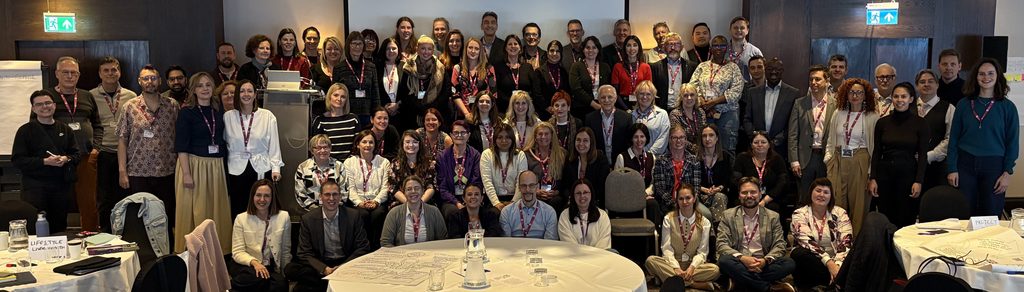
It was among the topics discussed at the International PBC Summit 2026. The Summit, held in Edinburgh in April, saw different stakeholders in the PBC community come together to identify unmet needs and discuss solutions.
PBC is a rare autoimmune condition that is progressive. There is no cure, but there are therapies helpful in managing some aspects of the disease. PBC mainly affects women—nine women to one man are affected—with the majority of those diagnosed being aged 35–55 years old. In the UK there’s estimated to be around 22,000 PBC patients.1
This year’s Summit had over 90 attendees, including 22 representatives from patient advocate groups (PAGs). Among the outcomes agreed from the discussions around RWE was to continue investigation into effective alternatives to placebo-controlled confirmatory clinical trials that will be accepted by regulators. This is a priority area for the Summit.2
An action agreed was to send an open letter to regulators calling for greater implementation of RWE in lieu of placebo trials.
This was sent on behalf of 23 patient advocate groups to regulators such as the Medicines and Healthcare Products Regulatory Agency (MHRA) and the European Medicines Agency (EMA).
It asked regulators for their collaboration in establishing a way forward to full approval of second-line therapies without long-term placebo controlled clinical trials.3
How do placebo arms work?
A placebo arm of a clinical trial is a control group where a select control group of participants are given an inactive treatment rather than the active drug being tested. It is a traditional and widely used trial method used to measure the effectiveness of a new therapy.
While the need for clinical trials is recognised, the placebo model has challenges for PBC patients. And the reliance on placebo-controlled trials over the use of real-world data has been criticised by advocacy groups.
In a paper published last November, the PBC Foundation outlined the challenges facing the PBC community—this included the use of placebo arms in phase 3 and 4 clinical trials. 4
What issues do they cause for PBC patients?
It tends to be high-risk patients who enter clinical trials, and therefore placebo arms.
Speaking of why placebo arms have become such a challenge for PBC patients, Robert Mitchell-Thain, CEO of the PBC Foundation, says: “If you are treated successfully, you can have a normal life expectancy, and if you’re not, then you don’t. There is a time and a place for placebo arms within research, but phase 4 or phase 3b confirmatory trials when the medicines are already commercially available is not that time.”
PBC patients who are defined as non-responsive to the main first-line treatment for PBC, are defined as high-risk and need a second-line therapy, Robert explains.
“It’s only those high-risk patients which go into clinical trials, which means it’s only those high-risk patients who are then given placebo. We know, in placebo terms in PBC, that means allowing the disease to get worse.”
In PBC, the higher the baseline in the liver biochemistry, the less likely a patient is to respond and to normalise—therefore early treatment is vital.
The recent open letter to regulators highlights the risks leading to liver decompensation, transplant and death faced by PBC patients while not receiving second-line treatment in a long-term placebo study.
Robert adds: “Confirmatory trials using placebo arms take patients who are, by definition in every major guideline, high-risk patients, allowing their condition to deteriorate. Biochemistry invariably worsens as levels become more abnormal, which enables further liver damage and reduces the statistical chances of biochemical response once a care intervention is made.” A high cost in pursuit of progress, raising significant ethical concerns in a ‘do not harm’ environment.
Are there other models?
There are other conditions where synthetic arm trials are used and RWE measures the effectiveness of a treatment. Open-label studies have also been used.
Real-world data from patient registries can be used to supplement or replace placebo trials and there is precedent for regulatory bodies accepting them as external control arms.
There have been discussions with the European Medicines Agency and the FDA about the issue of placebo arms, while the Medicines and Healthcare Products Regulatory Agency (MHRA) held a consultation into the use of external control arms using real-world data and is analysing the responses.
Realising they are on placebo can cause patients to disengage, which then inevitably affects the trial. Robert says:
“That these trials are unethical is but the start of the issue. That alone makes them impossible. However, patients realising they are on placebo practically unblinds the study and leads to disengagement and patient withdrawal from the study, making these trials absolutely unattainable.”
The importance of the patient voice
Despite significant progress in the landscape of patient engagement in rare drug discovery, it seems the patient voice is still not being heard when it comes to the issue of placebo arms. And this is something where PBC advocates have been consistently driving efforts to bring about change.
Robert shares: “The patient voice is part of an international PBC consensus, and this is one of the programmes driven by the work of the Summit to try and highlight that the status quo doesn’t work, and the need for change and the series of proposals that would perhaps make trials attainable.”
One of the significant workstreams to come out of the Summit in recent years is the issue of placebo arms.
The COBALT trial was something that sparked this. It was a phase 4 study for PBC patients. It already had a conditional licence; however, the trial was terminated before the study was fully enrolled due to lack of feasibility.5
The placebo arm required patients to voluntarily not take any active treatment for a number of years. However, as might have been predicted, there was a high dropout rate, with patients on the placebo leaving to take this or other therapies.
Due to the results of the placebo arm, in 2024 the EMA recommended revoking the drug’s marketing authorisation.6 There were supportive studies and real-world data, but the EMA’s human medicines committee (CHMP)said they were not sufficient to confirm the benefits.
This was a move opposed by patient groups. The PBC Foundation wrote an open letter to the European Commission requesting it reject the EMA’s advice.7 The PBC Foundation also launched a petition on change.org calling for the inclusion of the voice of patients with PBC in regulators’ decisions.
It underlined the situation with the COBALT trial as well as the plight of patients who have been told they have a high risk of dying but are then asked to take part in a long-term trial with a placebo arm. The petition called for other ways of gathering evidence of safety and effectiveness to be used.8
Due to the unattainable trial, access to the drug is, Robert says, in “real trouble” and he describes the situation as a “lesson we refused to learn from as a community.”
“It became part of the conversation at the Summit in 2025, and there has been international multi-stakeholder work driving this forward and trying to implement change. I genuinely believe that the Summit has played a role in terms of bringing the community together, bringing the patient voice in—in a meaningful way, and pulling in the data and the science that supports the initiative to change the status quo.”
The price of progress
A study looked at the extra amount of time PBC patients with normalised blood tests live without experiencing major, severe disease or treatment-related complications.
It showed those who didn’t normalise lost 52 months compared to those whose blood tests normalised.9
While scientific and clinical progress is vital, along with better therapeutic options, it has to be balanced with sound ethical and safety principles.
“How many life months lost are worth that progress? How many people do we allow to die early to make that progress worth it? How many attendances at the births of grandchildren do we sacrifice for the science? How many attendances at graduations do we sacrifice?”
He adds “How do we find the answers without putting anybody’s life at risk? Because that’s the only way we should be doing these things.”
Navigating a rigid system that fails to bend to the patient or their condition remains the reality for many living with PBC, yet change can often begin with one person and one idea. Looking ahead, Robert hopes for a shift in the placebo arm landscape.
He ends by sharing,
“My hope is that somebody, somewhere sees sense and decides we have to do better—decides we will do better—that’s my only hope. That’s all it’s going to take is one person who has the power to decide that actually the answer is zero life months.”
References
[1] https://www.pbcfoundation.international/what-is-pbc/about-pbc/
[2] https://www.pbcfoundation.international/wp-content/uploads/2026/08/International-PBC-Summit-2026_Report_External_general_FINAL.pdf
[3] https://www.pbcfoundation.international/do-better/
[4] https://www.pbcfoundation.international/wp-content/uploads/2025/12/Frontline-Paper_Challenges-facing-the-PBC-Community-insights-from-the-PBC-International-Summit.pdf
[5] https://www.clinicaltrialsregister.eu/ctr-search/trial/2014-005012-42/results
[6] https://www.ema.europa.eu/en/news/ema-recommends-revoking-conditional-marketing-authorisation-ocaliva
[7] https://www.pbcfoundation.org.uk/wp-content/uploads/2024/07/PBC-Foundation-Open-Letter-to-EC-re-OCA-in-PBC-in-EU-2024.pdf
[8] http://change.org/p/include-the-voice-of-patients-with-primary-biliary-cholangitis-into-regulators-decisions?utm_medium=custom_url&utm_source=share_petition&recruited_by_id=19658312-ce89-462e-8751-44d5eac09d2f
[9] https://pubmed.ncbi.nlm.nih.gov/37399238/
About The PBC Foundation
The PBC Foundation is the largest PBC patient support organisation in the world. Their purpose is to have a positive impact on the quality of life of every person affected by PBC.
https://www.pbcfoundation.international/support-services/about-us/
https://www.facebook.com/PBCFoundation
https://www.instagram.com/pbcfoundation/
https://www.linkedin.com/company/pbc-foundation-uk-ltd/