A tough year

2025 has felt a tough year for the biotech and pharmaceutical industry. Although we’ve seen approval in the UK of some new innovations in the rare disease world, uncertainties around President Donald Trump and USA policy, combined with fraught and unresolved VPAG (2024 Voluntary Scheme on Pricing, Access and Growth) negotiations, have caused organisations to pause—giving way for debate on viability of launching in the UK, review of and in some cases deprioritising/removing investment here, plus more subtly reductions on spend and recruitment. Meanwhile we all wait to see where things land. Changes in research and development (R&D) investment and the FDA (Food and Drug Administration) in the US also sent ripples through the community. Sadly, the consequence of this results in delayed access to new innovations for us the general public. For the rare disease community especially, this is devastating as many have no current treatment, research is precious and time matters.
The Duchenne muscular dystrophy (DMD) community has throughout the year campaigned that ‘Time is Muscle’. As I looked back to my article in December 24 I referenced what I hoped were imminent new options for the DMD community specifically and yet here we are—as I write this 12 months later—with no further clarity or routine access. [NICE and SMC decisions pending] Thankfully one of the companies provided free of charge access to their innovation in the interim but it didn’t mean access for all and offering free of charge access is just not feasible for many small startup organisations.
This is not the only condition facing such challenges. This year, some families heard that NICE (National Institute for Health and Care Excellence) have rejected applications or that companies no longer have the appetite to launch here in the UK. Devastating news always.
Hope for 2026
That said there are signs of hope as we move into 2026.
The MHRA (UK medicines and healthcare products regulatory agency) is setting new directions of travel having committed to work with NICE1 more overtly to ensure greater collaboration and alignment to drive potential HTA decisions close to the point of regulatory approval. Also announcing a consultation in the new year on its approach and model for rare diseases2. Providing government, the NHS (UK national health service), Department of Health and Social Care decision makers and NICE/SMC (Scottish Medicines Consortium) align with the aspirations both these things could be a really positive step forward and make the UK more attractive for investment and new initiatives.
From a cell and gene therapy perspective—one of my hot topics of interest as many readers will know—we are seeing increased focus on, and improvements in; standardisation, manufacturing and delivery. Moving from scenarios where they are reliant on an individual patient’s cells, to off the shelf gene therapy, improving shelf-life so storage and making of the product at hospital level is easier while enabling patients to be in hospital for shorter time frames are all positive moves forward.
In regard to defining value and ensuring long-term routine access, further discussions seem to be taking place on the severity modifiers, the use of the 1.5% discount rate when approaching health economics modelling and the wider introduction of carer utilities in decision making, which should all, in my opinion, be positively embraced. Hot off the press government announcements on December 1st also indicate a positive change. It has now been agreed that NICE will apply new higher thresholds of £25,000 to £35,000/QALY and that they will support NICE’s use of a new value set for valuing health-related quality of life3. If these go far enough to impact any innovations in rare conditions is yet to be seen and the fear of many is these changes will limit governments appetite to make other amends which could be more beneficial in the orphan arena.
In addition, a recent health select committee meeting started to talk about the wider economic benefits of adopting new technologies—relevant for both med-tech and biotech. A report4 by the cell and gene therapy catapult and the office of life sciences, proposes new methodological ways to potentially consider this. Although designed for ATMPs (advanced therapy medicinal products) specifically the approach could well offer a way forward that is practical and repeatable. NICE themselves have debated this in the past but stated that a clear consistent data set and approach would be necessary in order to be fair and transparent across disease areas. Are we now at a point when this is more feasible? NICE can only embrace a new approach though if directed by the Government to amend what they do. If you are speaking to anyone in government or at parliamentary level let’s keep this discussion high on their radar.
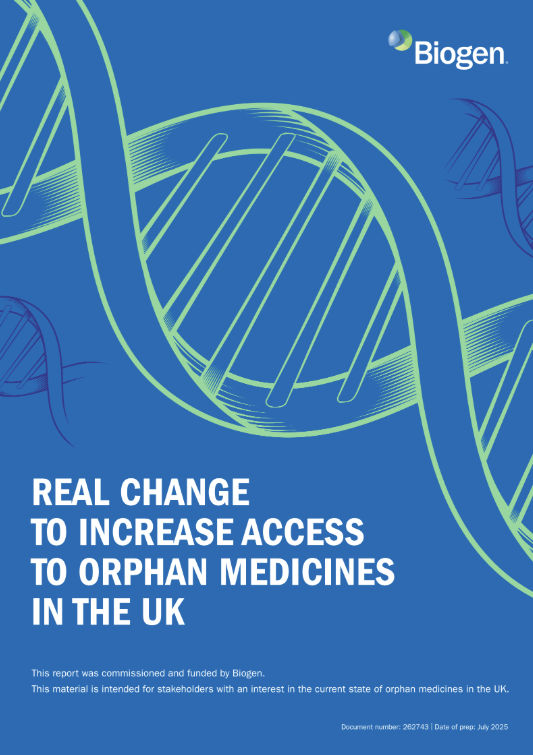
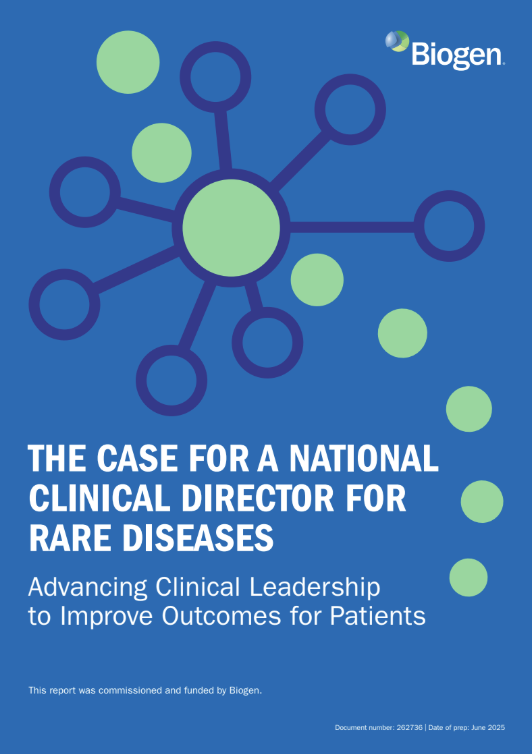
Multiple organisations have been calling for a refresh of the Rare Disease Framework and strategy in all four nations, with calls from LifeArc and Biogen in recent months for improvements that would hold rare diseases differently and give them greater focus. I’ve covered the LifeArc report5 earlier in the year. Biogen is calling for a specific Rare Disease Tsar to be appointed, for an overhaul of the current NICE approach and for paid for early access to new innovations for severe rare conditions prior to regulatory approval—much like the precedence of some other European countries support. They have been spurred on by HTA routing challenges in the UK which have limited access to their products.
If you’ve not seen their two reports do reach out to them for discussions.
REAL CHANGE TO INCREASE ACCESS TO ORPHAN MEDICINES IN THE UK
THE CASE FOR A NATIONAL CLINICAL DIRECTOR FOR RARE DISEASES Advancing Clinical Leadership to Improve Outcomes for Patients
They are open to hear from others interested in these concepts and very much wish to collaborate.
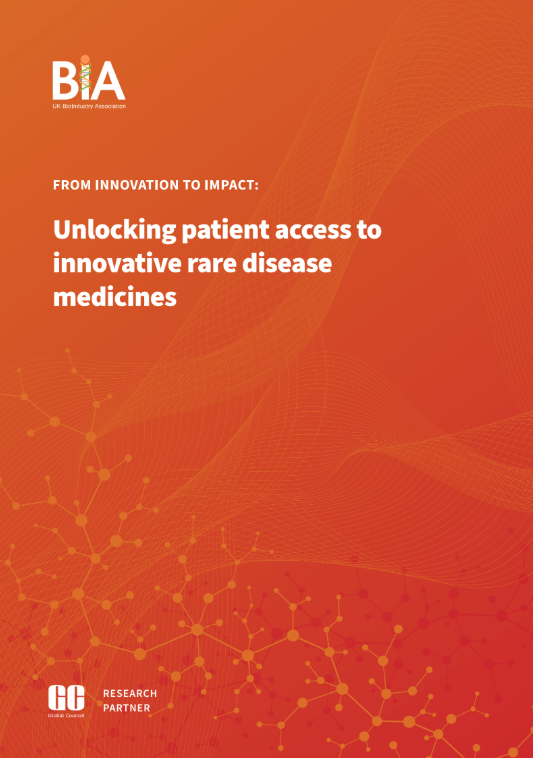
The BIA (UK BioIndustry Association) also launched a new report on 4th of December focusing on unlocking patient access to innovative rare disease medicines. This highlights how the system is struggling to keep pace and how currently many promising treatment options stall and struggle between MHRA and NICE. It calls for the MHRA announced changes to embed quickly to align the organisations better, encourages and supports the development of new approaches both in regulatory and reimbursement pathways and calls for a greater national focus and leadership6.
It sounds like the call for a renewal of the framework has now been heard so lets all watch for the specifics as they emerge in the new year.
Further afield, to name a couple of initiatives, we are also starting to get more insight into how a European wide approach to health economics and value will play out in practice as the first products go through the joint clinical assessment (JCA). More to follow on this in 2026.
In addition, The EU Biotech Act could positively impact as things move forward, the public consultation just closing in November.
And most recently the FDA in the USA has proposed a new regulatory approach designed to enable earlier access to bespoke personalised therapies based on a lower level of evidence where there is high unmet need but randomised trials are not plausible. This “plausible mechanism pathway” may grant marketing authorization based on mechanistic plausibility, biologically aligned evidence, and clinically meaningful improvements. Defining this approach will give more clarity on what’s both expected and feasible and is being positively welcomed by many.
Globally the conversations around rare conditions continue with great passion and yet sadly often not enough momentum to impact people’s lives quickly enough.
We need to remain confident that things will improve. We need to attract ongoing investment, be able to attract trials and then recruit patients into them quickly. Reimbursement decisions need to be quicker to reduce uncertainty for individuals and their families and ideally more tailored to reflect the unmet need and the challenges of data collection when it’s an ultra-orphan condition.
Call to action
One thing we can all do as we move into 2026, whether in bio tech, pharma, academia, the patient community or investors is strive to collect better data and insights into both the natural history of these conditions, and into what treatment is like on any current standard of care (if one exists). This includes wider insight and real-world evidence on the impact to carers, costs of equipment and additional adaptations families often need to make, and sharing of case studies so the reality of living with any condition on good days, bad days and everything in between is better understood. If we are making new year’s resolutions, I’d like to see this being considered.
Greater more accurate planning and preparation for commercial launch is also vital to be successful and ensure individuals actually get to choose those treatments most appropriate for them. This relates to both early health economics modelling, more in-depth calculations on the potential population and earlier preparation and training in regard to service reconfiguration and change. There are a lot of consultants and agencies well versed in this now and keen to help (myself and my fellow authors on this vertical included). Ideally conversations should start in parallel to phase II trial design so let’s make it more the norm to discuss these things early. Scientific and regulatory success alone is never enough—here in the UK or around the globe. Unless families can access any new option quickly, equally and equitably then we are failing in society. Let us ensure industry isn’t the limiting factor.
If you haven’t heard already, there is a new NHS England consultation open with a deadline of Wednesday 7th January at 5pm. They are inviting input on a scope which describes some planned work to develop a national operational framework on the future use of individualised genetic therapies within the NHS in England, initially under pilot arrangements, where funding has been made available from outside of the NHS. They are particularly keen to hear from patients, carers, clinicians, service providers and others with an interest in rare disease, genomic medicine and gene therapies and they welcome comments from individuals, or on behalf of an organisation.
If you have any questions or require further information, please contact the Innovative Treatments Team at england.innovativetreatments@nhs.net.
Finally, if you are a clinician, nurse or pharmacist reading this, I’d like to see the medical community more vocal about the importance of new treatment options. In recent years the Royal Colleges and Societies have taken a more reserved and less visible stance and individuals have been discouraged from speaking out by their employing trusts. The insights you can harness and the examples you can share are priceless. Don’t let them be missing from the debates and discussions that go on.
So, all that’s left is to wish everyone all the best for the new year ahead. I hope you get to take some time out during the festive season and make happy memories with all those you love. The one thing working in this field does is remind us all how precious time together is. Together, in collaboration we have and will continue to make a positive difference. Communication and collaboration across all our organisations and a shared desire for a world which is better—where improvements can be tangibly seen is definitely on my Christmas list.
About Nicola
Nicola set up NJ Redfern Ltd in 2022 to enable her to consult, coach and collaborate with other organisations, following her experience at bluebird bio. She has a long history in rare disease and oncology within the pharmaceutical and biotech industry and has worked closely with the Cell and Gene Therapy Catapult and the ATTC network in the UK. She is a member of the International Society of Cell and Gene therapy (ISCT) ethics sub group, contributes to the UK ATMP Engage community and projects, and speaks at various congresses and webinars about the challenges of bringing cell and gene therapies to market.
Nicola is committed to and motivated by ensuring people living with significant health challenges have a choice and are able to access transformative treatment options quickly once science and innovation reaches a point to positively impact their lives. She also believes the UK will be stronger if these new treatments are supported and embraced holistically across our ecosystem.
She can be contacted at nickiredfern@gmail.com or connect with her on LinkedIn.
References
[1] gov.uk/government/news/mhra-and-nice-invite-early-adopters-to-trial-accelerated-aligned-pathway-six-months-ahead-of-schedule
[2] gov.uk/government/publications/rare-therapies-and-uk-regulatory-considerations
[3] gov.uk/government/news/landmark-uk-us-pharmaceuticals-deal-to-safeguard-medicines-access-and-drive-vital-investmentfor-uk-patients-and-businesses
[4] ct.catapult.org.uk/macro-economic-report
[5] lifearc.org/rd-report
[6] bioindustry.org/static/1dd67412-3ae4-4817-989afa4e1b18a0fc/BIA-RDIG-Unlocking-patient-access-to-innovative-rare-disease-medicines.pdf