Advocates driving change
From youth voices to international collaboration, how ITP advocates are securing their seat at the table to drive progress for all
Content sponsored by argenx
Patient advocate groups (PAGs) can provide lived experience knowledge that can help drive research and treatment development. We spoke to some of the figures involved in ITP advocacy about their own journey and the importance of PAGs in being a relevant and constant voice for the community
Written by Karen Roberts, RARE Revolution
Interview with Ella-Sophia Ella, co-founder, ITP Support Association, young adult subgroup
Additional community insights from:
Barbara Lovrencic, president, AIPIT (Associazione Italiana Porpora Immune Trombocitopenica)
Serge Laborde, president, O’Cyto association

Ella-Sophia Ellis has experienced the “roller coaster” of life with the rare autoimmune disorder immune thrombocytopenia (ITP) and started her journey into advocacy as a child after being diagnosed at just nine years old.
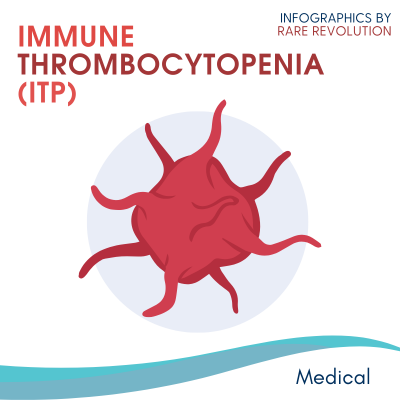
Life with a rare condition can be difficult. The condition means the immune system destroys platelets, the cells the body needs to form clots, and causes low platelet counts. Symptoms include fatigue, bruising and bleeding. Patient support groups (PAGs) not only provide individual and family support to help navigate these challenges, but they also raise vital awareness, often while also liaising with the medical and research community about treatment developments.
Now combining ITP advocacy with her civil service career, Ella-Sophia describes her journey, saying, “I was diagnosed with ITP as a child, so I’m coming up to 20 years of living with ITP, which is really humbling and interesting to reflect on that journey.”
Ella-Sophia hasn’t always responded well to treatment and says she really went through the “medical ringer”, as she explains.
“When I was a child, I experienced a lot in terms of treatment and hospitalisations. Then, after a period of remission, I went into a relapse in my late teens, and then subsequently I’ve relapsed again as an adult. It’s an ongoing roller coaster, which I guess will be with me for life.”
The road to advocacy
Ella-Sophia’s journey into patient advocacy started young, when, through her parents, she was involved with the ITP Support Association UK. She says: “Through this involvement, I had linkages with different causes and channels, so I spoke at the House of Parliament when I was 12. I wrote various letters to MPs.” She was involved in various awareness campaigns, including some with Birmingham Children’s Hospital.
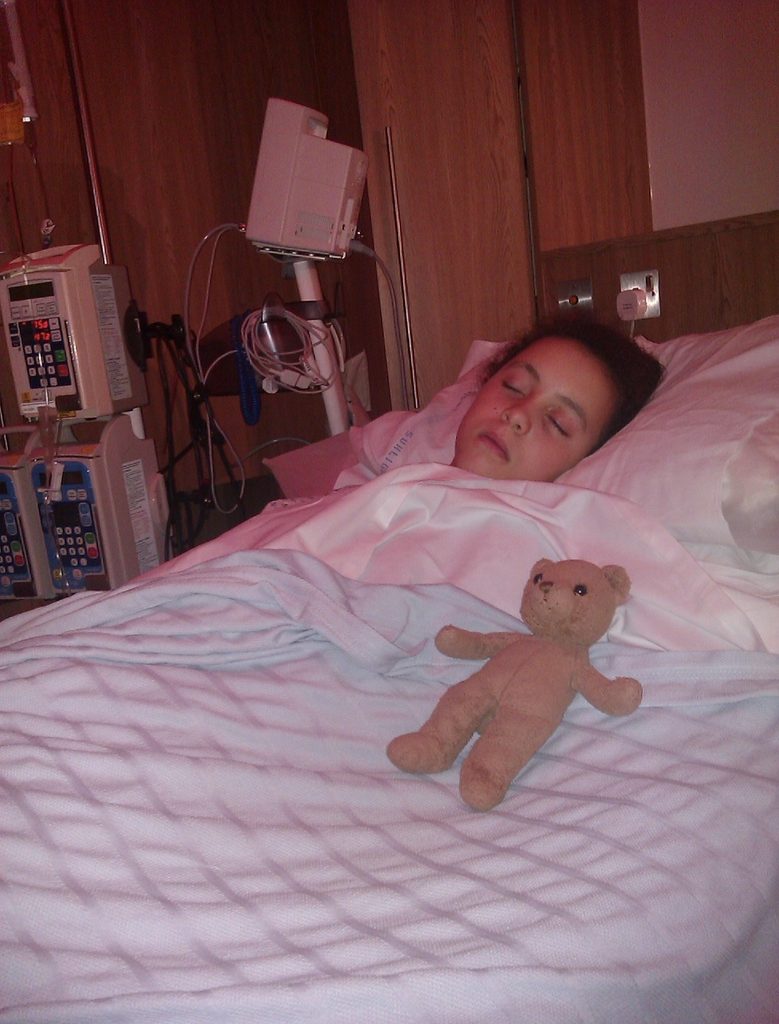
Patient advocacy also sparked her interest in politics, which she went on to study at the University of Sheffield.
As an adult, Ella-Sophia has increased her advocacy activities, reflecting,
“Maybe that coincides with a comfortability of talking about my illness and talking about what I went through. I think with time, I’ve been able to process it, and now I really want to drive change.”
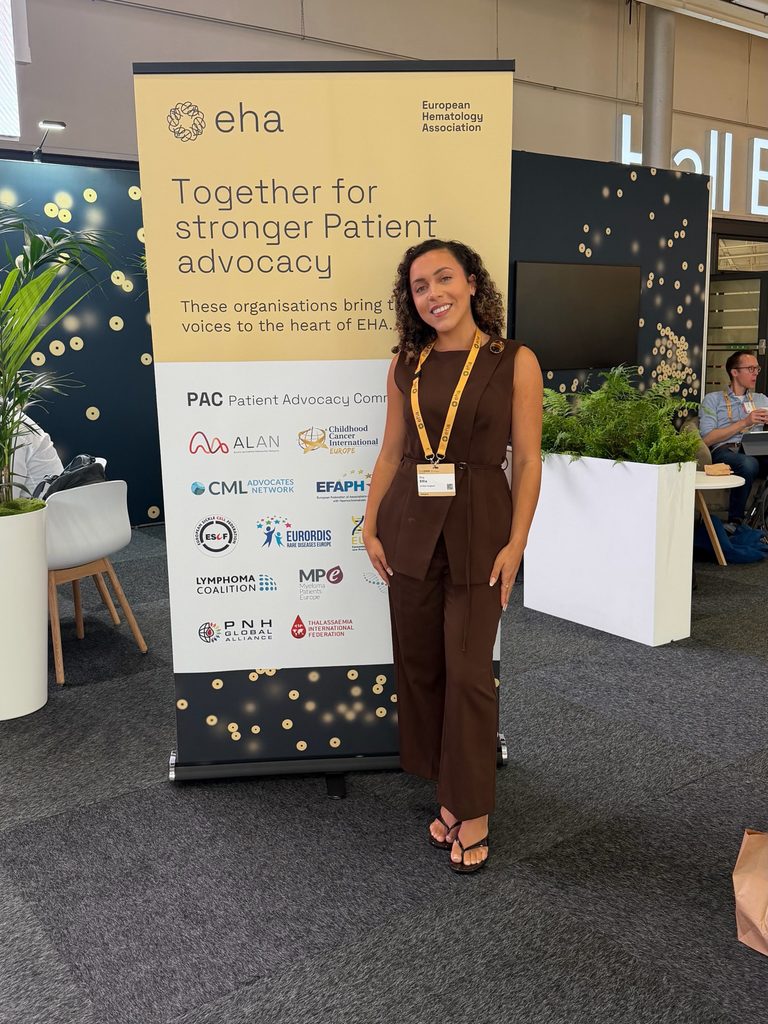
Ella-Sophia co-founded the ITP Support Association subgroup— Young Adults Group—a collective of ITP patients who are 18–30 years old. This was inspired by others she met at European Haematology Association conferences and by learning about the work they were doing to support individual sub-communities.
Speaking of the benefits of bringing a dedicated voice to young people, Ella-Sophia says,
“I personally think the youth group is a great channel to get people involved in the wider group as well. People are at different levels of engagement. Some people are heavily contributing and want to get involved. Others are a bit quieter. I feel the youth sub-group is a gentle step into the wider group—the ITP Support Association—which is obviously the big umbrella organisation.”
The group also creates a way to retain young people, who, like Ella-Sophia, may have been involved initially through their parents. By giving them a place to belong as young people growing in independence, it provides a way for these younger members to remain engaged and prevents them from being lost to advocacy.
Conversations that don’t take place in clinics
The youth group has a WhatsApp group chat and some shared resources available to the subgroup members, which Ella-Sophia describes as a “really good space” that fosters conversations that might not necessarily take place in clinics.
Some of the topics that crop up in the group centre around women’s health, such as menstruation, pregnancy, pregnancy loss, fertility and pregnancy termination.
Ella-Sophia says,
“Due to the complexity of ITP, and some of these topics being deemed as more taboo, they’re not as discussed in a clinical setting, and they are certainly not supported enough for people who have low platelets, and probably that can be expanded to any sort of chronic condition.”
She added that another huge area is support for the working population of people with ITP, including access to benefits and supporting dialogue with employers. Ella-Sophia, who says she is lucky to be in a remission state right now and in a rewarding and successful career, loves patient advocacy and gets great pleasure from helping provide support to others with ITP so they can continue to thrive in their chosen careers and gain access to meaningful work.
She explains the effect ITP can have on people’s working lives, “It can influence whole career changes. We’ve had athletes in the group that are no longer athletes, people that were about to be the next best thing in their sporting field, represent their country, who have got ITP, and their whole life has spun. They’ve had to do a different degree, retrain in a different area. It’s so life-changing.”
An engaged patient voice
The subgroup was only formed earlier this year, and Ella-Sophia already speaks of her hopes for a “more ambitious and engaged patient voice”. She explains: “I think you become more driven when you really feel that you’re a part of something, and there’s no greater way to make people feel a part of something than when they can identify with it on such a personal level.
“You can identify if you feel ‘this group is representing my interest’. Whether that’s a caregiver group, a pregnancy group or a men’s group, ITP is so broad-ranging, and it affects people so differently. It’s like everyone has a completely different disease, so being able to then all relate to very specific identifiable things going on in our lives, that really helps.”
Ella-Sophia hopes that conversations and topics raised within the group will filter into broader conversations and help drive research priorities. She says, “A more engaged patient group that is pushing the ITP Support Association and haematologists, clinic clinicians, researchers, founders to do more for patients—that is my biggest dream.
“A cure, of course, would be incredible; there’s so much we don’t know about ITP. We don’t know why people get it. We don’t know where it’s happening, don’t know how to cure or what treatments are most effective for individuals. We need to answer those questions.”
PAGs input can be invaluable
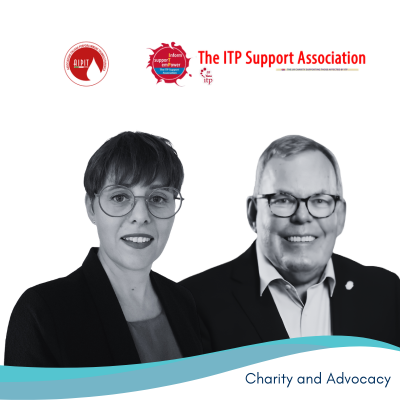
While Ella-Sophia’s work highlights the power of peer-led support in the UK, Barbara Lovrencic represents the global efforts in patient advocacy. Barbara knows firsthand the challenges, the isolation, and the daily reality of living with ITP. Diagnosed when she was four years old, her path to patient advocacy is a deeply personal one.
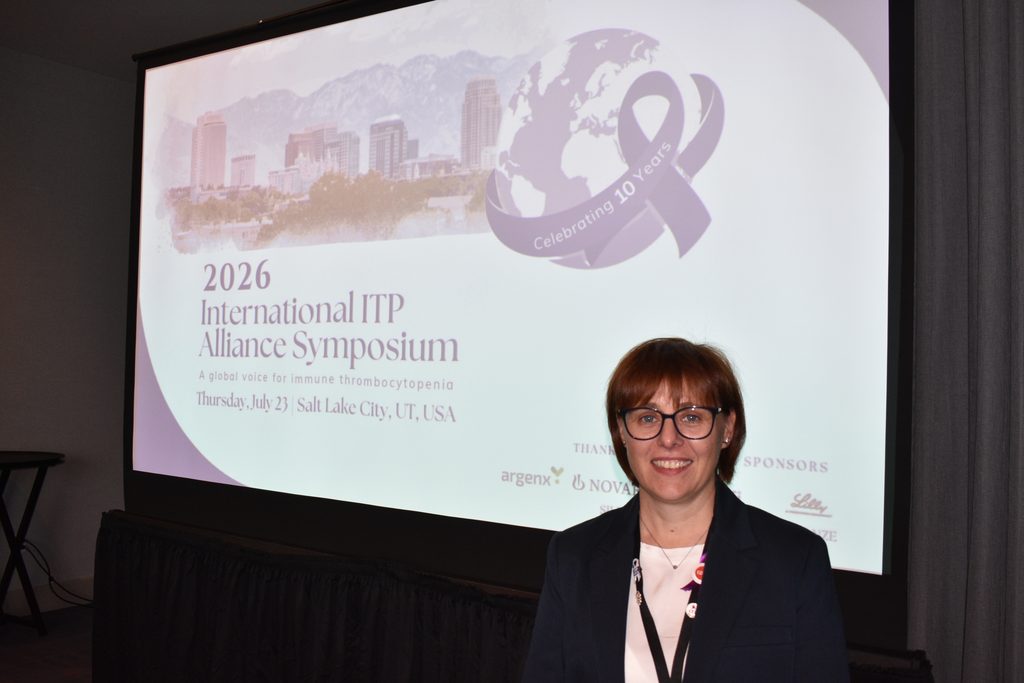
She is now president of AIPIT (Associazione Italiana Porpora Immune Trombocitopenica), Italy’s dedicated patient organisation for ITP and vice-chair of the International ITP Alliance, advocating globally for people with ITP. In her experience, PAGs have successfully challenged the medical community to prioritise real-world impacts such as emotional well-being, work productivity and treatment-related side effects. Barbara shares,
“Fatigue was one of the most underrecognised symptoms in ITP. Patients would report their fatigue, but since there was no data or literature to support it, such reporting was just dismissed. After quality-of-life ITP surveys were conducted and results were published, fatigue started to be addressed. PAGs’ input and involvement from the early stages of quality-of-life studies in ITP surely contributed to the success in capturing the underrecognised symptoms.”
ITP PAGs have been evolving. Speaking of her hopes for the next generation of patients, Barbara underlines the need for collaboration. She says: “There is still a lot to do. Unfortunately, in certain settings, patient engagement is still limited to ticking the box. We need to move away from that concept. Over the years, patient organisations have learned to speak the language of other stakeholders and have gained skills.
“Drug development needs to be a result of teamwork where researchers, HCPs, institutions, pharma companies and patient organisations work together to provide solutions that truly improve patients’ quality of life and are sustainable. Every stakeholder involved in drug development has their own point of view, language and priorities. We need to foster dialogue among all stakeholders and seek solutions.”
Sharing knowledge with others
For Barbara, collaboration at any level is always beneficial and “moves the boundaries”. She explains, “Sharing the experiences and seeing what is possible in one country inspires. Knowing how someone else has done something that can be replicated gives an idea of how to approach the problem in your own country. In the International ITP Alliance, we share our know-how so that whoever is starting now doesn’t need to reinvent the wheel.”
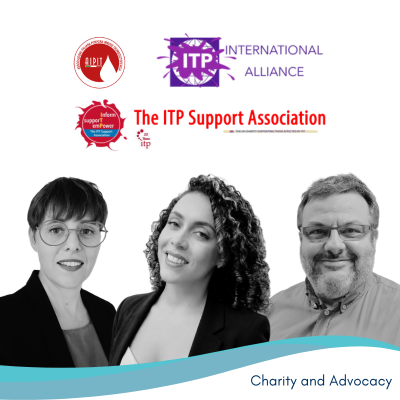
Also highlighting the role PAGs play in research is retired civil servant Serge Laborde, president of the O’Cyto Association. The organisation supports over 400 members, along with supporting research efforts across France and beyond. On how he sees the role of ITP PAGs evolving over the next decade, Serge shares,
“The path is already laid out. Disease knows no borders. Communication between doctors worldwide has been facilitated and developed since COVID-19. Research laboratories have a global reach. All the conditions seem to be in place for all stakeholders (patients, doctors and patient associations) to meet the challenge of making life with an ITP as easy as possible daily.”
Today, the role of PAGs is well understood. Their remit now stretches far beyond the traditional, grass-roots model of patient and family support. Now, in areas where real progress is being made, the differentiator is often clear—that PAGs also have a meaningful seat at the table in clinical research, disease care and symptom management.
And as the work of Ella-Sophia demonstrates, by extending the invitation further yet to include the often-unheard voices of the teen and young adult community, you can delve even deeper into disease understanding and in developing both advocacy and therapeutic interventions that elevate quality of life and drive change across the whole lifespan of the disease.
To learn more please visit:
AIPIT: www.aipit.com
ITP Support Association: www.itpsupport.org.uk
O’Cyto: https://o-cyto.org/en/
Articles are for information only and do not form the basis of medical advice. Individuals should always seek the guidance of their medical team before making changes to their treatment.
This article was sponsored by argenx.
argenx has collaborated in the development of content themes. They have had no editorial control over the content copy, and all opinions are those of the contributor.
RARE Revolution Publishing® retains all copyright.