Awareness to innovation: Sophie’s Hope Foundation paves the way for GSD1b research
By Sophie’s Hope Foundation
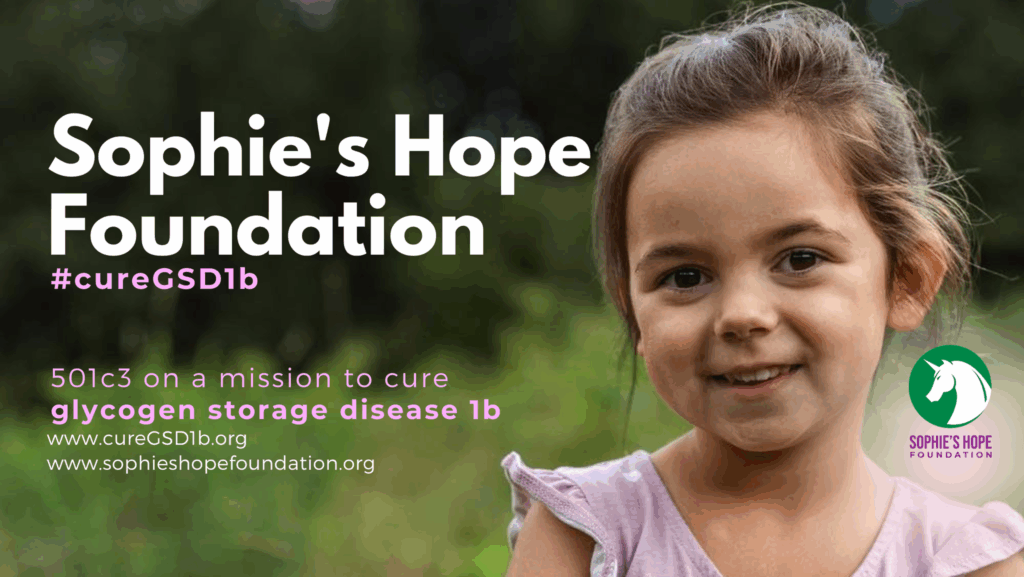
Sophie’s Hope Foundation outlines how they are actively driving research and uniting a community to improve outcomes for those with glycogen storage disease type 1b
Ultra-rare diseases have a greater impact than statistics show
Glycogen storage disease type 1b (GSD1b) is among the rarest conditions within the GSD family of inherited metabolic diseases. While GSDs collectively occur in approximately 1 in 100,000 births, GSD type 1 is the most common subtype, further divided into type 1a and type 1b. GSD1b accounts for only about 20% of these cases and affects an estimated 1 in 1,000,000 births, classifying it as an ultra-rare disease. Because GSD1b is so rare, progress in understanding and treating the condition has been limited; however, behind the statistic is a community profoundly impacted by the disease and determined to accelerate change.
GSD1b is a life-long, inherited metabolic disorder caused by mutations in the SLC37A4 gene.1 The mutation prevents the body from properly converting glycogen into glucose, which results in the accumulation of glycogen in various organs, particularly in the liver and kidneys.1
The disease typically manifests during infancy, often between three to four months of age. Symptoms may include hypoglycemia, seizures, lactic acidosis, hyperuricemia, hyperlipidemia, neutropenia, inflammatory bowel disease and issues with growth and body composition.2 Because of GSD1b’s complex and ultra-rare nature, management is multidisciplinary and creates a significant burden on affected families.
Before the existence of Sophie’s Hope Foundation, there was very little attention and research around GSD1b, and still, there is no FDA-approved treatment or cure. Management relies primarily on meticulous dietary control, including severe restriction of all forms of sugar and the intake of uncooked cornstarch to maintain stable blood glucose levels. The cornstarch works as a slow-release carbohydrate source, but must be consumed every few hours, including overnight, to maintain blood sugar levels. In infancy, patients usually need to be fed every 45-90 minutes or be placed on continuous feeds through a feeding tube.
Such a strict dietary regimen puts an incredible burden on patients and their caregivers alike, often disrupting sleep schedules and daily routines. Despite the benefits cornstarch use provides, it remains more of a workaround rather than a long-term solution for patients.
The families behind the organisations
Sophie’s Hope Foundation was founded in 2020 by Jamas and Margot LaFreniere after their daughter Sophie was diagnosed with GSD1b at 2 years old. Blair Stone-Schneider, also a parent of a child with GSD1b, joined Sophie’s Hope Foundation as executive director in 2023, leading patient advocacy and engagement within the foundation.
Originally, the team believed that by fundraising for GSD1b, the organisation would be able to hand over the money to research experts who would then be able to develop a cure. However, they quickly learned the foundation would need to become more active in not just fundraising but also accelerating research efforts to improve the quality of life for patients with GSD1b, their families and caregivers.
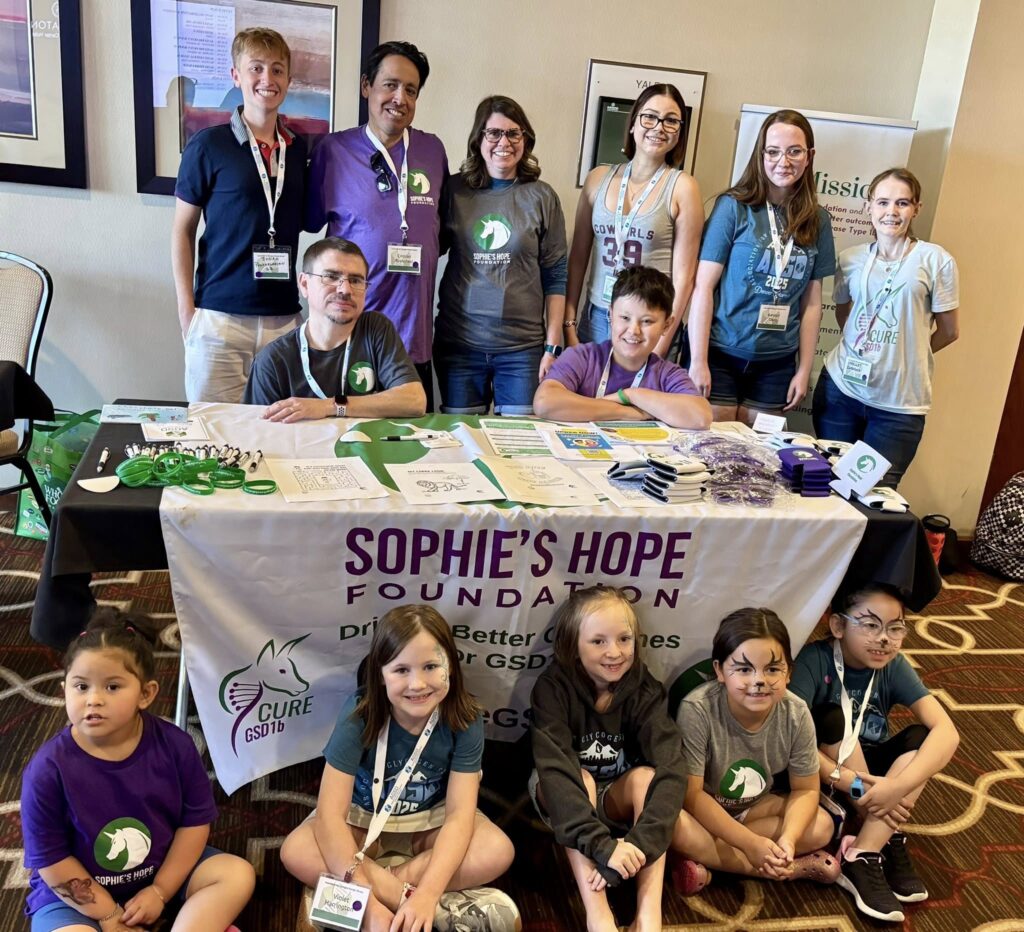
Sophie’s Hope got started right away, fundraising and building a vast network of patients, families, researchers and doctors with the ultimate goal of improving the quality of life for GSD1b patients and, in the long term, finding a cure.
According to Blair, Sophie’s Hope is “trying to be the driving force behind GSD1b research, raising awareness and finding ways to get the community involved as well.”
To expand their impact, Jamas LaFreniere also established CureGSD1b, which receives 100% of the funding from Sophie’s Hope Foundation’s fundraising efforts. CureGSD1b provides an educational hub for not just newly diagnosed patients, but their families, caregivers and healthcare professionals. By focusing on the big picture, rather than individual cases like Sophie’s, CureGSD1b helps advance education and brings together communities across the GSD1b space.
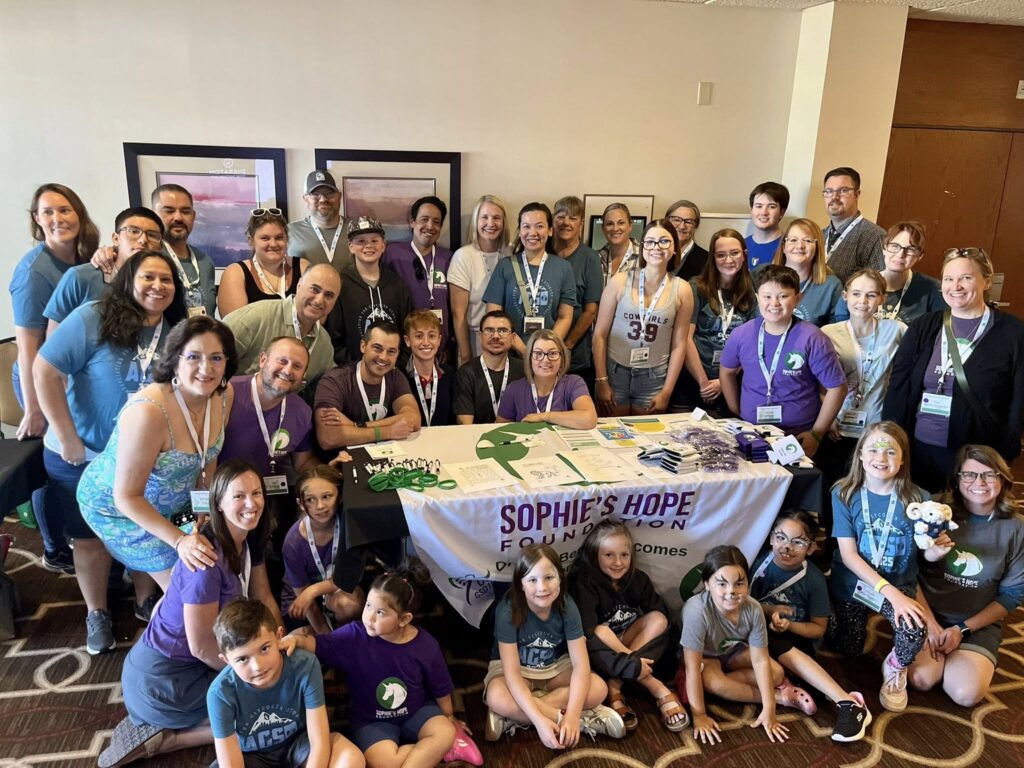
Together, the two organisations work to generate funding, build community and educate about GSD1b, pushing for a better future for patients, families and caregivers.

More than a cornstarch problem
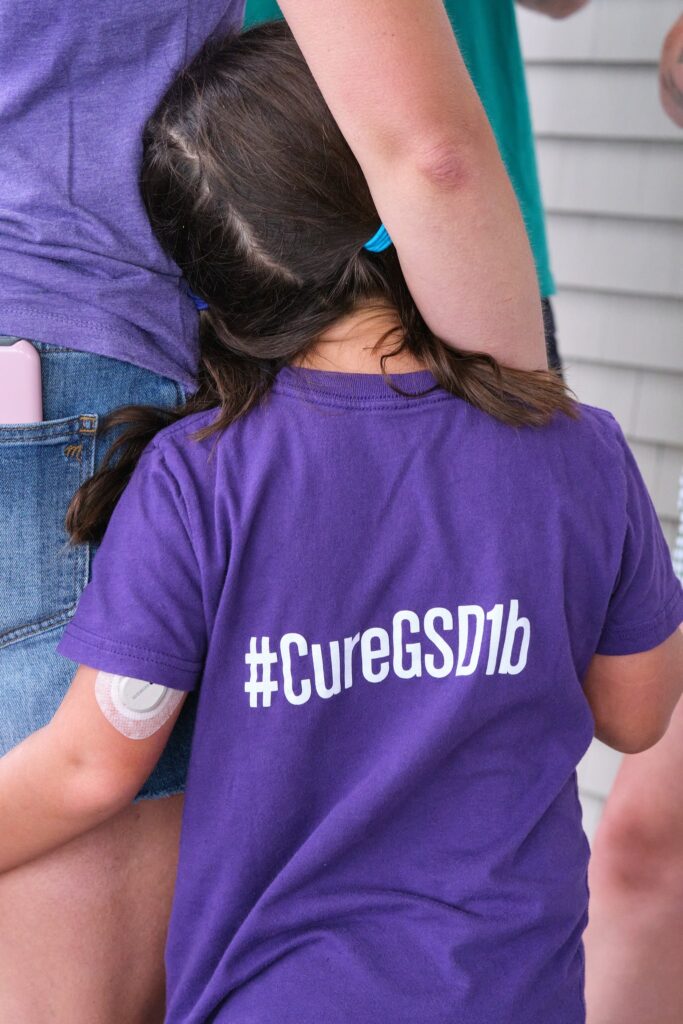
The incredibly unique reliance on cornstarch as a form of disease management often draws public attention. However, GSD1b is far more complex than a “cornstarch problem”. There is more that can and must be done to manage the disease beyond cornstarch consumption.
Progress towards these goals begins with knowledge and data, and the first step in collecting the necessary data is the implementation of a comprehensive prospective natural history study.
A natural history study documents how a disease progresses over time, offering critical insight into onset, symptoms and long-term impact. Since there is such limited data on GSD1b, these studies provide the foundation to help develop treatment and cures.
Due to the rarity of the disease, there are significant gaps in understanding GSD1b, including the use of empagliflozin and how inflammatory bowel disease interacts with metabolic dysfunction. In addition, since the oldest patients with GSD1b are only 40-50 years old, there is limited data on how GSD1b impacts aging adults and may influence other age-related health conditions.
A GSD1b natural history study has been carefully planned and designed by leading experts in the field, including Dr David Weinstein, and the scientific advisory board of Sophie’s Hope Foundation/CureGSD1b.The study will be a global, seven-year research effort, marking a major step towards future clinical trials and the development of a cure.
“We hope that the natural history study will be able to provide the data needed for the design of treatment development and eventually the initiation of clinical trials,” Jamas said.
Charting the road ahead
Over the next five years, Sophie’s Hope Foundation plans to continue to support research to work towards a better alternative to cornstarch-based management. The foundation envisions a future with an even bigger community that is engaged and empowered by the hope of better outcomes and treatments. With the natural history study in full swing soon, the foundation hopes that the data drawn from the study will push research forward.
For any of this to happen, Sophie’s Hope Foundation must scale its fundraising efforts, which need increased community involvement from both within the GSD1b community and beyond. Growth in awareness and engagement will allow Sophie’s Hope Foundation to expand its collaborations with researchers, clinicians and biotech, pushing progress for better outcomes and ultimately a cure.
Jamas says, “The Foundation knows we have the ability to reach our goals and support patients with GSD1b, but we need help from as many people as possible. The support of the GSD1b community, as well as those with the ability to push the science forward, is crucial in reaching our goal of an eventual cure.”
References
[1] Bali DS, El-Gharbawy A, Austin S, et al. Glycogen Storage Disease Type I. 2006 Apr 19 [Updated 2021 Oct 14]. In: Adam MP, Feldman J, Mirzaa GM, et al., editors. GeneReviews® [Internet]. Seattle (WA): University of Washington, Seattle; 1993-2025. Available from: https://www.ncbi.nlm.nih.gov/books/NBK1312/
[2] Genetic and Rare Diseases Information Center (GARD). Glucose-6-phosphate transport defect. National Center for Advancing Translational Sciences (NCATS), National Institutes of Health. Updated 2024. Available from: https://rarediseases.info.nih.gov/diseases/2515/glucose-6-phosphate-transport-defect