Beyond the diagnosis—rights, access and everyday realities
SPONSORED CONTENT
Chronic inflammatory demyelinating polyneuropathy (CIDP) is a rare, autoimmune disease affecting the peripheral nervous system. Individuals living with CIDP often face systemic barriers preventing them from accessing knowledgeable expert care, basic rights and meaningful inclusion. Drawing on the collective experience of European advocates Gabi Faust, Jean-Philippe Plançon, Marian Ciopec and Nancy Di Salvo we discuss the geographical lottery of treatment access, workplace hurdles and global policy gaps preventing autonomy
Written by Nicola Miller, RARE Revolution
Community insights from
Gabi Faust, chair, GBS CIDP Self-Help Organisation
Jean-Philippe Plançon, president, EPODIN
(European Patients Organization for Dysimmune and Inflammatory Neuropathies)
Marian Ciopec, executive manager, EPODIN
Nancy Di Salvo, international affairs director, GBS-CIDP Foundation International
Post diagnosis, the experience of living with CIDP can quickly shift from a personal health story to a struggle against outdated systems. While early diagnosis and timely treatment are critical to prevent permanent nerve damage, post-diagnosis the challenges continue as a labyrinth of systemic barriers that can prevent autonomy and inclusion. These barriers manifest as geographically disparate access to specialists and sustainable life-sustaining treatments, and a persistent lack of understanding in both social and professional spheres.
For Gabi Faust, who was diagnosed 20 years ago, and Marian Ciopec, whose illness coincided with a severe national treatment crisis, navigating this environment has required constant, exhausting advocacy simply to secure basic rights. As Nancy Di Salvo states, the resolve to this requires a shift from viewing care as solely a clinical matter to establishing a holistic, “360-degree treatment” that supports the entire person. Something that, while aspirational, is yet to be realised for the CIDP community. From Jean Philippe Plançon’s perspective, closing the gaps in CIDP care depends not only on sustained investment in therapeutic innovation, but also on strengthening and preserving existing care structures and treatment pathways, particularly where they are already demonstrating effectiveness, alongside an urgent reinforcement of the clinical workforce.
The geographical lottery: disparity in access to life-altering care
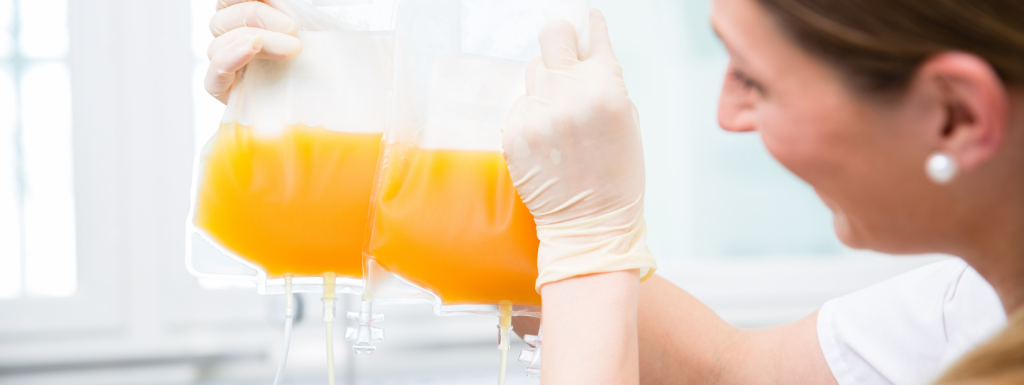
Access to life-sustaining immunoglobulin (intravenous and sub-cutaneous—IVIg/SCIg) therapy and specialised neurological care is woefully uneven, creating a “postcode lottery” that dictates a patient’s outcome. In Germany, Gabi reports a significant geographical barrier, noting that many patients must travel “200 kilometers or more, to see a specialist” or access centers of excellence.
Elsewhere in Europe, the situation is starker. Marian brings the global treatment crisis into sharp focus through his experience in Romania, where, due to severe national IVIg shortages, he went over a year without treatment following his diagnosis. He adds, “I have never even received a full dose of immunoglobulin in my life”—only receiving treatment every three to six months, compared to the standard of three to six weeks.
This is an issue Marian attributes to Romania being one of only few EU countries that don’t collect plasma for fractioning, meaning that at times of global shortages of plasma derived products, such as during the COVID-10 pandemic, the effects are felt more acutely on their supply chain.

This forces patients to shoulder an “incredible and costly burden,” having to work directly with hospitals to find a supply, which can mean countless hours weekly on the phone tracking down supply, and travelling 12 to 13 hours or flying across the country to receive it. Marian has heard of individuals looking to relocate internationally in the hope of receiving adequate treatment levels.
The pressure of this is also felt by physicians who are faced with making daily decisions around whose need is greater and where to allocate limited supplies—a situation that Marian believes has forced some out of the profession due to the emotional toll of these decisions. Critically, in the absence of IVIg, Marian was given dangerously high doses of corticosteroids, which led to severe side effects including “cortisone induced diabetes” and irreversible liver damage.
Jean‑Philippe adds that plasma‑derived medicines face inherent supply chain vulnerabilities, with a long, multi‑step journey “from the donors to the treatment”—insufficient plasma, limited fractionation capacity and complex national pricing and regulatory environments all drive recurrent shortages even in well‑resourced countries like his homeland of France. Challenges that highlight the need to broaden available treatment options.
Lack of “standard of care” knowledge amongst some professionals means that even when treatment is available, healthcare professionals may fear prescribing it, as Gabi explains, “They are afraid that the insurance will not pay, despite patients having the legal right to the therapy”. This access disparity leads Nancy to feel “helpless” when dealing with international patients who cannot afford basic insurance or treatment, noting that “it seems like you have to be lucky to be born in one country compared to another in order to get treated”.
Drawing on his experience as both a long‑term patient and European advocate, Jean‑Philippe further highlights unequal access to immunoglobulin and rehabilitation medicine services including physiotherapy across regions and goes further to cite “lack of investment in clinical workforces as impeding progress”. Without enough knowledgeable neurologists and multidisciplinary teams, even the best new treatments and even non-therapeutic interventions will fail to reach patients in a timely and equitable way.
Jean Philippe is also keen to stress that while immunoglobulins are effective for the majority of patients, “approximately 20%–30%1,2,3 of people living with CIDP are considered non-responders to currently available first-line treatments”. This highlights the existence of significant unmet therapeutic needs and underlines the importance of continuing to drive innovation in order to expand treatment options for all patients.
Protecting rights in the workplace and social spheres
Inclusion for patients with chronic, fluctuating neurological conditions requires systemic accommodations that go “beyond ramps” and physical accessibility. The workplace, in particular, remains a significant frontier where the “fear factor” and lack of understanding impede full inclusion.
Patient advocates agree that there is a gap in how employers accommodate the relapsing nature of CIDP, leading to a fear of being fired or biased. Nancy noted that many patients “don’t even tell their work or their employee they have a condition because they’re afraid that they’ll get fired”—placing extra burden on individuals to mask their health challenges. Marian, who lost his job due to CIDP, felt lucky that his expertise allowed him to transition to a remote working, desk-based role, but points out that for people who rely on physical work, there is “no solution in place” and often very little by way of welfare safety net.
CIDP also profoundly disrupted Jean Philippe’s career, forcing him to leave his role as an emergency department nurse and retrain in the field of teaching due to the functional loss affecting his hands. Through his experience, he stresses the importance of developing positive and inclusive disability policies that support flexible employment, access to treatment-related leave, and appropriate systems to help people remain in work. In his view, a system that invests in job retention for people living with chronic conditions ultimately delivers both social and economic benefits, by enabling individuals to remain active, independent, and contributing members of society.

Some countries do have embedded policy frameworks designed to overcome this barrier although implementation is variable. Gabi notes that in Germany, “larger companies are required to employ disabled people or pay a penalty”, and the social system helps with rehabilitation and workplace adaptations. In Italy Nancy shares that individual’s benefits from a policy where the “National Health Institute pays for three days off per month for patients to rest or receive treatment”.
However, the coordination required to access these rights is often overwhelming. For Gabi, the greatest policy hurdle is the sheer number of institutions a patient must deal with (healthcare setting, health insurance, employers, governmental bodies and systems). She estimates a patient interacts with “more than 10” separate institutions, leading to her call for a centralised “one stop agency” to streamline the process.
Crossing borders: global perceptions and travel hurdles
The perception of disability changes through a cultural lens across borders. Gabi notes that in her German community, she faces many physical barriers, but experiences very little by way of “human barriers”, sharing that “people are generally helpful and respectful”. However, she is acutely aware that this is not reflective across all social contexts nor globally.
The logistical challenges of international travel with CIDP demand meticulous planning in some cases. Gabi notes it creates an “inability for spontaneity”. Having to “prebook assistance”, makes even catching a train, something that requires detailed attention, removing the scope for spontaneous or autonomous travel.

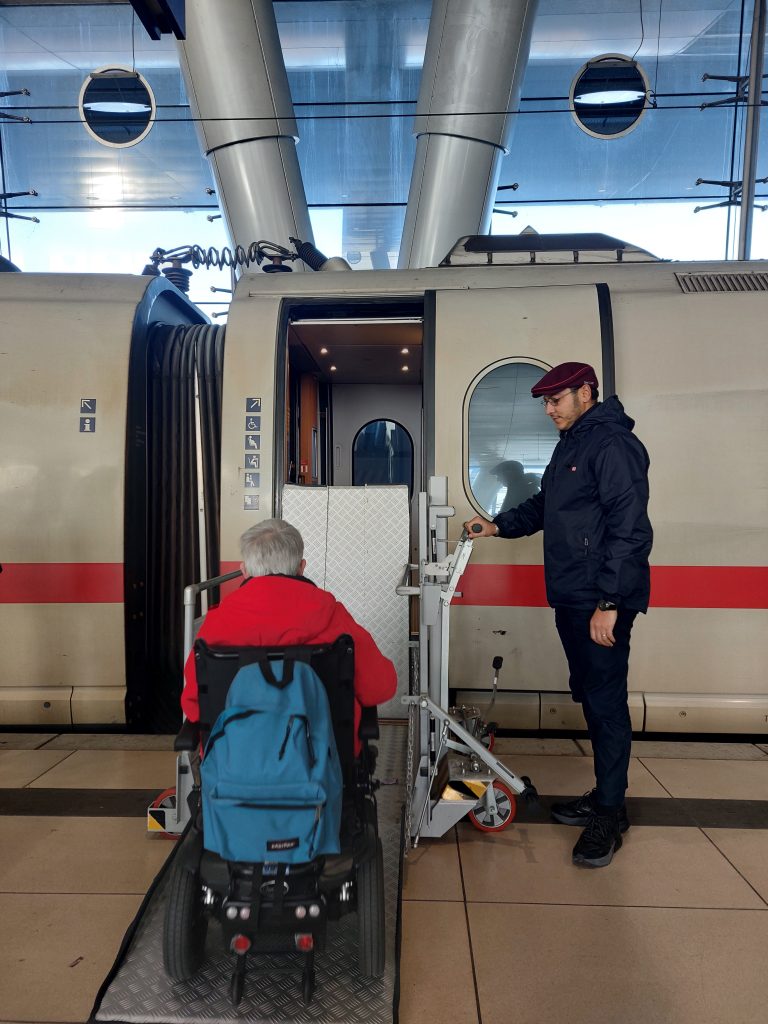
Marian finds treatment to be an enormous travel hurdle requiring endless planning around treatment cycles, or—for those fortunate to have in-home administration—the need to travel with treatment paraphernalia such as needles, sharps disposal bin, treatment products and bandages. Travel overseas also requires paperwork to allow for the transit of plasma derived products. Nancy often takes a cane while traveling, for extra reassurance, adding, “people need to see that I have a disability, otherwise they will just knock me over, and some need to visualise a disability (with a cane, a wheelchair, etc.), otherwise they think you do not need assistance when traveling.”.
To address critical safety risks across borders, patient advocates are working to develop a CIDP/GBS/MMN passport—a crucial document that would contain necessary medical information, to prevent mis-care or trauma in a health crisis. Nancy recounts how vital this is, particularly around anesthesia, which many patients fear because they don’t know how their body will respond. The lack of awareness among physicians about rare disease-specific risks—like one neurologist trying to recommend an “end of life” decision for a CIDP patient’s respiratory crisis—highlights the urgency of this safety measure.
Jean-Philippe highlights that in France, an emergency card has been developed by the health ministry through a consensus involving national medical experts and the patient association representing people living with CIDP. The document provides healthcare professionals with rapid access to essential information on the disease, ongoing treatments, and key precautions in emergency situations.
The voice of the community: advocacy and policy change
Patient leaders are increasingly recognising that meaningful change must be driven from the bottom up, with patient voices guiding policy and representation in political forums.
Gabi emphasises that her organisation focuses on making regional differences in care visible to influence political discussions. For Marian, who serves as the executive manager of the European patient association EPODIN (European Patient Association for Dysimmune and Inflammatory Neuropathies)—who represent 11 member countries—his primary goal is to push the political and health establishments toward foundational changes, such as viable plasma collection systems, viewing it as a “fundamental change which has to exist”.
A key advocacy pillar is raising awareness for plasma donation; Nancy notes that ”around 140 plasma donations are needed per year to treat a patient on monthly IVIG. For those on a weekly SCIG this rises to around 400 plasma donation per year”. Her powerful call to action stresses that “we need to make sure that people understand that donating plasma is truly donating life”, reinforced Jean-Philippe’s earlier reflections on the supply chain fragilities.
Ensuring long-term sustainability of CIDP care will require a dual approach: both strengthening plasma donation systems and accelerating the development and adoption of innovative, non–plasma-dependent therapies.
Furthermore, advocates highlight the need to better utilise existing policy tools. Marian suggests that advocacy must also inform patients of existing resources, noting that there is a “glimmer of hope” in Europe with new laws and protocols being put in place. He urges patient leaders to promote the “brilliant and often unused EU platform that lists all clinical trials”, which while visual and simple, remains largely unknown to patients and clinicians alike. “Available in a map format the site is accessible in multiple languages simply by inserting you preferred language initials in the url bar— gaining access to all the data in your national language: euclinicaltrials.eu/search-for-clinical-trials/trial-map/?lang=en”
Jean-Philippe paints a fragmented European picture for CIDP, where access to diagnosis, immunoglobulin therapies, rehabilitation medicine, therapeutic innovation, and social protections varies “country by country, region by region, hospital by hospital”. He sees the need for stronger and more solidaristic Europe-wide approaches, a vision he is actively championing alongside his European peers.
As Jean-Philippe explains, advocacy is fundamentally a collective act; a true “team effort”. Patient organisations provide an essential space where people living with CIDP and their caregivers can share their lived experience of the disease and help identify unmet daily needs. This lived expertise helps strengthen advocacy at the European level and supports a collective voice in discussions with decision-makers.

Nancy emphasises the power of connecting with others to raise meaningful awareness, sharing, “I love when people ask about my AFO(ankle-foot orthosis)—that way I can start the conversation and tell them all about GBS, CIDP. As a patient and an international patient advocate, my duty and mission is to make sure that all patients have access to diagnosis, treatment and care. We encourage HCPs to refer patients to the patient organisations in order to ensure that they are guided and supported—no patient should walk this journey alone.”
The road ahead: prioritising investment in research or infrastructure?
When reflecting on where future primary investment should lie—a “moonshot” for new pharmacological research or in a more robust infrastructure of social and physical accessibility—the patient leaders showed a clear preference for foundational support.
For Gabi, the number one wish for the future is transparency and equitable infrastructure so that access to clinical and holistic care is the same in “Berlin, Munich, and hopefully in every city, town and rural region of the world—not depending on where you are living”.
Nancy also wishes to see equity in the form of access to treatment globally and mandates that policymakers and advisory groups must refer to patients to understand the impact of current inequalities. To achieve this, Marian sees an urgent need for foundational infrastructure, specifically the political push to enable greater plasma collection in countries like Romania.
Jean‑Philippe also sees great needs in rare neuropathies around policy and funding priorities that; secure early, equitable access to treatment options (including new options for those not helped by first‑line therapy), reinforce the clinical workforce, and embed robust social and employment protections so that people with CIDP can remain active, included and economically secure.
Ultimately, the consensus among these patient leaders is clear: The most urgent investment is needed not just in research and therapeutic innovation, but in foundational infrastructure to ensure that access to effective and sustainable treatment options reach patients. In parallel, the power of community remains one of the most effective tools in achieving this—where knowledge, ideas and lived experience can fuel change, which Gabi’s mantra encapsulates: “exchange is the foundation”.
References
[1] https://neurologyopen.bmj.com/content/7/2/e001318?utm
[2] https://pmc.ncbi.nlm.nih.gov/articles/PMC10310601/?utm
[3] https://www.blood.gov.au/sites/default/files/documents/2025-02/CIDP%20Clinical%20Guidance%20Article_0.PDF?utm
To learn more about plasma and plasma donation please visit: https://www.blood.co.uk/plasma/why-we-need-plasma-donors and https://www.epodin.org/plasma-donation/
To learn more about GBS and CIDP please visit
https://www.neuropathies-peripheriques.org
Articles are for information only and do not form the basis of medical advice. Individuals should always seek the guidance of their medical team before making changes to their treatment.
This article was sponsored by argenx.
argenx have had no editorial control over the copy, and all opinions are those of the contributor.
RARE Revolution Publishing® retains all copyright.