Charity reveals diagnosis for rare brain diseases hasn’t improved in 10 years
A national survey released by UK charity the PSP Association (PSPA) has exposed a staggering lack of progress in diagnosing two terminal, progressive neurological conditions: progressive supranuclear palsy (PSP) and corticobasal degeneration (CBD).
The PSPA survey of 650 patients and family carers identified that diagnosis of PSP & CBD is still critically challenging, causing delays at a time when it matters most. The survey found the core drivers of the challenges experienced, include the confused diagnostic pathway (such as people receiving multiple referrals to different professionals before arriving at neurology) and waiting times to see neurologist once referred. This highlight issues of capacity within services (hence the reliance on people going private to skip the lengthy waits) and the lack of recognition of the underlying condition by GPs.
In addition to diagnosis issues, the survey also highlights a widening gap between the rapidly accelerating needs of people diagnosed and their family carers, and the slow-moving health services designed to support them. Again, this points to capacity issues, but also to a lack of understanding about the conditions and how they progress, and the impact of uncoordinated care.
The findings paint a stark picture of a system in crisis:
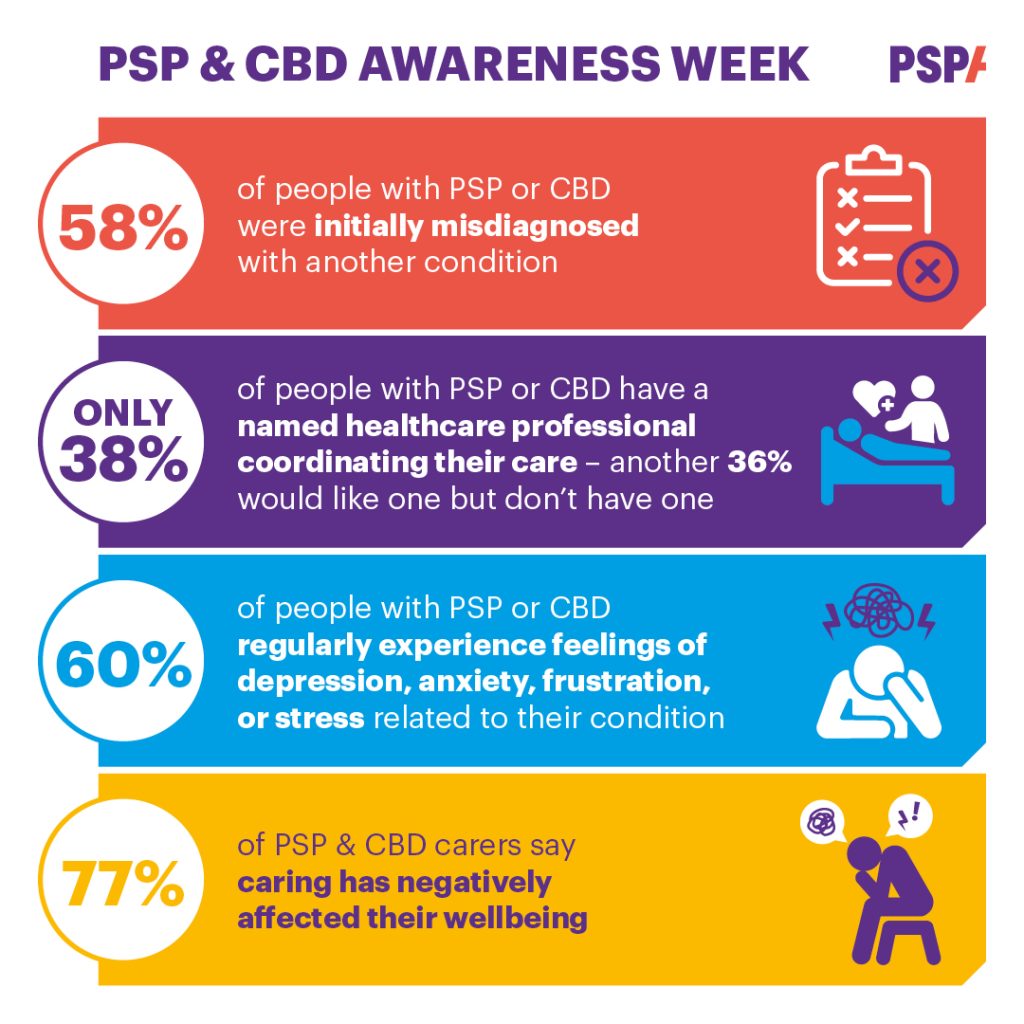
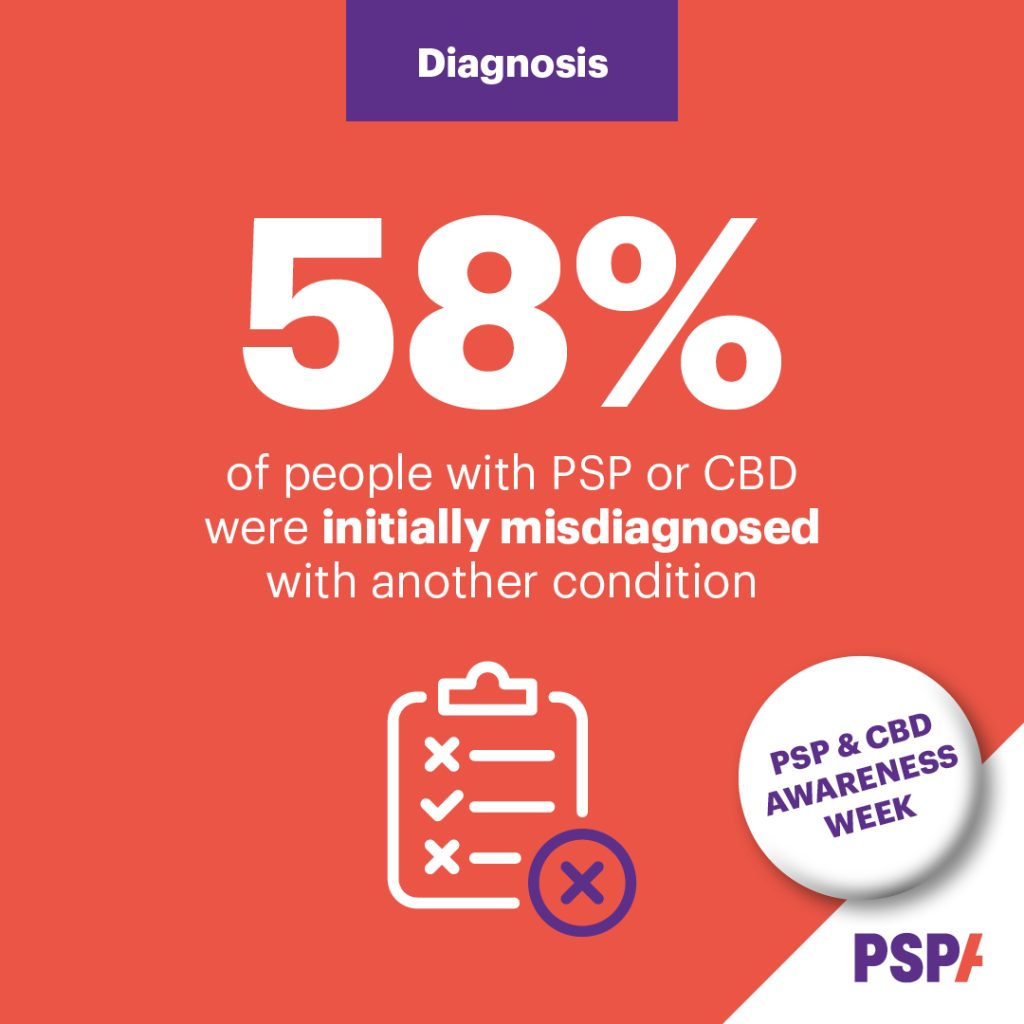
Diagnosis is too slow and often wrong: Despite ten years of public awareness campaigns, 58% of people were initially misdiagnosed with another condition, and 67% waited two years or more for a correct diagnosis. One-third of respondents felt forced to pay for a private consultation to get answers.
An unrecognised financial and emotional toll: Living with PSP & CBD causes a rapid loss of independence. 60% of respondents regularly feel depressed or anxious, while 43% face significant financial strain and stress due to increasing specialised care costs.
Service provision lags behind symptom progression: Because support takes so long to clear, a patient’s symptoms often worsen while waiting. Care packages or equipment routinely arrive after the need has been identified, leaving families in a permanent state of crisis.
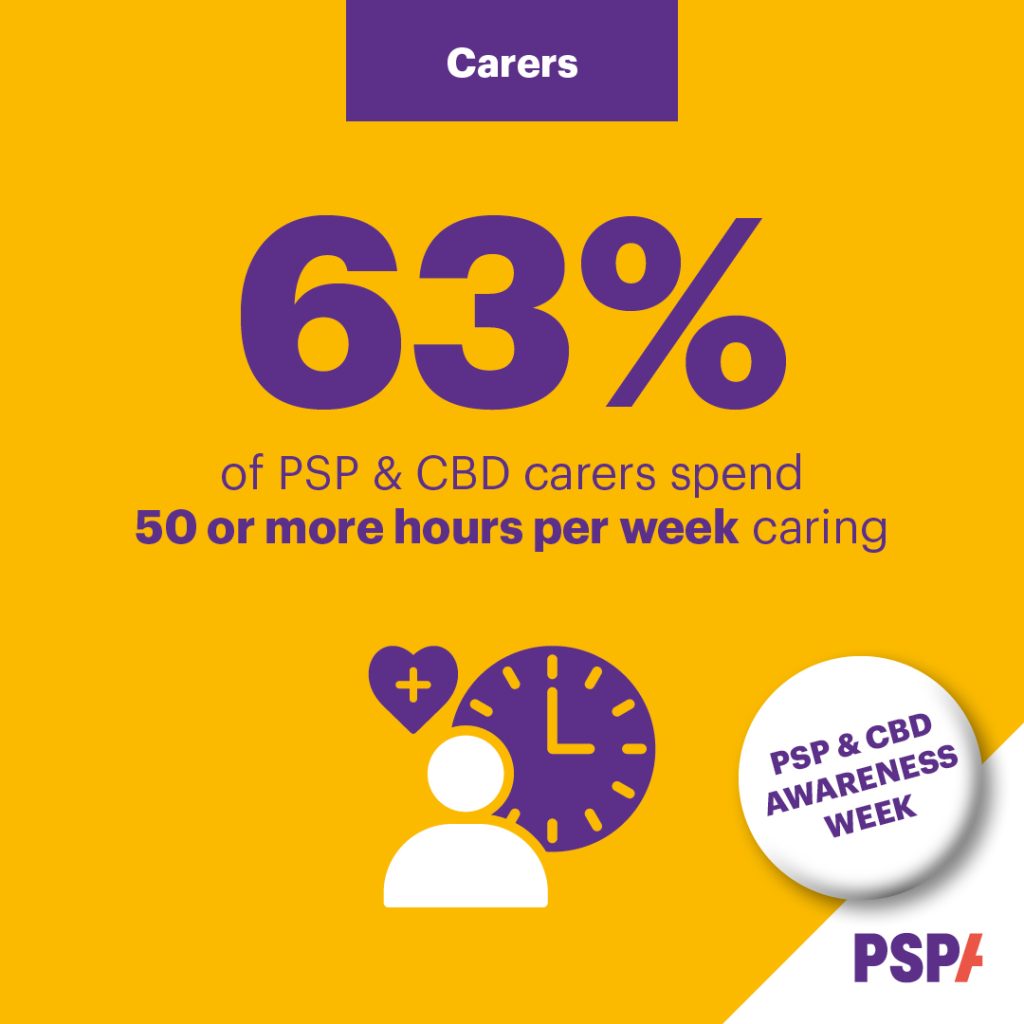
Family carers are essential but undervalued: Family members are propping up the system, with 63% providing over 50 hours of care a week. Consequently, 77% of carers report a negative impact on their own wellbeing, leaving them feeling isolated and invisible.
In light of the survey findings, PSPA is urgently calling on the government and healthcare leaders to implement four systemic changes:
- End the decade of diagnostic limbo: Train the primary care, ophthalmology, and ENT specialists to recognize early, atypical symptoms of PSP & CBD.
- Guarantee a named care coordinator: Assign every patient a single named contact within a multi-disciplinary care team to stop vital support from breaking down into fragmented silos.
- Legislate for anticipatory health and social care: Move from a reactive crisis model to a proactive framework, ensuring care packages and home adaptations are provisioned ahead of time based on known disease trajectories.
- Recognise and fund family caregivers: Accelerate access to early Carers Assessments and formally integrate family caregivers as a valued, supported part of the clinical care team.
Maggie Chapman, who cares for her husband Chris, said:
“It took four years to get a PSP diagnosis for Chris, and trying to stay on top of this progressive disease is difficult. Waiting times for appointments and equipment scupper any plans to get ahead. We are currently on a three-month waiting list for a specialist bed, and it took a year just to get an assessment for a replacement wheelchair when his needs changed.”
James Cusack, PSPA CEO, said:
“It is devastating that a decade has passed with very little progress in diagnosis times. Behind every statistic is a family living in uncertainty and pushed to the brink. We are seeing a vicious cycle where symptoms progress faster than the system can respond, leaving overstretched family carers to pick up the pieces. This stagnation cannot continue, which is why we are asking the government and healthcare leaders to act. Delays, misdiagnosis, and uncoordinated care are caused by systematic problems which can be improved. Families need healthcare professionals to have training so they can recognise the development of PSP & CBD, a coordinated and joined up service provision which is anticipatory (not reactive), and earlier support for family carers.”
Read PSPA’s full survey report, The experiences of people living with PSP & CBD: Findings from PSPA’s 2025 survey, including a comprehensive list of system recommendations, at https://www.pspassociation.org.uk/pspa-survey-report-2025/
About PSP Association
Progressive supranuclear palsy (PSP) and corticobasal degeneration (CBD) are two rare neuro-degenerative diseases.
They are caused by the loss of neurons in certain parts of the brain. Over time, this leads to difficulties with balance, mobility, speech, vision, swallowing and cognition.
Both conditions are life limiting. There is no treatment and no cure.
Currently, around 60% of people living with either disease, are initially misdiagnosed with other conditions including Parkinson’s, stroke and depression.
PSPA is the only UK charity dedicated to creating a better future for every affected by PSP & CBD.
We will do this by:
• Providing information and support to enable families living with PSP & CBD to live their best possible lives
• Improving the quality of life for people living with the condition via research and awareness raising
• Putting the voice of the PSP & CBD community at the heart of what we do.
For more information, please visit www.pspassociation.org.uk