Equal stakeholders: how FESCA is preparing patient advocates to reshape scleroderma research
SPONSORED CONTENT
The Federation of European Scleroderma Associations (FESCA) is working to move patient involvement in research from token gesture to genuine partnership. Sue Farrington, president, FESCA and chief executive of Scleroderma and Raynaud’s UK (SRUK), and Ilaria Galetti, vice president of FESCA, share how training, language and structural shifts can turn a patient voice into research that reflects their greatest needs
Written by Nicola Miller, RARE Revolution
Interview with
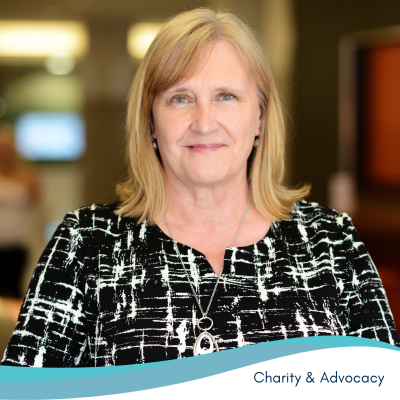
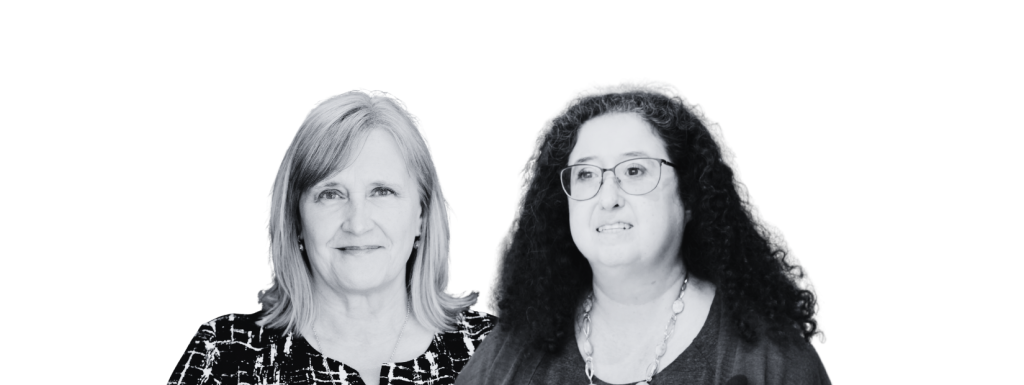
Sue Farrington, president FESCA, chief executive, Scleroderma and Raynaud’s UK (SRUK) and Ilaria Galetti, vice president, FESCA
A few years into a long-running industry collaboration, the FESCA patient advisory board pointed out something the trial team had failed to notice. The pill being developed for use in the study was too large for many scleroderma patients to swallow comfortably. The blister packs were a separate problem: people with the disease often cannot generate the grip strength or the finger movement needed to open them. The company changed the pill size and the packaging. The trial gained a better chance of meaningful adherence; the patient community gained a small but specific signal—that being asked actually meant being heard.
Over the last five years, says, Sue Farrington, president, FESCA and chief executive of Scleroderma and Raynaud’s UK (SRUK), that dynamic with industry has shifted further. “Now when they want to create materials, instead of presenting it as a final asset for comment, they say; ‘we want your insight; we want you to work with us to create the materials’”. The benefit to this approach has been felt by both parties, across material cocreation, trial design and more.
These benefits are the whole case for patient involvement in research. Get the pill wrong and adherence drops, evidence weakens, and the answer the trial produces tells the field less than it could. Get it right—because the people who will eventually take the pill have been in the room— and the study, the company and the community all gain.
FESCA has been working to make this kind of involvement the norm rather than the exception. The federation is pursuing two interlocking goals: equipping patient advocates to participate meaningfully in research, and helping the wider scleroderma community, particularly those treated outside specialist centres, to understand and engage with clinical trials.
Why early involvement changes outcomes
Sue has been president of FESCA since 2020. Ilaria Galetti has been vice president for the same six years. The two, who describe themselves as “partners in crime”, have a strong track record in advocacy work that includes membership of the EURORDIS DITA task force, a place on the European Patient Advocacy Group (ePAG) within the European Reference Network on rare and complex connective tissue and musculoskeletal diseases (ERN ReCONNET), and many other collaborative initiatives. So, they understand well the merits of collaboration and participation.
For Ilaria, the case for early patient involvement is settled in the literature.1 What is not settled is the practice. Patients are still too often approached only at the recruitment stage of phase three clinical trials, when the design choices that matter most have already been made.
Ilaria insists, “It’s important that the patient is involved from the very beginning, when the idea comes to mind. For pharmacological clinical trials, it’s important from the preclinical phases to understand the community’s unmet needs, which may not be the same as the clinical unmet needs.”2
Fatigue is the perfect example. For people with systemic sclerosis, it is one of the most disabling daily realities, and yet it is rarely treated as an endpoint in trial design. “This could influence the outcome of the clinical trial if the endpoints are not selected properly,” Ilaria explains. “Without taking our needs into consideration, the trial would not reflect what’s happening out there in real life.”3
From tokenism to partnership
Sue has seen the shift up close over the past ten years. “I really have seen it move beyond being a passive partner to an active participant,” she says. The change has not been uniform: industry, in her view, is now leading the way, while academia has further to go.
Equally important to Sue is what happens after a patient advisory board has spoken. Outcomes must be reported back so that participants can see how their suggestions have been implemented or not, with appropriate explanations as to why some could not be taken forward—allowing the community to see how their views can shape their futures. That feedback loop, Sue argues, is what separates real partnership from a polite consultation.
The wider system is starting to catch up. The European Medicines Agency now seats patients on its committees, and the EU Health Technology Assessment Regulation requires the patient voice to be included in joint clinical assessment and joint scientific consultations. “We bring to the table the real benefit that a health procedure can have,” Ilaria says, “not only pharma therapeutics, but devices and whatever else is in the health ecosystem.” The mechanisms are now in place. Whether researchers, sponsors and regulators use them well is, both agree, still a work in progress.4
Training to be equal
If meaningful partnership requires confidence, confidence requires preparation. That is the thinking behind the FESCA Patient Academy, which was launched in 2025 in Milan. The first programme ran across four sessions on topics the community had identified as priorities: artificial intelligence in healthcare, health technology assessment (HTA), innovative therapies, and the rights and duties of a patient advocate. “The patient advocate also has duties to comply,” Ilaria notes. A second programme is in planning, with possible sessions on patient experience data and a return to HTA.5
The aim is to give patients enough fluency in the language of research and regulation to participate as equals. “We must be equal stakeholders,” Ilaria says, “and to be partners, we need to speak the same language. We need the confidence to raise the right questions at the right moment, more than to give simple answers.” Confidence, she adds, depends on the environment as much as on training. “I’ve been very lucky, because I’ve been encouraged to speak up since the beginning of my advocacy journey, but this is not normal.”
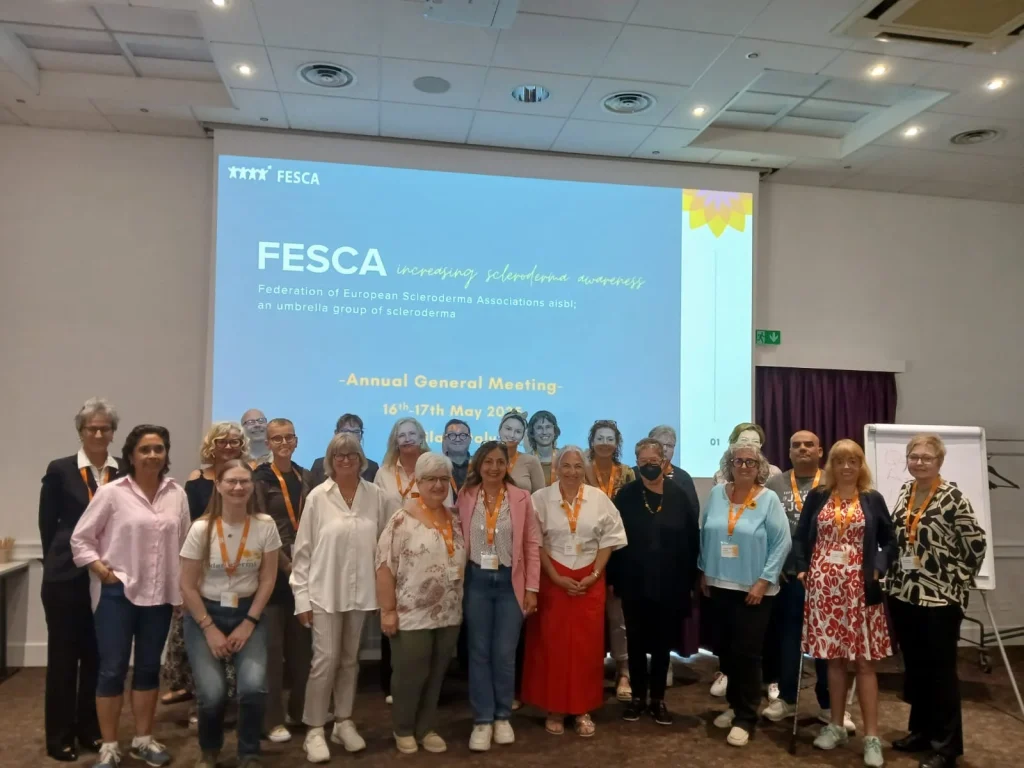
The academy is also a deliberate move to widen the pool of patient voices beyond the same handful of group leaders. “The main reason we started the academy is to help our members feel interested and motivated in joining the research,” Ilaria says. “We want as many people as possible to be trained and to join the research, not only the same people.” FESCA then maps specialist knowledge across the membership so that the right patient can be matched to the right piece of research. Where general rare disease training already exists, through EURORDIS, EUPATI and others, they are “keen not to “reinvent the wheel”, so FESCA layers scleroderma-specific training on top.
Sue describes the wider framing. The federation originally considered the name “patients as research partners” for the programme but moved on. “The way we work with our community is not just inputting into research, working with industry; it’s also helping to inform and shape policy and the healthcare system. So, we’ve shifted to call them ‘patients as partners in the health ecosystem’.”
The language of inclusion
Vocabulary is where the assumptions of the old model show up most clearly, and Ilaria is unsparing about it.
“I don’t like the word recruitment, because we are not soldiers,” she says. “We are not an army.” Her preferred term is “inclusion”: inclusion of a patient in a clinical trial, working with a group rather than a “cohort”. The point is more than pedantry. The way an industry talks to a community signals whether it sees the people behind the data as partners.
The same principle runs through the documents patients are asked to sign. The informed consent form is too often presented in legal rather than plain language. “Everything is written there, and the patient should understand to give his or her informed consent,” Ilaria says. “Why not involve patients in the development of the ICF?” Lay summaries of trial protocols are now available through the EU Clinical Trials Information System (CTIS), although for now only in English, which she flags as a limitation.

The harder question, in Ilaria’s view, is what happens when a trial fails. “What we would also like to see and read are the results of a clinical trial when the trial fails,” she says. “This would be real transparency. It would enable other researchers to better shape their work.” Ilaria speaks here from her own experience as a young patient, 27 years ago, in a trial that closed without disclosure of the reasons. Trials that end without explanation, she argues, damage trust and future participation alike.6
Beyond the specialist centre
The case for patient involvement in research only carries so far if the wider community cannot access trials in the first place. Sue points out that patients seen in specialist centres tend to have the most up-to-date treatments, while those in a general rheumatology setting may or may not. The NHS attempted a hub-and-spoke approach in the UK some years ago, intended to link specialist scleroderma expertise to general rheumatology services. The model worked in places, Sue recalls, but funding was withdrawn before it could embed nationally. A few “beacons of light”, as she puts it, have continued through the determination of individual clinicians.
For patients outside those networks, the second strand of FESCA’s work is about basic, accessible information: what a clinical trial is, what participation involves, what to ask in the consultation room, and how to weigh up an offer. The hope is that better-informed patients will ask the right questions of their healthcare teams, in the same way that better-trained advocates ask the right questions at the trial design table. The two strands are, for FESCA, parts of the same project.
Where the academic gap remains
Sue is candid that not every part of the research ecosystem has moved at the same pace. “There’s an equal and an opposite,” she says. “As much as we are doing a lot to prepare and support and inform patients, I do see a gap on the other side when it comes to academic research. Industry is far more open and understands the value, and has put in place systems and procedures to make the most of that. I’m not always so sure with academic institutions.”

FESCA is now working with an agency focused on academic-facing engagement to help bridge that gap. Sue points to a group of “enlightened” clinical researchers, many of them also rheumatologists in a field where clinicians and researchers often overlap, who are leading by example. She also notes ongoing discussions about a long-running patient registry that has been collecting systemic sclerosis data for two decades, which she sees as an opportunity to introduce a requirement that researchers requesting access set out how patients will be involved.
Patients setting the agenda
Looking ahead, both Sue and Ilaria see patients shaping the research agenda itself, rather than only responding to questions others have framed. “I see patients leading research,” Sue says. “Through the work we’re doing on surveys to understand the greatest challenges and unmet needs, particularly in the quality-of-life space, we will start to articulate and shape what that research agenda should look like.” She points to a growing interest in non-pharmacological interventions: nutrition, psychological support, exercise, rehabilitation. “Drug treatments are really important,” she adds, “but we need to look more holistically. Patients have been really pushing for that.”
Ilaria puts the test simply. “If we refer the patient to the researchers,” she says, “it means that the patient is ready, and that the patient knows the value of being part of the research, to make the patient’s voice heard.”
For FESCA, the work continues at both ends. Advocates in the room with the trial sponsor are gaining the language, the training and the confidence to ask the questions that change a study’s design. Patients in the consultation room, outside the specialist centre, are starting to get the basic information they need to make sense of what is offered to them. The smaller pill, in a pack that patients can open, is a small story. The principle underneath it is not.
References:
[1] (Perestelo-Pérez L, Rivero-Santana A, Abt-Sacks A, Toledo-Chavarri A, Brito N, Álvarez-Pérez Y, González-Hernández N, Serrano-Aguilar P. Patient Empowerment and Involvement in Research. Adv Exp Med Biol. 2017;1031:249-264. doi: 10.1007/978-3-319-67144-4_15. PMID: 29214577.).
[2] Velvin G, Hartman T, Bathen T. Patient involvement in rare diseases research: a scoping review of the literature and mixed method evaluation of Norwegian researchers’ experiences and perceptions. Orphanet J Rare Dis. 2022 May 31;17(1):212. doi: 10.1186/s13023-022-02357-y. PMID: 35642001; PMCID: PMC9158134.
[3] Wong AW, Johannson KA. The Fatigue Severity Scale in Interstitial Lung Disease: An Energizing Endpoint. Am J Respir Crit Care Med. 2023 Jul 15;208(2):128-129. doi: 10.1164/rccm.202305-0919ED. PMID: 37311236; PMCID: PMC10395494.
[4] https://fesca-scleroderma.eu/fesca-academy-2025/
[5] https://www.eu-patient.eu/policy/Policy/HTA/
[6] https://bmjgroup.com/many-post-authorisation-studies-fail-to-comply-with-public-disclosure-rules/
To learn more about FESCA please visit: https://fesca-scleroderma.eu/
Connect with Sue Farrington via LinkedIn: https://www.linkedin.com/in/sue-farrington-9b76aa6bv/
Connect with Ilaria Galetti on LinkedIn: https://www.linkedin.com/in/ilaria-galetti/
Articles are for information only and do not form the basis of medical advice. Individuals should always seek the guidance of their medical team before making changes to their treatment.
This article was sponsored by argenx.
argenx have had no editorial control over the copy, and all opinions are those of the contributor.
RARE Revolution Publishing® retains all copyright.