
Europe’s rare disease community sets out Blueprint for coordinated EU action
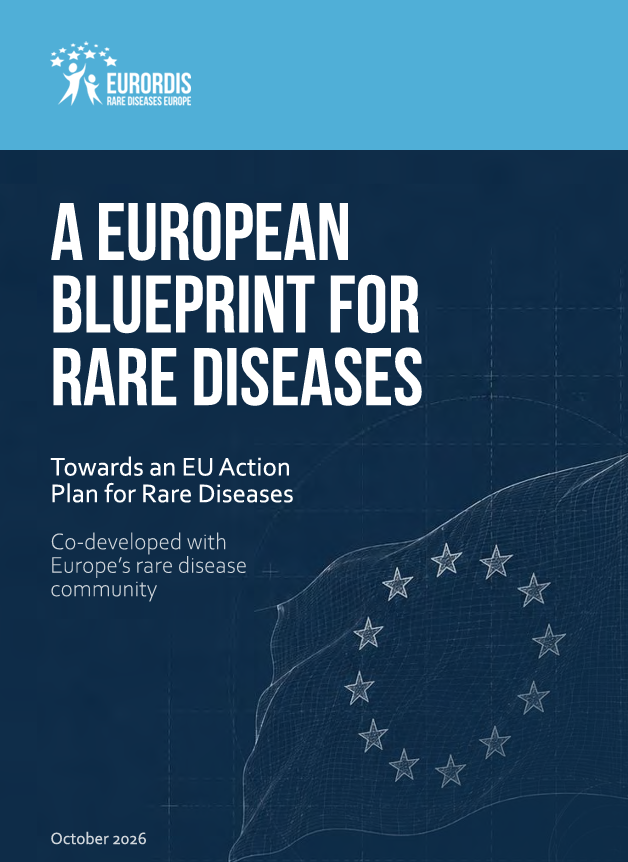
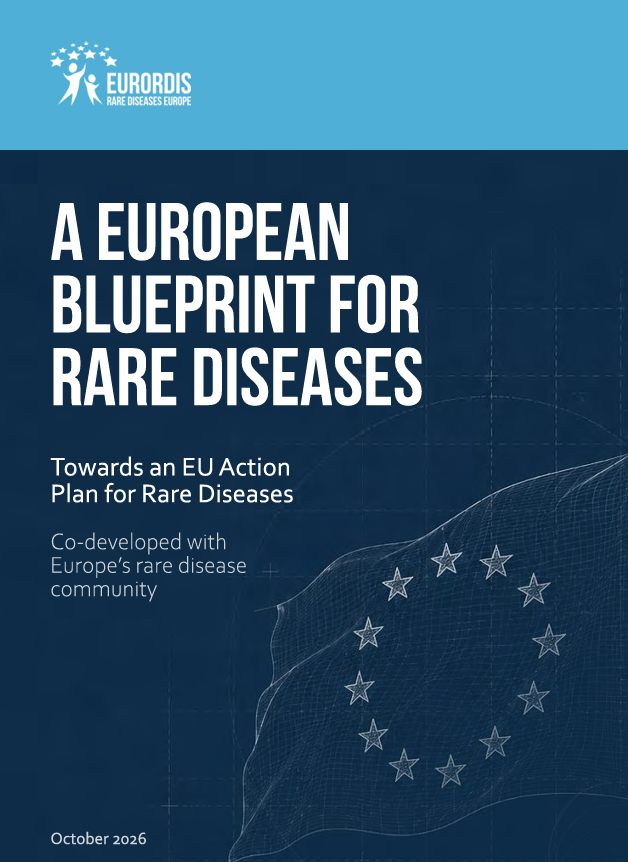
EURORDIS-Rare Diseases Europe has launched the European Blueprint for Rare Diseases, setting out the rare disease community’s proposals for the structure, priorities and delivery of a future EU Action Plan on Rare Diseases. The proposed Plan would connect existing initiatives, close remaining gaps and strengthen delivery across Europe.

Although individual rare diseases affect small numbers of people, together they affect around 30 million people in Europe. Around 85% of rare diseases affect fewer than 500 people in the EU, making European cooperation essential for shared data, research infrastructure, cross-border care and specialised expertise. Europe has already built strong foundations, including the European Reference Networks, Orphanet, the orphan medicines framework, ERDERA and national rare disease plans. The challenge is to connect and sustain these EU assets while supporting Member States’ actions for rare diseases.
Jean Saslawsky, Chief Executive Officer of EURORDIS, said:
“Europe has built excellent networks, research programmes, data systems, specialist centres and a regulatory framework, but too often they sit beside one another rather than working as one system. The policies of the past no longer fully reflect the realities and expectations of our community. To address the needs that remain unmet, new technologies and new possibilities for innovation must be matched by policies that keep pace. This requires more strategic and coordinated decision-making to ensure that we turn Europe’s existing strengths and future innovations into tangible improvements in the lives of people living with a rare disease.”
Developed and co-created over ten months, the Blueprint brought together people living with rare diseases and patient organisations, clinicians, researchers, public authorities and industry to develop a shared vision for an EU Action Plan on Rare Diseases. The process included a Core Group of 36 experts, a survey with 236 responses from 33 countries, and a workshop with more than 150 participants in Prague. The proposed EU Action Plan would strengthen national plans and strategies while respecting Member States’ competences and embedding meaningful patient partnership throughout.
Avril Daly, President of EURORDIS, said:
“Having helped shape national plans for rare diseases across Member States, patient advocates know what a well-designed plan can deliver, but also that national plans cannot succeed in isolation. A European policy framework for rare diseases, defined by societal responsibility and equity, and driven by the needs of people living with a rare disease, should guide the implementation of consistent national plans and strategies. National plans need a European framework to reach their full potential.”
Building on this broad stakeholder input, the Blueprint sets out the building blocks of an effective EU Action Plan and 18 priority actions across six areas with the greatest impact on people living with a rare disease: diagnosis, specialised healthcare, integrated care and social inclusion, data, research, and access to medicines and medical devices. The priorities were selected based on stakeholder support, EU added value and gaps left by existing initiatives.
An EU Action Plan would provide the coherent, long-term vision needed to align and reinforce existing and emerging EU initiatives, including the Biotech Act proposal, Life Sciences Strategy and pharmaceutical legislation. By strengthening coordination and investment in rare diseases, it would improve health outcomes while contributing to Europe’s competitiveness, innovation and leadership in life sciences.
“The very challenges that make rare diseases so difficult have also pushed us forward – research in rare diseases has been at the vanguard of innovation in genomics, precision medicine and cross-border collaboration. An EU Action Plan can build on that progress, creating the conditions for innovation to flourish, generate benefits beyond rare diseases and reach people wherever they live. In rare diseases, competitiveness and health equity are complementary, not competing, ambitions.”
Inching ever closer to an EU Action Plan on Rare Diseases
The Blueprint is published as calls for an EU Action Plan increasingly translate into formal institutional action, while the EU’s 2028–2034 Multiannual Financial Framework will shape future rare disease investment.
On 28 September, the European Parliament’s Public Health Committee adopted Nicolás González Casares MEP’s legislative initiative report calling for an EU Action Plan on Rare Diseases and a future Regulation, by a large cross-party majority. A plenary vote is expected in late November 2026. Meanwhile, the Biotech Act, pharmaceutical legislation, HTA Regulation, Critical Medicines Act and European Health Data Space can strengthen parts of the system, but cannot alone connect diagnosis, care, data, research and treatment access.
Jean Saslawsky, Chief Executive Officer of EURORDIS, added:
“The political question is no longer whether rare diseases require stronger European coordination, but how we turn that recognition into action. People living with rare diseases need a European framework that gives Member States common objectives, connects the expertise and initiatives we already have, and makes progress measurable for patients – from diagnosis and specialised care to social inclusion, research and access to treatment.”
A clear path for European action
EURORDIS is calling on the European Commission to propose an EU Action Plan on Rare Diseases, using the Blueprint as the rare disease community’s contribution to its design. The Plan should set shared goals and SMART targets, secure dedicated resources, embed patient partnership in governance, establish common monitoring and deliver the Blueprint’s 18 priority actions.
EURORDIS is also calling on the Council and Member States to support this direction, including through a renewed Council Recommendation by the end of 2027.
An EU Action Plan would build on Europe’s existing networks, research infrastructure, data systems, policy frameworks and patient expertise, connecting those strengths and closing remaining gaps.
With around 95% of rare diseases still lacking an approved therapy, diagnosis taking an average of nearly five years, and deep inequalities remaining across EU Member States, the time for an EU Action Plan is now.
About EURORDIS-Rare Diseases Europe
EURORDIS-Rare Diseases Europe is a unique, non-profit alliance of over 1,000 rare disease organisations from 76 countries that work together to improve the lives of the 30 million people living with a rare disease in Europe. By connecting people, families, and rare disease groups, as well as by bringing together all stakeholders and mobilising the rare disease community, EURORDIS strengthens the patient voice and shapes research, policies, and services.