Expediting novel therapies: a roadmap to a bright future for Saudi Arabia’s citizens
SPONSORED CONTENT

Dr Mohsen Alzahrani is a consultant in haematology and stem cell transplantation at King Abdulaziz Medical City in Riyadh, Saudi Arabia, under the Ministry of National Guard Health Affairs. He discusses ongoing programmes and future-planning, under the Vision 2030 initiative, to advance personalised medicine in the region and secure Saudi Arabia’s position as a global healthcare leader
Written by Emma Bishop, RARE Revolution
Interview with Dr Mohsen Alzahrani, consultant in haematology and stem cell transplantation
at King Abdulaziz Medical City in Riyadh, Saudi Arabia
Dr Mohsen Alzahrani has worked as a medical consultant at King Abdulaziz Medical City, Saudi Arabia, for 15 years. His clinical and academic work focuses on high-risk haematologic malignancies, transplantation and cellular therapies—particularly CAR-T and gene-based approaches. Mohsen was initially drawn to the field of haematology because of its positioning at the intersection of complex biology and highly impactful therapies.
“Over the past decade, the field has transformed rapidly—from chemotherapy and transplant into precision medicine and engineered cellular therapies. Being part of this shift, and helping patients access curative or life-changing treatments, has been a major motivator for me,” shares Mohsen.
CAR-T (chimeric antigen receptor T-cell) therapy is a personalised, cutting-edge immunotherapy treatment, and involves reprogramming a patient’s own immune system cells to manufacture a product to target their cancer.1
Gene therapy is a treatment that modifies the genome of specific cells to treat or prevent a genetic disease. A common method is using a viral delivery system called a viral vector. This type of gene therapy delivers a functional copy of a single gene into the cells of a target organ or tissue.2
The barriers to advancing novel therapies
While significant progress has been made in developing innovative and life-enhancing therapies, such as CAR-T and gene therapy, Mohsen notes that there are several interconnected challenges and barriers to address and overcome when considering their integration into the healthcare system in Saudi Arabia.
The nature of these advanced therapies means there are regulatory, logistical and infrastructural complexities to consider. “These therapies require highly controlled supply chains, strict manufacturing standards and time-sensitive handling—from cell collection to infusion.” They also necessitate specialised labs, apheresis capability, cell processing and cryostorage.
Delivery of novel therapies also requires highly trained multi-disciplinary teams, and so specialised training pathways in cellular therapy nursing, pharmacy, intensive care, transfusion medicine and lab sciences are necessary to expand access outlines Mohsen. While life-enhancing, CAR-T and gene therapy are “clinically complex” therapies with inherent risks which require “ICU coordination, protocols and strong governance”.
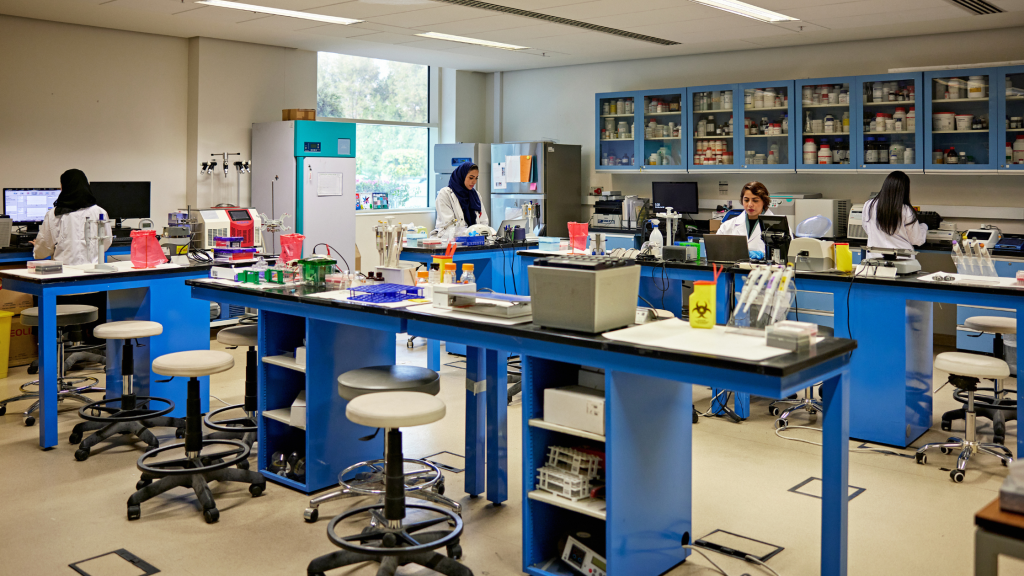
As with most highly specialised innovative treatments, the development of the infrastructure capable of delivering them, along with training a specialised workforce, inevitably has considerable cost and sustainability implications. Cost is generally the largest prohibitor to expediting novel therapies, not just in Saudi Arabia, but the world over. As Mohsen explains, “The upfront cost is high, and the health system must balance innovation with equitable access and long-term planning.”
Access and equitability
Financing high-cost therapies requires a structured approach that aligns with clinical value and health-system sustainability, says Mohsen. Funding decisions typically consider:
- Clinical value: Durability of response, potential for cure and improvement in survival and quality of life.
- Health-economic evaluation: Cost-effectiveness is assessed using frameworks such as cost per QALY, budget impact analysis and comparisons to long-term chronic care costs (e.g., transfusions, admissions, complications).
- Managed entry agreements: Some systems use outcome-based agreements or staged payments linked to patient outcomes, especially for therapies with high upfront costs.
- Appropriate patient selection: Ensuring the therapy is used for those most likely to benefit is one of the strongest tools to manage cost responsibly.
Patient eligibility for CAR-T and gene therapies in the region is based upon indication-specific criteria, which is a set of requirements, clinical evidence and cost-effectiveness benchmarks that a medicine must meet to be approved for reimbursement or clinical use.3 These generally include disease criteria, such as diagnosis, subtype and disease status; clinical fitness, such as performance status, organ function, infection control and ability to tolerate bridging therapy or conditioning; risk benefit assessment, such as expected benefit vs toxicity risk, prior treatments and co-morbidities; and system readiness, such as the availability of a trained team, ICU support and product logistics.
Mohsen explains that at present, the delivery of novel therapies is largely concentrated in major tertiary centres in Saudia Arabia. “This is primarily because therapies demand specialised infrastructure, governance and experienced teams. This can mean patients from remote regions face additional barriers—travel, repeated visits and the need for extended post-infusion monitoring.” He adds that while access is improving, it still requires structured referral pathways, timely evaluation and coordination to avoid delays.
A practical solution he sees to addressing issues of access across the region is the hub-and-spoke model which would involve complex therapy delivery at specialised hubs across Saudi Arabia, paired with shared care arrangements, where local hospitals manage aspects of the evaluation and follow-up care following standardised protocols and with telemedicine support.
A forward-thinking vision for Saudi Arabia

Launched in 2016, Vision 2030 is an ambitious roadmap for the future of Saudi Arabia. Its aim is to diversify the economy, empower citizens and create a vibrant environment, establishing Saudi Arabia as a global leader. By addressing these main themes, its mission is to improve the quality of life for its citizens, expand opportunities for growth and investment, foster global collaboration and enhance government efficiency. “Saudi Arabia is forging a future where tradition, innovation, and sustainability go hand-in-hand, providing endless opportunities for citizens to realize their potential and ushering in a new era of development and prosperity for the Kingdom.”4
Mohsen recognises the significant contributions of Vision 2030 to the healthcare system, and in particular the expedition of novel therapies to the Kingdom.
“Vision 2030 has accelerated innovation by emphasising health sector transformation, improving research capacity, strengthening regulation and enabling investment in advanced care models. It has helped create an environment where high-complexity programmes—like cellular therapy—can expand through improved governance, partnerships and strategic national priorities.”
The hub-and-spoke model, championed by Mohsen, is an initiative of the Healthcare Transformation Programme under Vision 2030. Examples include SEHA Virtual Hospital (SVH) which has a team of consultants and specialists at its ‘hub’, and supports 130 hospitals—the ‘spokes’—across the Kingdom.5 Other examples are the formation of health clusters with hospitals in major cities providing tertiary care and serving as a ‘hub’, providing support to primary healthcare centres.
In late 2025, King Faisal Specialist Hospital & Research Centre (KFSHRC) began in-house manufacturing of CAR-T cell therapy, which marked a major milestone in accelerating novel therapies to the region. As Mohsen notes, in-house manufacturing can considerably reduce turnaround times and logistical dependency on international sources. It lowers long-term costs as systems mature and scale and improves national resilience and capacity, particularly during global supply limitations. For Saudi Arabia, a country committed to improving its healthcare and the quality of life of its citizens, Mohsen says this development “Strengthens research and innovation, including investigator-initiated trials and locally optimised products, and supports broader national goals of biotechnology growth and advanced healthcare capability.” Once fully operational, the facility based at the hospital’s Riyadh site, is expected to manufacture around 2,400 treatment doses per year.7

The Saudi Human Genome Program
Launched in 2018 under Vision 2030, The Saudi Genome Program sets out to create a “pioneering database that will not only capture the genetic blueprint of Saudi society but also revolutionise healthcare by enabling personalised medicine and driving down healthcare costs.”6 Mohsen sees the database as foundational for the advancement of novel therapies in the Kingdom. “It improves our ability to identify disease-causing variants and refine diagnosis, particularly for inherited haematologic disorders.” He explains that it also supports targeted therapy decisions and risk stratification and enables research infrastructure for genotype-phenotype mapping, essential for future gene-based treatments and clinical trials. “Ultimately, it supports a move from “one-size-fits-all” care to data-driven, precision approaches.”
Mohsen expands to says that enhancing understanding of the genetic make-up of a county’s citizens is extremely important as population specific genetic data improves diagnostic accuracy, by including variants that may be more unique or common locally, and ensures appropriate screening programmes for inherited diseases and carrier states. It also enhances clinical trial relevance and therapy design and ensures safer implementation by predicting risks, adverse events and differential responses. As Mohsen asserts,
“In short, precision medicine works best when it reflects the population it serves.”
Mohsen believes it is essential to establish clear and ethical guidelines for personalised medicine, as it relies on sensitive genomic and health data. “Ethical guidelines ensure patient autonomy and informed consent that is clear and culturally appropriate, and equity protections so access and benefits are not restricted to only a few groups.” He expands to say they also safeguard privacy and cybersecurity, and ensure transparent governance around data use and sharing and secondary research. “Clear frameworks build public trust, and trust is the cornerstone of genomic medicine.”
Mohsen also stresses that public knowledge and perception of personalised medicine is critical for acceptance and appropriate use. “Educating the citizens of the Kingdom improves early engagement and screening uptake for inherited conditions, informed consent quality for genetic testing and advanced therapies, and trust in data handling and governance.” Increased awareness also sets realistic expectations, as while these novel therapies can be transformative, they are not suitable for every patient or condition.
The future of healthcare for Saudi Arabia
With Vision 2030 driving initiatives and excellence in healthcare for the Kingdom, Mohsen believes Saudi Arabia has the potential to become a global leader. He anticipates significant growth in key areas over the next five years. Firstly, in growing centres of excellence for cellular and gene therapy, with regional referral capabilities. Secondly, in developing national registries and real-world evidence, strengthening outcomes tracking and value-based frameworks. Thirdly, by expanding clinical trial participation, including for locally relevant indications. And finally, greater integration of genomics into routine care, supporting earlier diagnosis and personalised prevention strategies.
“If we continue building capacity, governance, and training—while prioritising equitable access—Saudi can become a model for how advanced therapies are implemented responsibly at scale.” Dr Mohsen Alzahrani
References
[1] https://www.england.nhs.uk/commissioning/spec-services/advanced-therapy-medicinal-products/car-t-therapy/
[2] https://www.genomicseducation.hee.nhs.uk/blog/what-are-genome-editing-and-gene-therapy/
[3] https://www.england.nhs.uk/long-read/nhs-commercial-framework-for-new-medicines-consultation-phase-1
[4] https://www.vision2030.gov.sa/en/overview
[5] https://www.moh.gov.sa/en/Ministry/Projects/Documents/Seha-Virtual-Hospital.pdf
[6] https://www.vision2030.gov.sa/en/explore/projects/the-saudi-genome-program
[7] https://www.kfshrc.edu.sa/en/news/2025/10/kfshrc-launches-the-first-facility

Sponsored by CSL Behring
Job number: SAU-NA-0002