From a moment, to momentum: Why Undiagnosed Day 2026 is shaping what happens next
As we recognise Undiagnosed Day 2026, Helene Cederroth, president and founder of Wilhelm Foundation, discusses the progress that has been made in the past year for people living with undiagnosed diseases, and how the mission remains: to ensure no one is left behind
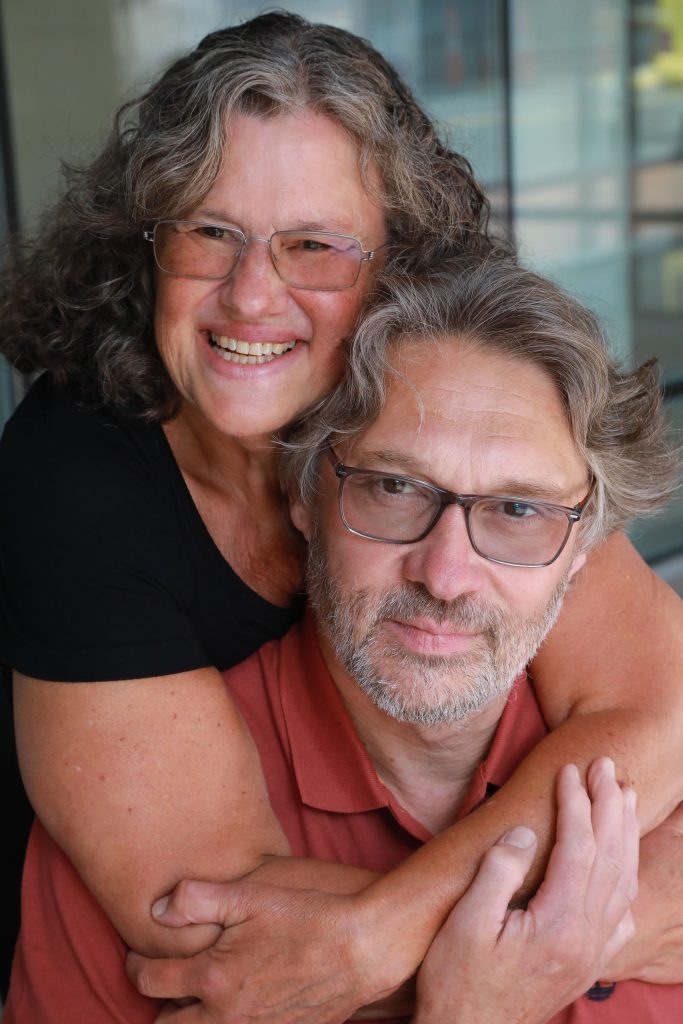
By Helene Cederroth, president and founder, The Wilhelm Foundation
Last year, we said that Undiagnosed Day is not just a day, it is a movement. A movement built on visibility. On voices finally being heard. On a global community beginning to come together around a shared reality.
This year, it is clear that this movement has made progress; both in terms of visibility and awareness but also in terms of action and momentum.
What began as a call for visibility, is evolving into something more tangible: a connected, collaborative effort to solve one of medicine’s most persistent challenges—the absence of a diagnosis.
For millions of people living with undiagnosed diseases (PLWUDs) around the world, that absence still defines daily life. But the difference now is this:
We are no longer only raising awareness of the problem.
We are building the systems designed to solve it.
What progress looks like when answers don’t yet exist
The reality remains stark.
Millions of individuals and families continue to live without a diagnosis, navigating uncertainty that affects not only their health, but every aspect of their lives.
But focusing only on that number risks missing something important.
Because progress in undiagnosed diseases is not always measured by what we have solved. It is also measured by the number of in-roads and paths-forward that we are creating to solve it.
In recent years, we have seen a growing recognition that the traditional model—fragmented, siloed and often limited by geography—cannot deliver answers at the scale required.
And in response, something new has started to emerge, a model built on collaboration, openness and shared purpose.
A different way of working and why it matters
At the heart of this shift is a simple but powerful idea:
No single expert, institution or country can solve the undiagnosed challenge alone.
The answers exist, but they are scattered across disciplines, across datasets and across borders. Bringing them all together changes what is possible.
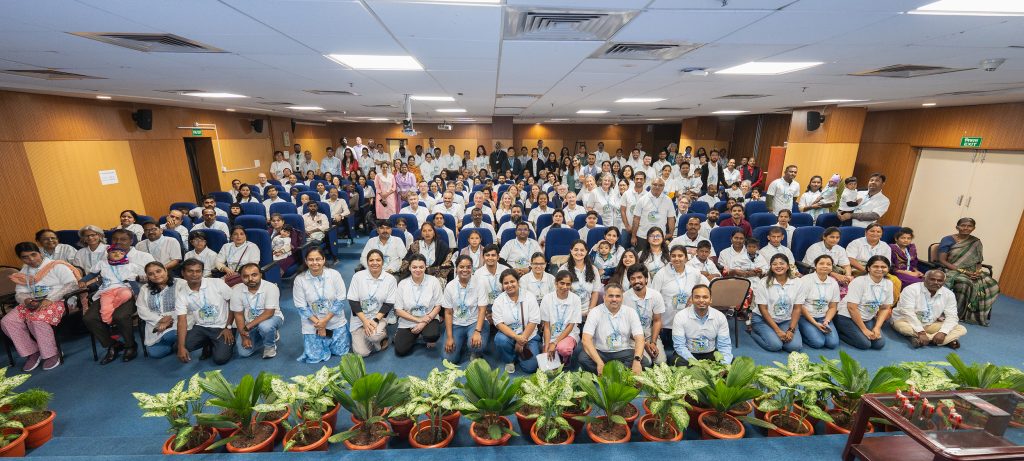
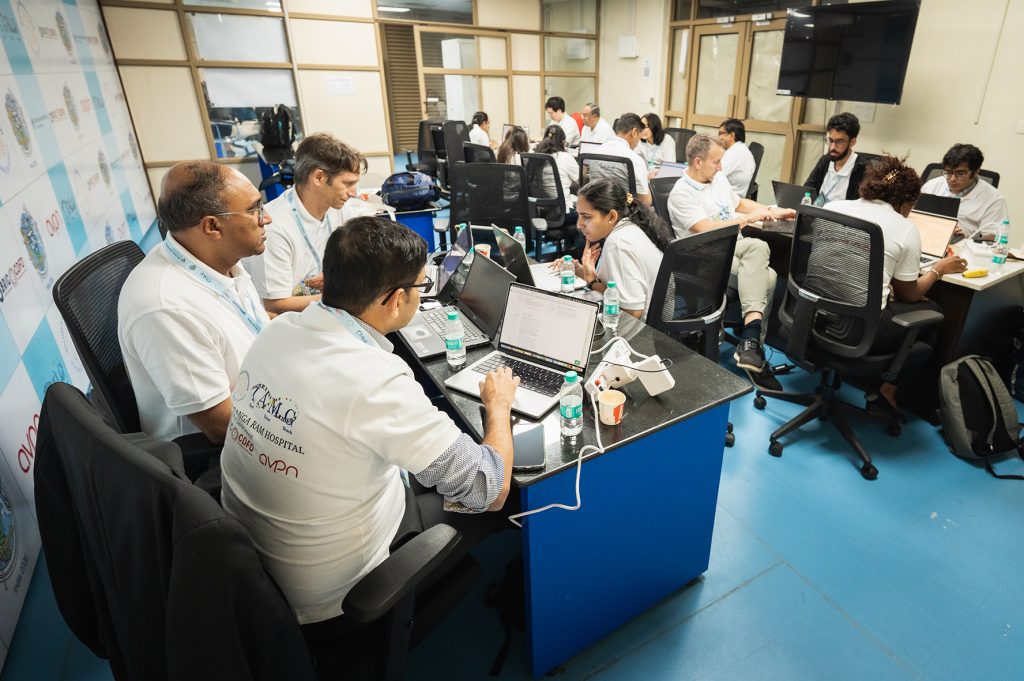
This is the principle behind the ‘Undiagnosed Hackathon’, an initiative that continues to redefine how we approach complex, unsolved cases for people living with undiagnosed diseases.
Here, clinicians, geneticists, data scientists and researchers work side by side with adults, children and families, combining expertise in real time to uncover answers that have previously remained out of reach.
And it is working.
In recent Hackathons, we are pleased to say that families who had spent years searching for answers have received diagnoses in a matter of days. Others have gained critical insights that move them closer to one.
But beyond individual outcomes, something bigger is happening.
Each Hackathon builds momentum, not just by solving cases, but by proving that a different model works.
A model where:
- Silos are replaced with collaboration
- Data is shared, not held
- Families and PLWUDs are partners, not passive participants
From isolated efforts to global alignment
As we mark Undiagnosed Day 2026, what is evidently different is that this model is becoming a broader template that is creating momentum elsewhere.
Through new collaborations, including with the European Rare Diseases Research Alliance (ERDERA) and the Medical University of Gdańsk, we are beginning to see the value of alignment.
Research networks connecting across Europe. Clinical expertise embedded into real-world healthcare settings. Data and knowledge shared with greater purpose and reach.
This matters, because the challenge of undiagnosed diseases is not only scientific, it is a health systems issue too.
Access to diagnosis remains deeply unequal. In many parts of the world, particularly in low- and middle-income countries, families still face significant barriers to even beginning the diagnostic journey.
If we are to move forward, progress cannot be concentrated in a few centres of excellence. We must share best practice, adopt new pathways and scale them. This is what momentum looks like and this is also how we begin to ensure that no one is left behind.
From ambition to action
For the Wilhelm Foundation, this work has always been driven by a clear mission:
To end the diagnostic odyssey for people living with an undiagnosed disease.
And a vision that remains unchanged:
A world where no one lives without a diagnosis.
For many, that ambition may still feel all too distant. But what is different today is that it is no longer theoretical because we are seeing the building blocks take shape:
- New models of collaboration that deliver results
- Stronger global partnerships that enable scale
- Growing recognition that this challenge requires collective action
Even our most ambitious goal, reducing the number of people who remain undiagnosed after comprehensive investigation from 60% to 0%, now feels more than an aspiration, it feels like a tangible and measured direction of travel.
Undiagnosed Day 2026: a moment to act
Undiagnosed Day has always been about visibility and providing a moment in time to recognise a community that has too often been unseen. A moment to share stories, raise voices, and build understanding.
That remains true today.
But in 2026, it also represents something more. It is a moment to engage, to connect and to contribute to a growing global effort that is already changing how we approach diagnosis.
Because progress in this space does not happen in isolation.
It happens when people come together, from across disciplines, across borders and across experiences, to share knowledge, challenge assumptions and push the boundaries of what is possible.
What you can do
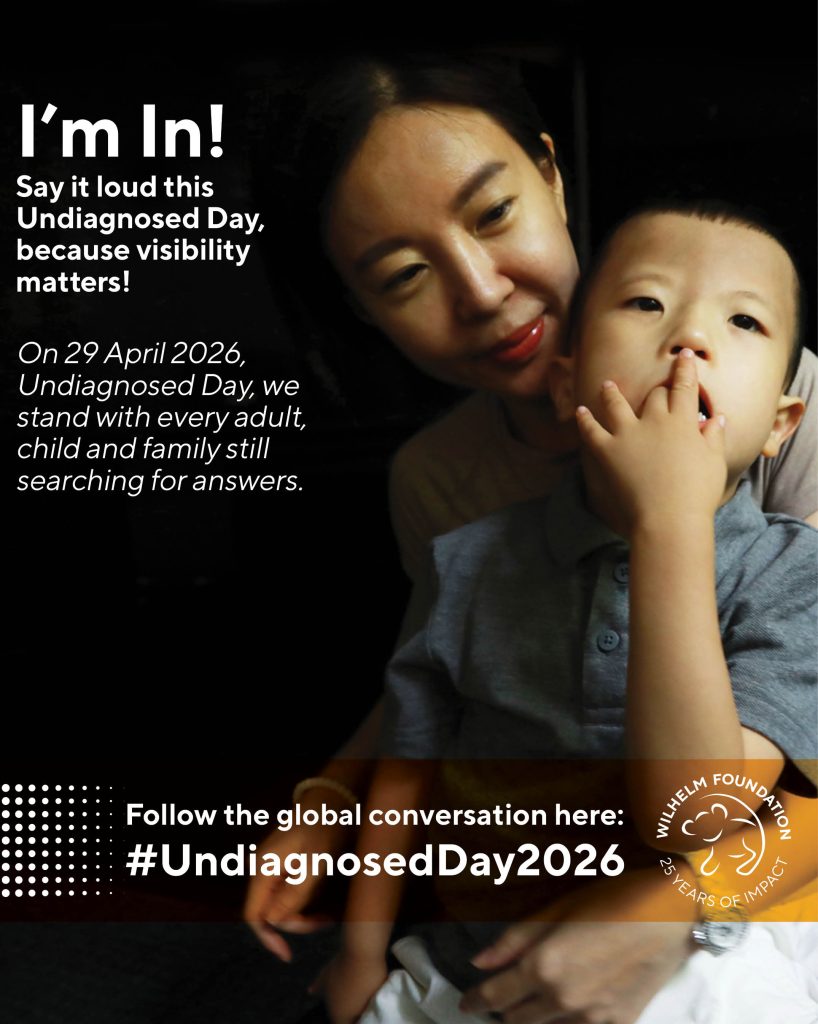
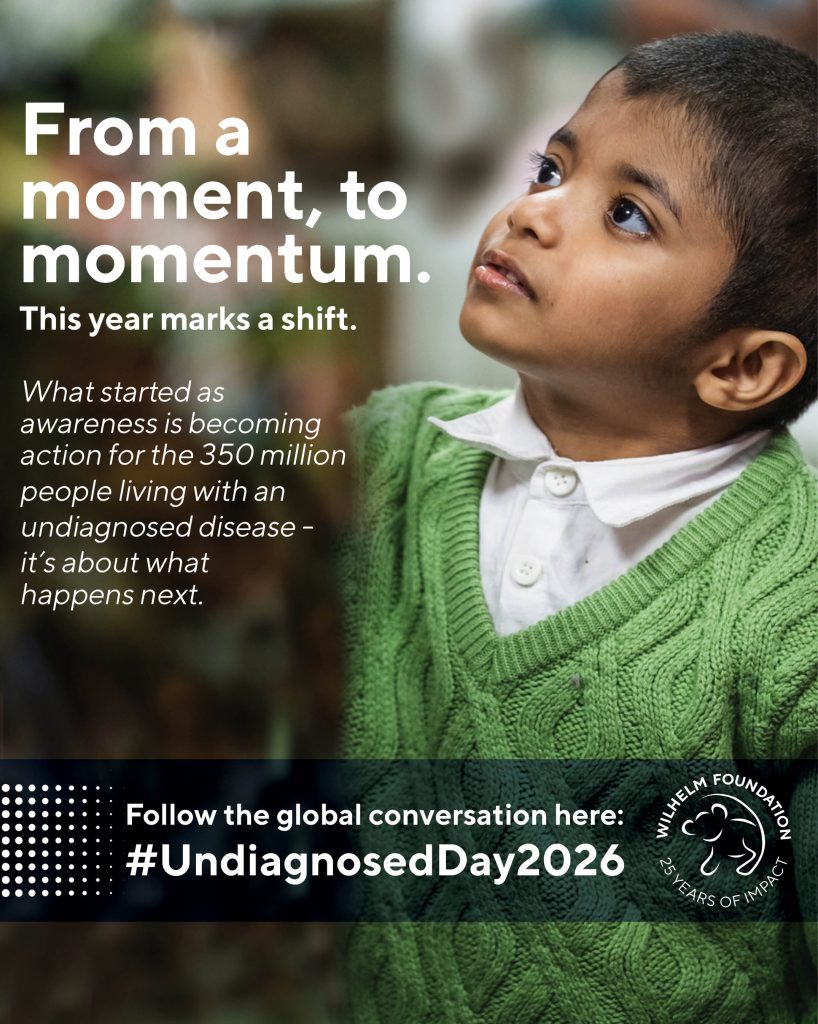
On 29 April, you can be part of that momentum.
- As a healthcare professional you can declare ‘I’m in’ and commit to seeing a patient with an undiagnosed disease and share this pledge as well as your story using the hashtag #UndiagnosedDay2026.
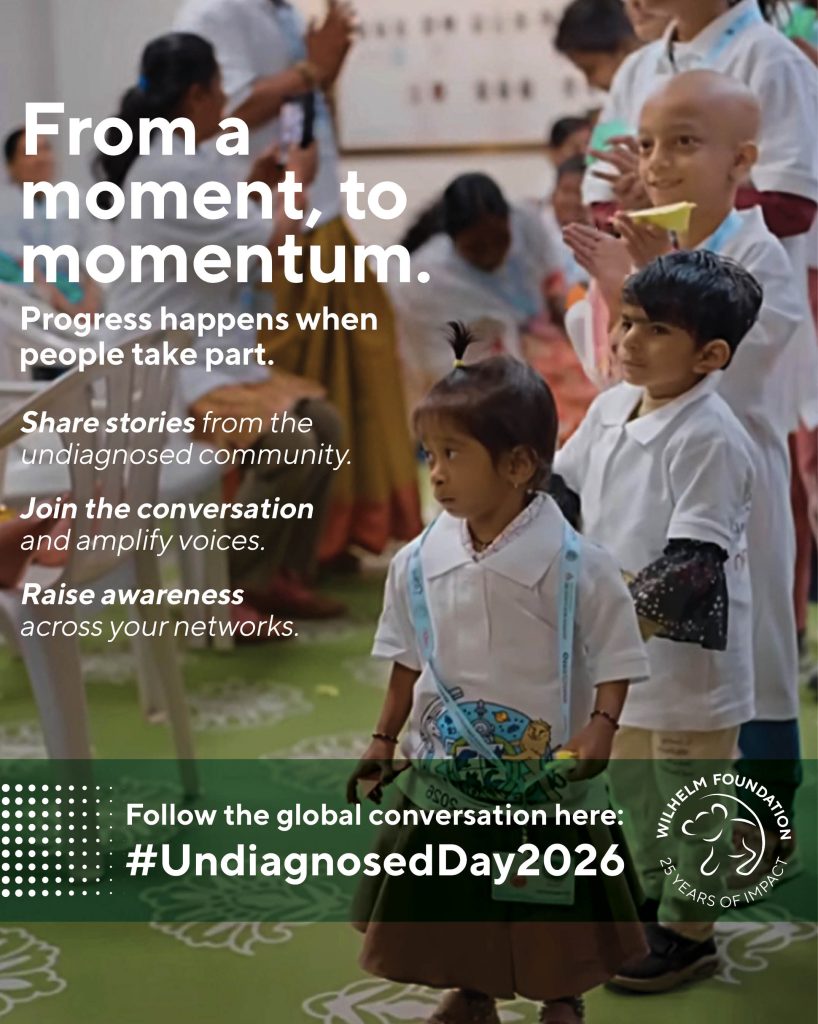
- If you are someone living with an undiagnosed disease or a family member or carer, you can join the conversation and share your story using the same hashtag #UndiagnosedDay2026 to help amplify the voices that are too often unheard
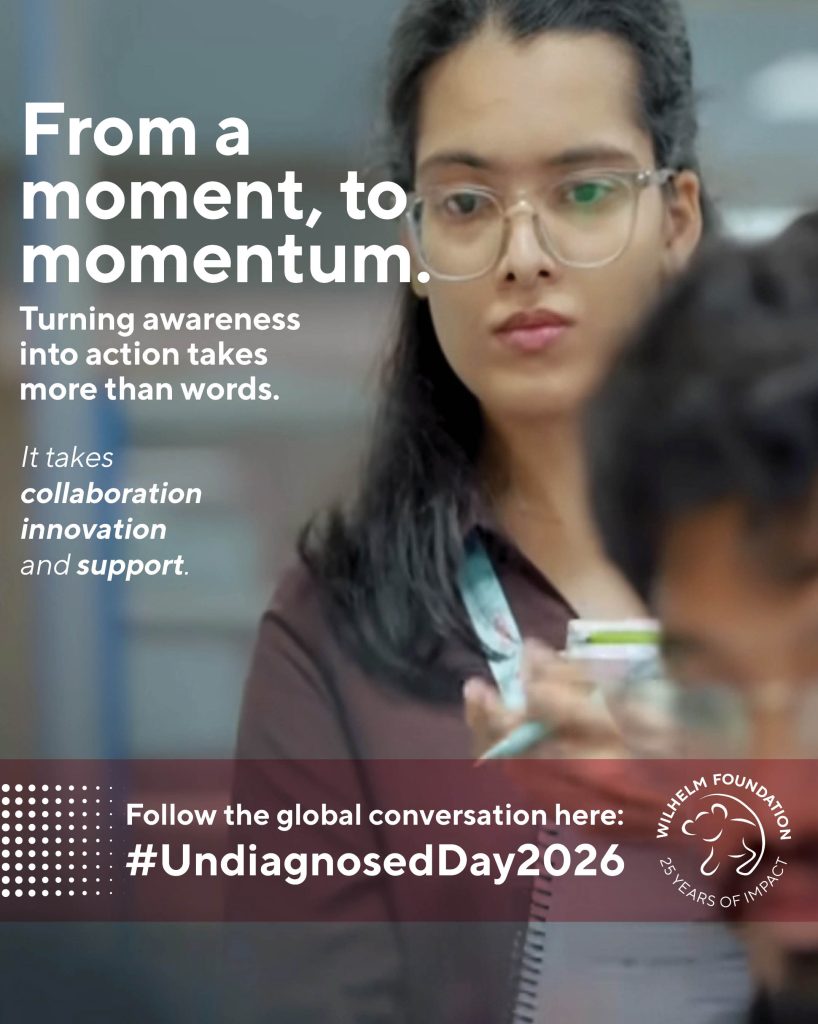
You can help take Undiagnosed Day from a moment, to momentum by: Making the pledge. Spreading the word. Sharing a story.
This year Wilhelm Foundation, The European Rare Diseases Research Alliance (ERDERA), the Medical University of Gdańsk (GUMed) and the University Clinical Centre in Gdańsk (UCK) will be hosting a two-day, clinician-led meeting in Gdańsk, Poland. The event, named ‘Where Diagnosis Becomes Hope: The Power of Collaboration and Technology in Rare Diseases’, will bring together specialist clinicians, clinical geneticists and invited experts to support phenotype-led diagnosis through live case discussion, shared clinical reasoning and practical exchange. The event will take place to mark Undiagnosed Day from 29 – 30 April.
We are so thrilled to help create practical, case-led, knowledge-sharing events such as this to support our overall mission and vision on behalf of the global rare disease community.
And this is our message for Undiagnosed Day 2026 – every action, however small, contributes towards momentum. Momentum that will accelerate solutions and diagnoses, and reduce the number of people and families living with undiagnosed diseases.
More information about Undiagnosed Day 2026 can be found at www.undiagnosed-day.org. If you would like to register to attend our clinician-led event in Gdańsk please visit www.erdera.org/event/undiagnosed-day-2026 for more information and registration details.
Looking ahead
For families still searching for answers, the wait has not ended.
But the way we work is changing. The way we collaborate is changing. The way we think about diagnosis is changing.
And with that change comes much needed global momentum. Not just momentum towards understanding the problem, but towards solving it.