From no options to new hope: How science, partnership and persistence are driving progress towards treatments for CASK
SPONSORED CONTENT -THIS ARTICLE HAS BEEN FUNDED AND WRITTEN BY THE OXFORD-HARRINGTON RARE DISEASE CENTRE
Matthew Wood and Matthew P. Anderson of the Oxford-Harrington Rare Disease Centre (OHC) highlight their commitment to driving progress for rare disease—impacting the lives of families like Cynthia Schulz and her daughter Noni who spent decades living without answers or effective treatments for CASK
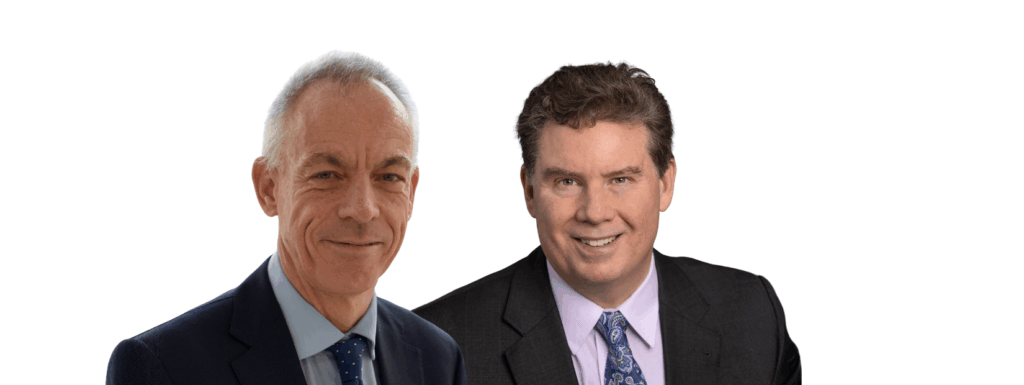
Written by Matthew Wood, MD, PhD, director and chief scientific officer, and
Matthew P. Anderson, MD, PhD, co-director of the Oxford-Harrington Rare Disease Centre
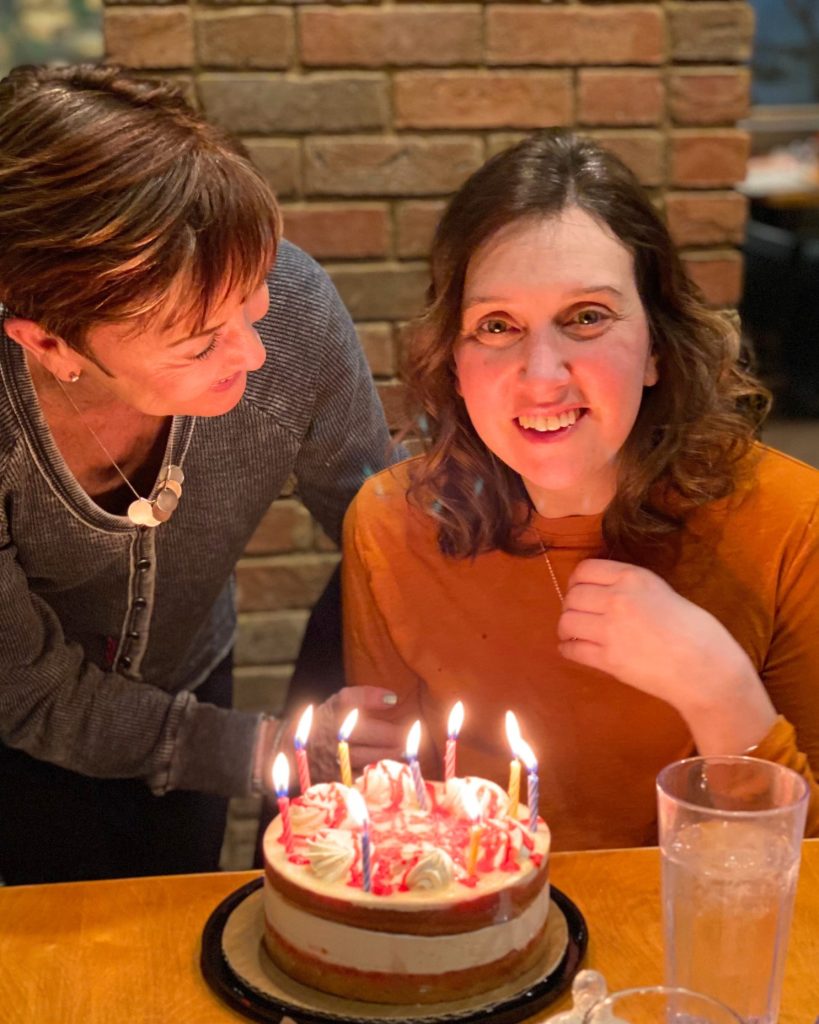
Cynthia ‘Cindy’ Schulz still remembers the moment. Her daughter Noelle—nicknamed ‘Noni’— was a toddler when developmental delays became impossible to ignore. Appointments and tests followed until one day, Cindy opened an envelope containing the neurologist’s blunt assessment: ‘mental retardation’, the ‘clinical’ term used at the time.
“It was a sad sign of the times to receive such crushing news in the mail,” Cindy recalls. “There was no roadmap, no explanation and no treatment plan. Just a label.”
Noni exhibited considerable intellectual and physical challenges: she could walk and talk but could not read or write or do many other simple tasks people take for granted.
When Cindy asked what could be done to change the course of her daughter’s condition, the response was that there were no treatment options, care would be supportive, not transformative or curative.

“It would have been easy to let that destroy us,” Cindy says. “Instead, we focused on helping Noni build a bright, happy life.”
While still needing help with basic daily living, with incredible support from her family (she has three siblings) and her inclusive schooling, Noni developed her superpower: social skills. Now aged 42, Noni lives happily with her parents and has worked for more than 19 years at her part-time job in a local grocery store. Colleagues and customers love her.
It was only when Noni was around 30 years old that genetic testing provided clarity. The cause was a rare mutation in a gene called CASK, which is essential for healthy development of the brain. At the time, only 50 people worldwide had been diagnosed with CASK. Today, the number tops 2,000 and is growing.
In contrast to Cindy’s earlier experience, this time a caring and compassionate geneticist delivered this diagnosis in person, taking time to explain the disorder and answer her questions.
Bridging the gap between discovery and therapy
For families like Cindy’s, the hardest part of a rare disease diagnosis is not just the rarity, it’s the lack of a path forward. Traditional academic research often stops at discovery, while drug development typically begins only when a route to a commercially viable product is clear. Between those two worlds lies a gap where attempts to tackle many rare diseases stall.
The Oxford-Harrington Rare Disease Centre (OHC), a first-of-its-kind, global initiative dedicated to delivering treatments and cures for rare diseases, was created to close that gap.
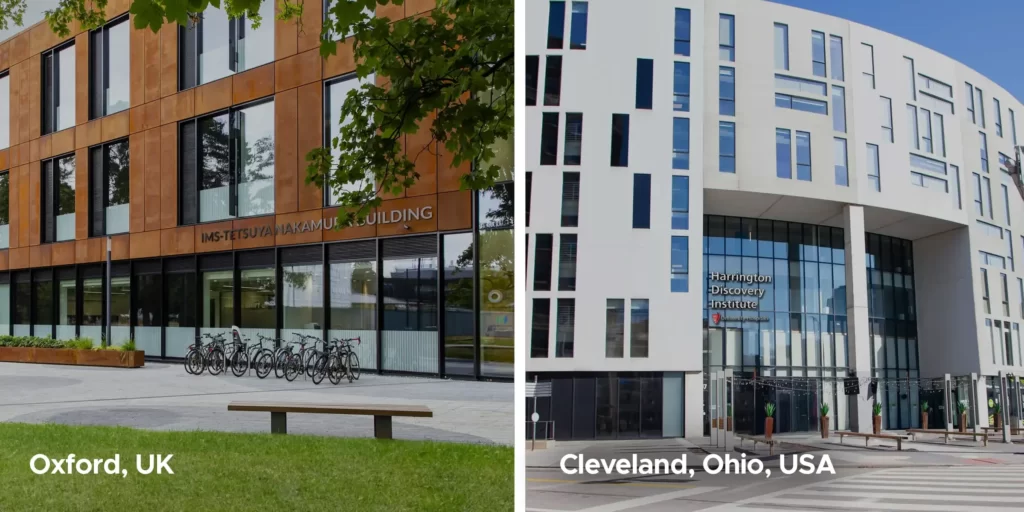
The OHC’s model is built around a simple but powerful idea: pair world-class rare disease research across the UK, USA and Canada under the expert scientific guidance and capability of University of Oxford with the structure, reach and track record in therapeutics development at Harrington Discovery Institute at University Hospitals in Cleveland, Ohio, US. Instead of asking researchers only to describe disease mechanisms, the OHC supports them in answering a harder question: how could this become a treatment?
By integrating biology, translational science, drug development expertise and project management from the earliest stages, the OHC aims to turn promising discoveries into real therapeutic candidates, setting itself the goal to advance 40 new medicines into clinical development by 2034.
For severe, life-altering and historically overlooked conditions like CASK, this integrated approach offers something families rarely hear: a reason for cautious optimism.
The OHC’s Rare Disease Scholar Award programme
At the heart of the OHC’s approach is its Rare Disease Scholar Award programme, which each year selects up to ten exceptional academic investigators whose projects have the potential to meaningfully change the course of rare diseases. Scholars are supported with the resources needed to move beyond the lab and into clinical development.
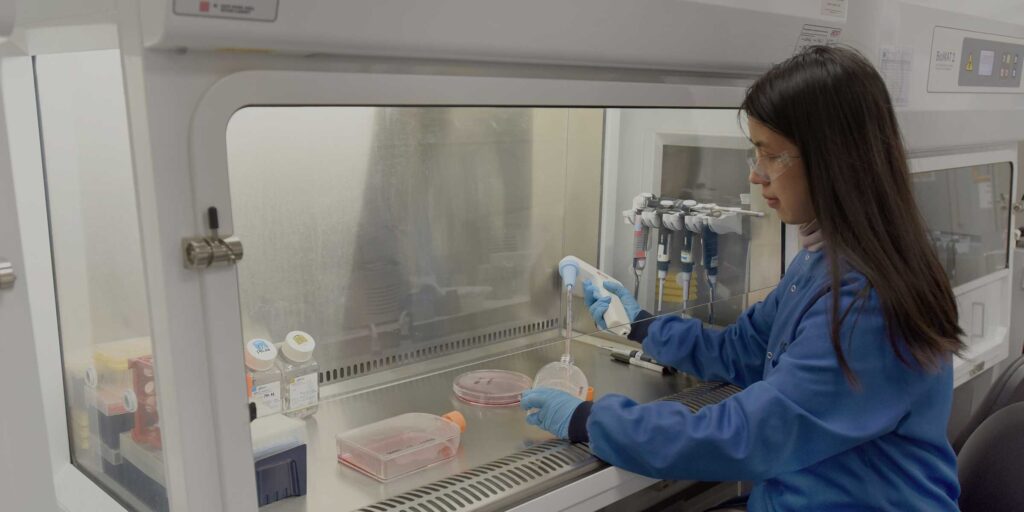
Scholars come from leading institutions in the UK, US and Canada and receive not only funding, but also hands-on guidance from advisors with expertise across drug development and commercialisation, as well as strong connections to patient groups and industry partners. The goal is not incremental progress, but acceleration—helping projects reach a point where they can attract larger investment and enter clinical trials.
Across the OHC, more than 20 Scholar programmes are underway, ranging from neurodevelopmental, neuromuscular and metabolic disorders to rare cancers. These programmes explore cutting-edge approaches, including gene and RNA (ribonucleic acid) therapies that address the underlying causes of these diseases, as well as more conventional small molecule drugs.
One of the newest and most compelling of these programmes focuses on a disorder that Cindy Schulz knows all too well.
Investigating the potential of gene therapy for CASK

Dr Mingshan Xue has spent his career studying the brain. Trained in biology and neuroscience at Fudan University (Shanghai), Baylor College of Medicine (Houston) and the University of California, San Diego, his work has focused on the genetic pathways that shape neural development and function in the brain.
CASK is caused by loss-of-function mutations in the CASK gene, located on the X chromosome. The gene plays a crucial role in brain development, and when it fails, the consequences can be profound: epilepsy, severe developmental delay, intellectual disability, motor impairment, autistic features and microcephaly.
Diagnosis is made through genetic testing. Treatment, however, remains largely unchanged from decades ago: manage seizures if they occur, provide physical, occupational, and speech therapy and support quality of life as best as possible. None of these approaches addresses the underlying cause of the disease.
Finding a treatment for CASK becomes a personal quest
Dr Xue’s interest in CASK began with a patient.
“During my postdoctoral training, I met an individual affected by CASK,” he says. “Seeing the severity of the symptoms and knowing there was nothing available that could change the trajectory stayed with me.”
That encounter shaped his career. Over time, Dr Xue connected with advocacy organisations such as Project CASK and learned from families who were not only living with the disorder, but actively pushing science forward through registries, natural history studies and research funding. Through Cindy’s involvement, he also learned about the OHC’s Rare Disease Scholar Award programme.
Although CASK is rare—estimated to affect about 2,000 individuals across the US, UK and Canada—the community around it is highly engaged. More than 300 patients are enrolled in registries and five advocacy groups worldwide are working to expand knowledge and accelerate research.
For Dr Xue, the message from families was clear: discovery alone was not enough.
Enter the Oxford-Harrington Rare Disease Centre
Dr Xue’s research is focused on developing a disease-modifying gene therapy for CASK. The approach uses viral delivery technology to deliver a functional copy of the CASK gene, replacing the faulty gene.
Currently, Dr Xue is working towards establishing proof-of-concept for this approach before moving into clinical studies.
“What attracted me to apply to become an OHC Rare Disease Scholar was access to broad and deep drug development support,” he explains. “Guidance on gene therapy development, connections to potential industry partners and project management expertise are critical if this programme is going to move forward and into patients.”
By helping scholars think early about all steps on the route of a new therapy, the OHC increases the likelihood that promising ideas will survive the long journey from lab bench to patient bedside.
What success would mean for families affected by CASK
If a gene therapy for CASK is successful, its impact would be transformational.
For patients, it could mean improved neurological function, fewer seizures, better motor control and greater independence—changes that ripple through every aspect of daily life. For parents, it could mean something just as profound in knowing that their child has a great chance of experiencing a significantly improved quality of life.
“When Noni was diagnosed, no effective therapy was in sight,” Cindy says. “We just learned to accept and manage her significant disabilities with a positive attitude.”
A disease-modifying therapy could redefine the future for newly diagnosed children and for families who today receive the same devastating news Cindy once did.
The prospect of a better future
Cindy fully understands the significance of Dr Xue’s work.
“To know that scientists are not only studying CASK but actively trying to change its course—that’s extraordinary,” she says. “When my daughter was young, that notion simply wasn’t part of the conversation.”
The contrast now is stark. Where once was resignation, there is now collaboration and exciting progress, supported by the OHC and other institutions, and driven forward by families and researchers together.
Cindy knows that research takes time, and that not every promising programme will succeed. Still, she looks to the future with a perspective shaped by four decades of lived experience.
“Hope doesn’t mean guarantees,” she says. “It means effort, intention, and not giving up. Now, for the first time, there is hope for a future of treatments and cures.”
For Dr Xue, the goal is clear: to translate breakthrough science and understanding into something that changes lives. For the OHC, the mission is to ensure that ideas like his are given their best possible chance.
And for families facing a new diagnosis of CASK, the message is no longer that there is nothing to be done. Thanks to the convergence of advocacy, science, and innovative models of support, a different story is beginning to emerge where the future is brighter.
Biographies
Matthew Wood, MD, PhD, serves as director and chief scientific officer of the Oxford-Harrington Rare Disease Centre, professor of Neuroscience at the University of Oxford, deputy head of the University of Oxford Medical Sciences Division, adjunct professor of Medicine, Case Western Reserve University School of Medicine and research vice president, Muscular Dystrophy UK.
He has pioneered the development of novel drug delivery systems for targeting macromolecular biologics, including RNA-based medicines and antisense oligonucleotides, to tissues including the brain, to treat rare neuromuscular diseases. He has authored over 450 scientific papers and has co-founded four spin-out companies, Evox Therapeutics, PepGen, Orfonyx Bio and ISOGenix.
Professor Wood also led a major UK national initiative to establish the UK Nucleic Acid Therapy Accelerator (NATA) as its founding director and is an advisor to numerous research funding agencies including UK Research and Innovation (UKRI), to Genomics England and to industry. He currently serves as a non-executive director of the University of Oxford’s technology transfer organisation, Oxford University Innovation (OUI).
Matthew P. Anderson, MD, PhD, serves as investigator and co-director of the Oxford-Harrington Rare Disease Centre. He holds the Sylvia K. Reitman chair in Discovery and Innovation at Harrington Discovery Institute at University Hospitals, and he is a senior attending physician and professor of pathology in the Division of Neuropathology at Case Western Reserve University. He is also a visiting professor at the University of Oxford.
Prior to joining the OHC, Matt served as vice president of Research and Preclinical Development, and head of the Neuroscience Therapeutic Focus Area at Regeneron Pharmaceuticals. For many years, he served as chief of the Neuropathology Division at Beth Israel Deaconess Medical Center at Harvard Medical School (Boston, MA), running a biomedical research programme yielding breakthroughs in neurological, neuropsychiatric and neurodevelopmental diseases including epilepsy and autism.
Dr Anderson received MD and PhD degrees from the University of Iowa College of Medicine where his work on the function of the CFTR chloride channel that is mutated in cystic fibrosis was foundational to the subsequent development of small molecule therapeutics that saved lives for individuals with cystic fibrosis.
Cynthia Schulz is an author, speaker, mom of four adult children, one with a rare genetic disorder. She is a voice of experience in the disability community. After a long career as a corporate communication executive, she has embarked on an encore career devoted to making life better for individuals and families living with intellectual and developmental disabilities.
Her debut book, Shine On, Raising Our Kids with Disabilities to Lead Bright, Happy Lives, is the one she wishes she had when a child with disabilities rocked her world. It showcases families everywhere turning challenges into triumphs. Cynthia’s storytelling and audacity embolden parents to stand up for their children and not take no for an answer, a powerful perspective in the world of disability parenting.
Cynthia’s work resonates far beyond families. Healthcare professionals, educators, employers, and community leaders find her heartfelt parenting perspective eye opening, deepening their empathy for the lived experiences of families touched by disabilities.
Dr Mingshan Xue is an associate professor in the Department of Neuroscience at Baylor College of Medicine and the Caroline DeLuca Scholar in the Jan and Dan Duncan Neurological Research Institute at Texas Children’s Hospital in Houston, Texas. He received his BS in Biology from Fudan University and PhD in Neuroscience from Baylor College of Medicine. He conducted postdoctoral research at University of California, San Diego and was supported by a Jane Coffin Childs Postdoctoral Fellowship. The long-term research goal of his lab is to understand the pathogenesis of neurodevelopmental disorders and harness this knowledge to develop genetic therapies for these disorders. His research has been recognised by the Peter and Patricia Gruber International Research Award in Neuroscience, Janett Rosenberg Trubatch Career Development Award, McKnight Scholar Award, and STXBP1 Foundation Impact Award.