From whimsy to wisdom

Written by Jill Drury, Pharm.D., MBA
Any new invention, design or innovation starts with belief. It comes long before evidence and proof and is a powerful catalyst for great discoveries, never more so than in the world of rare disease
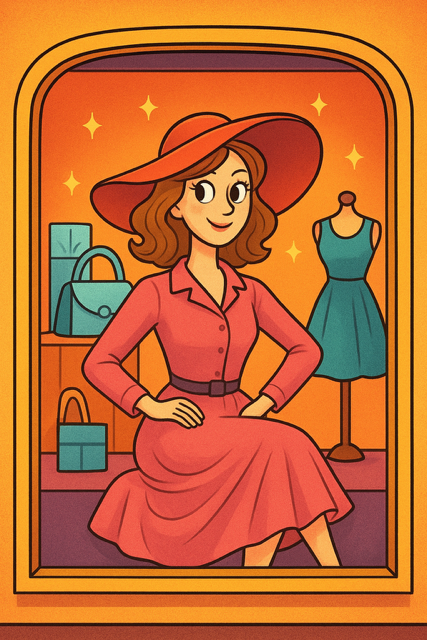
Sometimes inspiration arrives in the most unlikely packaging. This Winter, I was transported back to 1987 and found myself nostalgically watching the film Mannequin. Andrew McCarthy plays Jonathan Switcher, a dreamer, an artist and someone everyone else has written off. He can’t keep a job. He doesn’t quite fit the mould. And in a department store filled with fluorescent lights and scepticism, Jonathan finds something magical: a mannequin who comes to life.
Now, at first glance, that movie is pure whimsy, a romantic comedy with Kim Cattrall in a window display. But behind the humour is a profound truth:
Everyone around Jonathan was convinced that what he saw was impossible.
But because he believed, truly believed, he was able to transform his world.
I think about this silly movie story when I reflect on rare disease, on science and on the very nature of innovation.
Rare disease is, in many ways, society’s mannequin, overlooked, underestimated or assumed to be static. For decades, patients and families have lived in the window display of medicine: visible but not fully seen. Present but not fully understood. Waiting for someone to imagine more.
And yet just like Jonathan, innovation begins with the ones who refuse to look away. The scientists who ask, “Why not?” The clinicians who say, “Let’s try.” The caregivers who persevere. The advocates who refuse to accept that a lack of options means a lack of hope. The entrepreneurs who build what doesn’t exist yet. The patients who keep us honest about what matters.
When Jonathan and Emmy create those department-store window displays together, it changes everything. People gather. They marvel. The impossible becomes undeniable. That is what happens in rare disease when breakthroughs occur. When a new mechanism is understood, when a therapy emerges, when data reveals what biology was trying to tell us all along.
Innovation doesn’t always begin with proof, it begins with belief.
Belief is not naïve; it is catalytic. It does not replace science; it precedes it.
And that matters because rare disease is not rare in spirit. It is filled with some of the most inventive minds, brave families and relentless innovators on the planet. In these communities, hope is not sentimental. It is a strategy.
In Mannequin, there is a moment when Jonathan stops apologising for what he sees and starts building from it. That shift from embarrassment to conviction is the moment innovation truly begins in real life. The same is true in science. Discovery moves forward not when everyone agrees, but when one person is willing to look at a model, a phenotype or a patient story and say, “This matters. This deserves more.”
Every rare disease breakthrough we celebrate today, every gene therapy, every biomarker, every novel trial design, every regulatory shift started as an idea no one else could see yet. Someone believed. Someone kept going. Someone refused to let reality get in the way of possibility.
In the end, Mannequin reminds us that transformation rarely starts in the spotlight. It starts quietly. It starts with imagination. And it becomes real when others finally see what was there all along.
So today, as we advance rare disease research, build new models of care and unlock the tools of modern biotechnology, my hope is that we continue to be the Jonathan Switchers of this world:
The ones who believe before the world agrees. The ones who make room for the improbable. The ones who understand that the mannequin isn’t just wood and plastic, it’s potential waiting for courage.
Because if history, scientific or 1987 cinematic comedy has taught us anything, it’s this: Once you believe that anything can happen, sometimes, it does.
About Jill:
As a pharmacist by trade, I have been an inventor and an entrepreneur my whole life. Long gone are the days of independent corner drugstores, but working in one as a teenage girl inspired and shaped me in so many ways. I was constantly challenged and encouraged by managers and mentors to use and leverage my creative abilities to further my career path. Whether it was increasing patient satisfaction or negotiating contracts over soda and candy sales, every challenge that I faced in my pharmacy career taught me something new.
In business school I continued to grow my skill set to collaborate with diverse groups of people all over the world. I have helped negotiate, innovate and streamline drug dispensing mechanisms. I have published and worked to enhance public awareness and outreach around numerous industry and health-related topics.
Relaying valuable resources and knowledge to providers across the globe has become the compass of my mission. To gain the necessary perspective and foundation, I have listened carefully to the stories and concerns of the patients who are the very reason why we strive for excellence. They are the ultimate destination in my profession. It is for the patient that we aim to maximise value—value in accessing medications and quality of care that will extend their lives.